The "progressive" Democrats presidential candidates may be hoist by their own petard

Future betto campaign workers

Future betto campaign workers

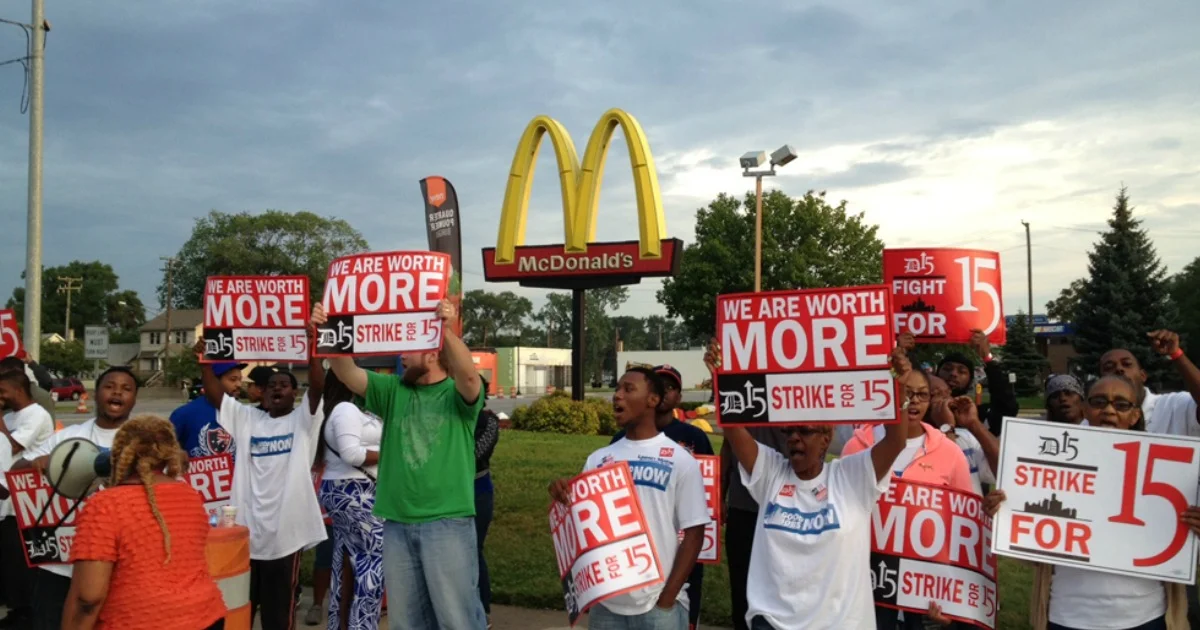
Democrat campaign interns trying to unionize, demand $15 an hour minimum wage, plus health benefits, etc. By my reckoning, that would probably raise the going wage for door-knockers and ballot harvesters to more than 30 bucks, and that should cripple most campaigns, just as it cripples other small businesses. Bernie, send me an email: I’ll try to pitch in.

“It’s hard to be going door-to-door, telling people you should vote for this candidate because they support a $15 minimum wage when you yourself are making less than that,” added Ihaab Syed, secretary of the Campaign Workers Guild, a union for campaign staffers. “It’s hard to go door-to-door, calling for Medicare for All, when you’re not being given health care.”

In the heart of Riverside, a bit of troublesome news; maybe

19 stoney ridge.jpg

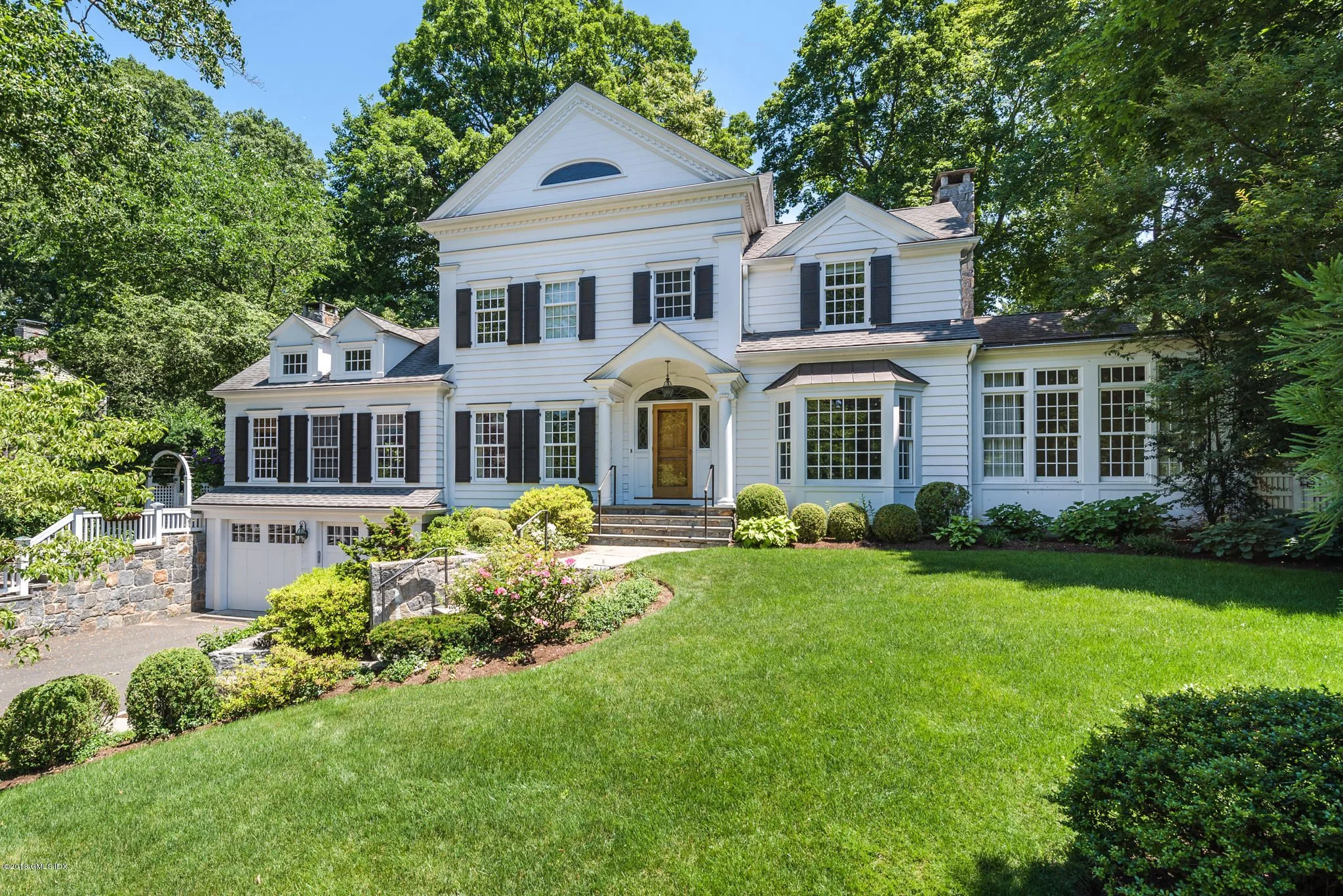
19 Stoney Brook Lane, built in 2002 and sold for $3.350 in 2014, has resold for just $2.540. The sellers tried for $3.650 in 2016 before giving it up and renting it for a year in 2017. The house and the lot it sits on have never been among my favorites, but the street itself, just off Lake Drive South, is an excellent location, and so I’m surprised to see this kind of hit.

Trend, or exception? I suppose we’ll see as the spring market unfolds.

I'm alive, but simply not inspired

Screen Shot 2019-01-23 at 4.54.44 PM.png

No posts for a couple of days, but what’s to write about? The political world continues on its dreadful course, Greenwich real estate has yet to awake from its Thanksgiving — MLK Day slumber, though that should change next week.

In the meantime, there’s an article from Maine saying that that states’ real estate market is booming (behind a cash wall, so not worth the link). I suspect that the phenomenon will be short lived, because Maine residents have replaced their governor of eight years, Paul LePage, with a Democrat, and given her an overwhelming majority of Democrats in both houses to whoop through new taxes: already, 3,000 (!) proposed new laws have been rushed into the legislative hopper, bills that have doubtless been stuck in desk drawers during the previous eight years of frustration.

LePage and Republicans took control of a state hopelessly in debt and mired in recession and in eight years wiped out the deficit, built a surplus and dropped taxes, while unemployment and welfare rolls sank to all-time lows. The very people who moved to Maine to take advantage of those new job opportunities have now grasped control of the legislature and are determined to undo everything that was gained.

Not much different than what’s going on in Washington.

William Raveis isn't impressed with the current Greenwich real estate market, either

We’re going to disney world!

We’re going to disney world!

In fact, their statistics are as depressing as those cited by David Huffinpuffer, two posts below.

Per Ryan Raveis:

“Median sales prices last year stayed about the same,” he said, “but average sales prices were down significantly.”

Raveis said there was no doubt that Fairfield County’s richer municipalities have been adversely affecting the big picture in the residential market. According to sourceMLS, while locales like Bethel and Bridgeport posted average sales prices up in both by 8 percent from 2017, Greenwich’s average sales price last year was down 8 percent from 2017. Old Greenwich fell by a little less than 12 percent and, while Darien was down just 3 percent, its number of unit sales declined by nearly 15 percent.

Part of the reason, Raveis said, is that “wealthier folks are leaving the state, and those who are replacing them don’t have the same level of income.”

According to data from the Internal Revenue Service, $2.6 billion in adjusted gross income was lost to other states as Connecticut experienced a net loss of roughly 20,179 residents in 2015. The largest group of tax filers leaving the state were those earning over $200,000 per year: between 2015 and 2016, the state saw a net loss of 2,050 tax filers earning at least that much money each year, the most since the IRS began tracking that income bracket.

“I don’t think anybody wants to die in this state,” Raveis said. “That’s why you see so many Florida and North Carolina license plates when you’re driving here in the summer — those people live most of the year outside of Connecticut.”

The ongoing perception that Connecticut as a whole is not business friendly, as evidenced by the exit of General Electric and the staff reductions at UBS and RBS, and doubts about its fiscal future thanks to the ongoing budget deficit, have had a deleterious effect, he added.

“A CEO who’s looking to move his company knows that this isn’t a particularly business-friendly environment,” Raveis declared. “And older, wealthier baby boomers are leaving.” Whether those attitudes will change under new Gov. Ned Lamont remains uncertain, he added: “I think everyone’s waiting to see what the new governor does.”


Why does our state university have any athletic program at all?

Taxpayers are forking over millions to coaches, multi-millions to build and maintain off-campus stadiums, and subsidizing $40-million in losses, for what?

[UConn Athletic Director Benedict] was asked about a recent report that the university’s athletics department is running at about a $40 million deficit.

He said it shouldn’t necessarily come as a surprise, considering the Big East money that UConn and the other former Big East teams got when the conference split up six years ago is drying up and will be non-existent next year. Benedict also noted that the school had to renegotiate its multi-media rights deal with IMG for a lower price recently, and that ticket sales have suffered due to poor performances from several different teams.

“Is it sustainable long-term, at this level? That’s for other people to make that decision,” Benedict said. “Certainly, one of the things that I’ve come to learn about UConn and the state of Connecticut since I’ve been here is that there is a strong belief — that I think the majority of people share — that the university is what it is, not just because of our academic success, but because of the athletic success we’ve achieved. In combination, we’ve created a nationally-renowned university.”

But he added that the school had to look at how the athletic department was structured, and wouldn’t rule out the possibility of eliminating certain sports.

“That’s a really tough decision. There are a lot of athletic departments over the last few years that have had to do that. It’s probably one of the most difficult things you could do. As an athletic department, we’re gonna look at all opportunities to try to deal with this prior to that. But, sometimes there are inevitabilities.”

A full breakdown of the huge losses sustained by UConn’s athletic program can be found here

UConn's athletic department spent more than $40 million than it earned in 2018, according to the school.

Connecticut's flagship state university generated $40.4 million in revenue from sports last year, but spent almost $81 million, according to an NCAA financial statement made public Thursday. Both expenses and revenue were down slightly compared to 2017.

UConn, with a majority of its athletic programs in the American Athletic Conference, received $7.1 million in conference distribution funds and $1 from media rights in 2018, the financial statement said.

The steep deficit was plugged with $30 million in institutional support and $8.5 million from student fees.

UConn football remains the department's most expensive team to operate at more than $15.7 million last year. Also, ticket sales for the one-win team in 2018 totaled $2.4 million vs. $3.3 million in 2017.

That resulted in a $8.7 million deficit for the football team.

As of Aug. 2018, the football program's attendance at Pratt & Whitney Stadium at Rentschler Field in East Hartford has declined by more than 48 percent since it peaked in 2008 when it averaged 39,331 fans per game, according to the NCAA.

UConn men's basketball lost $5 million, while women's basketball lost $3 million. It cost $11 million to operate the men's basketball team and $7.8 million to manage the women's program, the statement said.

UConn athletics spent nearly $17 million on scholarships and $14.4 million for staff and administrative support.

Possibly, maybe, one percent of UConn’s basketball team players find employment in the NBA, and maybe half that number of the football squad: That would be about three students. The rest of the athletes are just intramural players, and we could afford them that opportunity for a fraction of the cost of what we’re paying now.

Is Greenwich real estate headed for Hell?

This article in Zero Hedge suggests that it is.Greenwich Home Prices Plunge 17% As Manhattan's Weakness Shifts To The Suburbs

Zero Hedge and the rest of the media love disaster stories, and I’d take this “news” with a large block of salt, but for sure, we’re seeing some huge whacks taken by the ultra-housing market (one notable exception, yet to be reported, is a mega-million sale in the back country, all cash, for a sum only a few million less than the seller paid for it in 2012. Buyer is a Chinese weekender, I hear, looking to move his money away from the kleptocrats in his homeland. That capital flight has mostly focused on Vancouver until now, but that city’s been pretty-much bought up, so perhaps this sale will be a harbinger of a shift in interest eastward, though I suspect it’s a one-off).

Real estate brokers told BBG that the weakness in the NYC market was largely to blame.

"The weakness in New York City has definitely played a role in some of the weakness that we’ve felt here," said David Haffenreffer, brokerage manager of Houlihan Lawrence’s Greenwich office. Sellers who got less than they wanted for their city apartments "are in turn then dialing down their budgets when they get here to look at homes. Or, it’s just flat-out delaying their ability to buy here."

And just as New York led Greenwich on the way down, sellers in Greenwich will be looking to New York City to determine when the market equilibrium has shifted back into the seller's favor.

"As New York City finds its footing, so too will our markets," Haffenreffer said. "We’re just waiting for those indications."

And sellers in the high-end of the market have already largely pulled their inventory off the market, as weakness first surfaced in the market for homes selling for $10 million or more (a trend that some brokers blamed on a shift in tastes away from estates and toward more centrally located homes closer to down town and public transit like the train station).

In a town known for its $10 million-plus estates, most purchases in all of 2018 were for less than $2 million,according to a report by Houlihan Lawrence. There were 335 single-family deals in that price tier, up 4 percent from 2017.

Condos continued to be an appealing option for buyers looking to keep city-style living and amenities even after moving to the tony suburb. Purchases jumped 23 percent in the fourth quarter from a year earlier to 48 deals, Miller Samuel and Douglas Elliman said. The median price was $746,250, down 3.1 percent.

My advice on all this is about the same as stock brokers dish out: don’t panic. If your job requires you to hang out around here, then pick a house and settle in: Greenwich still has great schools and amenities, and it’s a nice place to live. Ten years down the road, we, especially Connecticut, probably won’t look so attractive, but the way things are going, what part of the country will?

It wouldn’t hurt to buy tinned food and load your shotgun, though.

What the hell? Greenwich hires yet another school superintendent, and it isn't Ralph Mayo

now, you won’t leave us like the others did, will you?

now, you won’t leave us like the others did, will you?

We’ve gone with a woman from Fairfield, and I’m sure she’ll make a fine superintendent, our 15th in 12 years (or something like that), but I had assumed the school was searching for a new candidate because acting superintendent Mayo wasn’t interested in the job. Turns out, he was.

Mayo has run our best middle school, Eastern, been part of the school system for decades and, so far as I’ve always heard, is hugely admired, by students, parents and staff. Plus, he’s shown his commitment and love for the town — he grew up here, for Crimminey’s sake — and is likely to be here three years from now, which would be a first for anyone else the town’s plugged into the superintendent’s position before.

I don’t do school board politics, but this decision is bizarre.

The only way to win this war is to lift a middle finger and cry, "sod off, swampy".*

Trump’s serving hamburgers to 18-year-old Clemson students proves he’s a racist, according to ESPN. Why? Because apparently black kids eat fast food, just like their white peers, but … well, because shut up.

After a complaint is received, Oxford University removes octopus terrine from menu because underprivileged students might feel uncomfortable.

There is simply no bottom to the endless pool of resentment and faux-outrage of the left, so Trump is exactly right in his approach: do as you see fit, and tell ‘em to screw off.

  • From a memorable moment captured by The Free Republic:

  • Sod Off, Swampy!
    Tech Central Station ^ | 2/21/05 | Val MacQueen 

    Posted on 2/22/2005, 9:54:31 AM by Valin

    Last Wednesday the Kyoto Protocol kicked in and Greenpeace decided to mark the event in Britain by storming London's International Petroleum Exchange, the world's second-largest energy market, with the modest ambition of closing down trading for the day. 

    Around 35 dolphin-huggers stormed the exchange just after the 2 pm resumption of trading. The sortie was well-planned. One male protester lurked around the door to the building. When he spotted an employee about to use his swipe card to exit, he accidentally dropped some coins and bent to pick them up and, as the employee, not noticing him, strode out onto the street, stuck his foot in the door for his co-protesters to rush in for the assault. The first few sidled in, and two minutes later, two Greenpeace vans skidded to a stop and out poured another 30 or so protesters who stormed through the doors held open for them. 

    Hoping to shut down "open outcry" trading, where deals are shouted across the pit, the Greenpeaceniks ran onto the trading floor, according to the London Times, "blowing whistles and sounding fog horns, encountering little resistance from security guards. Rape alarms were tied to helium balloons to float to the ceiling and create noise out of reach." 

    But London traders, just after lunch, are more likely to be powered by two or three pints of strong ale than the milk of human kindness. 

    The trespassers were set upon by traders, most of whom were under the age of 25. "They were kicking and punching men and women," said a photographer, according to The Times of London. "It was really ugly. … They followed the [Greenpeace] guys into the lobby and kept kicking and punching them there. They literally kicked them on to the pavement." 

    "The violence was instant," reported one aggrieved recipient of a rain of blows to the head. "I've never seen anyone less amenable to listening to our point of view." 

    "Sod off, Swampy!" shouted one tardy trader, steadying himself against the railings of the balcony of the pub across the street as his colleagues threw the protesters bodily onto the sidewalk. (Swampy was an enviro-protester who gained fame by living unbathed in a tunnel for eight months.) 

    Meanwhile, other traders inside the building were punching and felling men and women with a politically correct lack of sexual discrimination. Those who had already been punched onto the floor were shocked to look up and see traders trying to overturn heavy filing cabinets onto them. 

    A laconic spokesman for the IPE said, "We are dealing with the situation."

Riverside price cut

215 Riverside.jpg

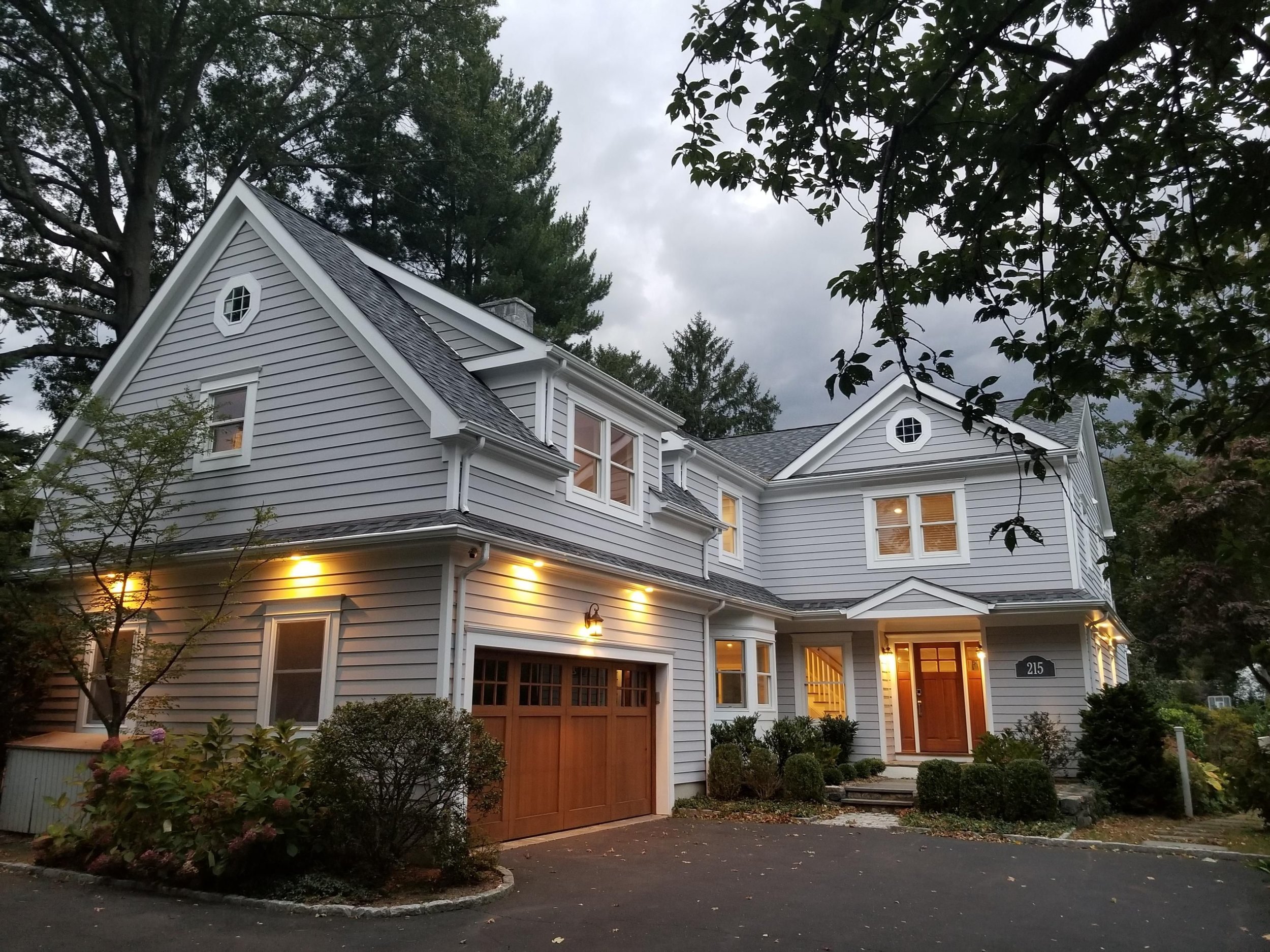
215 Riverside Avenue, in Riverside, started at $3.2 million back in August, 2017, but failed to strike a spark in buyers’ hearts. Today it’s been marked down to $2.295, and that seems like a pretty good price. These owners paid $2.025 million for it in August, 2016, and what they got for their money was a perfectly good, but modest 1976 home of 2,600 square feet. They proceeded to completely re-do it, adding 1,400 sq. ft. and installing an entirely new kitchen, all new baths, and so on. Their plans must have changed, because no sooner was that work completed than they put it back up for sale. At $2.3, almost all of that work will prove to have been done for free.

Good location, away from the road (sort of), and a short walk to Riverside and Eastern, the station, and even the yacht club and St. Paul’s church, should those be your thing.

A solid buy, in my opinion.