When you discover, too late, that your political leaders have been lying to you

Social-distancing with a vengeance

Social-distancing with a vengeance

No, sorry, you can’t just buy a gun online

First came the panic buying of hand sanitizer. Then, people panic bought toilet paper. Now, food shelves are emptying and firearm and ammunition sales are through the roof. The COVID19 outbreak might be bad for the stock market, but it’s certainly been a boon for very specific sectors of the economy. The gun industry, used to such boom/bust cycles, knows how to respond – but other sectors might not be so acclimated.

Here at Omaha Outdoors, we’ve been inundated with inquiries from out-of-state folks – many from California – asking if we can ship them a gun directly. The answer is, of course, no. Despite what politicians and many in popular media claim, you can’t buy a gun online and have it shipped to your house. Well, you could, if you were a federally licensed firearm dealer (or federally licensed curio and relic collector) and your home was your place of business. Other than that, no, you can’t buy a gun online and have it shipped, especially across state lines, to your home.

What you’ll need to do to buy a gun from us is order it on our online store and select an FFL, a federally licensed firearm dealer, during the online checkout process. We ship the gun to the dealer near you – presuming the firearm and its accessories are legal in your area – and you visit the dealer to fill out the required ATF Form 4473 and undergo the federal and any applicable state background checks. Some states might require a waiting period – sure to be a sore point at a time when people feel the need for a gun to protect themselves NOW. Only then can you take your new firearm home.

Probably better to just give up your toilet paper stash with a whimper and a rueful grin.

Nattering Nabobs of Negativism

Jane, you ignorant slut

Jane, you ignorant slut

Dumbest question of a woman posing as a reporter at VP Pence’s presser:

Paraphrasing, but close enough, “Mr. Vice President, how are you going to get more hospital beds so that tens of thousands of Americans won’t die, and how quickly will you be getting more ventilators so that thousands don’t suffocate?” [updated to reflect EOS’s correction]

These midgets, these execrable lilliputians of the press, think they have the right and the ability to editorialize in press conferences when no one cares.

How about self-isolation for all of them?

RELATED: CNN Bryan Stelter slams Surgeon General for criticizing reporters. I’m sure that if Stelter could identify a real reporter and point him out, the Surgeon General would be glad to apologize to that individual.

Okay, Boomer meme out: all 6 coronavirus patients in NJ hospital ICU are between ages 28-48

Shelter in place

Shelter in place

And that’s bad news for those of us who figured this was something we, but not our children had to worry about

Worse, Mike Maran, medical director of the Teaneck hospital treating these patients, is the first person I’ve encountered who has first-hand experience with this flu and the knowledge to opine on that experience. No paid talking head he, yet he’s worried:

Maron is a widely respected health care executive because he has proven a single-entity hospital can compete in quality of care with the bigger systems that surround him. He now knows Holy Name has another distinction.

“Holy Name is at the epicenter of the outbreak in New Jersey,” he said.

Maron said the past week has been unlike any other in his more than four-decade career.

“I can fall back on my cholera experiences in Haiti, which was devastating, considering the lack of basic medical supplies after the earthquake — and then the other things that came here, everything from MERS and SARS, and even when we ramped up for Ebola — this is unprecedented,” he said.

“I can tell you, it’s real.”

New York state is introducing drive-through testing, following the lead of Washington, California, Texas, Colorado and others. Seven states had introduced it going into the weekend. Plenty more — including New Jersey — are either considering it or getting ready to introduce it.

This concerns Maron ….

The tests are so new — and have so little history behind them — that Maron said he’s been told they are 90% accurate at best. And that’s for patients presenting with the known symptoms: fever, respiratory issues, gastrointestinal distress. For those who aren’t, Maron said, the accuracy is much lower.

“Here’s the concerns around lab testing that people need to know,” he said. “One, every sample has to be garnered under strict conditions. So, the sample taker has to be gowned in full PPE equipment. Precautions have got to be taken. You can’t just put up a test and have people show up. Gathering samples is not like swabbing for the flu. So, that slows down the number of people you can effectively swab.

“The second is that all these companies all use different assays to determine the RNA sensitivity to the test. And, because the (Food & Drug Administration) let people fast-track because we need to make more available, we don’t know for sure. I’ve had this conversation with the virologists at LabCorp, and they told me, ‘We don’t know the sensitivity of the test.’

“So, if you’re symptomatic, meaning you have a fever and cough, and I swab you and send that sample in, the accuracy of that is 90%. There’s a 10% chance it’s wrong, which is a pretty big window. This is opposed to the flu test, which is 99.999% positive. We’ve had enough testing on those and they have refined that the processes that they know for sure.

“This is complicated. It’s complex science. And, the best we can tell, it’s only 90% accurate. And there is no evidence whatsoever to indicate it’s otherwise.”

Maron said he’s explained this to elected officials.

“I said, ‘Governor, you do not want to do this,’” he said. “You’re going to give people a very false sense of security thinking they can drive through and get swabbed and say, ‘Oh, it’s negative. I’m clear.’

“That’s not good. That’s irresponsible.”

Expanding of testing appears to be coming anyway.

We continue to live in interesting times. Theme song for the coming week?

Was it over when the Germans bombed Pearl Harbor?

Oh, dear, such a mess. King George and Elizabeth view post-raid debris, Buckingham Palace, September 1940 (Friday the 13, but who’s counting?)

Oh, dear, such a mess. King George and Elizabeth view post-raid debris, Buckingham Palace, September 1940 (Friday the 13, but who’s counting?)

Queen flees London as the plague descends

I get it; she’s an old, frail lady and this bug especially afflicts the elderly, but her parents stuck around during the Battle of Britain to encourage their subjects and to show unity with the people, a duty that I’d have thought came with the job.

Where’s a Billingsgate fishmonger to go when the flu comes down his street? No alternative, second castle for him, certainly.

Then what's the point in sheltering in place?

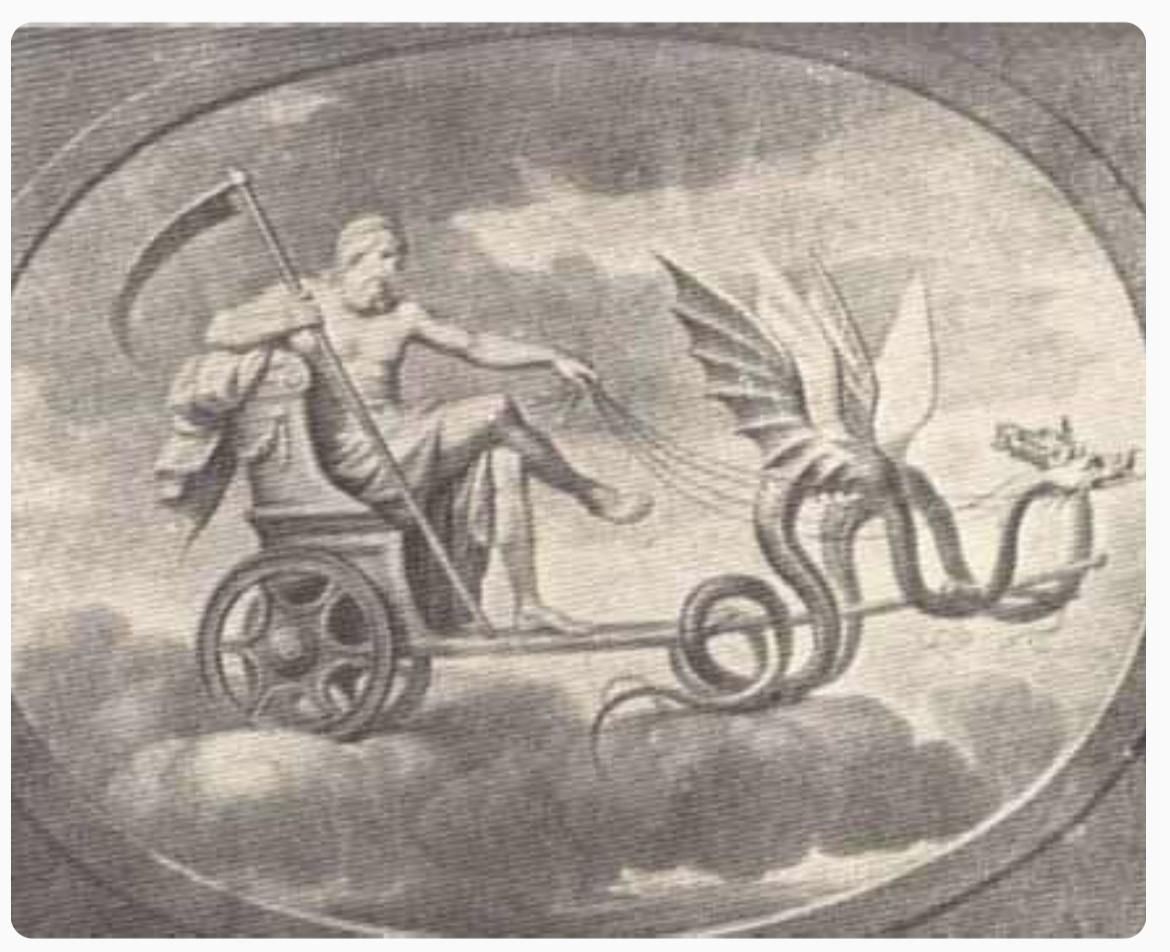
Cronus and his new Central Park hansom service, reporting for duty

Cronus and his new Central Park hansom service, reporting for duty

NYC health official: everyone in the city should assume they’ve been exposed to Hu Flu.

New York officials have effectively stopped trying to trace COVID-19 cases — saying everyone should assume they have already come into contact with the potentially deadly virus, according to an alarming report.

They stated that the virus is likely so wide-spread that tracing the number of infections is redundant — while warning that the city could be hurt until at least late fall, according to the report.

“Everyone in New York should assume that they have been in contact with COVID 19,” a read-out at the conference call said, according to Foreign Policy.

“Interviews with confirmed cases and contact tracing is not a good use of our resources when the virus is widespread,” they admitted, according to the report.

“This means that all individuals should assume that they have had some contact with the virus and practice maximum-possible social distancing; most cases will be mild and medical care should only be sought in urgent, worsening, or vulnerable cases,” the officials warned, according to the read-out.

“Testing is now less important — the danger of transmission is much higher as many people have now been exposed and the majority of people will only have mild symptoms,” they warned, according to Foreign Policy.

The authorities could only say they were “hopeful that exposure to COVID will make people immune,” conceding it was “too early to say definitely.”

I don’t mean to be glib, or unduly fatalistic, but if we’ve all been exposed, and the flu is as contagious as described, and there is no available vaccine against it, is there any reason to continue to hide from others, instead of just assuming we’re all infected and going about our business? Put another way, if practice makes perfect, but nobody’s perfect, why practice?


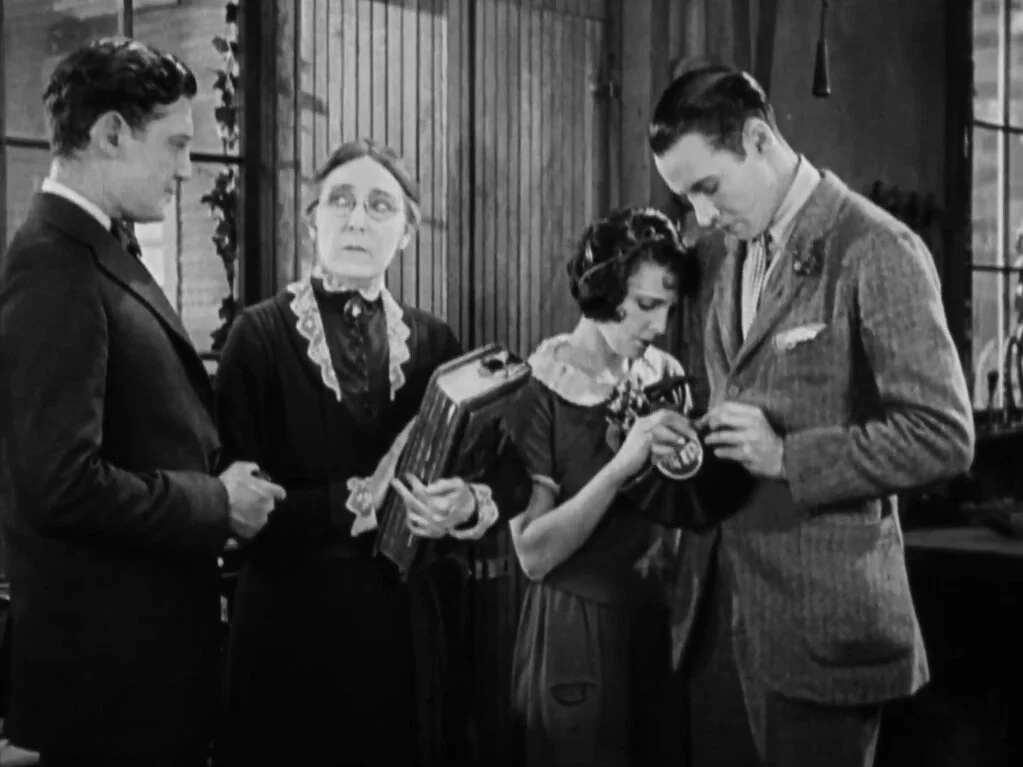
Whatever works – my grandmother, Leatrice Joy, eschewed glycerine drops and "just pictured my poor, dear mama dying" when the director called for tears

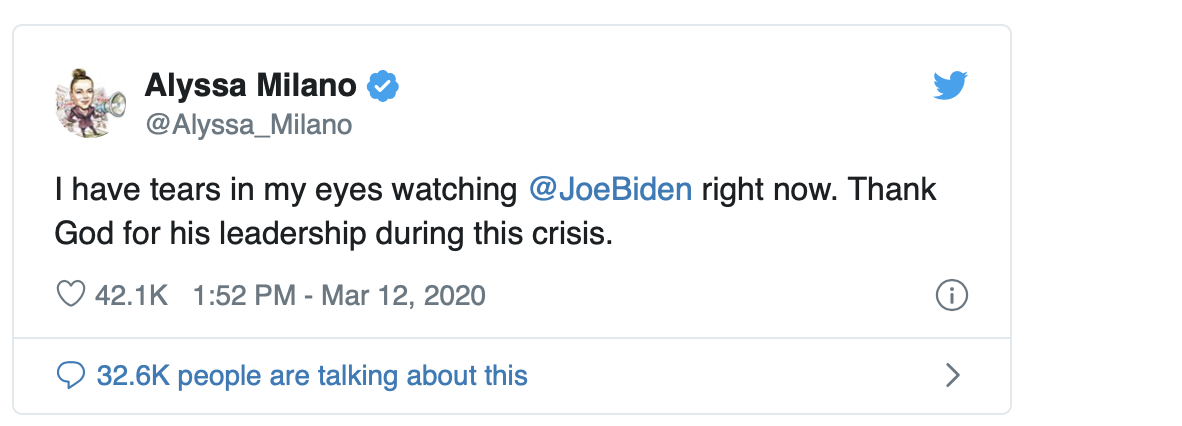
Oh Boo Hoo

Oh Boo Hoo

Screen Shot 2020-03-15 at 9.38.54 AM.png

I had been as unaware of this woman’s existence as I was Joe’s leadership in curing the Asian Flu, but if imagining it helps her career well, then, you go girl! Granny would approve.

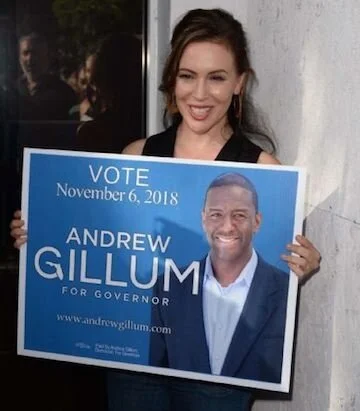
UPDATE: Holden (of course) has come up with a previous passion of Miss Milano

gillum.jpg

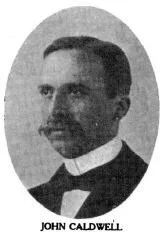
"But remember, Children, the poor have their problems, as well as the rich".

John caldwell.jpg

Words of compassionate admonishment from this author’s great-grandfather John Caldwell. Caldwell was a Protestant Irishman who arrived here penniless, served all four years in The Civil War and went on to earn great wealth and success at Westinghouse. He was being ironic, I’m told, but he might have been chiding these people:

Billionaires invade rural Wyoming, find that they’re just the same as the Little People

John Truett made millions as an oil and gas CEO, but since moving to Teton County, Wyoming — a town inhabited by an increasing number of wealthy transplants like himself — his biggest passion has been becoming a “normal person.”

When he visits the downtown bars, “I don’t tell people that I live in a gated community. They accept me as a local,” he tells author Justin Farrell in his new book, “Billionaire Wilderness: The Ultra-Wealthy and the Remaking of the American West” (Princeton University Press), out now.

Money, he insisted, hasn’t changed him.

“Yeah, I’ve got the airplanes, a motorcycle, and I love driving my Beemer through the mountains . . . [but] I go down and drink beer with the guys that run the lifts, and I’m as much as a ‘lifty’ as they are.”

Truett is just one of the hundreds of CEOs, investors and moguls — some of the “most powerful and well-known figures in business and politics” — who have made Teton County their home. Some live here permanently, commuting to major cities for work, and some only visit during the summer or winter months. Everyone interviewed by Farrell for the book did so on the condition of anonymity (all names are pseudonyms).

Teton, once known as a “little quaint cow town” by locals, has transformed over the last decade into a haven for the ultra-wealthy, with full-time residents like former Vice President Dick Cheney, Wal-Mart heiress Christy Walton and former Google CEO Eric Schmidt.

“Our friends are everything from ski-bums to people who are very successful with immense wealth, and you would never know it because we’re all just in our jeans and flannel shirts,” she told Farrell. “It’s very casual, and money just doesn’t matter to people like it does other

They also feel accepted by the locals. “Many of them assume that the poor ranchers see the world the same way they do,” Farrell says. “That mentality of, ‘We’re all out here trying to make a living without government interference!’ ”

Colin Stewart, a Yellowstone Club member and hedge-fund investor from Connecticut, insisted to Farrell that he was “very close with all sorts of people in town.” Asked for an example, he mentioned an employee at the local fish market who always gave him “the inside track to the best cuts of halibut.”

Stewart considered this relationship, and others he had with lower-income locals, to be authentic and equitable, but as Farrell points out, “his friendships are often based on economic exchange and uneven power dynamics.”

Many of the wealthy Teton residents Farrell spoke to have romanticized ideas of what life is like for the poor. “Poverty to them is either the ski bum or the hard-working rancher,” he writes, “not the reality of the immigrant family from New Mexico working two to three jobs just trying to stay afloat.”

Julie Williams and her husband, Craig — who made well over a hundred million dollars with hedge-fund investments during the 1990s and 2000s — are adamant that nobody in their community “gives a hoot” about personal finances.

“Our friends are everything from ski-bums to people who are very successful with immense wealth, and you would never know it because we’re all just in our jeans and flannel shirts,” she told Farrell. “It’s very casual, and money just doesn’t matter to people like it does other places.”

“Other members simply aren’t impressed by what you’ve accomplished outside the club,” Tom explained to Farrell. “People don’t need to put on airs.”

The author clearly has an ax to grind: poor Mexicanos vs the rich, injustice, and the nobility of the poor, and it’s easy to make people look ridiculous by taking quotes out of context. Further, many of his targets are self-made, like my own ancestor, and are fully-familiar with what being poor entails, but this is still funny:

He recounted seeing a nationally famous club member tying his own kid’s shoe. “There he was, bent over on one knee,” he told Farrell. “Not his nanny nearby, but himself. It was unbelievable to see.”