As flu cases in Greenwich soar, our First Selectman takes bold action

Okay, that’s done; I’m off to the Vineyard

Okay, that’s done; I’m off to the Vineyard

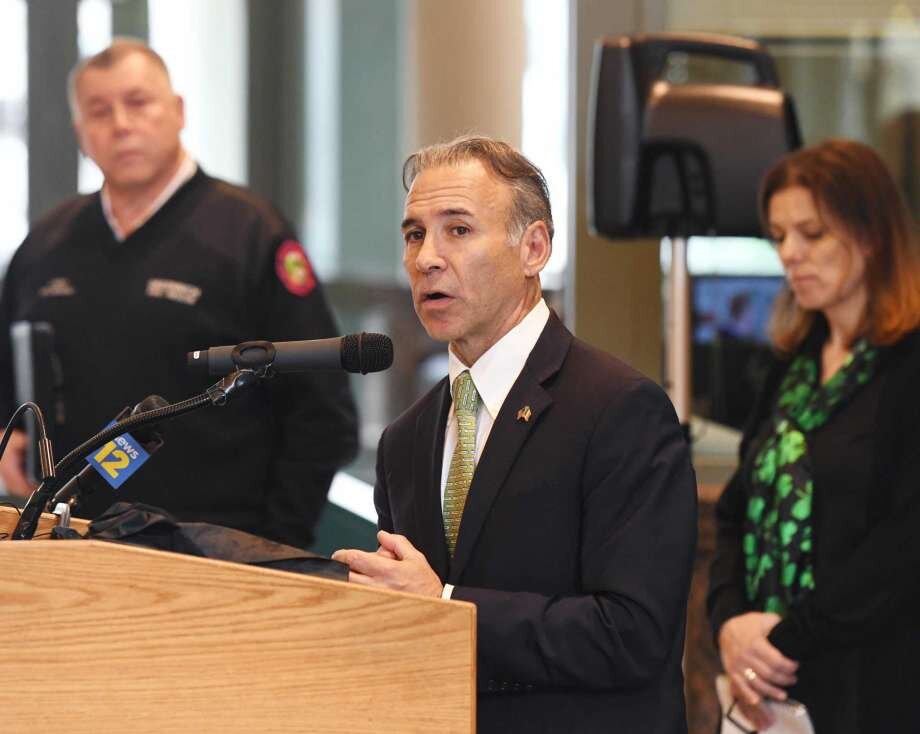
Effective immediately and until further notice, Greenwich property owners may employ only one gasoline-powered leaf blower at a time to clear their lawns. (By “employ”, I don’t think our leader envisions a Greenwich homeowner actually using such a machine himself, but you get his meaning.)

“It may be unpopular”, Camillo told FWIW, “ but we’ll do what needs to be done and that goes for anything.”

We can all breath easier now.

That's not usually how this works

7 indian head.jpg

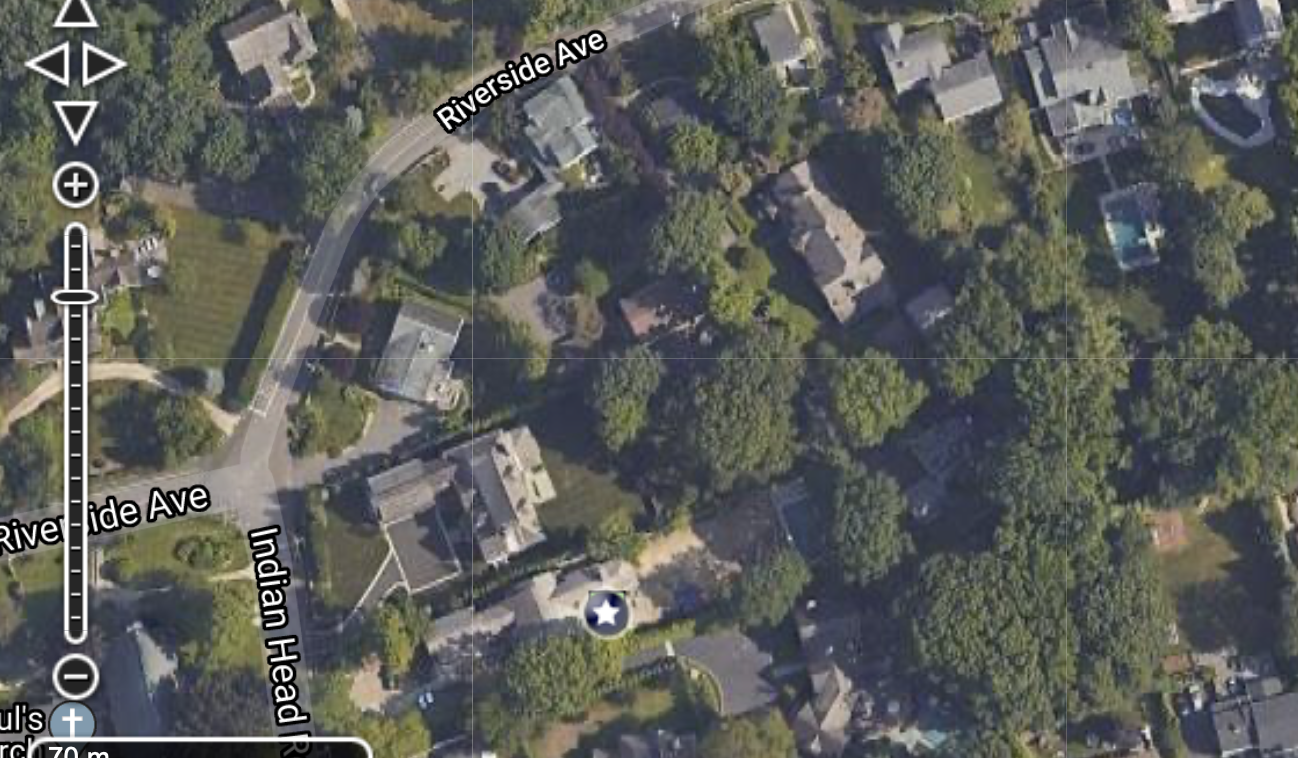
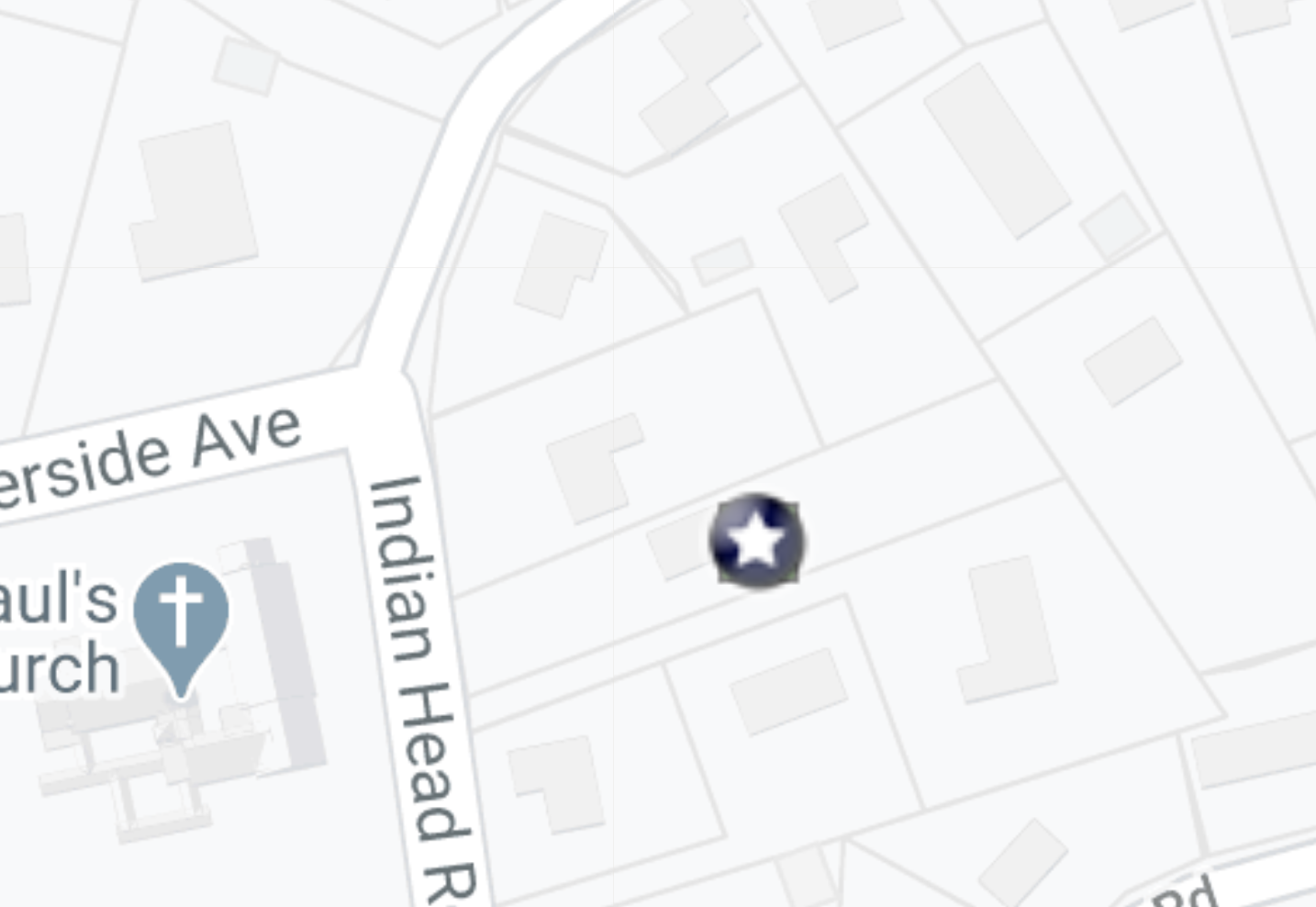
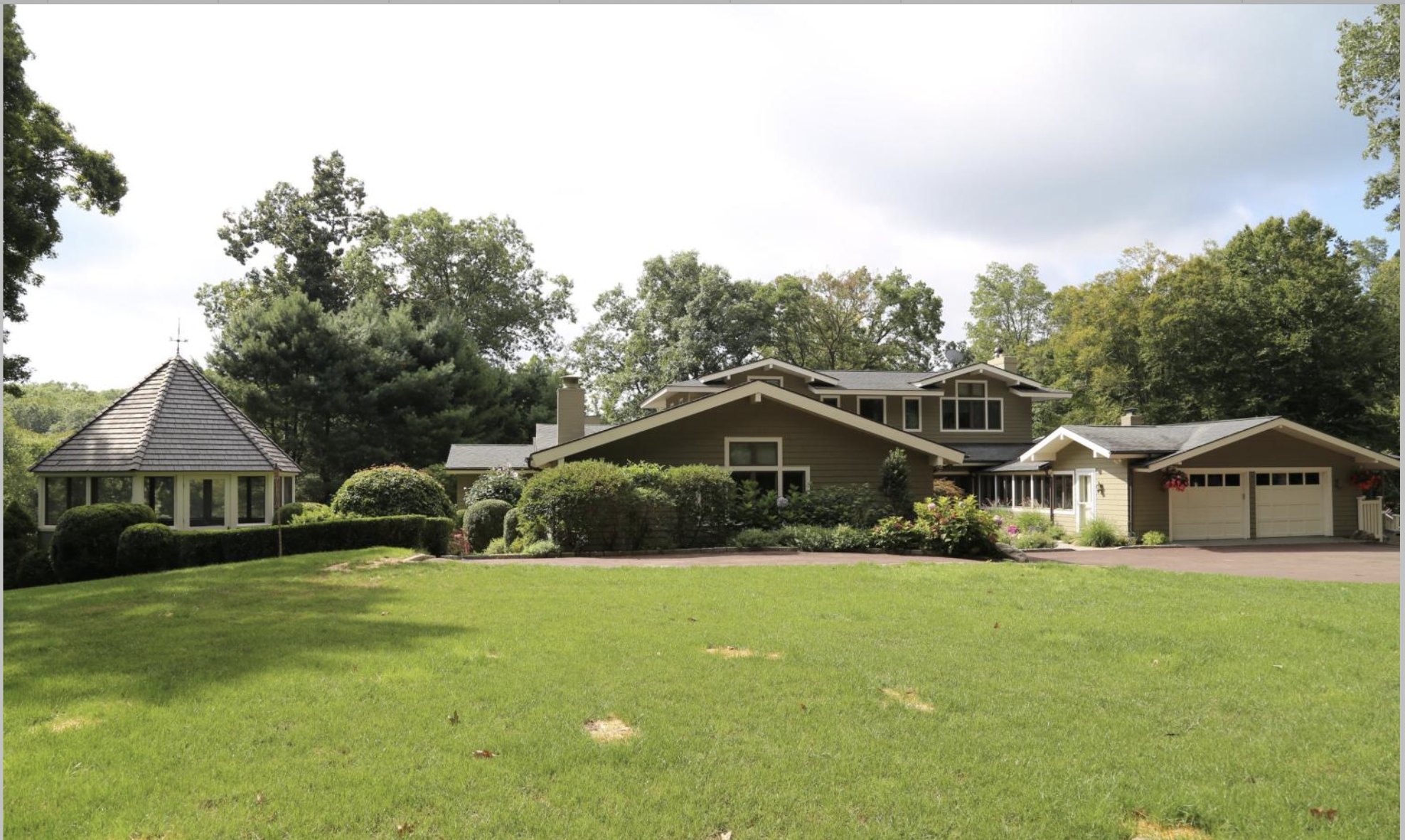
The owners of 7 Indian Head in Riverside bought it new in October 2018 for $4.3 million, decorated it to their taste, built a pool at the rear of the yard and have re-listed it today at $4.950. Usually, new homes command a builder’s premium and drop in value once the thrill is gone, so I’m not sure where this one is calculated to have gained $650,000 in added value.

Narrow lot, with a house configured to match. I’d describe this as shotgun shack architecture (shoot a shotgun through the front door and it goes straight through the house and out the back) if it cost any less — with an awkward layout as the result.

But we always wish home sellers good luck here at FWIW, so … good luck.

Screen Shot 2020-03-19 at 6.49.41 PM.png
Screen Shot 2020-03-19 at 6.50.14 PM.png

Common sense surfaces, briefly, in Maine

Ah, remember when there was food in grocery stores?

Ah, remember when there was food in grocery stores?

A reader familiar with my pet peeve alerts me to this story reporting that Maine has halted its impending plastic bag ban, at least until the Wuhan Chinese Virus pandemic is over. Once the all-clear is sounded, the state will presumably reinstate the ban because, after all, we’ll never have to worry about germs again — this was a one-off, eh? Eh?

With concerns mounting over how to contain coronavirus in the U.S., lawmakers in Maine voted March 17 to delay implementation of their plastic bag ban until next year. The decision, part of large package of emergency pandemic measures in that state, comes as a few elected officials around the country are pushing to delay or halt other single-use plastics bans, arguing that reusables pose more risk of spreading the virus. Maine's single-use plastic bag ban had been set to start April 22, but Gov. Janet Mills, a Democrat, announced a series of actions March 17 that included delaying the ban until January 15, 2021. “These emergency measures will support the state's response to the coronavirus and mitigate its spread in Maine," Mills said.

Related: Tales from Down Under:

Supermarket staff discover mice, dirty nappies and used NEEDLES in reusable bags after plastic ban

Dirty nappies and used needles are some of the vile items being found in reusable shopping bags when they are handed to supermarket staff, workers claim.

Woolworths eradicated single-use bags last week with Coles quick to follow at the start of July, but the controversial ban has raised a plethora of hygiene questions as people bring their own bags from home to the store. 

Workers have reportedly found a number of disgusting objects in worn out re-usable bags including mice, cockroaches and razor blades that shoppers hand over to them to bag groceries.

'We get stories of cockroaches crawling out on to check-outs from bags ... a worker suffered a needle stick injury after a used needle was left in a bag,' Shop Distributive and Allied Employees Association (SDA) NSW secretary Bernie Smith told The Australian.

'Staff said customers had presented bags strongly smelling of petrol.' 

Dozens of concerned shoppers questioned how grubby re-usable bags would be monitored.

'How will you stop people bringing in their dirty bags, placing them on counters and around your stores,' one person wrote online.

'I hope there won't come a time when Coles and Woolworths and other shops would be riddled with vermin, cockroaches and other contamination in the future ... what about those staff handling those dirty recycle bags?,' another person shared.

Another fire sale in the offing?

121 Lower Cross Road

121 Lower Cross Road

Fireman fighting a major blaze at 121 Lower Cross Road.

GREENWICH — Greenwich firefighters are working a major residential fire on Lower Cross Road Thursday morning.

Authorities are asking motorists to avoid the area at Lake Avenue, which will be closed. There were no injures reported to any residents, according to the dispatch center, and no pets have been injured.

According to an emergency broadcast network, there was extensive fire throughout the house at 121 Lower Cross Road, and portions of the building have collapsed.

According to a Twitter feed from the firefighters union, “House is fully involved, all occupants are out, house is starting to collapse.”

The property was listed for sale between September 2015 to October 2016, starting at $3.799 and dropping to $3.495 before expiring unsold.

I wonder whether we’ll see more of these as the market withers?

Here's a moral test: when this is over, will you be proud of your actions during these times of trouble?

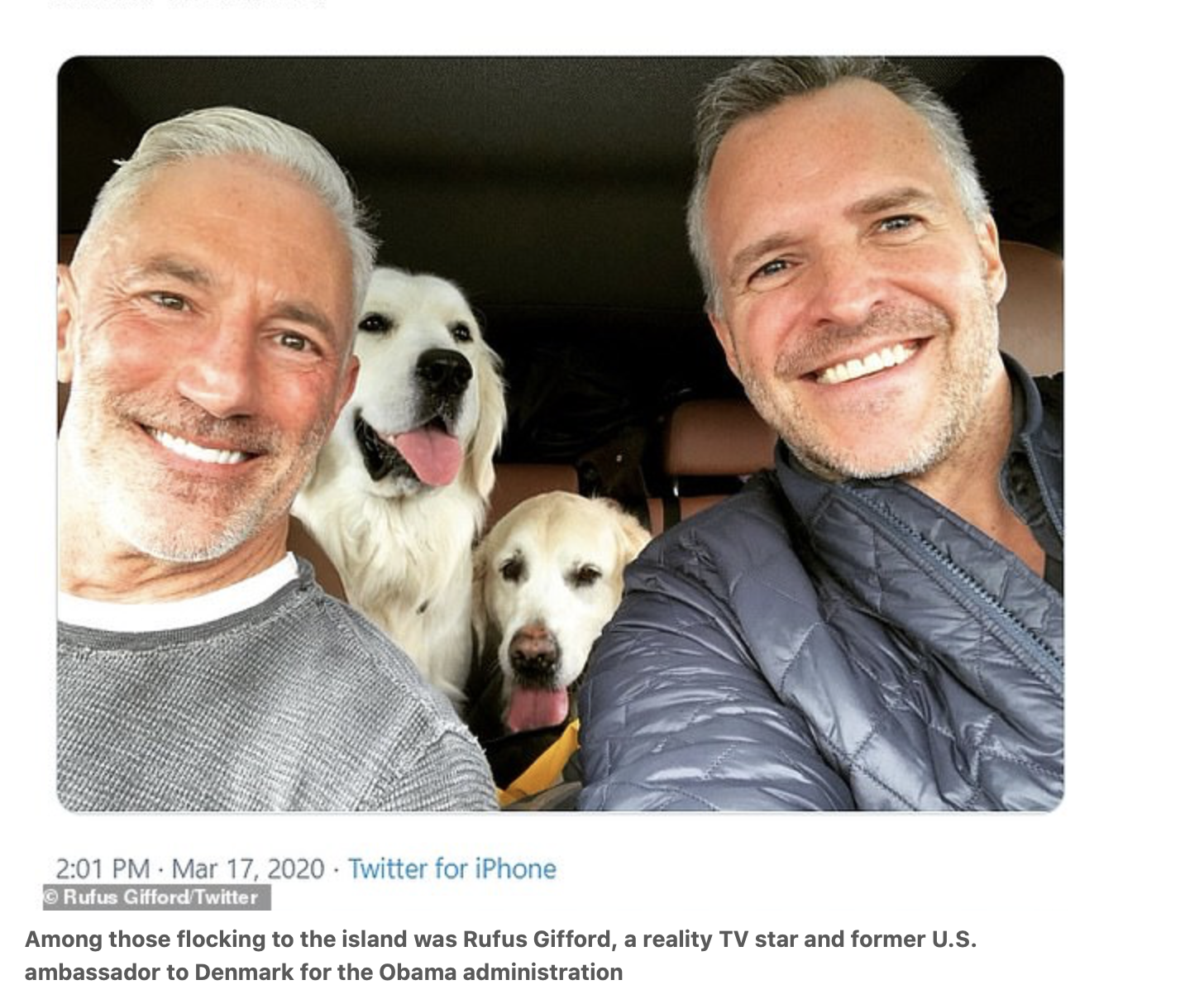
Rufus, husband Steve and the dogs head off for a most excellent vacay.

Rufus, husband Steve and the dogs head off for a most excellent vacay.

That’s assuming you care, of course; some people don’t.

In Greenwich and the Hamptons, the worst of the wealthy aren’t behaving themselves; rather, they’re buying the lifeboats off the Titanic, steerage class be damned.

The well-heeled shoppers are buying “pretty much everything they can,” said

Joe Gurrera, founder of upscale supermarket chain Citarella.

Gurrera, whose stores are known for carrying gourmet goods. “Instead of asking for one or two steaks on a tray, a customer will buy the whole tray. Then they’ll move on to shrimp, and buy all the shrimp, and then they’ll buy all the salmon steaks.”

Once they’re done demolishing the meat and fish section, they move on to the prepared foods, Gurrera said. “Instead of asking for a slice of lasagna, they’ll buy all of it. Then they’ll buy all of our root vegetables,” he added.

“Business is insane. We are doing far more business than in July and August,” said Gurrera, who has four stores in Manhattan, three in the Hamptons and one in Greenwich, Connecticut. “People are spending thousands of dollars at a time.”

Philanthropist and socialite Jean Shafiroff is accustomed to dining out on a nightly basis. But in the face of the coronavirus, she has taken the unfamiliar step of cooking for her husband, daughter and her daughter’s boyfriend. And it’s not been cheap.

“I’m spending $300 to $1,000 a day on food and supplies,” she said. The money goes toward chicken and salmon steaks, some of which she freezes, as well as for cleaning supplies and food for her dogs.

“I even bought the drugstore out of all its dental floss. I wanted to make sure I had enough, along with extra toothbrushes, soap, toothpaste and body lotions,” she said. “If I have to be quarantined, I better look nice.”

Shafiroff also is buying canned goods like the rest of America, but only out of an abundance of caution. “I can donate them later,” she said of the items like Progresso chicken noodle soup and Del Monte peas and carrots — brands “I had never heard of before.”

The stockpiling also has meant buying an extra freezer to store the goodies, as well as extra pots and pans for cooking, the philanthropist said.

She still goes to the beauty parlor often, including a recent trip to get her eyelashes done, but now dons a face mask.

“If I look bad, I will be depressed, even if I am just staying at home,” she explained. And on Monday, she also made a trip back to Manhattan — with a friend and her driver — to pick up “more clothes and the mail,” and a “big giant jar of Le Mer face cream.”

The sheltering experiment has already led to memorable family moments, like the night her daughter’s boyfriend, who is from Texas, made chili. It was such a departure from her normal life of fancy gowns and charity galas that she posted a pic of the stew online.

“It’s on my Instagram,” she said.

Well, even philanthropists have to eat; until they’re eaten themselves.

Of course, Greenwich and the Hamptons aren’t the only locations where one can shelter in space:

The rich flock to the Vineyard and Nantucket and guess who isn’t glad to see them?

Wealthy virus refugees flock to Martha's Vineyard and Nantucket

The ultra-rich are hoping to escape the coronavirus pandemic by fleeing to summer homes on Martha's Vineyard and Nantucket, drawing fury from locals who fear they will decimate supplies and bring the infection with them.

Although the summer busy season doesn't start until May, year-round residents say that the ferries are now packed with cars with New York and Connecticut, and private jets have been pouring into the airports, the Boston Globe reports. 

Full-time residents are incensed at the wealthy 'virus refugees,' warning that their own supply of groceries and essential goods is limited, and has to be brought to the islands ferry. 

'If you don't need to be here, if you don't have a reason to be here, it doesn't make sense for you to be here.' Gordon Healy, an assistant manager at a Martha's Vineyard animal shelter, told the Globe. 'I don't speak for everyone on the island, but I think it's a pretty common belief.' 

Mind you, Rufus and Steve may discover a fly in their butter if they get ill; perhaps from that flu that seems to be going around?

Nantucket Cottage Hospital, the island's only hospital, has warned that it 'is not built for a global pandemic.'

'We do not have an intensive care unit at Nantucket Cottage Hospital and we have limited number of ventilators,' the hospital said in a statement.

'We are working with limited medical resources and personnel on our small island.'

Fire sale price — literally (Amended: see updates)

hillcrest.jpg

[Original post] 64 Hillcrest Park Road, which was purchased for $2.965 million in 2013 is back on the market today at $2.195. I remember it as a gorgeous antique back then, and the new owners appear to have done a great job restoring it, but this cautionary note gives me pause: “Call the Listing Broker about what work is left to be completed in this home.”

I’d be tempted to make that call, and find out what’s still left to do. Nice home.

UPDATE: A reader notified me that there was a fire at the house June 5, 2017. The GT article on the fire quoted the Fire Marshall as saying there was “no structural damage”, so that’s good.

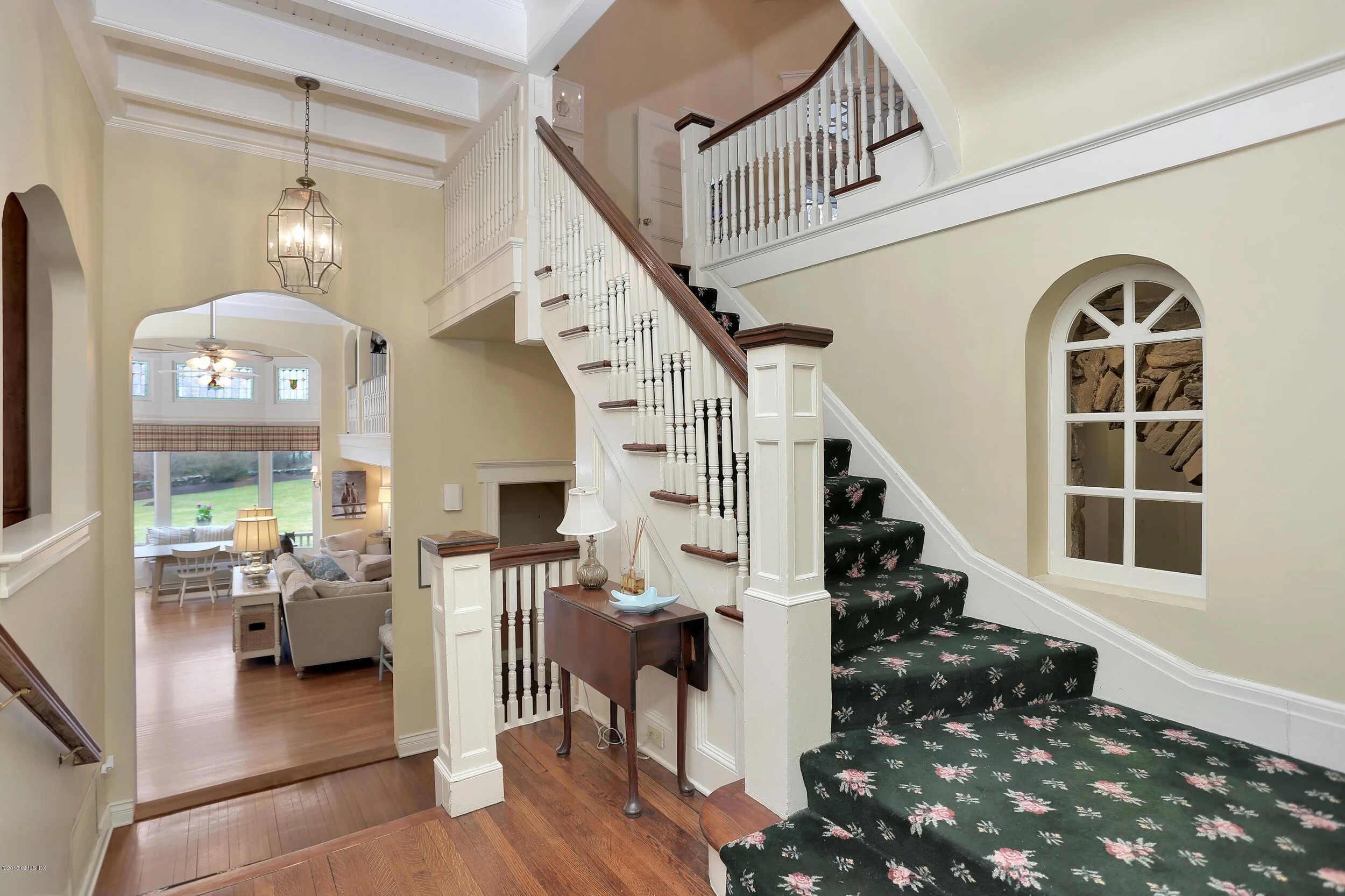
UPDATE II, and the important one: The pictures shown are “what the house could be if finished. The house has not been rebuilt after the fire.

The once and future interior, but not the current one

The once and future interior, but not the current one

DJ Reminded me that I’ve written about this before, back in 2017 when it was priced at $3.249. It was Guy Lombardo’s house.

It only takes one buyer, I guess

park.jpg

74 Park Avenue, Old Greenwich, is new to the market at $4.395 million. I thought that was a crazy-ass price, so I looked up its history to see what it sold for previously. Hoo boy, I’d missed this one, because it flashed across the listings in 2016 and sold in just 22 days for $4.7 — I tend to ignore new listings when I think they’re overpriced, figuring I’ll revist the issue when the market’s worked its magic on them, but I never noticed this one’s swift passage.

May lightning strike twice.

It does have an orange construction fence thing going for it in the neighboring yard; at least it has that!

It does have an orange construction fence thing going for it in the neighboring yard; at least it has that!

Imagine what's coming should the Republicans lose the Senate and fail to regain the House

Screen Shot 2020-03-17 at 8.02.56 PM.png

NBC Legal analyst and former federal prosecutor seeks ways to prosecute Trump for Chia Virus response

These people have literally been driven insane by their hatred.

There’s plenty more of this lunatic’s ravings at the link, but it’s exactly what you’d expect. The fact that NBC deems this clown worthy of airtime as an analyst of anything says everything that needs to be said about the National Broadcasting Corporation, once home to David Brinkley.

Screen Shot 2020-03-17 at 8.03.18 PM.png

John Tierney says, "Goodbye to the Handshake, and Good Riddance"

Sorry — I’m temporarily out of hand sanitizer

Sorry — I’m temporarily out of hand sanitizer

Aside from its questionable hygiene, it poses social problems as well, including who initiates the shake first, how hard to grip and for how long, and many more. Tierney offers a practice alternative with an impressive historical pedigree and, being John Tierney, throws in some science, too. Excerpts:

Now that a virus has finally stopped us from shaking hands, we have a singular opportunity to eliminate this custom once and for all. There’s a much better way to greet one another—and no, it’s not the fist bump, and it’s certainly not the ridiculous elbow tap, either.

The handshake has always been a poor form of greeting, and not just because it spreads germs. It needlessly complicates what should be a routine interaction. The fist bump is in some ways an improvement, simpler and more hygienic, but it, too, is problematic. Like the handshake, the fist bump can be awkward to execute, especially if you try it on someone from a culture where it’s taboo to touch a stranger or someone of the opposite sex. And the body language is all wrong. When we’re subconsciously interpreting cues from a stranger’s gestures, the brain doesn’t translate an oncoming fist bump as, “Pleased to meet you.”

But a gesture exists that works for all brains in all cultures: the “no-fear greeting,” as it’s known to yogis, an example of what the anthropologist David Givens calls the “palm-show cue.” All you need to do is bend your right forearm along your side and display your open palm near your shoulder. Exposing an open palm, as when we’re waving to a friend or stretching out upturned hands to ask for help, is a universally recognized sign of non-aggression. We do it naturally. It evolved from ancient circuits in the brain and spinal cord that cause vertebrates to make themselves look smaller to indicate meekness or friendliness. Just as dogs instinctively lower themselves into a crouch to signal passivity, we instinctively drop our shoulders and open our palms, and these gestures are instinctively understood.

Let me reassure those who want to resume shaking hands after the pandemic that we shouldn’t casually abandon a cultural tradition by banishing all handshakes. The gesture has an undoubtedly long and illustrious tradition, but not as a greeting. Instead, we need to restore it to its glory days of the ninth century BC, when a handshake still meant something. In fact, it meant so much to Assyrian King Shalmaneser III that he commissioned one of its earliest depictions. A bas relief on the limestone base of his throne showed him grasping the hand of a Babylonian king, Marduk-zâkir-šumi—and they weren’t just saying hello. They were displaying a serious commitment.

When the Babylonian king faced a rebellion from his younger brother in 850 BC, Shalmaneser came to the rescue and spent two years helping to vanquish the rebels. The carving proclaimed their victory and continuing alliance. Later, when Shalmaneser confronted his own set of rebels at home in Assyria, the Babylonian king returned the favor. He understood his obligation. After all, they’d shaken on it.

The ancient Greeks took this gesture seriously enough to give it a name, dexiosis, “the joining together of the right hands.” They featured it on coins and in statues celebrating political and military alliances. So did the ancient Romans; leaders ever since have been shaking hands to seal treaties and other deals. But along the way, the handshake was also used as a greeting, perhaps because an extended right hand demonstrated that you weren’t holding a weapon. Presumably, people figured that the danger of getting germs from a stranger was less than the danger of being stabbed.

Exactly how to shake hands became a complex subject for Victorian arbiters of manners, and the angst has never gone away. Who shakes with whom? How firm should the grip be? How long should it be held? The fatal faux pas are revealed in web listicles like the “Seven Super Revealing Things Your Handshake Says About You” and the “Top 10 Bad Handshakes,” which include the Wet Shake, the Lingerer, the Bone Crusher (especially painful for people with arthritis and women with large rings), the Lobster Claw (using your thumb to pinch their fingers), and, of course, the Limp Noodle. The current edition of Emily Post’s Etiquette offers a four-step guide to shaking hands, including the advice to “use about as much pressure as it takes to open a refrigerator door”—whatever that means.

Why go through all this trouble with someone at a cocktail party who you’ll never see again? Why risk inadvertently sending the wrong message—or picking up the wrong pathogen? To signal a friendly hello, all you need is the no-fear greeting. It’s similar to the gesture we make when pledging an oath, or that greeting in old Westerns from Indians who say, “How,” but you keep your elbow at side instead of raising it. Star Trek fans will notice the similarity to Mr. Spock’s Vulcan greeting, except that you hold your fingers naturally instead of splaying them in a “V.” ….

And much more, all of which is good reading.