Order that chest freezer now, if you still can

Screen Shot 2020-04-27 at 1.55.06 PM.png

Tyson Foods chairman warns that the nation’s food supply chain is breaking

The plants are shutting down but worse, farm producers are slaughtering their animals and composting them and not raising more, because there’s no place to send them. Just like the reusable bags and mass transit systems they were so fond of, the eco-warriors will soon discover the limits of relying on that friendly farmer’s vegetable and egg stand up the road.

Best recommendation of Greenwich may be our lack of mass transit

subway.jpg

Reader Hankster sends along this delightful vignette:

City subways filled with passed-out passengers, urine, and trash.

The subway has become a filthy, deadly homeless shelter on rails, according to disgusted transit workers who have taken to recording and photographing the horrid conditions.

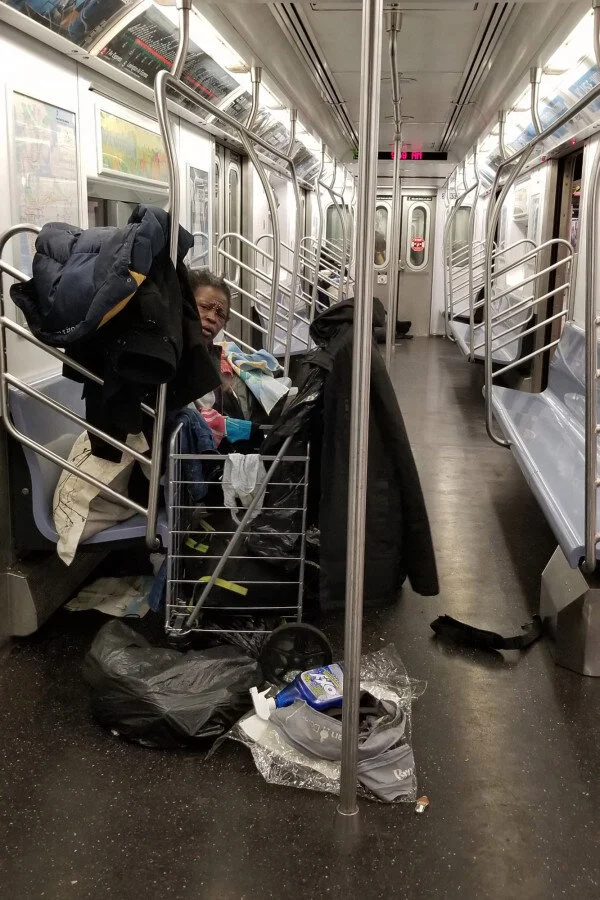
One video shot earlier this month shows cars of homeless men and women stretched out and slumbering away on an E train. In another filmed Thursday, a man puffs on a cigarette while standing on an E car. A homeless woman was photographed sitting on a 2 train mid-afternoon Wednesday next to an overflowing grocery cart and plastic bags.

And in one video, a man uses the space between the cars on a 2 train as a toilet while stopped in a Brooklyn station.

“That’s straight disgusting, man,” the shocked MTA worker who saw him exclaims in a video. “With the coronavirus, that’s f–king disgusting.”

Workers say the transit systems has never been dirtier or more packed with the homeless as ridership has declined with stay-at-home restrictions for all but essential workers.

The images of “essential workers” one MTA employee posted on a Facebook page were of passed-out passengers.

“Thank you, MTA. I have to deal with homeless, mental illness and now dudes from jail. Every f–king night there is a mother f–king problem. … While our trains do not get clean. I have to wipe my own cab and air it out. S–t is for the birds,” the worker wrote.

“They’re coughing. They’re peeing. They’re defecating in the cars. We don’t know if they have COVID-19. They’re up in our faces every single day as well as the other people who are taking the trains to and from work every day.”

De Blasio, who uses a chauffeured SUV to move around the city, denies there’s anything wrong with this situation, and as his fellow communists tighten their grip on the city, the “new normal” can only add to the suburbs’ appeal. That assumes the new, transformed economy will generate paying jobs in the next few years after the election, which may be assuming too much.

Just to ensure that NYC won't recover

First things first

First things first

Delighted with her billion-dollar-wasted performance doing nothing for the mentally ill, de Blasio appoints his wife to head up a “racial inequality task force” to rebuild and transform the city.

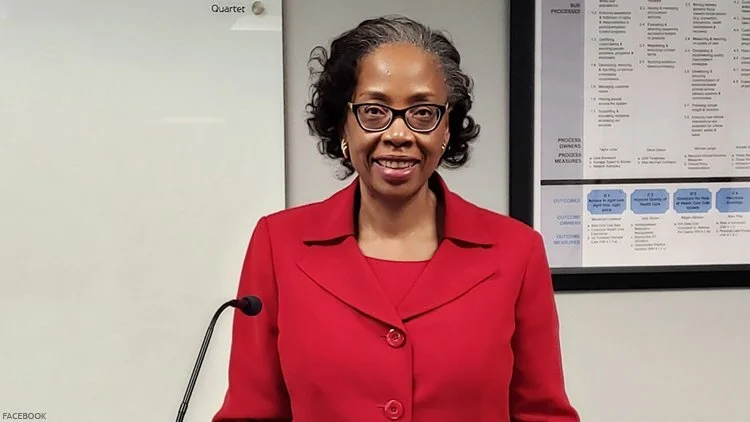
Mayor Bill de Blasio announced Sunday that he has put First Lady Chirlane McCray in charge of a special coronavirus task force — insisting her work with her embattled ThriveNYC initiative made her perfect for the new job.

McCray will work with Deputy Mayor Phil Thompson in leading a task force on racial inclusion and equity to make sure the Big Apple rebounds as a “better and more just society than the one we left behind,” Hizzoner said.

The mayor insisted that the First Lady deserved her place at the head of the new initiative because of the ideas she generated  — defying critics and praising her work with her $250 million-a-year mental health plan.

“In terms of fighting inequality, Thrive has gone to that point and in many ways even farther,” he insisted, praising his wife’s work in “putting a light” to serious issues, making her an obvious choice for the new role.

Critics have charged that McCray’s ThriveNYC program is both ineffective and ripe for abuse as a political cudgel.

The crisis has highlighted the “many things that are broken in our city and in our country,” Hizzoner insisted at Sunday’s press briefing, calling it a “clarion call” for change.

“We don’t just need a recovery, we need a transformation,” he said.

Never let a good crisis go to waste.

Going south?

Bangor, ME

Bangor, ME

Some random, loosely connected musings on a Sunday morning

I had some hours to kill yesterday so I drove up to Bangor to see Pal Nancy’s and my first home and just see how the town’s fared in the past 40 years. Not well.

Even back in 1981 Bangor reminded me of Bridgeport, a once vibrant city of faded glory. It was dying then — had been for decades — and while, like Bridgeport, it had its boosters, it was clear to me that it was doomed. Nothing in yesterday’s brief visit proved that wrong.

The streets, never overly active, were empty, a product of the shutdown. But the main streets are littered with retail shops that closed long before the state ordered them to, and they’re surely not coming back.

A visit to Pal Nancy’s and my former house in East Holden was even more depressing. When fresh out of law school I dragged poor Nancy up there, we purchased an 1835 farmhouse and set about restoring it. The narrow country road we lived on, six miles off Route One, held a mixture of housing then, house trailers interspersed with fine homes, and other farmhouses being brought back by couples our own age. The trailers are still there, but the good houses are good no longer. Our own house, which Nancy and I lavished so much time on, retains the roof we put on forty years ago and shows it, the trim is peeling, and the meadows surrounding it have been reclaimed by the forest. I saw no car up on blocks on its lawn, but surely that will come.

Portland will probably recover from this disaster, eventually and temporarily, because it has attracted some technology companies and some health and insurance businesses, and their employees will stay in the Portland area, below what is referred to here as “ the Volvo Line”. The restaurants that made Portland a dining hub and attracted national media attention will probably not come back, but new ones will; there’s something irresistible to rich yuppies about investing in restaurants featuring heirloom potatoes and John Dory scallops in leek sauce. How long that recovery will last is an open question, though, as the state collapses around it.

Portland may see a temporary reprieve, but I don’t think Bangor will. Businesses that were barely clinging to survival before are gone, and what fool would put new capital into a venture that has a proven track record of failure? The same is true of all the other collapsed mill and lumber towns in the state; they won’t be back after this.

I’d considered buying a house up here, but no longer. 3/4 of the state is terminal, and the immigrants in southern Maine are busy turning it into their native Massachusetts, capturing the governorship, the House and the Senate, and undoing the budget constraints imposed by the hated Governor Le Page. They’ve already run up spending an additional $800 million in just the first two-year budget since his retirement, wiped out his surplus, and pushed into a $200 million deficit. With an expected unemployment rate of 30% looming, “social spending” with its concomitant ruinous taxation will be arriving soon. That, in turn, will drive existing businesses out and dissuade new ones from coming in, and the Prius squad will follow their employment.

In 1990, when Coffee by Design opened the first independent coffee shop there, the commercial vacancy rate in downtown Portland stood at 47%. That changed over the ensuing years as a community of newcomers formed, attracted by coffee shops, book stores, and concert venues. Say what you will about the political views of these people, they did transform the city and dragged it from its decaying somnolence. Property values soared, and the city became far more than its former identity as a place where drunken fishermen gathered in Old Port dives and punched each other’s teeth out.

There is no place to gather now, and the community has scattered. Surely that will come back, slowly, as new entrepreneurs take over failed businesses, and people emerge from their hiding places, but it’s going to be a slow process, and it will depend on how many employed people stick around.

Maine’s population is already the oldest in the nation, as young people have fled and retirees stay; the only change I can foresee in that equation is that the retirees will join their children in their flight.

Last one out, turn off the lights.

A drab, joyless existence in Vacationland

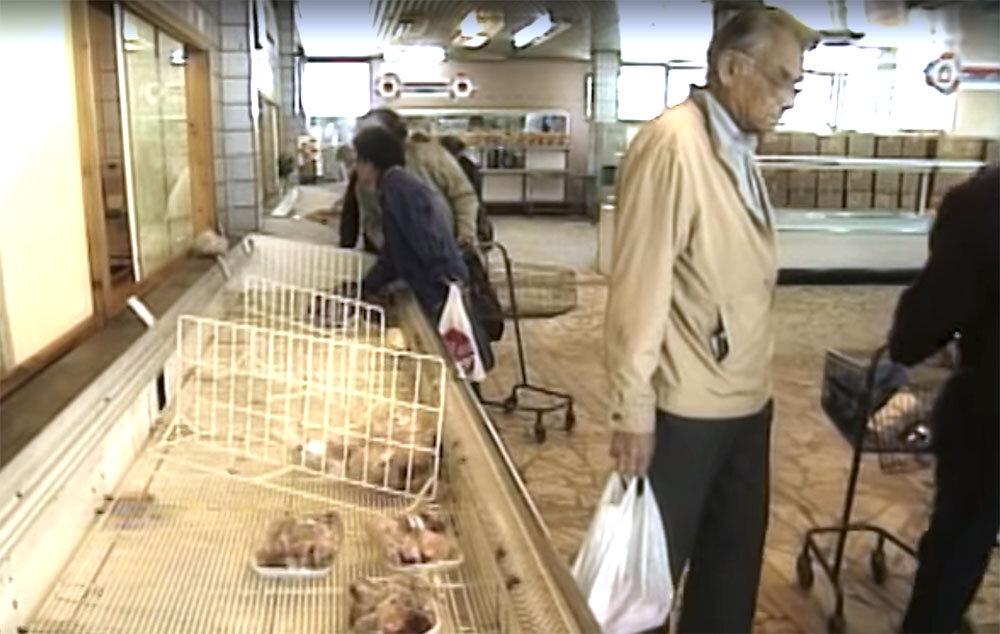
Soviet Union supermarket, 1990

Soviet Union supermarket, 1990

It’s taken a while to recognize what’s going on up here in the frozen north, but I think I’ve finally realized the problem: no smiles, even behind the paper masks so many people are wearing.

A spirit of glumness pervades the supermarket I visit once a week. Solo shoppers, none accompanied by children, spouses or friends, sullenly stock their carts while avoiding any comments with other shoppers and maintaining absolute silence. Shoppers are met at the door by an employee counting heads, and the message is clear: do your business and get out, because others are waiting — no dawdling!

Inside, shoppers seemed dispirited, their mood no doubt soured by the lack of choice; you want chicken? There might be a few packages of breasts, lots of wings (since restaurants are no longer in business and the market for them has disappeared), and that’s it. Same limited inventory for pork and beef, and though you might still find toilet paper, it’s probably a 3M product diverted from their sandpaper line. Life in a socialist paradise.

And no interaction, none at all. People are completely silent, even in checkout lines or at the self-serve kiosks. Not that supermarkets were ever great conversation hubs, but people did used to speak to each other, perhaps to comment on a price, or the weather, or to ask a question. You might even occasionally hear laughter. None of that is taking place now, and the atmosphere is not helped by the brooding presence of an army of scolding Karens, ready to pounce on percieved violators of the new social order. In short, it’s oppressive and depressing, yet this “social interaction” is likely to be the sole outside activity for the week. It’s awful.

The hallmark of committed communists was always their complete lack of a sense of humor, and their “that’s not funny!” approach to life has spread to our campuses and media. Now it’s infected the entire society, and that’s sad.

First it was reusable bags, then mass transit and urban crowds. Hey Greens, suck on this

Screen Shot 2020-04-24 at 10.29.34 AM.png

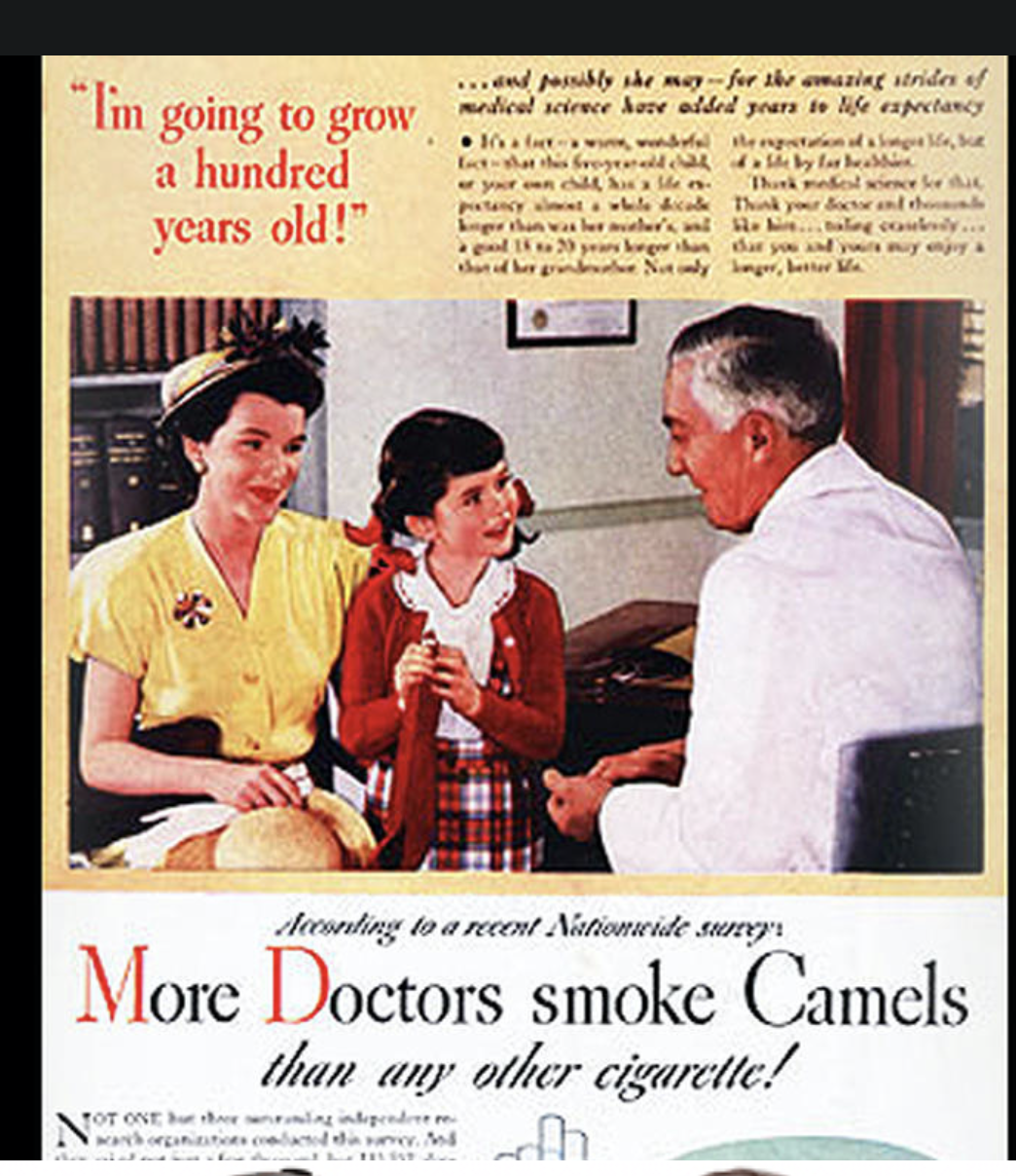
French researchers suggest reaching for a Lucky instead of a sweet

French researchers are planning to trial whether nicotine patches will help prevent - or lessen the effects of - the deadly coronavirus

Evidence is beginning to show the proportion of smokers infected with coronavirus is much lower than the rates in the general population. 

Scientists are now questioning whether nicotine could stop the virus from infecting cells, or if it may prevent the immune system overreacting to the infection.

Doctors at a major hospital in Paris - who also found low rates of smoking among the infected - are now planning to give nicotine patches to COVID-19 patients.  

They will also give them to frontline workers to see if the stimulant has any effect on preventing the spread of the virus, according to reports. 

It comes after world-famous artist David Hockney last week said he believes smoking could protect people against the deadly coronavirus.

MailOnline looked at the science and found he may have been onto something, with one researcher saying there was 'bizarrely strong' evidence it could be true.  

One study in China, where the pandemic began, showed only 6.5 per cent of COVID-19 patients were smokers, compared to 26.6 per cent of the population.

Another study, by the Centers for Disease Control in the US, found just 1.3 per cent of hospitalised patients were smokers - compared to 14 per cent of America.

The researchers determined that far fewer smokers appear to have contracted the virus or, if they have, their symptoms are less serious.

'Our cross-sectional study strongly suggests that those who smoke every day are much less likely to develop a symptomatic or severe infection with Sars-CoV-2 compared with the general population,' the study reads. 

'The effect is significant. It divides the risk by five for ambulatory patients and by four for those admitted to hospital. We rarely see this in medicine.'

Next myth-buster; computer models that pretend to predict the temperature thirty years from now.