Providing free drug dens for the homeless (at $700,000 per unit) benefits no one except government bureaucrats, contractors and lawyers. D’uh.
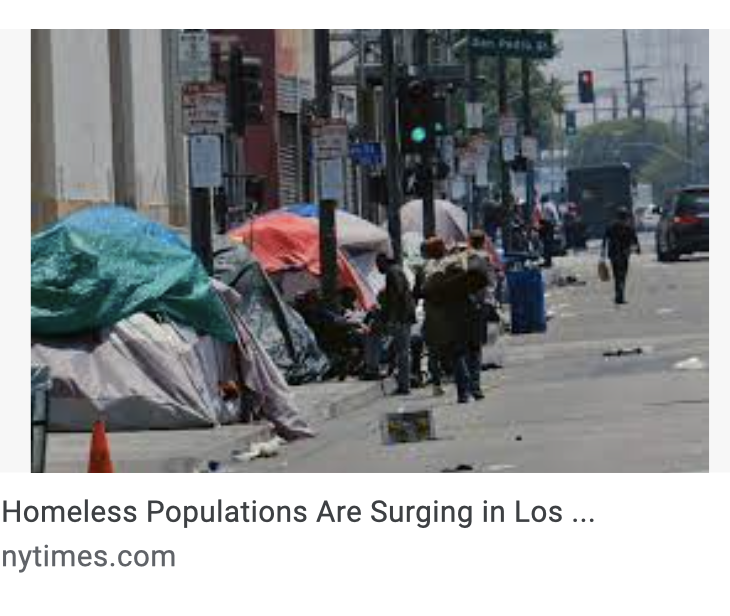
In 2016 influential political leaders, activists, and media outlets in Los Angeles said they had a simple solution to homelessness: build more housing. Echoing an argument heard across the country, they claimed that rising rents have thrown people onto the streets and that by directly providing free “permanent supportive housing,” cities can reduce the number of people on the streets and save costs on emergency services.
In response, 77% of Los Angeles voters approved a $1.2 billion bond for the construction of 10,000 units for the city’s homeless. That commitment made Los Angeles the most significant testing ground for the “Housing First” approach that has become the dominant policy idea on homelessness for West Coast cities. Even before the passage of the bond, the concept’s creator, Sam Tsemberis, was lavished with praise by the national media. In 2015, the Washington Post wrote that Tsemberis had “all but solved chronic homelessness” and that his research “commands the support of most scholars.”
[snip]
Five years in, the project has been plagued by construction delays, massive cost overruns, and accusations of corruption. The Los Angeles city controller issued a scathing report, “The High Cost of Homeless Housing,” which shows that some studio and one-bedroom apartments were costing taxpayers more than $700,000 each, with 40% of total costs devoted to consultants, lawyers, fees, and permitting. The project is a boon for real estate developers and a constellation of nonprofits and service providers, but a boondoggle for taxpayers. The physical apartment units are bare-bones — small square footage, cheap flooring, vinyl surfaces — but have construction costs similar to luxury condos in the fashionable parts of Los Angeles. Meanwhile, unsheltered homelessness has increased 41%, vastly outpacing the construction of new supportive housing units. Los Angeles magazine, which initially supported the measure, now wonders whether it has become “a historic public housing debacle.”
You can go to the link for a lengthy synopsis of how putting drug addicts, the mentally ill, and alcoholics has worked out in the cities that are trying these “no judgement, no rules” houses (I posted here last month that San Francisco was proving clean needles and instructions on how to inject drugs in the arsehole — for those no longer capable of finding a vein) have worked out, but I imagine you can guess.