So an alcoholic and a trio of transvestites open a daycare center, and you'll never guess what happened next!

“The women of manchester” : Sally Dreckmann, 52, the day care owner; and her employees Traci Innie, 51; Kaitlin Filardo, 23; and Jessica Foster, 23, all of Manchester, were charged with 10 counts of endangering the welfare of a child,

New Hampshire daycare workers sprinkled melatonin in children’s food unbeknownst to parents, police say

The current (check in tomorrow for the next one) lefty outrage is over a football player, speaking at a women’s Catholic college commencement ceremony to Catholic young women, telling graduates that staying home and raising children can be more fulfilling than a career spent in a cubicle. Better to entrust your children to professionals like these, because … reasons.

Solar energy bust

Here’s an article on Australia’s struggles with converting the country to solar. It’s interesting in itself, but the real meat is found in the comments, where a number of engineers weigh in, arguing a bit with each other, but, combined, provide a better look at the pitfalls awaiting us; something the media’s flying monkeys can’t do.

ICMYI, the Biden Administration released a plan to cover 22 million acres of western lands with solar panels. That is an area about the size of Ohio. The Biden Administration is crowing that it will generate enough energy to power 3.5 million homes. Would anyone care to bet on that?
Hey, but 3.5 million homes sounds pretty good until one realizes there are over 14 million homes in California.
This is the level of thinking that creates the results we see in Australia.

Biden Solar Plan

GlobalTrvlr

  • That is 34,375 square miles. You could put enough solar panels to more than power the whole US by about 4x. However, it would only do so for a few hours per day, and good luck trying to collect all that energy and shipping it to where it could be used.

    Where did you see him crow about that? And is it in the same vein as his other lies like he inherited 9% inflation?

    • piscorman GlobalTrvlr5 hours ago edited

      I didn't see Biden crow about it. The Biden Administration's report made the claim, which you can see at the link (click Biden Solar Panel to see their report). As you note, this only works for a few hours a day.

      I don't know where you get your number of powering the whole US by 4x. The report at the link says it will power 3.5 million homes. For now, I'll go with that. You can Google it, but there are give or take 14 million homes in California. So, covering the west with an area the size of Ohio in solar panels will meet 25% of Cali's needs. This is the data from the study.

      Reports and studies tend to use average values for usage. However, power grids must be configured to the maximum. So, how would the thing work in the middle of a North Dakota winter when it is 20 below zero with no wind? These Green Energy grids must meet that requirement.

      • GlobalTrvlr piscorman2 hours ago

        Here is how I got to the 4x number. I am in the electricity space. I have done economics, proposals and design build for the electrical portion of projects or turnkey for every kind of generation: nuclear, coal, coal gasification, gas simple cycle, gas combined cycle, geothermal, hydro, wind, solar, diesel, and storage from pumped storage and Batteries. In the last few years I have been working on the economics of wind, solar, islanded systems, hybrid systems, etc. I know the average acreage per MW or per 100MW.

        Recently, Elon Musk has been claiming that you could serve all of the power in the US with a 100 square mile plant in Arizona. The peak demand of the US has been about 750GW once a year, and as you state, you have to plan for peak plus reserve. So, if you pick texas, or AZ areas which is the most favorable place, and you use a 21% conversion of sunlight to electricity, and the given sunlight per sq meter is about 1kw. which gives .21kw per square meter. convert that to a square mile you get around 543MW. 100 sq. miles would be about 54TW. In 2023 our peak day was 750GW, and our average hourly use was 456TW. So, obviously you can't do that. So, then he also was quoted as saying he need 100 mile by 100 miles. That is not 100 sq miles, that is 10,000 sq miles. So, 10,000 sq miles would be about 540TW. So, theoretically you could run the US for the average consumption, but not the peak. If you have 38,000 sq miles, which is around 22 million acres, that would scale up to 20,500 TW, so you could power the US with that. But, not for long.

        Now, those are basically using ever sq inch as a solar panel, given the spacing needs, and the needs for control houses to collect and convert, and substations and transmission stations to carry it away, you would really be down to about 60% of that. Now, given that they never run at 100% nameplate because of the temperature issues, they only have 4 hours of peak, and only about 10-12 hours of any kind of generation per day, the average output of a solar farm is 20%. Applying those numbers to the 20,500 theoretical would bring you down to about 2,460TW, so that is why I said it could provide about 3-4x what the country needs.

        But, to get your mind blown, think about how many MWH of battery storage you would have to have to provide 456 TW per hour for at the minimum 12 hours, and then add in all of the solar panels you would need extra just to charge them while you are still producing 456TW/ hour to the grid during the day.

        BTW, whenever you see the "could supply XX million homes" just turn your head. Those are BS numbers. It is using 100% of the nameplate rating of either wind or solar, divided by a ridiculously low average hourly usage for a home. But neither wind or solar EVER put out 100% of nameplate. Peak on wind is usually around 75% once or twice a year and averages 33% for the year. Solar can reach 80% of nameplate, but average is only 20% of nameplate. Of course both of those can go to zero, sometimes for days or over a week on end.

        • piscorman GlobalTrvlran hour ago

          The 3.5 million homes was provided by analysts in the Biden Administration, as was the 22 million acres of solar panels to provide it. You are claiming that the Biden Administrations proposal is pure BS. I agree.
          This is the gang that spend $7 billion for 7 EV charging stations.

          That's great you know all of the engineering about Green Energy. You must also know about the fallacies of large-scale engineering (by the way, I've published papers in this field). But I digress.

          Economic Fallacy: Green Energy is free. Yes, the availability is. So, is the availability of water, gold, silver, and other stuff. The cost is from the exploitation of the material. It takes money to get free water to the citizens of a city. So too it is with Green Energy. I'm glad you've looked at the economics.

          Engineering Fallacy: This is known as the Diseconomy of Scale: because things can be built at a small scale does not mean they will scale up well. The Big Dig (a tunnel under downtown Boston for a freeway) is an example of that principle. Many Civil Engineering firms can dig a tunnel, but building one big enough for a freeway under Boston is so much different in scale as to be different in kind. The original bid was $2 billion and the final cost was over $20 billion. That will surely be the case for Green Energy.

          Power Density: it takes about 100x more land to generate electricity with solar than with Nuclear. Fossil fuels are somewhere in between. The greatest demand for power is in the urban areas, where land is most expensive and least available. Therefore, Green Power will necessarily be generated away from the locations of greatest demand. This will require a significant upgrade to the power distribution systems. That's not going to be cheap.

          It Looks Silly: Because Green doesn't provide energy 24x7 it must have batteries to store the power for demand when the sun isn't shining or the wind isn't blowing. It is fair to look at Green Energy as battery chargers. So, a Green Energy system will charge batteries at a remote location to transfer the electricity to a city to charge another battery. That sounds expensive. Oh, and you know this, the voltages must be stepped up for transmission. There are a whole set of circuits to be added to do this work. All of that so a solar panel can charge a battery to charge another battery at a remote location. That doesn't sound economical to me.

          As an engineer, I'm sure you know that prototypes are a good way to explore options and risks to find the best way forward. California stepped up and volunteered itself as a prototype. How's that going? They are having brown outs and telling people to to charge their autos. Also, Newsom petition to keep the Diablo Nuclear facility open. It seems to me to be wise to figure this thing out in California first.

          If you look at the Netherlands they are taking farm land to put these things out. If people have nothing to eat, what good is the Green Energy. So, I would strongly urge the proponents of this thing to show the rest of us what the real costs are and how it can work, by making California go entirely Green first. When that's done, then we'll be ready to take on the bigger challenges.


Greenwich housing prices

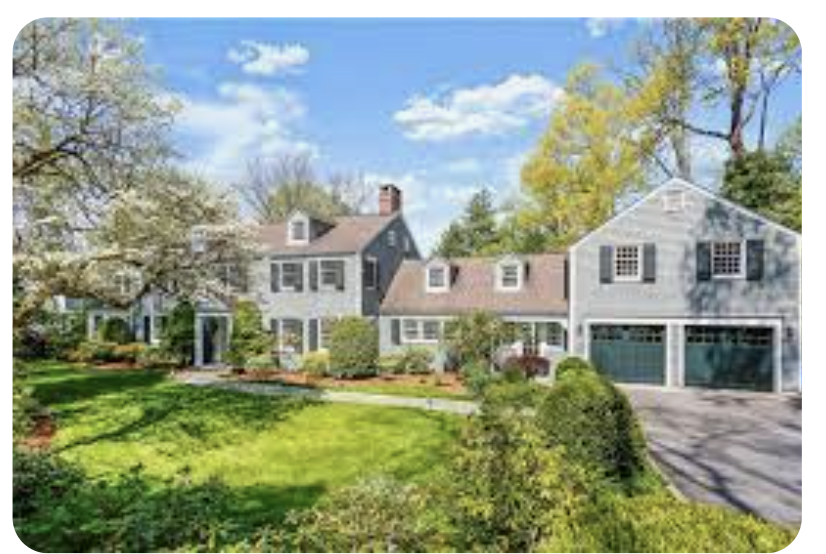
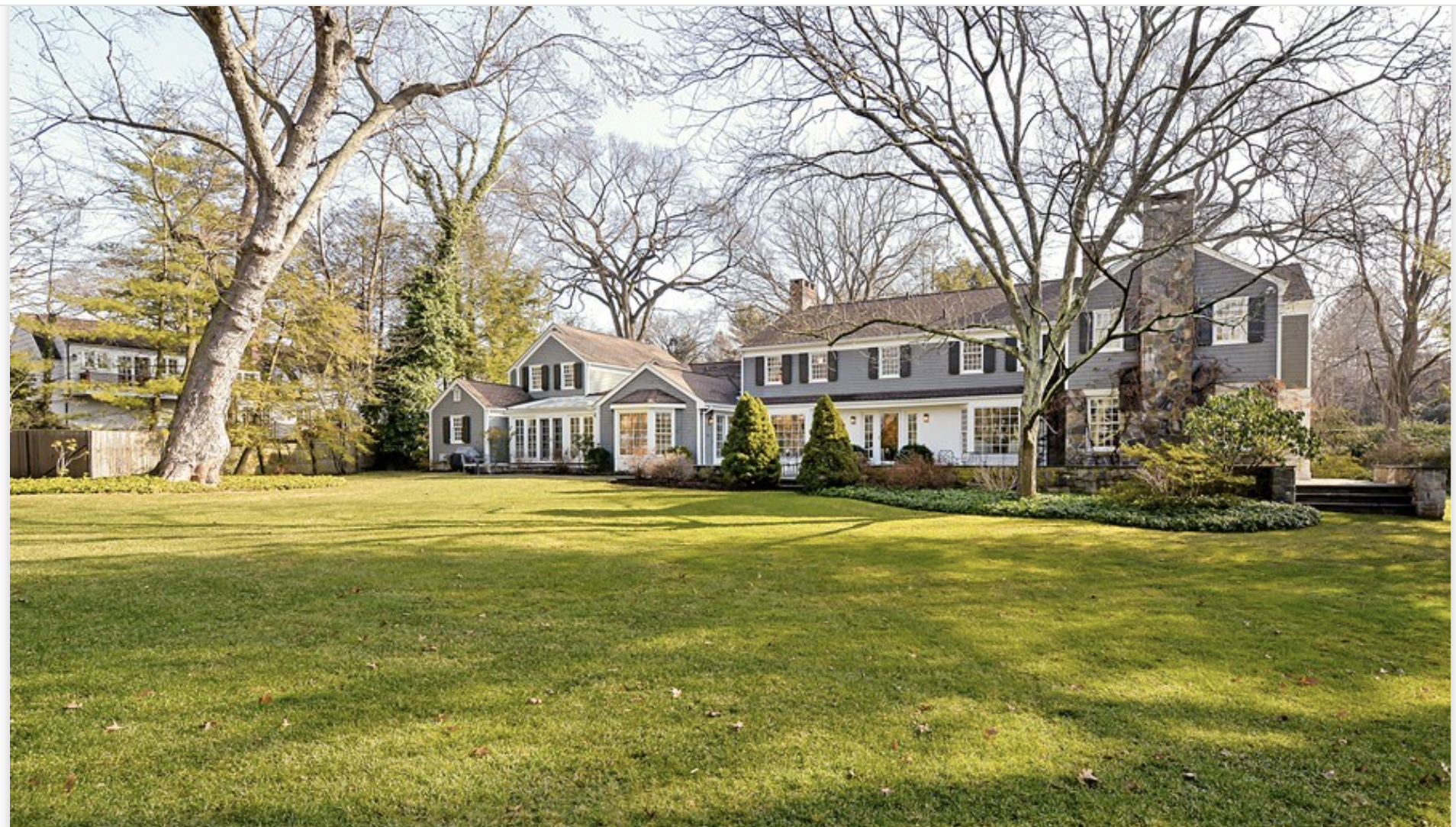
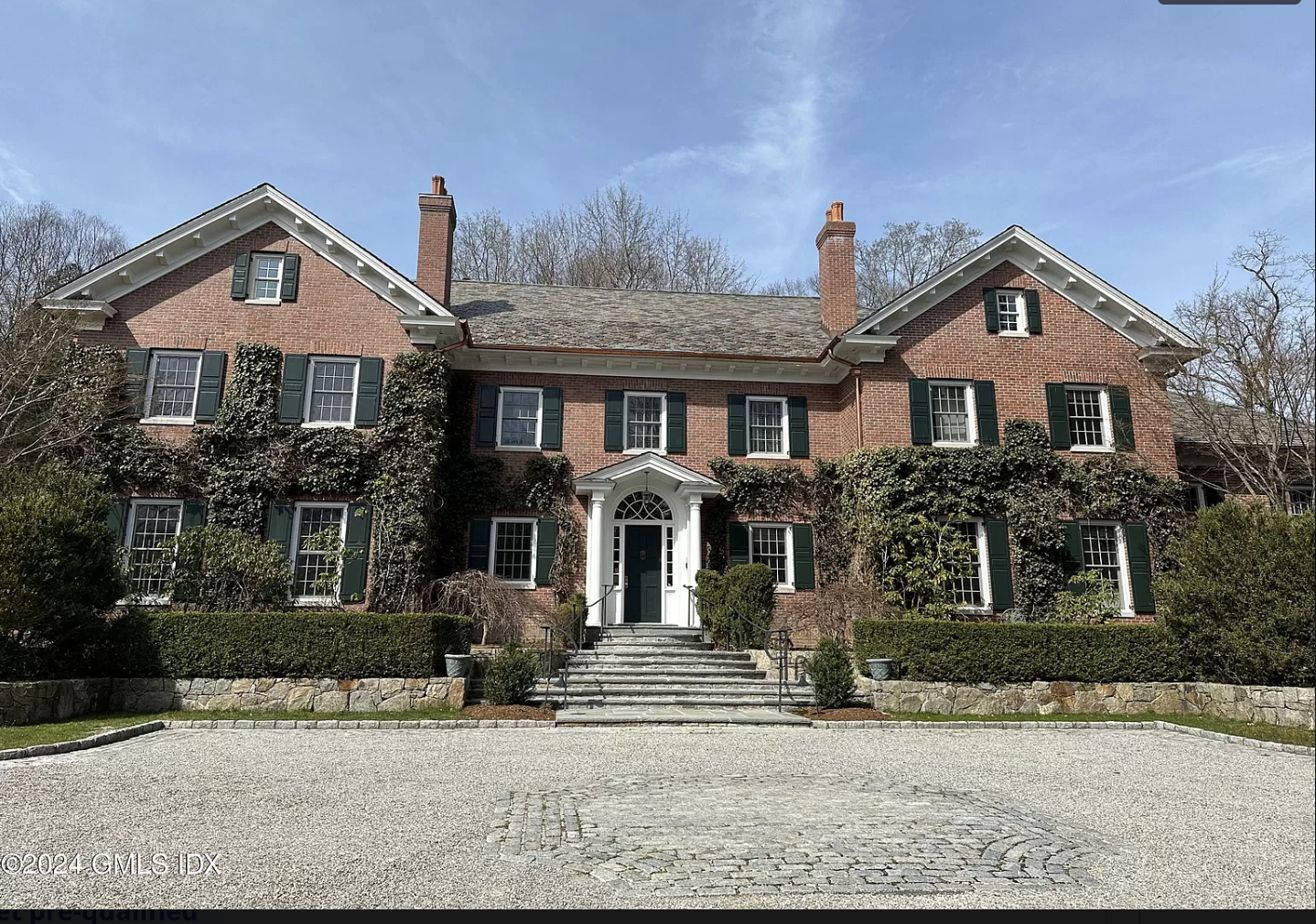
24 Gilliam Lane (expanded and modified by successive owners, but basically the same 1954 house)

I noticed in the post below that the cost of that Jacobsen mower in 1954 was $375, and, curious, I plugged that number into this inflation calculator to see what its present value would be: $4,71.02. That’s a bit pricey, but I don’t think similar lawnmowers cost much more than that today.

So that set me thinking about what’s happened to Riverside housing prices over the past 70 years. Hmmm. They have outperformed lawnmowers, certainly, and that’s completely transformed who can afford to move in now. The current value of the $50,000 my father paid in 1954 for a beautiful house on Gilliam Lane,with an acre-and-a third of land is, according to that calculator, $582,802.97; the smaller house my grandmother bought for $15,000 in 1957 would cost $167, 374,38 today. I’m guessing here, but I’d be surprised if those houses couldn’t sell for at least $4.5 and $1.750 million, respectively, in 2024. Obviously, changes have been made to them over the years, and, especially in the case of Gilliam Lane, some expansion has been performed, but the point is, someone with a $600,000 house buying budget today won’t be looking on Gilliam Lane or even William Street — or anyplace in Riverside, for that matter.

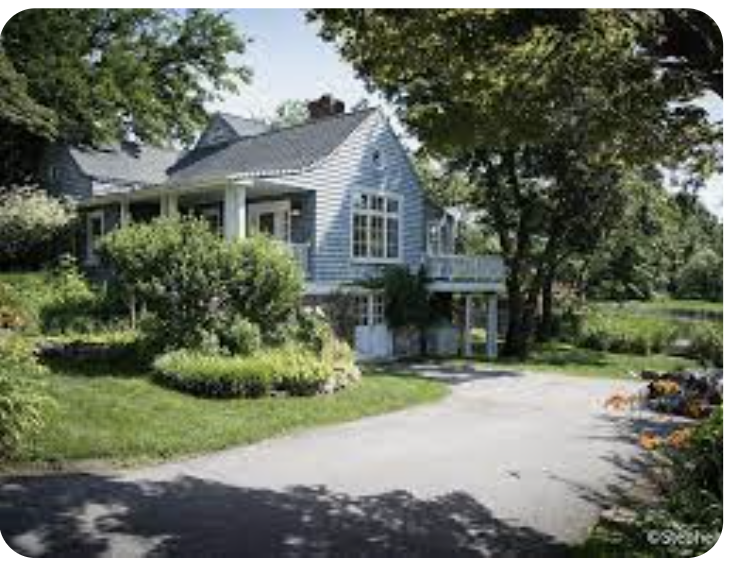
granny’s “magic cottage”

I wouldn't be so hard on the guy — the same strategy worked for my father for years

'Too bad I need to eat!' Store sparks outrage with post for 'volunteer' job

  • A pharmacy in Toronto is facing backlash online after posting a 'volunteer' job ad

  • Shoppers Drug Mart has removed the post and claims it was made in error [Spoiler alert: it wasn’t]

A Shoppers Drug Mart pharmacy in downtown Toronto posted the unpaid position on job site LinkedIn on Thursday, CBC News reported.  

'Your role as a volunteer is crucial in ensuring that our customers have a positive and seamless shopping experience,' the listing read. 

The unpaid role would require 'assisting customers, restocking shelves, and organizing inventory.' 

The job was advertised by Emil Harba, the pharmacist owner at the Shoppers Drug Mart located at King and Peter in Toronto. 

Shoppers Drug Mart has since claimed that it was put online by mistake. 

… However, Harba told [CBC] that the position was posted intentionally but he was only 'trying to help people seeking Canadian experience.' 

'The post wasn't for any bad intentions, it was for good intentions,' he told the publication.

Harba explained that he often receives messages from people who want to gain work experience but that once he was told by the company it would not be allowed he immediately took the listing down. 

Bah humbug: Pharmacist Harba should have stood his ground and insisted on employing this time-tested approach to labor relations.

When my parents sold their W. 11 St. brownstone and moved the family out to Riverside, the property they bought on Gilliam Lane had 1 1/3 acres, almost an acre of it lawn, and that posed a daunting weekend mowing job for anyone pushing a mower. So he bought a 1954 Jacobsen mower, with sulky, to ride on while slicing down those pesky blades. As it turned out, a riding mower was a novelty back then, and the local teenage boys (Bruce Moger? Dan? Dickie Wallace? Still around?) competed with one another to do the job for him, for free. (it’s important to note that, kind-hearted man that he was, father never took advantage of the boys, and so never charged them for the privilege).

That worked for quite a few years, until the teens grew up and wised up and, sadly for us, the Fountain boys reached an age (10, if I remember) to take their place. Still, that purchase worked out just fine for “The Commander”, and the boys gained valuable experience that surely benefitted them as they proceeded through Yale and Cambridge and on through their successful careers.

A slow seller

(blame plate tectonics for this slide)

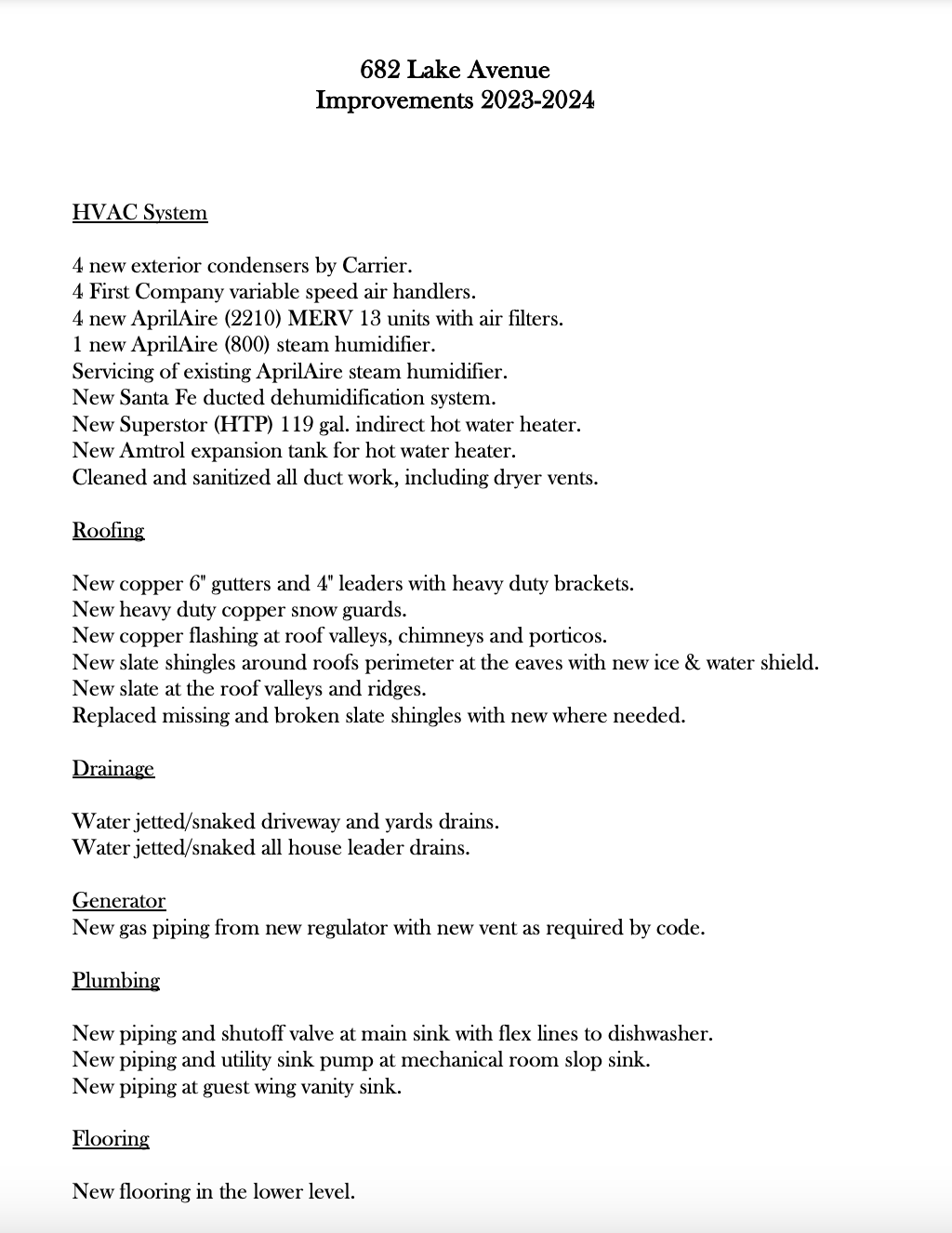
682 Lake Avenue (corner of Clapboard Ridge) has lowered its price to $5.395 million. The owners paid $4.950 million in May 2023, performed some basic maintenance* on the 24-year-old house and relisted it last month for $5.950. That has proven to have been a tad aggressive.

But, so far, they haven’t done as badly as their predecessors, who paid $5.8 million when it was new in 2001, and sold it to these owners in ‘23 for the aforementioned $4.950.

*

Well, it's close to the Merritt, and if these city buyers are still commuting there, this location could be attractive, I suppose.

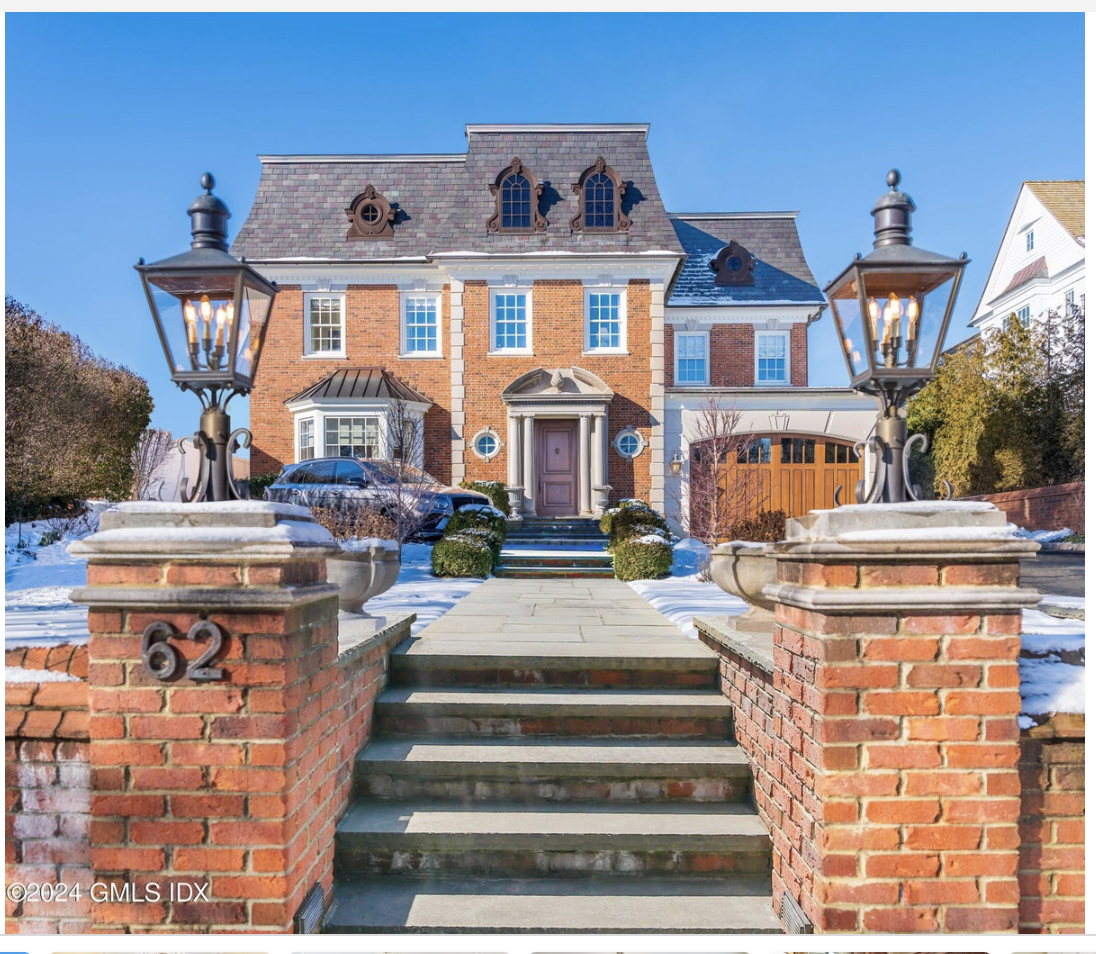
16 Hedgerow Lane was listed at $6.750 million and after 15 days on the market it was sold to the listing agent’s own client for $6 million.

I wrote abut this house last week when it was reporting pending but before the sales price was reported:

This strategy often doesn't work out, but it did here

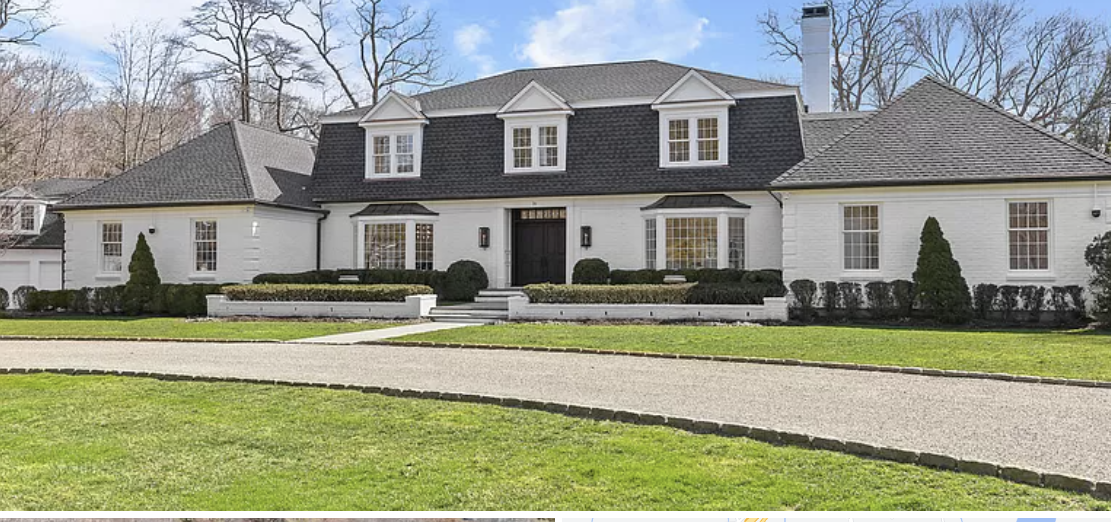
Back in September, 16 Hedgerow Lane was put up for sale at $5.650 million, and the market’s response (and, probably, comments from colleagues of the listing agent) must have been overwhelmingly negative, because it was yanked two weeks later. Builders were called in, repairs made, and it was put back on the market in late March at $6.750 million, with this notation on the listing:

Extensively renovated 2024 (new roof, new floors, new kitchen, new boilers, new bluestone front and rear, updated exterior, systems, electrics, plumbing etc.)

That did the trick — it was under contract a month later, and now it’s pending. In my experience, an owner is usually better off lowering the pie-in-the-sky price of a house that won’t sell, rather than gambling that expensive repairs and improvements can be recouped with an even higher price, but this time that gamble paid off.

So, good for the seller, but I still wouldn’t advise it in the usual case, where owners simply want to sell their house and move on — better to leave the renovations to the next owner.

That opinion was based on the quick time between listing and selling, which suggested that the final price would be close to or even above the asking price. At $6 million, deducting an estimated 7% transaction cost, net proceeds were $5.650 million. Applying that same 7% cost factor to the original price of $5.580 would have yielded $5.254. The renovations surely didn’t cost $400,000, so the sellers did come out ahead, probably, but not by very much, and they were saddled for 10 months with a house they no longer wanted. I’ll stand by my original advice.