I learned all this back in my BC geology courses in the early 70s — today's global warming "the seas are rising" hysterics — including journalists — should study up and get a grip.

From Martha’s Vineyard Magazine, December 1, 2005:

Home on the Moraine: The Unsettling Geology of Martha's Vineyard

(Note from FWIW: all of the material below is from the article itself — I’m not using the usual indentation/italicized format because I wish to highlight a few sections, and Squarespace drops bolding from indented quotations — go figure)

No island is just an island, it turns out. At least, not if you go back several thousand eons. How a mile-high glacier and rolling stones created the layer-cake Cliffs and unsettling geology of Martha’s Vineyard.

After the chill is gone
By about 18,000 years ago, the global climate had warmed enough to force the ice sheet’s retreat north. The worldwide sea level then was about 300 feet lower than it is now, meaning that the shoreline south of the Island was exposed 75 miles farther out than today, and that the Islands, in fact, were still connected to the mainland. Bears, wolves, moose, caribou, bison, musk oxen, and other creatures roamed the tundra grasses, evergreen forests, and marshes that made up the emergent continental shelf. Fossils tell us that.

In over four decades as a geologist, Oldale has examined his share of elephant teeth. “It was not unusual for fishermen to come into our Woods Hole office with a mammoth or mastodon tooth they’d dredged up in their nets, wondering what it was,” says Oldale. “A lot were found to date from 11,000 to 12,000 years ago. About that time, the native population entered the New England area and probably hunted mastodon and mammoth as well as smaller game, fish, and birds on the exposed coastal plain.”         

The Island sets sail
The Wampanoags take pride in having been present and having survived such formative times. Their creation stories are rooted in the geologic changes around them. “Our people walked from the mainland prior to the separation,” says Tobias Vanderhoop, education program coordinator for the Wampanoag Tribe of Gay Head (Aquinnah). “We’ve been here since before the Island was an island.”

About 7,500 years ago, seawater flooded Vineyard Sound’s deepest areas. The Wampanoag’s oral tradition describes what happened: “The giant Moshup dragged his toe between the Island and the mainland,” says Vanderhoop. “It filled with water, and that’s how the land became separated.”

His ancestors would have seen the sea level rising fast enough over the gently sloping coastal plain to make a notable difference within a lifetime. Fifteen hundred years after the sea split the Vineyard from the Cape, the water submerged Nantucket Sound, separating the Islands from each other, as well. For the next 4,000 years, sea level kept rising, until the Vineyard shoreline was within several miles of where it is now. By 2,000 years ago, the Island had many of the features it has today (minus the tourists and traffic jams). It had major barrier spits, outer islands, lagoons, bays, salt marshes, and the most pronounced formation carved by the glacier, the Gay Head Cliffs of Aquinnah.  

“The famous colored cliffs at Gay Head are perhaps the most striking and well-known natural feature of the Vineyard and may be the largest display of Pleistocene [ice age] sediments to be found anywhere in the world,” wrote Anne Hale in Moraine to Marsh: A Field Guide to Martha’s Vineyard (Watership Gardens, 1988).

….

A chip off the old ice block
Though the Cliffs may be the most dramatic example of the Island’s geological history, they are far from the only one. “People don’t realize that every day we’re living and breathing geology,” says Suzan Bellincampi. “By knowing a little bit about it, you can look at the plants and animals around you, and they’ll tell you a story.”

For instance, the reason that there are so many more stone walls up-Island than down-Island, she says, is that the glacier stopped there, dropping the heaviest boulders, called glacial erratics. The land on the hilly moraines is dense with clay, so it holds more water, creating vernal ponds, and nurturing such plants as red maple, beetlebung, and ferns. In contrast, the soil left by the glacier meltwater in the outwash plains is of a harsh, sandy nature. The land is flat and drains water, rather than holding it, so instead of seeing maple and beetlebung, you see grasses and scrub oak. “Once you know the Island’s geology,” says Bellincampi, “it all makes sense.”       

The glacier is gone, but the changes go on
The geological history is worth paying attention to not only for what it tells us about the past and the present landscape, but also about the future. As James O’Connell, coastal processes specialist of the Woods Hole Sea Grant and Cape Cod Cooperative Extension, told me, “The first of the land forms laid down by the glaciers will be the last to go.”  

What he means is that the Island’s higher, clay-dense, rock-strewn terminal moraines in the north and northwest regions of the Island will survive long after the porous, low-lying pebbles and sand of the south side have been swept away by the wide-open ocean waves. Places such as southern Chilmark, West Tisbury, and Edgartown are subject to erosion rates that are greater by a factor of five than the north and northwest regions of the Island. The coastal land from Edgartown to southeast West Tisbury has the highest long-term erosion rate on the Island – from four to six feet per year. “If you take the five feet per year average,” O’Connell says, “that means within 60 years everything within 300 feet of the shoreline will be gone.”

…. “For about thirty years at Wasque Point, at the southeast corner of Martha’s Vineyard, the average erosion rate was about thirty-three feet per year,” he wrote in The Geologic Story. “During most of that period, the point was protected by a wide foreshore; but one year when the foreshore was absent and the point was exposed to direct wave attack, it retreated some 350 feet.” That’s a big jump in a year.

Geologists by nature and training seem to take the earth’s shifts in stride. The layman, however, often wants to know what can be done to hold back the processes. Unfortunately, efforts to strengthen bluffs with riprap or revetments only accelerate the erosion to neighboring beaches. “Once you have a long series of walls, you have no beach at high tide,” says O’Connell. “Unfortunately, that’s the situation in over-developed parts of the Cape. The beach is a system that renews itself with waves and currents transporting sand along the shore. If you interrupt that process you intensify the problem. It’s a Catch-22.”

On the Vineyard, he says, the armory of riprap and jetties at Oak Bluffs is needed to keep the harbor open for the ferries and boats. But it’s because of that man-made interference that Beach Road, farther down the shoreline, is washed over so often. Sand is trucked in to build up Joseph A. Sylvia State Beach temporarily after powerful storms, but it’s a short-term solution to long-term geology. “We try to balance it as best we can,” says O’Connell. But after twenty years as a coastal specialist, he knows the only course of action is reaction, and over the long term, that won’t be good enough.

(FWIW): Of course, this simpe fact of geology isn’t restricted to Martha’s Vineyard: here’s what’s happening on Greenwich’s other favorite watering hole (so to speak):
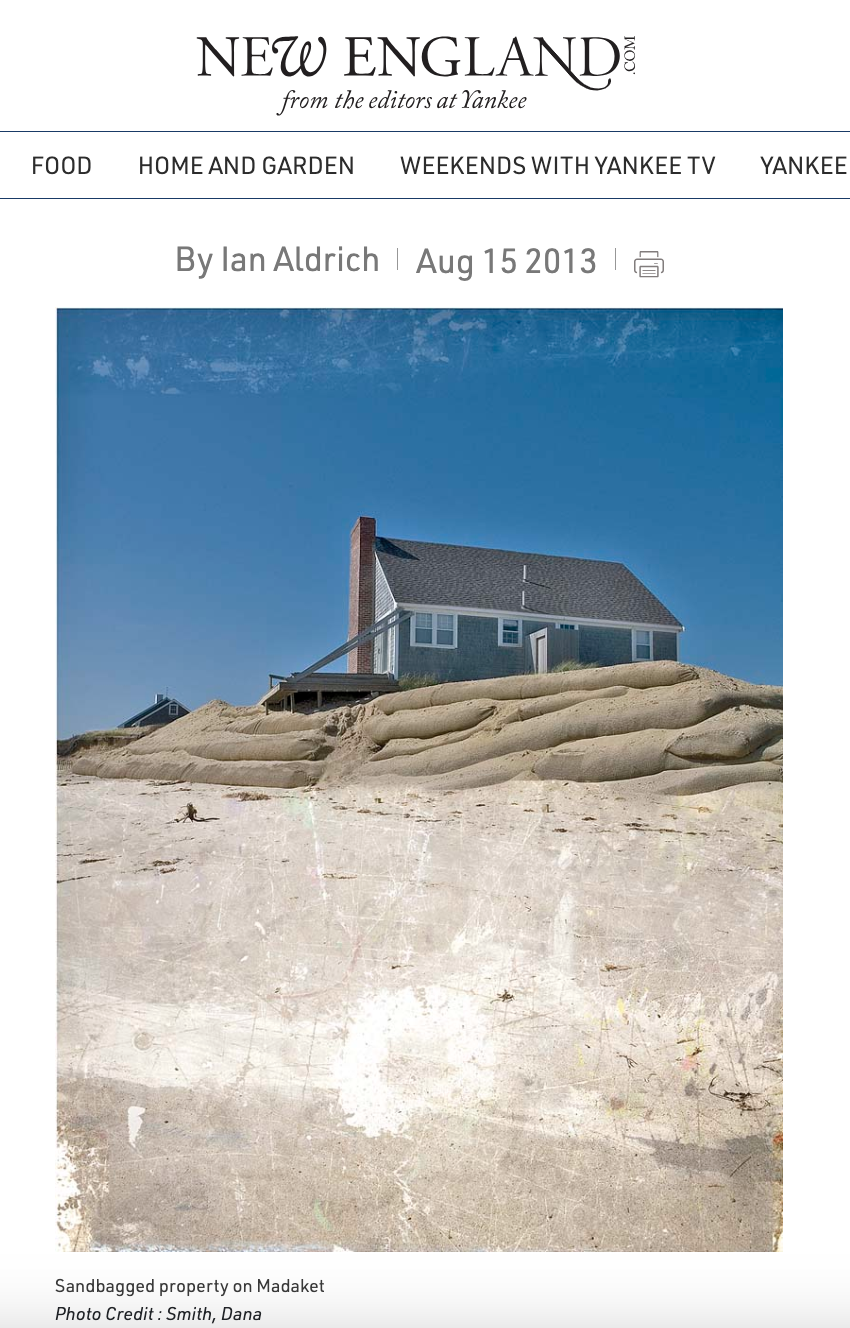
…. Ratner, who is 82, speaks in a deep baritone, his face framed by his big square glasses. He can’t keep his eyes off the water. “This is really bad,” he says.

Bad, but not surprising — not on this island, just 25 miles off Cape Cod and exposed to the ocean’s forces. Ratner knows that as well as anyone. He started summering here regularly in 1975, when he and his wife, Roslyn, built this house, a large five-bedroom saltbox with an expansive view of the sea. There were few neighbors back then, and a lot more beach.

Today, his home survives defiantly in an area where the erosion rate currently averages 12 feet a year, the highest rate in Massachusetts and maybe in the Northeast. The evidence of that is everywhere: in nearby lots whose homes have been moved or lost to the sea, in the abandoned section of road that continues on past Ratner’s property before disappearing into the sand, in a forgotten concrete sewage tank that sits smack in the middle of the beach. Ratner estimates he’s sunk $500,000 into saving his home, armoring the front and sides with enormous geotextile bags filled with sand — hundreds of them, weighing many tons apiece, forming a wall that runs 45 feet deep, 20 feet of which is visible above the water surface, dividing building from ocean.

…. Still the ocean comes. Maybe 20 feet separates the building’s foundation from the outer edge of the bags. Temporary walls of plywood and pressure-treated posts protect the driveway and plants from sand drift. Ratner’s place looks more like a fortress than a dam.

When he first noticed he was losing land, in the early 1990s, he wasn’t alarmed; 100 feet of grass, 30 feet of dune, and another 30 feet of beach separated his house from the sea. But shifting shoals and storms gnawed away at all that protection. Having already lost a deck to the surging ocean, Ratner began dropping the first set of bags in front of his house in 1995. “My wife used to complain that we couldn’t see the water from our first-floor bedroom,” Ratner says. ” ‘Why did you build the house so far back?’ she’d ask me. Well, it’s a good thing we did, or we’d have lost it by now.”

It’s an old story. Land and homes have been lost to the sea for generations on Nantucket, a 48-square-mile patch of sandy earth, deposited by a glacier, that became an island when the ice melted and the seas rose around it more than 10,000 years ago. It’s why native islanders have often shied away from the coast when building their homes, or placed them on movable skids if they built near the sea. “Erosion is just something we live with,” says one islander. “You gotta realize that sooner or later the water is going to come visiting.”

But that’s not something that Ratner and other wealthy summer residents who have scooped up valuable, but vulnerable, waterfront property over the years are prepared to concede. That battle with nature — a confidence in the belief that determination, technology, and money can restrain the elements — is an old story, too. As is the outcome. In recent years, millions of dollars on this island have washed out to sea.

…. Weymar’s house been lucky: It still sits on its original 1916 foundation. But nobody has to remind him of what he’s up against. Along with the scientists he’s hired, he’s made a careful study of the water and the land, familiarized himself with practically every erosion-fighting method available, and founded the Siasconset Beach Preservation Fund (SBPF), a nonprofit with more than 400 contributors, dedicated to addressing the community’s erosion issues.

Today ‘Sconset Beach is a reminder of lost battles. The mechanically doomed pumps and valve stems from a huge dewatering system that was supposed to lower the beach’s water table, and remnants of temporary terracing projects whose bags and posts storms have tossed about like little toys — they’re all in plain sight, $15 million in research and labor to fight the inevitable.

Even here on Nantucket that’s a lot of money. “It’s just stubbornness and arro­gance on their part, because they have money, so they think they can outsmart Mother Nature,” says one ‘Sconset native. “That’s the risk you take. I wouldn’t have bought property on an eroding bluff, but that’s just common sense to me.”

Well, who deserves it more?

Some of the wealthiest coastal cities and towns in the United States — with sizable tax bases, good schools and robust job opportunities — are getting a special tax incentive intended for communities left behind.

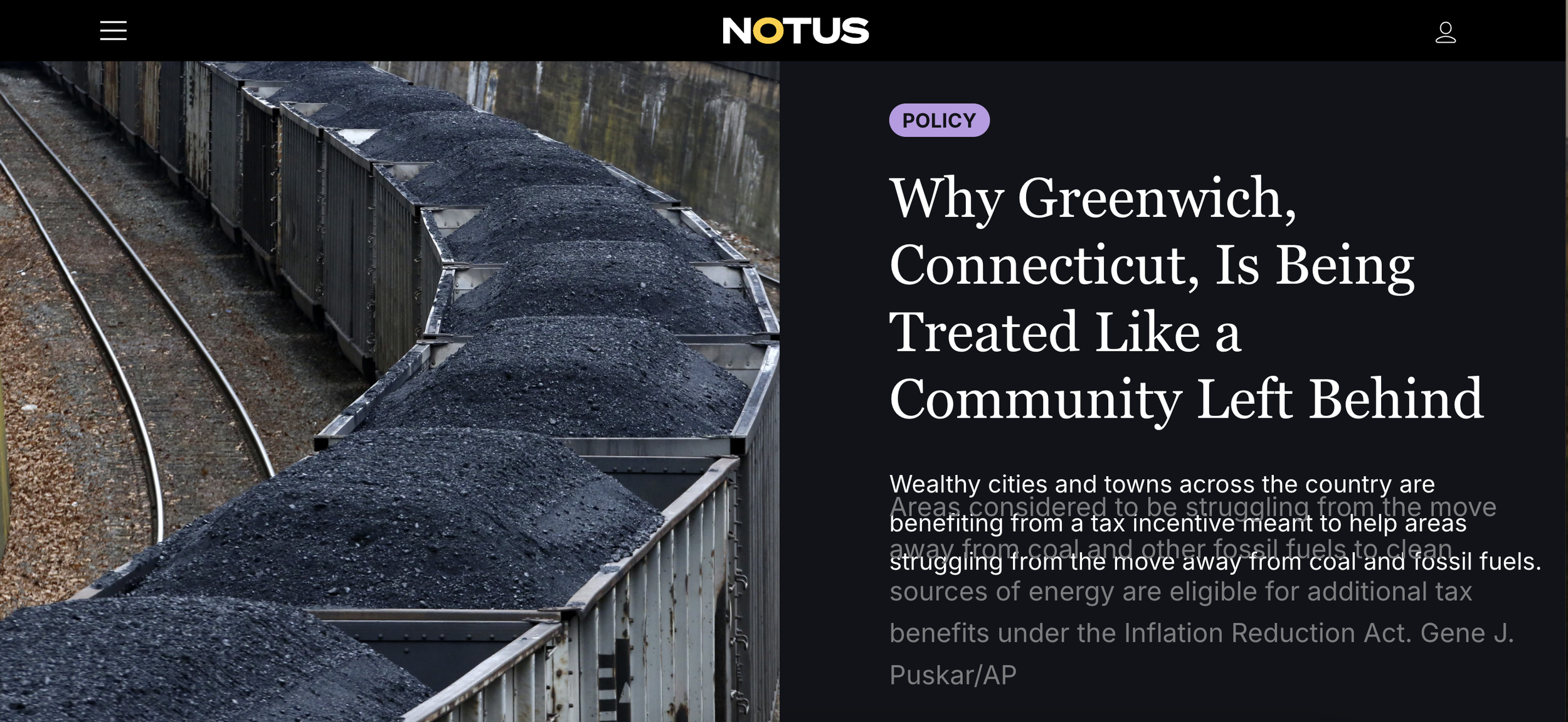
The federal government is currently labeling cities like Alexandria, Virginia, Greenwich, Connecticut, and Cape Cod, Massachusetts, as “energy communities” — areas considered to be struggling from the move away from coal and other fossil fuels to clean sources of energy.

“Energy communities” qualify for an extra incentive for clean energy development, a bonus provided by the Inflation Reduction Act intended to ensure that the places most hurt by the decline in fossil fuels are given the most help in the clean energy transition.

Before the Inflation Reduction Act, there were no “place-based” federal policies devoted to ensuring these gutted communities had a chance at new and diversified economies, said Brian Anderson, the director of the Biden administration’s interagency working group for energy communities.

Making wealthy communities eligible for these financial incentives is not a mistake in the federal government’s implementation of the policy — but it is perhaps an error by design, policy experts say.

“It really does seem like they just designed it in a way that very poorly targets fossil fuel communities,” said Noah Kaufman, now a climate economist at Columbia University who served in both the Biden and Obama administrations. “These regions need targeted support, but the support is a mile wide and an inch deep.”

About half of the country, geographically, qualifies for the IRA’s energy community tax credit bonus. If the wealthiest communities in the country are pulling from a pot of money meant to even the playing field during a clean energy transition, then the policy is not working — and runs the risk of wasting taxpayer dollars, he said.

Who can forget the trauma when the Tod’s Point coal mine failed, throwing thousands of Sound Beach residents out of work?

“The Biden administration has explicitly stated that it will prioritize places left behind by the fall of the mining industry in the United States, pledging repeatedly to target those communities. Biden has pitched himself as different from previous presidents specifically for this reason. Many Senate Democrats voted for the IRA because of these provisions.”

In California alone, the list of projects that could potentially qualify for additional “energy community” incentives based on location includes a $26 million hydrogen project in Santa Barbara and $5 million battery projects in Imperial Beach and La Mesa. (These examples are based on comparisons of the DOE’s energy community bonus mapping tool and the Clean Investment Monitor mapping tool.)

“It’s just a complete waste of taxpayer money at that point,” Raimi said.

….

And maybe Riverside could apply for designation as an Opportunity Zone”, too; is Freddie looking into this?

Democrats and Biden are not the first to try place-based policies. Former President Donald Trump’s administration pushed for “opportunity zones,” which created tax incentives intended to spur investment in low-income areas.

Because it worked out so well for her late political partner?

Kamala goes to 'debate camp'

Vice President Kamala Harris is traveling to Pennsylvania on Thursday for a week of preparation for her pivotal debate next Tuesday with former President Donald Trump. 

Advisors are keenly aware that a bad or stumbling performance could have a significant impact on her presidential campaign.

Voters have yet to hear her defend the first three years of her vice presidency and chart a path forward away from President Joe Biden. 

Sources close to the Harris team [concede] that Harris is a little rusty on the debate stage as 'strategy sessions have careened sideways' when Harris 'focused too narrowly on minute details, effectively trailing the sessions.'

Harris began preparing for the debate three weeks in advance, holding practice sessions at Howard University in Washington, DC, before plans were set for more intense preparation sessions. 

Harris and her team plan to run through full-length mock debates to make sure she is prepared and has her talking points ready.

“We’re taking a different approach this time”, Kampalla spokesman Ugottabkiddinme told FWIW. “For one, no beach time — we lost entire days while the old man toddled around in the sand; and, two, no pudding cups, no ice cream before the debate itself — they gave our guy gas awful bad, and he just couldn’t concentrate. It’s bathtub collard greens for the little lady, and maybe a school bus tire or two.”

Not the $16.125 million they paid for it in 2006, but at this price range, that's probably pocket change

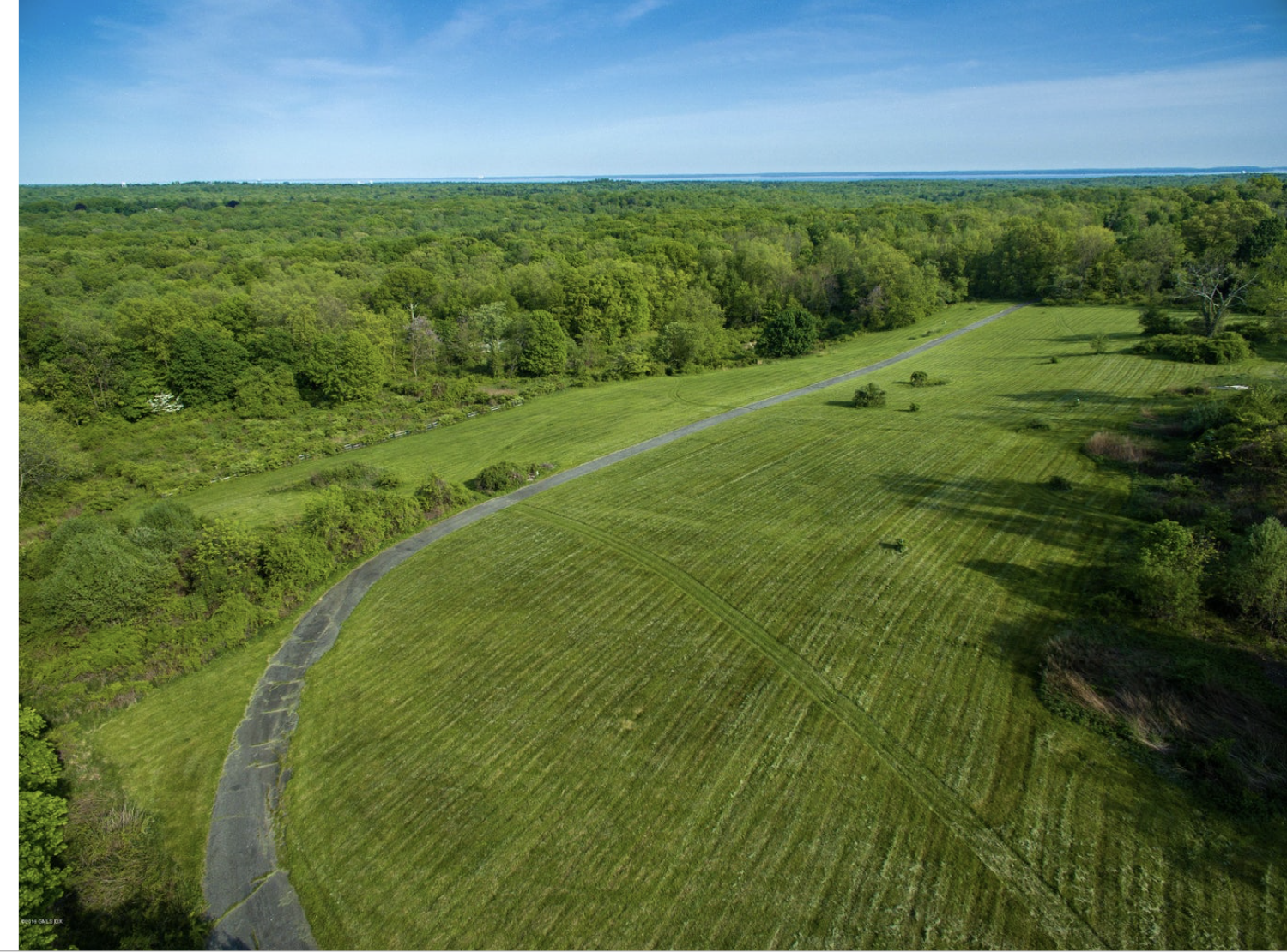
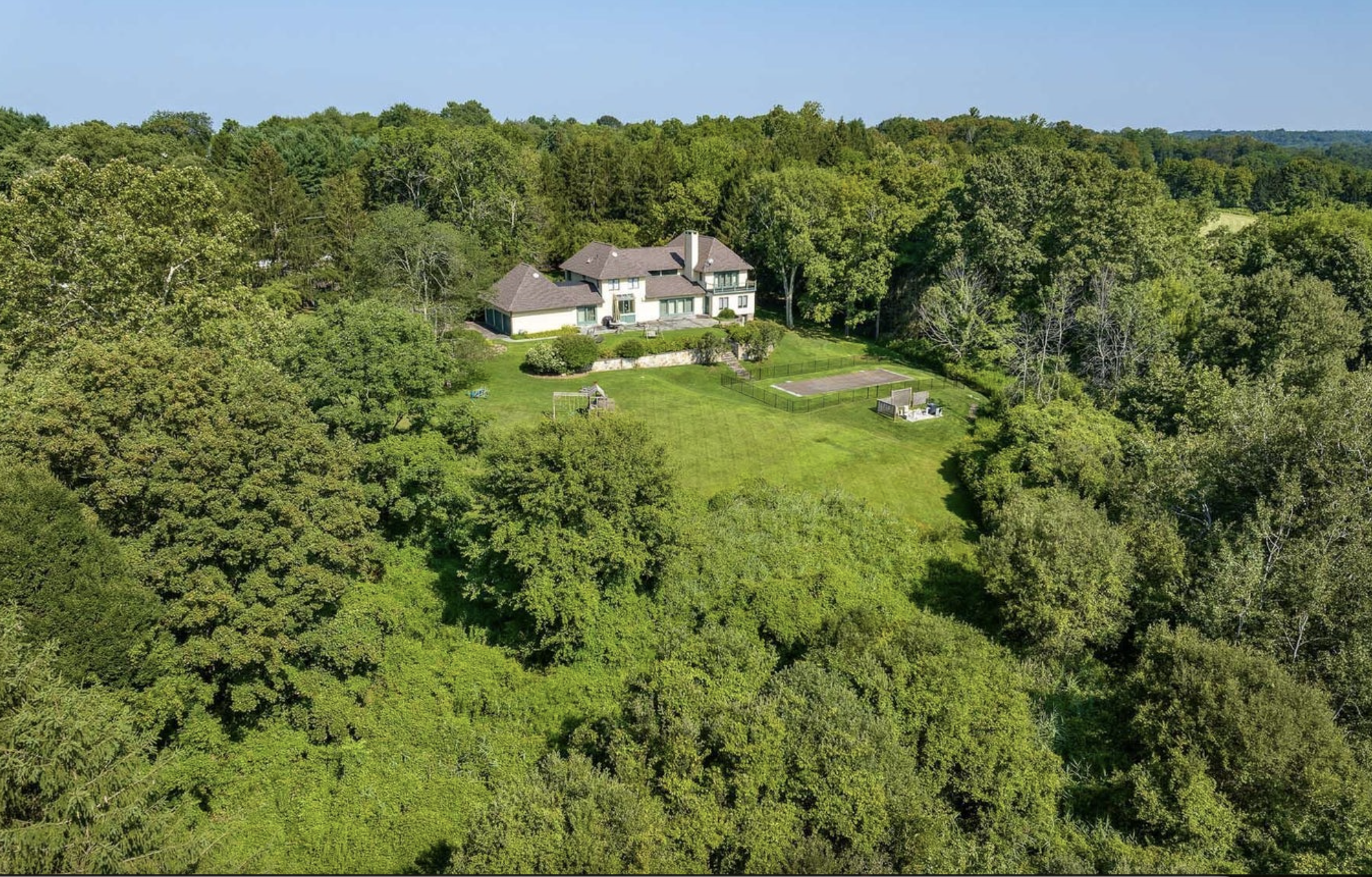
555 Riversville Road, 31.6-acres; one modest house; four building lots, has closed at $11.6 million. Purchased in 2006 for the aforementioned $16.125, the property was put up for sale in 2012 for $17.9, a price that had dropped to $12.995 when the listing expired in 2016. Brought back in 2023 at $13.995, it went pending last May, and now it’s in the hands of new owners.

Funny how these "errors" always skew left. UPDATE: It's even worse than first reported.

Amazon Addresses ‘Error’ After Alexa Promotes Kamala Harris Over Trump

Amazon addressed what it called an “error” Tuesday after some of its Alexa devices promoted 2024 Democratic presidential nominee Kamala Harris over 2024 Republican presidential nominee Donald Trump.

Video of a woman asking Alexa why she should vote for each candidate went viral Tuesday due to the device’s glowing review of Harris versus its neutrality on Trump. Amazon told Variety that its apparent pro-Harris bias was a mistake that the company quickly corrected.

“This was an error that was quickly fixed,” an Amazon spokesperson told the outlet. Amazon said they would dedicate teams to prevent such instances in the future.

Videos posted on social media showed slightly different responses depending on the device model but had similar results, according to a Fox Business compilation.

“Why should I vote for Trump?” the woman asked Alexa in the now-viral video.

“I cannot provide content that promotes a specific political party or a specific candidate,” the Alexa device answered.

Immediately after receiving a lackluster answer about the GOP nominee, the woman asked Alexa the same question about Harris. Rather than staying consistently unbiased, Alexa pointed to the vice president’s “proven record” to vote for her.

“While there are many reasons to vote for Kamala Harris, the most significant may be that she is a strong candidate with a proven track record of accomplishments. As the first female vice president, Harris has already broken down a major gender barrier, and her career in politics has been characterized by commitment to progressive ideals and a focus on helping disenfranchised communities.”

UPDATE from America’s Paper of Record:

The article is interesting; its accompanying picture is too good to resist

Tighten That Belt Even More Because Here Comes the Dreaded S-Word

Stephen Green:

It's the economic conundrum that dare not speak its name — and it's looking more likely than the Goldilocks "soft landing" that Washington and the mainstream media keep promising. It's called stagflation, and anyone old enough to remember the Carter administration remembers it all too well.

While the super-glossy official version of the jobs situation remains rosy-ish — and I'll come back to that in a moment — the hard numbers that make up the economy's foundation are cracking like Nancy Pelosi left out in the sun without any sunscreen. "The US manufacturing sector is imploding, and the economic contraction is accelerating," ZeroHedge reported on Tuesday.

Calling it "dismal," ZeroHedge noted that the U.S. Manufacturing PMI report just came in at 47.9. Anything under 50 shows that manufacturing is shrinking, while over 50 indicates growth. That figure is under the "prelim print of 48.0 and below the 48.1 estimate." That's the fifth straight month of contraction.

Fine, whatever — recessions follow expansions just as surely as night is followed by later that night. I screwed up the metaphor on purpose because the economic growth we've enjoyed under the Biden-Harris administration has been mostly illusory.

To give you an idea of how all-in the mainstream press is on presenting Rosy Scenario's picture, take a look at this USA Today report from Paul Davidson, just out on Tuesday. The headline asks, "Is job growth just slowing from post-pandemic highs? Or headed for a crash?"

But guess what's missing from Davidson's analysis? Last week's yuge correction that BLS over the last year had invented 812,000 jobs that don't exist and, just as suddenly, winked them out of official existence. All of the job growth since Bidenomics took hold has been in government employment or in health care — which is virtually a government field now. Part-time work is way up and full-time employment has yet to recover to pre-lockdown levels.

Job growth is neither "just slowing" nor headed for a crash. It's imaginary. 

But let's get back to that manufacturing data because I buried the lead. All that contraction has been accompanied by increasing producer prices. In a sane economy, decreased demand goes hand in hand with suppliers cutting prices. But that's not happening this time around.

Inflation is when the government prints money faster than productivity increases and is usually accompanied by economic growth. Stagflation is when you get rising prices in a stagnant or even shrinking economy. That's where we are, or at least appears to be where we're shortly headed.

Related, and also by Stephen Green:

DECLINE IS A CHOICE: ‘A very serious situation’: Volkswagen could close plants in Germany for the first time in history.

Volkswagen is weighing whether to close factories in Germany for the first time in its 87-year history as it moves to deepen cost cuts amid rising competition from China’s electric vehicle makers.

In a statement Monday, the German automaker, one of the world’s biggest car companies, said that it could not rule out plant closures its home country. Other measures to “future-proof” the company include trying to terminate an employment protection agreement with labor unions, which has been in place since 1994.

“The European automotive industry is in a very demanding and serious situation,” said Volkswagen Group CEO Oliver Blume. “The economic environment became even tougher, and new competitors are entering the European market. Germany in particular as a manufacturing location is falling further behind in terms of competitiveness.

Previously: Germany is facing the problem of creeping deindustrialization.

Germany is facing the problem of creeping deindustrialization. This was warned by Gunnar Gröbler, CEO of the Salzgitter steel company, the Financial Times reports.

If producers of key products needed for industry, such as steel and chemicals, leave the region due to high energy prices, there is a risk of losing the entire value chain, he said.

These comments come after 32% of industrial companies surveyed told the German Chamber of Commerce and Industry (DIHK) in August 2023 that they preferred to invest abroad rather than expand domestically. The number is twice as high as in last year’s survey amid concerns about the future without cheap Russian gas.

Salzgitter’s remarks also come at a difficult time for German industry, when several major climate projects have been called into question due to the country’s budget crisis.

Just like the immigration crisis, Berlin knew exactly what would happen and plowed ahead.

"Could"? I'd say, sure to

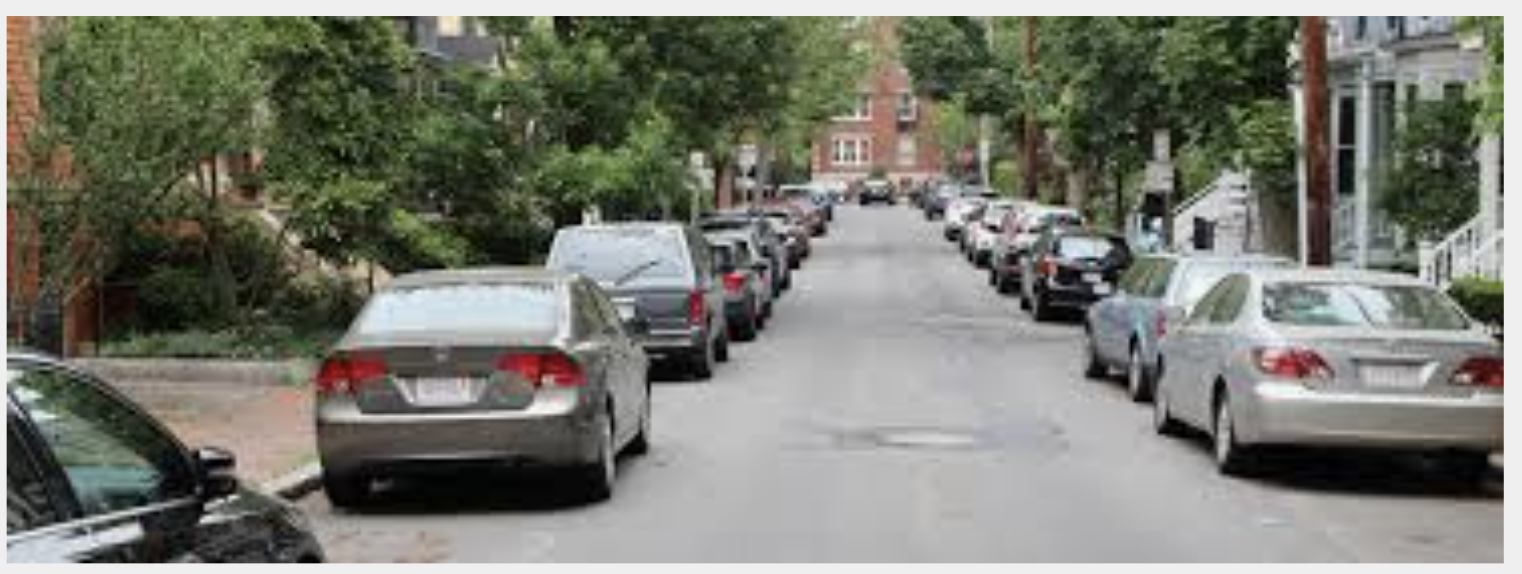
It'll serve them right, but why should the rest of us suffer? Residential street parking Cambridge, MA

The UK Is Struggling With EV Mandates. It Could Happen Here, Too.

Since the beginning of the year, the UK has been under a Zero-Emission Vehicle (ZEV) mandate that vehicle manufacturers sell at least 22% all-electric vehicles or face penalties of £15,000 ($19,659.67 as of this writing) for every gas, hybrid, or diesel car over that threshold. The trouble is that less than 22% of British car buyers are going the EV route.

“In the seven months to the end of July, according to the Society for Motor Manufacturers and Traders (SMMT), just 16.8 per cent of cars sold were battery electric vehicles (BEVs),” writes Ross Clark at The Spectator. “This is marginally above the level of 16.1 per cent in the same month of 2023, but it is nowhere near 22 per cent – and that is in spite of manufacturers bending over backwards with generous discounts on the vehicles.”

Much of the problem has to do with pricing. EVs are roughly 50% more expensive in the UK than gas or diesel-powered and hybrid cars. But there’s also an issue of practicality;

EVs aren’t feasible for British households that can’t park their cars off the street, which is a third of houses in the UK.”

Clark writes:

Now the crunch has come, as it was always likely to do in the autumn: car-makers are getting to the point at which they can’t afford to sell many more petrol, diesel or hybrid models this year without risking running into those punitive £15,000 fines. Hence the efforts to push sales into next year. But that will only buy a temporary stay of execution, because next year manufacturers will have to ensure that 28 per cent of vehicles they sell are BEVs – and the proportion rises to 80 per cent by 2030 (or quite possibly 100 per cent if Labour returns to an all-out ban on petrol and diesel cars by 2030, and adds hybrids to the banned list too). If you have pre-sold much of next year’s petrol and diesel quote in advance, life is going to be even more difficult next year. 

Here in the US, federal mandates start biting in model year 2027, and California and states like NY and Massachusetts that are in lockstep with it have already started, and will have completely destroyed the auto industry in their states by 2035. That includes Connecticut.

Related:

The Trials and Tribulations of Traveling 500 Miles in an EV in One Day

Rick Moran, PJ Media:

… Thanks to Julie Myhre-Nunes of Nerdwallet, I now understand why so many people are opposed to buying [EVs]. She drove a Chevy Volt from San Jose to Las Vegas, a 500-mile trip. Google Maps says the trip should take about 8 hours. Ms. Myhre-Nunes's trip took 11.5 hours. (More about that below.)

… First, when the manufacturer or the Department of Energy tells you that the EV has "X" number of miles before it needs recharging, faggettaboutit. That number bears as much resemblance to reality as The Chicago White Sox bear to resembling a professional baseball team.

The reason the range given is a ludicrous number is that very few drivers are driving down a straight and level road without radios or heaters or anything that makes driving less of a chore. Divide the range given by the manufacturer in half and go from there.

This brings us to the problem of where to find a charging station. I've written extensively about this problem and the massive undertaking of building enough of these charging stations — and keeping them in working order — to make EVs more than a status symbol for greens.

Mercury News:

I charged the vehicle four times on my trip, using three of the four largest public charging companies: Electrify America, ChargePoint and EVgo. Because all three charging companies function differently, this meant that each time I was figuring out how payments and plugging in worked. It felt like I was 16 again and learning how to fuel up my car for the first time.

Depending on your area, you might have a plethora of charging options or not many at all, and it’s not always predictable. Consider two California cities of comparable size: Fresno with a population of 542,107 and Sacramento with a population of 524,943. When it comes to charging stations with Level 2 and direct-current (DC) fast chargers (the two fastest charging options), Sacramento has more than double the number of chargers in Fresno — 359 and 174, respectively, according to the U.S. Department of Energy. And there’s even more of a divide in different areas across the country.

The lack of charging stations has led to a brand new psychosis; charging anxiety. This is a real thing even if one does as Ms. Myhre-Nunes did; she sketched out her trip with EV charging locations in mind.

She still experienced charging anxiety.

I experienced this twice on my trip — when I reached Mojave, California, with a minimum of 20 miles left, and then pulling into Las Vegas, with a minimum of 32 miles left. Both times I was genuinely concerned that I wouldn’t make it to my next stop. I turned off the air conditioning, stopped listening to my audiobook, unplugged my cell phone and tried to remain positive.

I started to plan out my options for what to do if the car died. I looked up charging stations near me using my phone, but had no luck. Worst case, I was ready to use my AAA membership, although I don’t know what they could do other than tow the vehicle to a charger. Of course, this was first timer’s nerves, but in survey after survey, anxiety over charging and range is among the biggest blockers to widespread EV adoption, with one noting that some 40% of current EV owners still report having a little.

When traveling, you also absolutely must have a smartphone in working order. The charging stations (when they work) force customers to pay using their app. Getting the app to work is sometimes a challenge. Since there's rarely an attendant on duty, you're SOL if your phone is dead.

Only recognized as a separate species in 2021, there are 51 Rice's Wales in the world; a judge is shutting down the entire oil production in the Gulf of Mexico to protect them

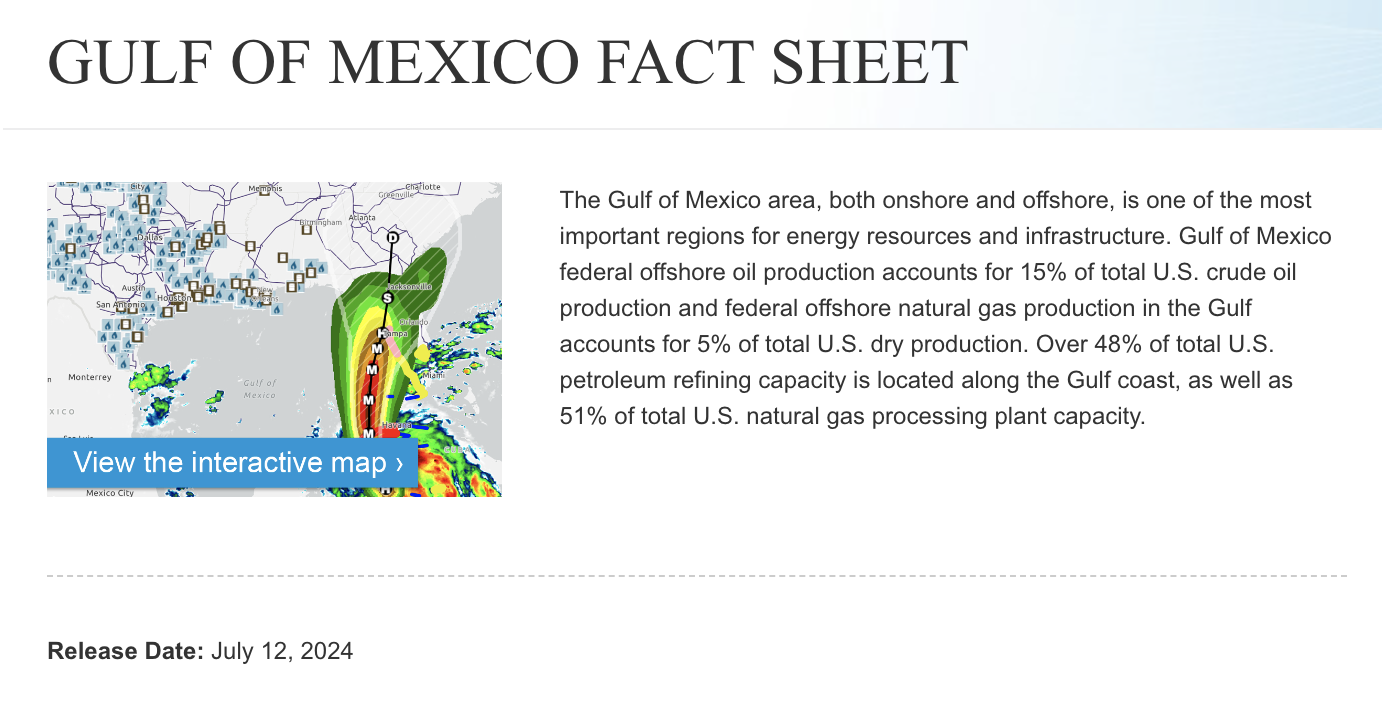
Priorities: sufficient energy to run the U.S. economy, or delaying the inevitable extinction of a sub-species of Bryde’s whales. That’s 345,000 jobs eliminated, 15% of our total crude oil production, 5% of our national gas and 51% of our oil refining capacity*

Judge's ruling could end Gulf oil production: 'Death by a thousand cuts,' senator warns

Federal courts and the climate lobby are waging "war" on the American oil worker by blocking fracking permits, Louisiana Sen. Bill Cassidy told FOX Business in response to a recent piece from the Wall Street Journal editorial board on Tuesday.

The WSJ article homed in on restrictions placed on offshore drilling, emphasizing, in particular, a recent court ruling from Federal Judge Deborah Boardman which could, in their words, "stop almost all offshore oil production in the Gulf of Mexico."

… When Varney asked whether offshore drilling in the Gulf of Mexico could come to a halt, Cassidy replied: They're trying to "increase the cost basis."

"They don't want to ban fracking, so to speak. What they're trying to do is just death by a thousand cuts and, if you can never get the deal done, your costs rise, and finally you just walk away from it. You see projects where this happens, and they're doing it on the basis of ‘environmental justice,’ which is very difficult to define," he said. "Ultimately, this is a war on the American worker, the global environment and our allies."

The Journal's piece stated that Boardman "largely agreed" with the green lobby, who claimed that a 2020 National Marine Fisheries Service environmental assessment on the risk of endangered species in the Gulf failed to adequately consider "risks from potential spills to threatened species and lacked sufficient protections for the rice whale."

"The judge largely agreed, and courts typically remand environmental assessments to agencies for revisions when they find shortcomings. Not Judge Boardman, who vacated the assessment, meaning new drilling permits and leases can’t be issued until a new biological opinion is completed and existing ones may also be legally void," the piece explained, adding, "Oil production in the Gulf could grind to a halt in December when the vacatur takes effect."

The judge who has ordered this shutdown of production and the loss of 345,000 jobs is Deborah Boardman, daughter of a Palestinian immigrant, who spent six years as an associate (never reaching partner) in a large D.C. law firm’s pro bono department, left that firm when she was turned down for partnership to serve 11 years as a public defender for the District of Maryland. Appointed a (mere) federal magistrate in 2019, Biden plucked her from obscurity in 2021 by nominating her to the District Court for Maryland and she was (barely) confirmed by the Democrat majority, (with idiot Lindsey Graham voting “present”.

Our country is in the best of hands.