Who wants to tell them?

NPR is baffled, but its “journalists” know one big thing:it must be Trump’s fault

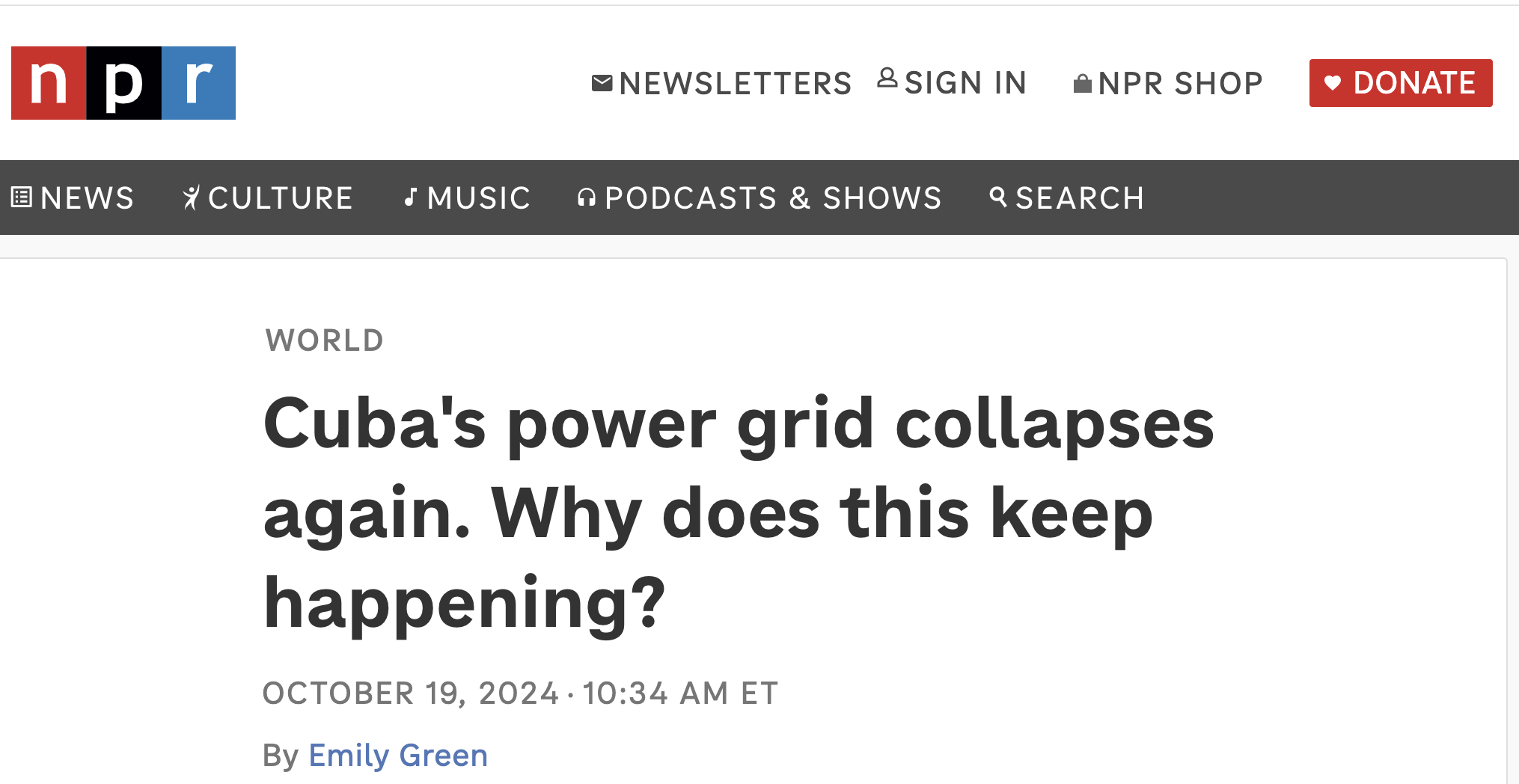
MEXICO CITY — Cuba’s power grid collapsed for a second time on Saturday, shortly after Cuban officials announced they had begun reestablishing service, in what has become one of the worst crises in the country’s history.

The massive outage leaves 10 million people on the Caribbean island without electricity, and with no clear indication of when power might be restored.

It is a new low in a country that has already been dealing with a deepening economic crisis, compounded by the U.S. embargo and widespread food shortages.

The crisis began on Friday when one of the country’s largest power plants, the Antonio Guiteras power plant in the western province of Matanzas, failed shortly before midday on Friday. The failure prompted a total breakdown of Cuba’s electrical system.

Cuba’s prime minister, Manuel Marrero Cruz, blamed the problem on deteriorating infrastructure and fuel shortages exacerbated by Hurricane Milton, which has made it difficult for much-needed fuel deliveries to reach the island.

Declaring a “energy emergency,” Marrero Cruz introduced measures to reduce power use across the country — state workers were told to stay at home, and schools and non-essential industries were closed. He also sought to assuage concerns saying he expects an influx of fuel from Cuba’s state-owned oil company.

While the collapse of the electrical grid comes as a surprise, the crisis is years in the making. Cuba’s power plants are dilapidated and in desperate need of maintenance. In addition, Cuba produces very little fuel of its own, meaning it relies on imports to keep the electrical grid afloat.

The big problem for the island is that Venezuela — a political ally that for decades was Cuba’s principal provider of fuel — has slashed shipments amid its own economic crisis. Mexico and Russia have also cut exports, leaving Cuba in a vulnerable position.

[That’s a problem, not even close to the real problem]

For months [decades,actually], there have been rolling blackouts across the island, with the situation coming to a head with the failure of the power plant on Friday.

Cuba’s economy initially began tanking during the pandemic [it was booming until then; trust us, we’re NPR] , when international tourism plummeted and inflation soared. During that same period, former President Donald Trump imposed a range of sanctions on Cuba after re-designating the country a "state sponsor of terrorism."

Then in March, hundreds of protesters took to the streets in Santiago de Cuba, the island’s second largest city, furious over the lack of electricity and food. Cuba’s communist government — which uses a rationing system to provide a certain amount of food per household — started limiting its allocations of bread only to children and pregnant women. Some analysts say conditions are worse than the economic crisis that followed the collapse of the Soviet Union in 1991, a time known as the Special Period.

The Cuban government has long blamed its woes on decades-old U.S. sanctions that have complicated the island’s purchase of fuel and food.

While the causes of the crisis are multifaceted, the country-wide blackout is a new low for the government — and those Cubans still living on the island. Amid growing desperation, an unprecedented number of Cubans are trying to migrate to the U.S. by any means possible. The island has lost an estimated 10 percent of its population over the last three years.

Today marks the 62nd “anniversary” of JFK’s Cuban Missile Crisis Speech to the nation; it seems fitting to also remember the history of Cuba’s food rationing program, also imposed that year, and used to starve thee peasants and control the dissident.
The Story of the Ration Book

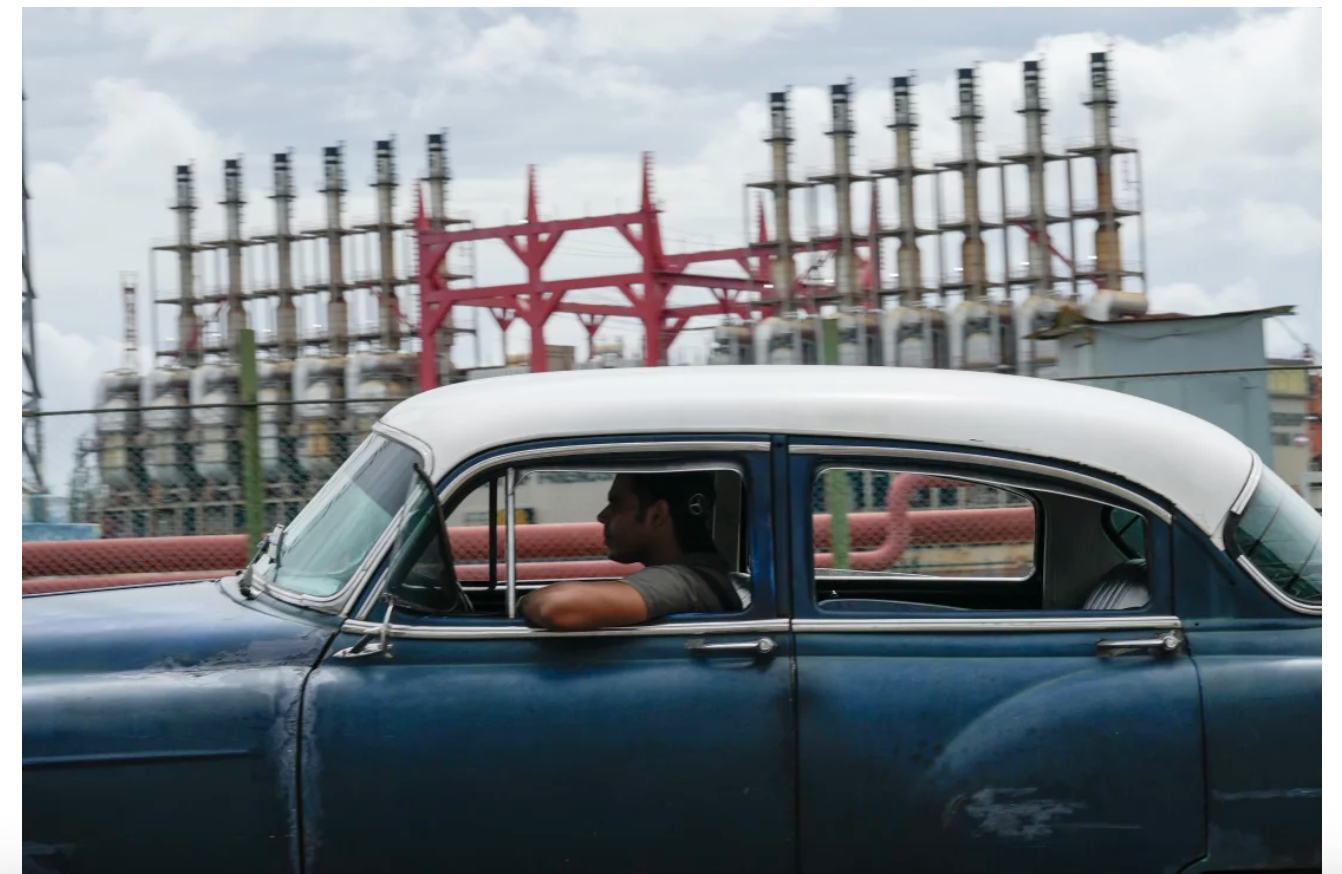
Cuba’s power infrastructure is as old as its cars, but not as well maintained —that would be because the cars are privately owned.

Transsports

(both) my dads can beat up your mom, so nahnananana!

Women’s soccer club embroiled in trans controversy after team fielded two ‘bearded guys’

And ….

UN reveals how many female athletes have lost medals to trans opponents in explosive report

Female athletes have lost nearly 900 medals to transgender rivals competing against them in women’s sporting categories, an eye-opening United Nations report has revealed.

The study — titled “Violence against women and girls in sports” — stated that more than 600 female athletes have been bested at various events by competitors who were born male.

“According to information received, by 30 March 2024, over 600 female athletes in more than 400 competitions have lost more than 890 medals in 29 different sports,” the report said.

And then there’s this, naturally (well, unnaturally, but you get the point):

New York AG Letitia James threatens ‘decisive legal action’ over county’s transgender athlete ban

Green Energy

The Energy Department’s own data, entered last week into the Federal Register, shows that electricity, much of it generated by wind and solar, is more than three times as expensive as natural gas, an out-of-favor-with-the-elites fossil fuel.

Issues & Insights’ Editorial:

A little more than a year ago, a New York Times headline proclaimed what so many have said is absolutely, undeniably so: “The Clean Energy Future Is Arriving Faster Than You Think." Despite the story's examples that were supposed to buttress the claims, reality tells a different story.

A recent analysis by Bloomberg found that “the fast money on Wall Street has taken a close look at key sectors in the green economy and decided to bet against them.”

“Despite vast green stimulus packages in the U.S., Europe, and China, more hedge funds are on average net short batteries, solar, electric vehicles, and hydrogen than are long those sectors; and more funds are net long fossil fuels than are shorting oil, gas, and coal.”

Hedge fund institutions have concluded, says Bloomberg, that “many climate investments” haven’t posted returns as quickly nor as profitably as they had expected.

Bloomberg’s sources blamed politics, both in the U.S. and abroad.

If so, we say good, because the green energy crusade has been driven solely by Democratic and progressive politics rather than rigorous research and compelling arguments. It’s about time that the skeptical side posted a few victories in trying to stop the wholly unnecessary climate agenda of the left.

It matters not to the political left that at least half the country, and maybe nearly half in Europe, is uncomfortable with the renewable energy shift that is being dropped on developed nations by the elites. Central planners are force-feeding Westerners a dish they don't like, and investors have taken notice.

Could green energy’s declining popularity be tied to its high costs? That’s a factor. The Energy Department’s own data, entered last week into the Federal Register, shows that electricity, much of it generated by wind and solar, is more than three times as expensive as natural gas, an out-of-favor-with-the-elites fossil fuel.

Are the intermittence and unreliability of wind and solar also factors? Of course. Americans don't want to live a Third World existence in which energy production and delivery are substandard.

Do the climate skeptics and “holdouts” — we would place ourselves solidly in both groups — also resent being told that they must comply with the commands of their betters? Those who aren't looking to impress their friends, neighbors, and strangers with their green street cred, who simply want to live their lives, and in many cases just getting by, are justifiably offended by our ruling class.

If green energy were an unalloyed advancement and a can't-miss investment, then it wouldn't need the hundreds of billions in taxpayers' dollars that have been poured into it. Governments wouldn't have to set deadlines for transitioning to zero-emission power grids and all-electric vehicle fleets if the evidence of the goodness of renewables were undeniable. There'd be no reason for "government dictates and the confiscation and redistribution of people’s money."

Renewable energy isn't so much green as it is red, the color flown by communist governments and violent leftist movements since the late 19th century.

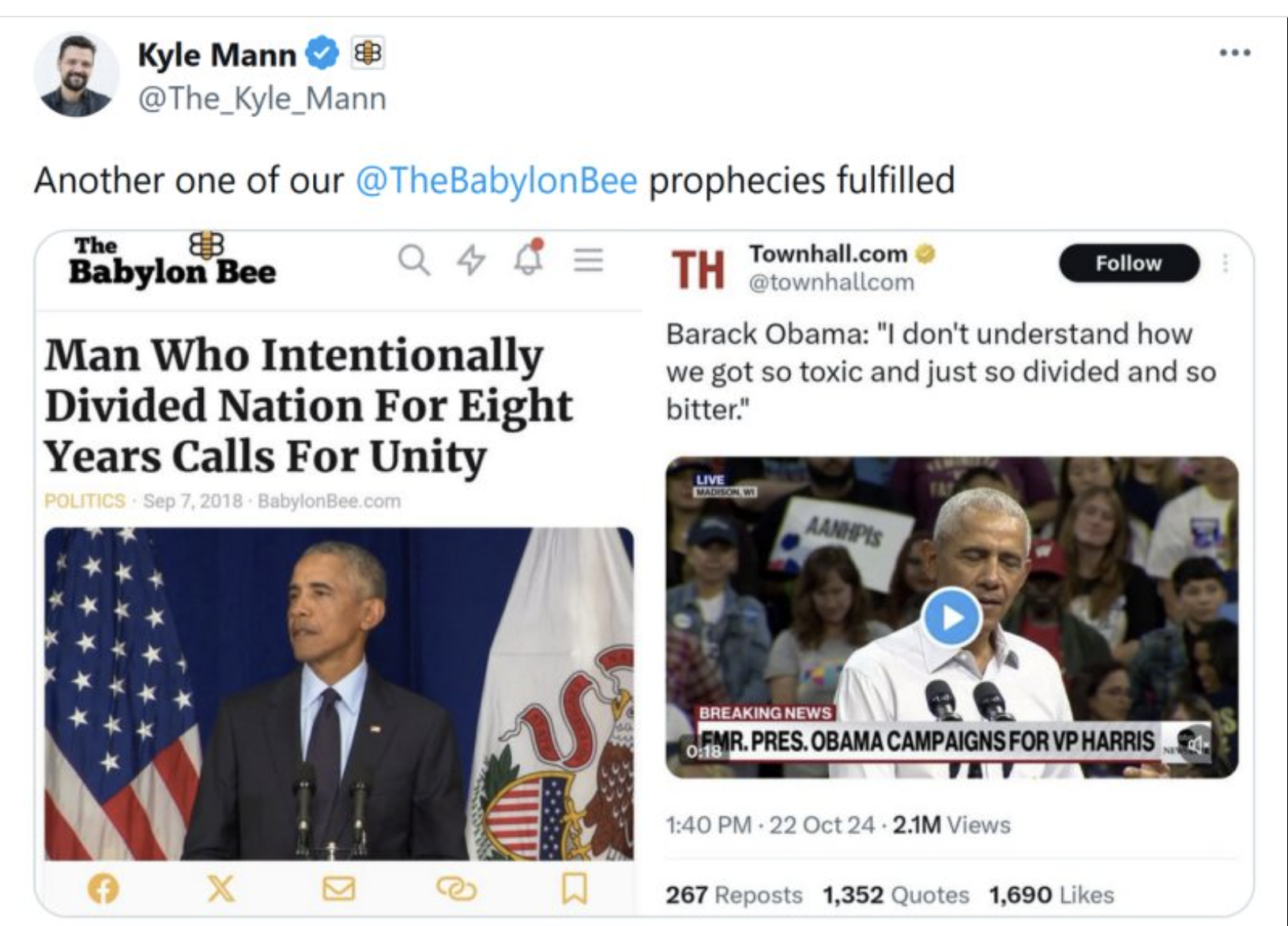
Harmony — C'mon, People Now, Let's Get Together, and blather

September 7, 2018

Instapundit

Yes, how indeed? As Jon Gabriel explored at the beginning 2017: President Obama’s Disastrous Record on Race.

On Election Day 2008, many Democrats welcomed a new post-racial America. The hideous blight of slavery and Jim Crow could never be forgotten, but our first African-American President would in some small way help atone for those sins and ultimately transcend them. Even Republicans shared the emotions of Grant Park, where thousands crying elderly blacks finally saw that America could elect a person of color.

Despite these bipartisan hopes, the nation is more racially obsessed than it has been in 25 years. In a recent Washington Post-ABC News poll, 63 percent of Americans think race relations are “generally bad.” Shortly after Obama took office, that number was 22 percent. In the same time period, those who think race relations are “generally good” plummeted from 66 percent to 32 percent.

Of course, Obama fans assert that this increase in racial division is due to white contempt for a black president. This is illogical since months after he took office, the American people thought racial harmony was higher than it had ever been. So what changed?

Watching Ferguson, MO go up in flames, I ironically remarked, “My favorite part about the Obama era is all the racial healing.” Little did I know how many times people would republish that line in the years that followed.

Eric Garner’s death created racial unrest in New York City. Baltimore was racked with days of violence following Freddie Gray’s death. Five officers were murdered by a black separatist in Dallas. Other law enforcement officers were ambushed in Florida, Idaho, Louisiana, Michigan, Missouri, and Mississippi. The police-involved shootings of Alton Sterling and Philando Castile sparked more violent protests in New York City, Chicago, St. Paul, Baton Rouge, and elsewhere. In each case, the major media misreported the facts, stoked the literal fires, and characterized the rampages as “mostly peaceful.”

* * * * * * * * *

Before getting into politics, Barack Obama was a community organizer. This anodyne term was created by Chicago leftist Saul Alinsky who created the position to “rub raw the sores of discontent.” Many thought Obama’s moderate sounding speeches meant he had tossed Alinsky’s Rules for Radicals in the dustbin. Instead, upon entering the White House, Obama created Organizing for Action, which has trained 5 million Americans in Alinsky tactics.

Occupy Wall Street, Wisconsin’s anti-Walker protests, and Black Lives Matter didn’t arise of their own accord. They were the bitter fruit intentionally cultivated by OfA.

Remember when? HAHAHAHAHA

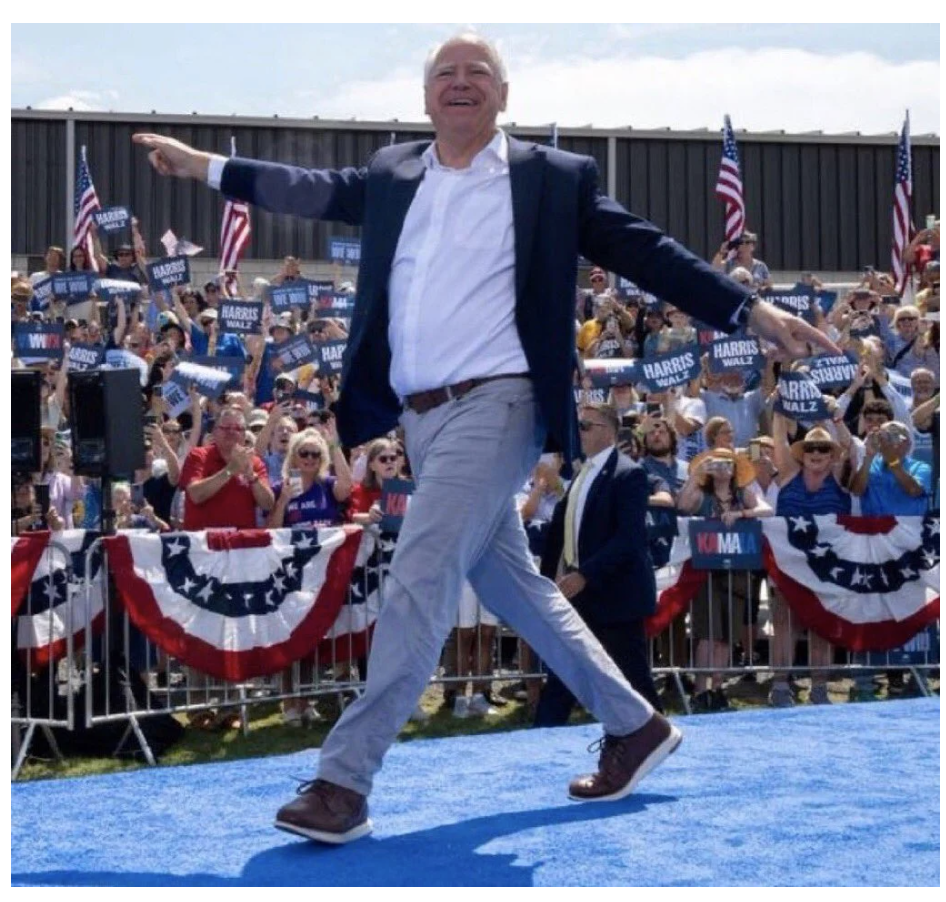
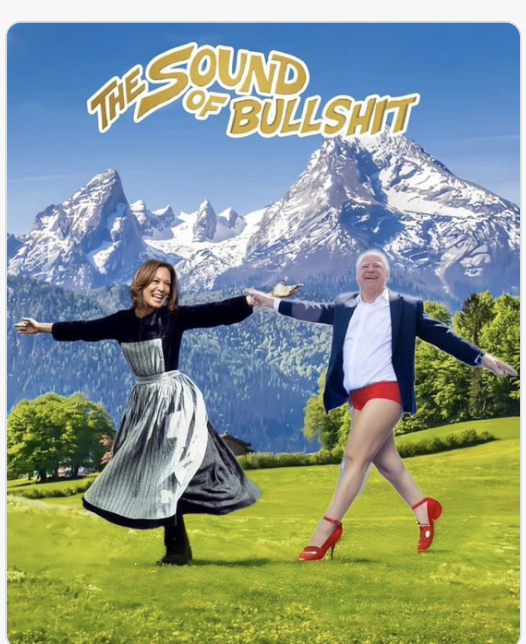
Or this bit of nonsense, beloved 1970s hymn of earnest, naive college students everywhere while they were pretend communists, and before they advanced to their careers on Wall Street.

Uh, I thought it was just Ol’ Dependables who’d gone senile down there

Here’s what knotted Elmer Fudd’s knickers:

Because it's a grift, nothing less, nothing more

Univ. of Michigan Spent $250 Million on DEI: 'It’s like giving a bunch of 6-year-olds Tasers'

John Sexton, HotAir

The University of Michigan has spent a quarter of a billion dollars on the promotion of DEI over the past decade, building the largest DEI bureaucracy at any school in the country. So what has it gotten for all of that investment? Not much according to a lengthy report by Nicholas Confessore. What it has produced is a campus overrun with DEI language.

Leaders of the University of Michigan, one of America’s most prestigious public universities, like to say that their commitment to diversity, equity and inclusion is inseparable from the pursuit of academic excellence. Most students must take at least one class addressing “racial and ethnic intolerance and resulting inequality.” Doctoral students in educational studies must take an “equity lab” and a racial-justice seminar. Computer-science students are quizzed on microaggressions.

Programs across the university are couched in the distinctive jargon that, to D.E.I.’s practitioners, reflects proven practices for making classrooms more inclusive, and to its critics reveals how deeply D.E.I. is encoded with left-wing ideologies. Michigan’s largest division trains professors in “antiracist pedagogy” and dispenses handouts on “Identifying and Addressing Characteristics of White Supremacy Culture,” like “worship of the written word.” The engineering school promises a “pervasive education around issues of race, ethnicity, unconscious bias and inclusion.”...

A decade ago, Michigan’s leaders set in motion an ambitious new D.E.I. plan, aiming “to enact far-reaching foundational change at every level, in every unit.” Striving to touch “every individual on campus,” as the school puts it, Michigan has poured roughly a quarter of a billion dollars into D.E.I. since 2016, according to an internal presentation I obtained. A 2021 report from the conservative Heritage Foundation examining the growth of D.E.I. programs across higher education — the only such study that currently exists — found Michigan to have by far the largest D.E.I. bureaucracy of any large public university. Tens of thousands of undergraduates have completed bias training. Thousands of instructors have been trained in inclusive teaching.

Given the amount invested, DEI should have blossomed into its final utopian form at UMichigan, but that hasn't happened. On the contrary, students say the climate on campus has become less positive.

Michigan’s own data suggests that in striving to become more diverse and equitable, the school has also become less inclusive: In a survey released in late 2022, students and faculty members reported a less positive campus climate than at the program’s start and less of a sense of belonging. Students were less likely to interact with people of a different race or religion or with different politics — the exact kind of engagement D.E.I. programs, in theory, are meant to foster.

So what has all the funding the the hiring of DEI administrators produced? Grievances. Lots of grievances and lots of ways to pursue those grievances.

Michigan’s D.E.I. efforts have created a powerful conceptual framework for student and faculty grievances — and formidable bureaucratic mechanisms to pursue them. Everyday campus complaints and academic disagreements, professors and students told me, were now cast as crises of inclusion and harm, each demanding some further administrative intervention or expansion. On a campus consumed with institutional self-criticism, seemingly the only thing to avoid a true reckoning was D.E.I. itself. “D.E.I. here is absolutely well intentioned, extremely thoughtful in its conception and design,” said Mark Bernstein, a lawyer and a Democrat who sits on the university’s Board of Regents. “But it’s so virtuous that it’s escaped accountability in a lot of ways.”...

In 2015, the university office charged with enforcing federal civil rights mandates like Title IX received about 200 complaints of sex- or gender-based misconduct on Michigan’s campus. By 2020, that number had more than doubled. Last year, it surpassed 500. Complaints involving race, religion or national origin increased to almost 400 from a few dozen during roughly the same period.

Case in point, a professor at the school named Eric Fretz was called out by one of his students after he admitted in advance that he was from a different generation and asked students to hold him accountable on how he used examples in class.

Lily Cesario, then a student in his class, felt differently. His disclaimer “raised a red flag for me,” she wrote in an email to Fretz. In a subsequent meeting, according to a written account Fretz later submitted to school officials, Cesario told Fretz he had wrongly asked women in the class to educate their professor about sexism and had failed to fully acknowledge his privilege.

Afterward, in the class’s unofficial group chat, Cesario asked other students if they found Fretz’s statement “problematic,” according to screenshots I viewed. “He’s going out of his way to be inclusive,” one replied. Others liked his humility. In a subsequent email, Cesario told Fretz she was dropping his course. His disclaimer was “extremely disrespectful and ignorant of the struggles that women and girls continue to face on a daily basis,” his behavior “inseparably ingrained within a larger culture of harm that exists on this campus and within the wider world.” She then filed a Title IX complaint...

Though the Title IX office found no grounds for punishment, Fretz remains stung. “It’s this gotcha culture they have created on campus,” he told me, adding: “It’s like giving a bunch of 6-year-olds Tasers.”

…..

Junk science posing as a new religion:

Some researchers argue that teaching students to view the world chiefly through the lens of identity and oppression can leave them vulnerable instead of empowered. Psychologists have questioned whether implicit bias can be accurately measured or reduced through training. The notion that microaggressions are not only real but ubiquitous in interracial encounters is widespread in D.E.I. programs; a 2021 review of the microaggressions literature, however, judged it “without adequate scientific basis.”

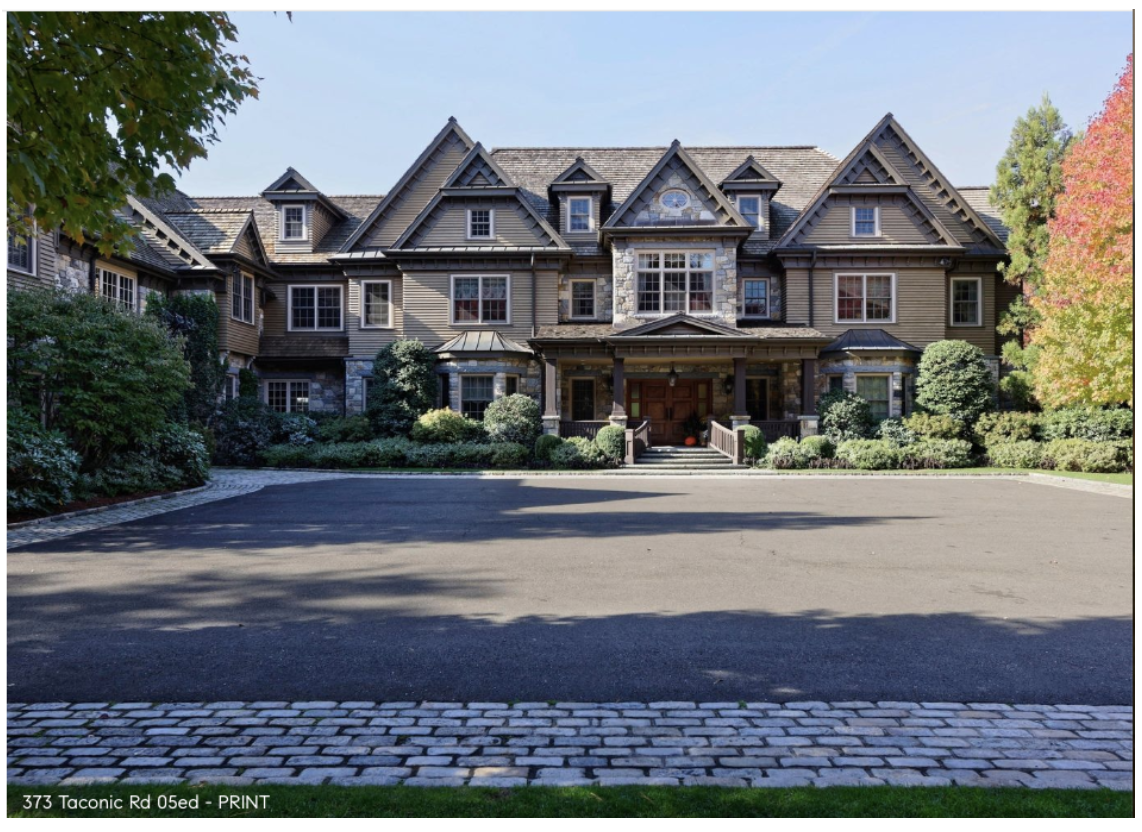
Things aren't looking good for the former owner of 373 Taconic Road; if residents up there don't start behaving themselves, Rogues Hill Road is going to lose its title in favor of Taconic UPDATED

Ho Wan Kwok and the temple of doom

Exiled Chinese billionaire with CT ties faces decades in prison for defrauding investors of millions

A federal judge has agreed to delay the sentencing of Miles Guo, an exiled Chinese billionaire and Greenwich resident convicted of defrauding investors of millions.

Guo, also known as Guo Wengui and referred to in his indictment as Ho Wan Kwok, was found guilty in July on nine counts, including racketeering conspiracy. He was scheduled to be sentenced Dec. 9, but United States District Judge Analisa Torres agreed last week to postpone the sentencing to Jan. 6, 2025. 

The judge's order requires the government and Guo's attorneys to submit sentencing filings in December. In the government's case, Torres said prosecutors must also provide the names of any victims who wish to be heard at sentencing. 

I mentioned that the Taconic house sold by his Trustee in Bankruptcy four days ago for $7.250 million, but for a full history of Mr. Ho’s troubled past, I refer you to an even earlier article I posted here in 2023.

UPDATE:

A friend who knows (a lot) about this kind of thing writes:

That Chinese guy on Stanwich? He had an apt in The Sherry Netherland ….

Get this, the guy who owned the apartment below was absolutely, positively connected to the USA govt. I forget how. Or, when. Or, in what capacity. But, spy wouldn't surprise me.

Did you know the fire that destroyed Guo's apartment ignited after he had left, and while the FBI was still there?

The significance of which is -- to me -- when the Fire Dept hosed down Guo's apt, they also soaked everything in the apt below, presumably including evidence against Guo. (If, in fact, the guy on 17 was collecting evidence. And, who the hell knows?) Maybe that's all just a coincidence.

Or not. Curious, in any event.

RELATED:

This is the Democrats’ proposed administration, and 50% of the country doesn’t care.;

This is the person Tim Walz brought in to guide the education of his state’s children”

And …

And this is Kamalla’s own pick to help shape her new, “moderate”energy policy:

Kamala Harris's Far-Left 'Climate Engagement Director' Accuses Oil and Gas Workers of Committing 'Ecoterrorism,' Weaponizing 'White Supremacy' and 'Toxic Patriarchy'

Camila Thorndike called fossil fuel industry a 'death cult' that weaponizes 'white supremacy'