If you've been looking for The Tipi and The Zebra, we've found them for you

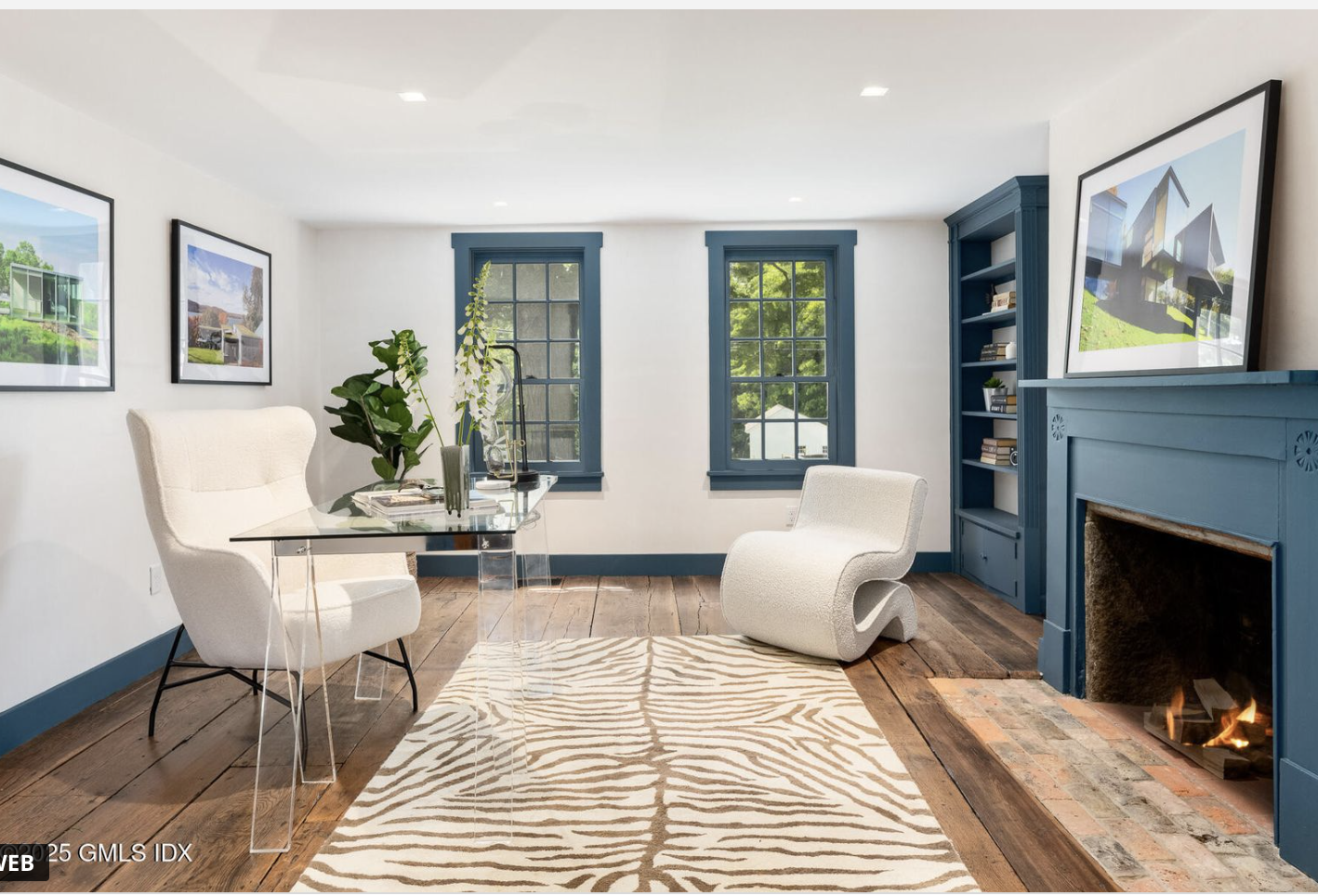
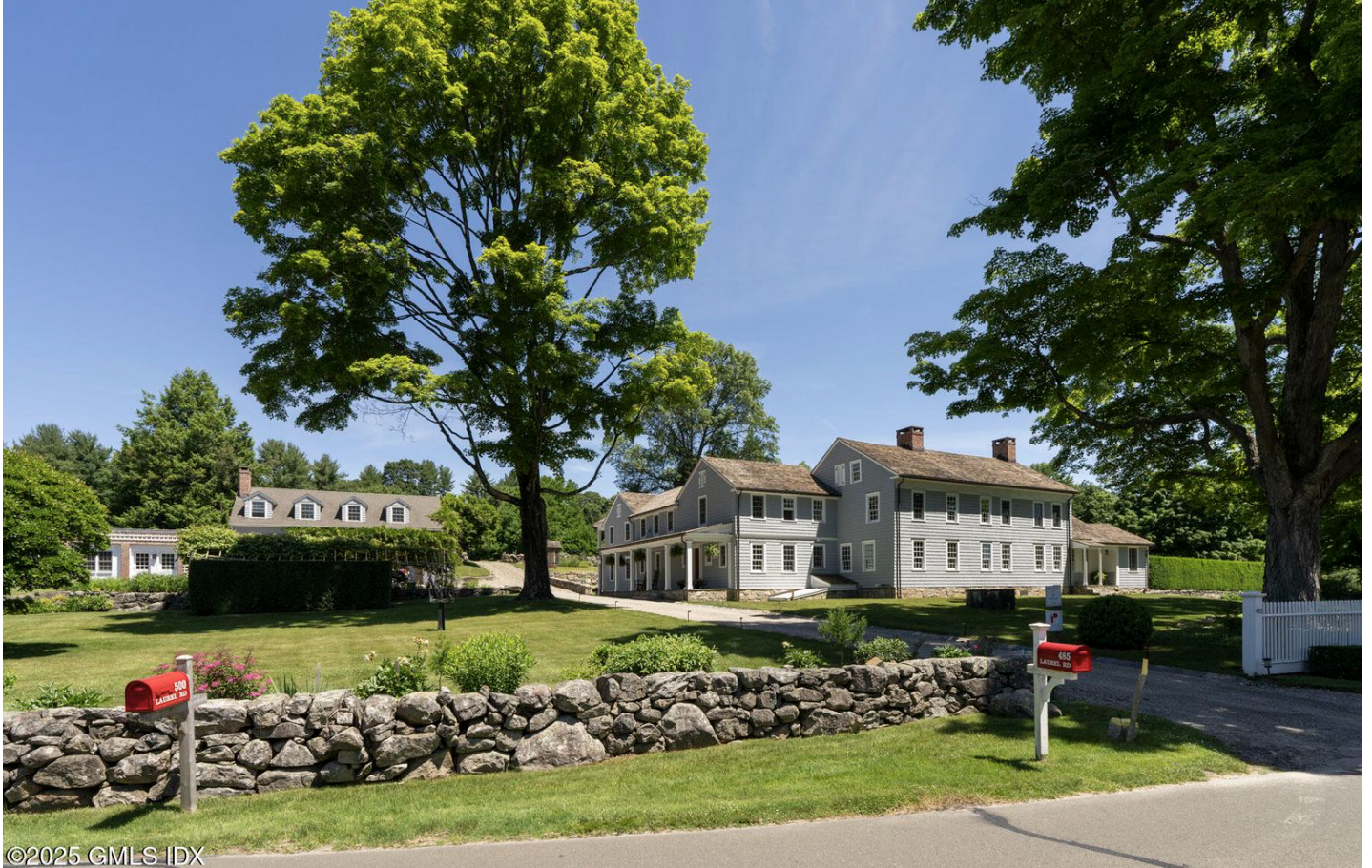
They’re in New Canaan! At 485 Laurel Road, to be precise, new to the market and priced at $7.250 million. Jokes about stagers’ cliches aside, this property looks pretty cool. Renovated 1846 house, plus various outbuildings, all on 17.5 acres. God knows what the maintenance costs for this assemblage would amount to, but the entrance price seems reasonable enough.

Riverside NoPo sale

86 Mary Lane, new construction, $3.1 million. That’s a record for modest Mary; next highest, renovations, were 23 Mary, $2.180 million in 2022; and No. 27, $1.950 million in April ‘24.

Everyone’s favorite failed builder, Jianhua Tsoi, who kept the foreclosure business alive and flourishing almost single-handedly in the mid-2000s owned this property back then, and tried unsuccessfully to find a buyer willing to pay him to build a $2.850 home on it in 2008; the only one interested in the place was the bank, who foreclosed and, eventually, sold the lot to this builder in 2023 for $566,000.

That may have changed since Politco published its poll in 2017 (UPDATED)

While we’re on the topic of welcoming muslims into western civilization and expecting them to adopt our values …. Two Muslim Nurses In Australia Suspended for Allegedly Threatening to Kill Israeli Patients

Ahmad Rashad Nadir and Sarah Abu Lebdeh were colleagues on night duty at Sydney’s Bankstown Hospital when the video was taken by Israeli influencer Max Veifer and later posted on social media.

In the clip of his face-to-face conversation with the nurses, Veifer remains calm as Lebdeh calls him a “piece of sh*t” and wishes him “the most horrible death.” The two healthcare workers then candidly express their hatred toward Israelis and their intent to kill them—suggesting that Israeli patients have already been murdered in the hospital.

From the video posted Tuesday night:

Veifer: “Let’s say an Israeli …”

Lebdeh: “I won’t treat them. I will kill them.”

Veifer continues: “If an Israeli is in Australia and God forbid something happens to him and he comes to your hospital …”

Lebdeh: “Not God forbid. A help to God.”

Nadir: “You have no idea how many Israeli dog came to this hospital and [hand-motioning to slit his throat] I send them to Jihannom [Hell]”:

UPDATE:

Lots of Hot Air, no results

…. What's also a mess, after immigration, is the state of the German electrical grid, which is so dire, so unreliable, so dependent on outside backup electricity, and so expensive that it has caused the deindustrialization of the once-upon-a-time manufacturing juggernaut of Europe.

The things that made Germany and what Germany made are now shallow husks of better times.

An unexpectedly cold winter with extended periods of the dreaded dunkelflaute - or dreary days with little to no wind - has brought that home to the wind and solar-dependent country.

For a nation so proud of their self-sacrifice at the altar of decarbonization, it would appear they're killing themselves for nothing.

These are the people claiming authority to run — or ruin — our lives

And here’s that same old lady, Jan Schakowsky, Il. and a colleague bringing their keen insight to global warming

Editor's note: On July 19, [2006] a House Energy and Commerce subcommittee held a hearing on "Questions Surrounding the 'Hockey Stick' Temperature Studies: Implications for Climate Change Assessments." Those studies, under the lead authorship of paleoclimatologist Michael Mann, claimed that that the 1990s were likely the warmest decade and 1998 likely the warmest year in a millennium. They reached iconic status in the climate change debate when they were cited in the Intergovernmental Panel on Climate Change (IPCC) as proof of unprecedented human induced global warming.

The hearing on July 19th was to hear a report to the subcommittee by a panel headed by Edward Wegman, who chairs the National Academy of Sciences' Committee on Applied and Theoretical Statistics, that found Mann and his co-authors had misused certain statistical techniques in their studies, techniques that tended to produce hockey stick shapes in the temperature history. Further they found the studies were peer reviewed by a "social network" within the paleoclimate community who wrote papers together, reviewed each others work and shared the same data sets. Here are some excerpts from that hearing that -- for the most part -- speak for themselves

* * *

On basing policy on science or science on policy

Rep. Jan Schakowsky, D-Ill.: "I'm very concerned that this is being used in a way to discredit the whole notion that our country and the rest of the industrialized and developing world ought to do anything about global warming. And that's why I ask you that question, Dr. Wegman, if this does not make you somewhat uncomfortable. Can you see in any way how this is being used and does it bother you?"

Edward Wegman: "I can understand that it's your job to sort out the political ramifications of what I have said. In some sense it's not fair for you to say well, gee, you reported on some fact and that's going to be used in a bad way."

On the same issue, from a witness in a second panel

Dr. Hans von Storch, director of the Institute for Coastal Research, GKSS-Research Centre Geesthacht GmbH, Geesthacht, Germany and professor at the Meteorological Institute, University of Hamburg: "I was a bit disappointed about the comment from the lady from Illinois who said, aren't you afraid if you say this, that this would have negative implications on the policy process. I was kind of shocked. Should we really adopt what we say if that's useful for the policy process? Is that what you expect from science? If we give advice, must we first think, is it useful for something? I think that is not the way we should operate."

On how to describe an 88 degree F July day in Washington, D.C.  

Rep. Tammy Baldwin, D-WI:
"It doesn't take much more than a quick walk outside today to know that the thermometer has reached dangerously high levels and government heat alerts are abounding these days."

Maybe they can just use Harvard Med’s cuddle room

“The speaker also claimed to have a multitude of disabilities” — I believe him

A purple-haired woman spoke about having two trans children, while another woman at the council meeting asked city leaders to imagine being in a same-sex marriage as she is and fearing that their marital rights could be "stripped away at any moment."

The city council approved the resolution by a vote of 9-2.

As a follow-up to the post below on old memories, do you remember when, seeing that the doctor treating you had a Harvard diploma on his wall, you relaxed? Those days are over.

Harvard Medical School, Citing Trump NIH Cuts, Encourages Distressed Students To 'Take Advantage' of 'Countway Cuddles' Pet Therapy

Trump's policy places a cap on 'indirect' research funding used to pay for energy bills, admin salaries, and, in one infamous case, a yacht

…. [Medical School Dean George P. Daley] (not to be confused with professor of urology I.P. Daily) went on to encourage students, faculty members, and researchers to "take advantage of the well-being resources available to members of the Harvard community." He linked to a page that touts Harvard-funded services like a "24/7 mental health support line" and the "Countway Cuddles pet therapy program," which hosts "pet-therapy sessions" meant to "combat burnout, stress, and anxiety." Attendees can "pet and play" with one of six "therapy animals": "Sophie the Golden Retriever," "Rudy the Golden Retriever," "Sasha the Black Lab," "Bodhi the Yellow Lab/Golden Retriever Mix," "Bao the miniature Goldendoodle," and "Hermie the therapy guinea pig." The program's website includes a guide on the "Right Way to Pet a Dog."

You can stop reading here; if you’re curious what all the fuss is about, though, the Free Beacon article explains it:

The NIH's Feb. 7 memo sets a 15 percent cap on "indirect costs" the federal government agrees to fund when it awards a research grant to a university. Under the system, a school that receives a $1 million grant would receive an additional $150,000 to pay for indirect costs associated with the research.

Before the change, individual universities negotiated their own reimbursement rates for indirect costs. Those rates averaged between 27 and 28 percent, according to the NIH, though some schools enjoyed much higher rates. Harvard Medical School's previous rate sat at 69.5 percent, meaning it would receive nearly $700,000 to fund the indirect costs stemming from a $1 million grant.

The grant money covers costs directly associated with a project, like equipment and researcher salaries. The indirect funding covers more general research expenses, like energy bills, computers, waste disposal, building maintenance, and, more controversially, administrative salaries and budgets.

The NIH memo calls those costs "difficult to oversee" and specifically aims at administrative spending. "The United States should have the best medical research in the world," it states. "It is accordingly vital to ensure that as many funds as possible go towards direct scientific research costs rather than administrative overhead."

The memo also notes that private foundations reimburse indirect costs at much lower rates than those previously offered by the federal government. The Gates Foundation, according to the memo, maintains a 10 percent cap on indirect costs, while the Rockefeller Foundation's cap sits at 15 percent. Those foundations pay lower indirect costs, according to the scientific journal Nature, "because historically, universities have had their costs covered by the federal government."

Should the Trump administration prove successful in its bid to end that practice—the new NIH policy is the subject of an ongoing legal challenge—Harvard will have plenty of money to cover indirect costs.

Its endowment, managed by Harvard's in-house hedge fund, Harvard Management Co., is valued at more than $53 billion. In fiscal year 2024, the school's operating expenses totaled $6.4 billion, a 9 percent increase from the year prior that was "driven primarily by higher compensation costs, increased spending on information technology services, and the ongoing maintenance of our campus," according to the Harvard Financial Administration.

Even with those increased costs, Harvard ended the last fiscal year with a $45 million budget surplus. The medical school received more than $171 million in NIH funding during the same period.

Universities have a history of generously interpreting the federal rules surrounding indirect costs. In the 1980s, Stanford University infamously used indirect funding to cover luxuries for then-president Donald Kennedy, including $6,000 for cedar lining in his closets, $2,000 a month for flowers, and $1,000 a month in laundry services. Stanford also used the funds to cover the depreciation of a 72-foot yacht that was donated to the university's sailing program to entertain donors.

Kennedy maintained that the yacht spending was a mistake (federal rules prevent schools from using indirect funds for entertainment), though he defended billing the government for the maintenance of his home, arguing that those expenses were permissible. Stanford repaid the federal government for the superfluous costs, and Kennedy resigned over the scandal in 1991. The University of Pennsylvania responded to the ordeal by voluntarily ceasing its use of indirect funds to maintain its own presidential home. The school said such expenses were legal but widely seen as "not proper," the Associated Press reported at the time.

The Obama administration also attempted to curtail indirect cost spending, having proposed an unspecified flat reimbursement rate for all institutions in 2012. Some economists praised the move, though the Association of American Universities—which represents Harvard, MIT, and other top research institutions—successfully lobbied to kill it.

"Harvard is taking the government to the cleaners," Richard Vedder, an Ohio University economics professor who leads the Center for College Affordability and Productivity, said at the time.


A trip down Memory Lane — and Greenwich pricing

that was then, this is now

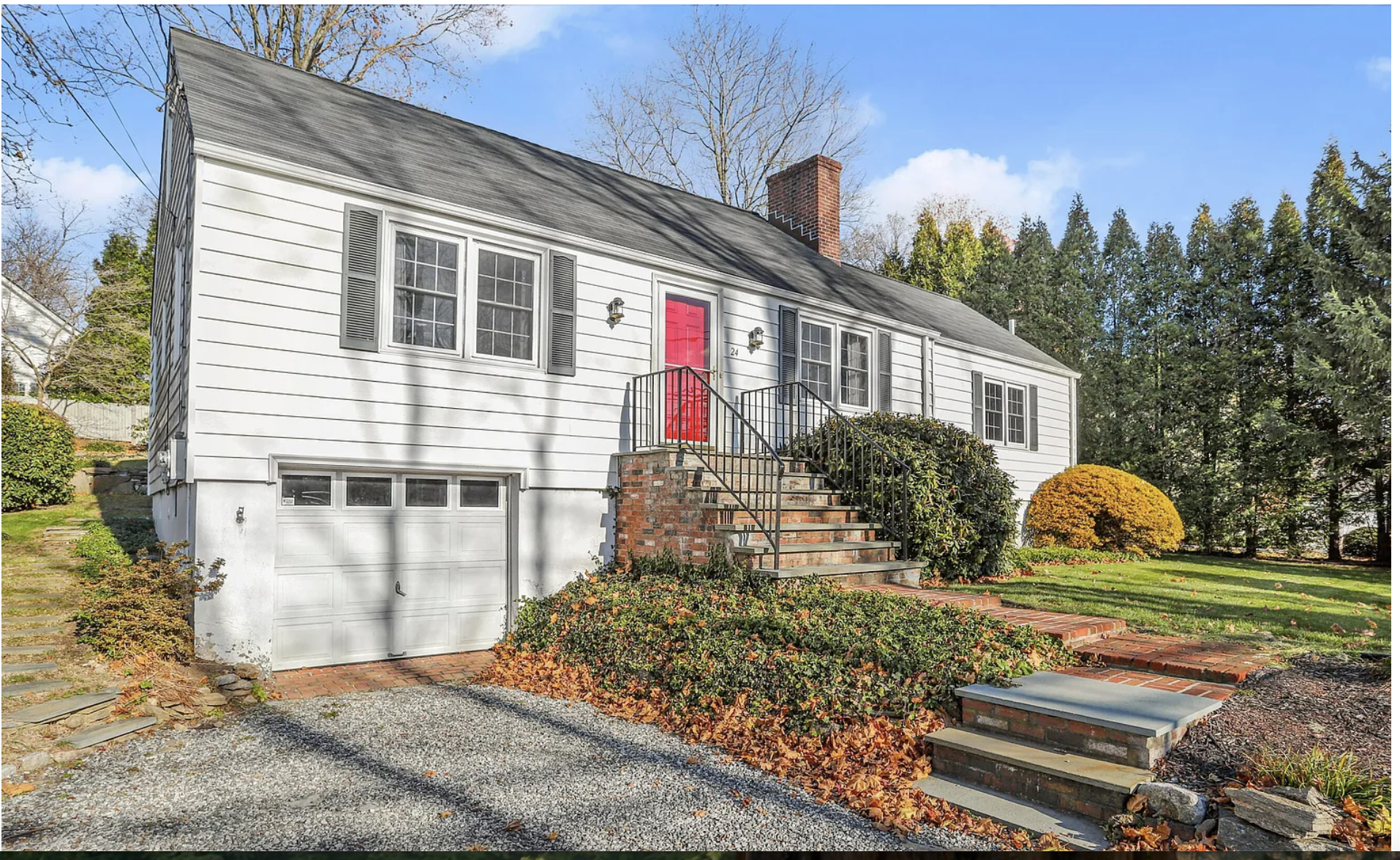
I noticed that 24 Forest Avenue in Old Greenwich has just rented for $6,500 a month, and I recognized it as the house of former legal clients of mine from way back when (January 28, 1986, to be exact — we were in Norwalk Housing Court, seeking to recover damages from a tenant, when one of the housing specialists barged into the conference room to tell us that the Challenger had just blown up). That aside, I noticed the current rent of $6,500 and knowing that my clients had eventually sold up and moved back to Germany, I wondered what they had received for it: the tax card shows that it sold in 1999 for $13,500.

Sheesh.