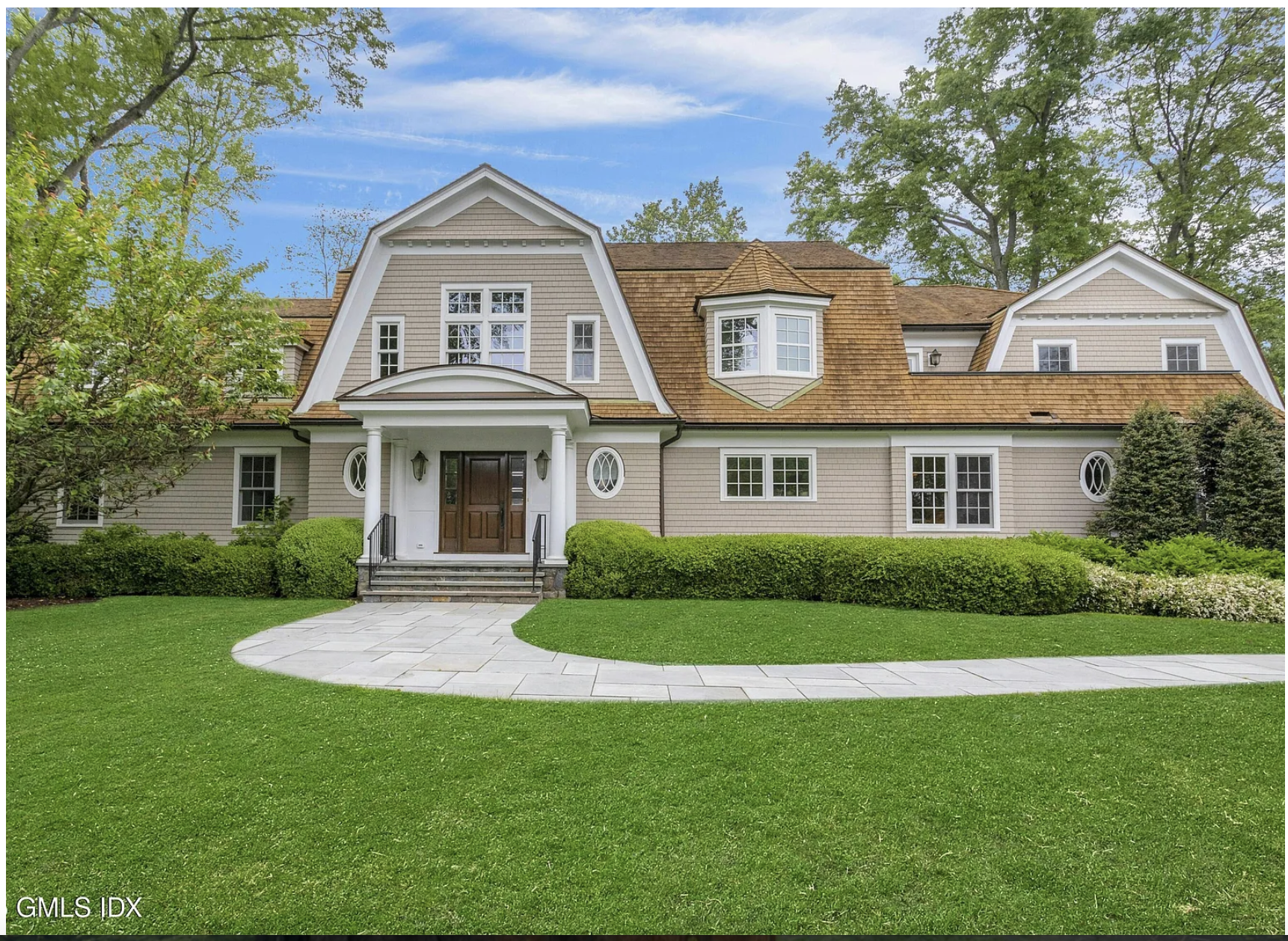
Who ya gonna believe, me, or your own lying eyes?

“And of course, as you can see, the manhattan skyline is simply breathtaking”

I’ve posted on this topic several times over the past year or so, and offered some examples of how AI can generate real estate descriptions for listings, as well as showing how one can improve existing listing photographs by inserting missing, essential items like The Zebra, the Orange, and the Tipi, so the article below isn’t news, but it’s still interesting (to me, at least). And of course, if you’ve checked out the pictures in almost any of the Greenwich listings posted here or elsewhere online you’ll know that our local realtors have been doctoring dollying up their own photos for quite some time.

Will this development put the stagers and their warehouses stuffed with furniture and animal skins out of business? My first thought was no, because most buyers are still stubbornly demanding that they actually see a property before purchasing it, but then I remembered Apple Vision goggles, like those being deployed by the savvy agent above. I believe the goggles have been temporarily pulled from the market while they’re being improved, but with AI’S capabilities expanding exponentially every few weeks, I’m sure the goggles will be back soon, better than ever.

How AI is transforming Maine real estate listings

If you’ve perused Maine real estate listings in the last few months, you might notice that photos often show bright homes with light emanating from windows against a vivid sky.

It may not be real. That’s because more and more Maine real estate agents are using artificial intelligence to market their properties, having it enhance photos, write property descriptions and even virtually stage empty rooms in homes.

National organizations and lawyers have been raising ethical concerns about the use of this technology in real estate for years. Its use has become common in Maine in recent months. Some agents recoil at the idea of using it at all, even though the technology has the potential to substantially lower the costs of staging and listing property.

“This is more of a productivity tool,” Susan Dube, an Auburn-based agent with The Masiello Group, said. “I want to focus on the money-making things like meeting clients, showing properties … and have something else working in the background to help promote me and my business.”

For the past three months, Dube has used AI for writing property descriptions, advertising, staging and sharing market updates with clients. It’s the work an assistant would typically do, but for a lot less money. Dube said she always reviews and edits all AI-generated content herself and is taking a year-long course in the subject to shore up her skills.

She’s not alone. A lot of Maine real estate agents are using these tools, Jannika Bragg of Cates Real Estate said. So are the real estate photographers they contract with. It’s easy to tell who is and who isn’t just by looking through photos and reading property descriptions, she said. 

Bragg uses AI to give her feedback on emails she writes or to occasionally stage rooms, but like Dube said she never wants to lose that “human touch” and isn’t overly reliant on it.

“I like to still be authentic,” she said. “There definitely are some properties that do call for on-site staging. But virtual staging is a lot of times more efficient, a lot more cost-effective.”

Staging a home the old-fashioned way can cost up to $5,000 for a 1,500-square-foot home, said Heather Pouliot, who stages homes as president of Pouliot Real Estate in Augusta. It costs as little as $25 per photo to virtually stage the same room, she said. Pouliot has used AI in the past, but she prefers hiring a company that will take a photo and edit virtual furniture in by hand.

“Sometimes AI has a mind of its own,” Pouliot said. “You have to be careful about it. It might move windows or distort a room.”

Using virtual tools to edit photos or stage rooms isn’t new in real estate. Houlton-area agent Andy Mooers edits the listing photos he takes by resizing or adding color to them. He takes issue with generative content, saying it often lacks personality and is used as a crutch.

It’s clear to him when an area realtor has used AI to generate listing information because it won’t actually capture the town’s essence and adds contrived details that make the place sound more like Alaska than Houlton, he said.

Others take issue with enhanced photos for being deceptive. While editing tawny grass to look green has long been something real estate agents do, Pouliot does not like when agents virtually enhance a sky or brighten a home. 

“I just feel like it can show a home in a different way than it is, it makes it look a lot nicer than it is,” she said, adding that it can spell disappointment when clients show up to view a home.

The law on this area is emergent. Automation in real estate risks data privacy breaches, inaccuracy, algorithmic discrimination, intellectual property infringements and might impact labor laws, too, according to a Maryland-based law blog. The National Association of Realtors advises members to disclose the use of AI in photos, as Dube and many other agents do.

What’s clear is that AI is not going anywhere, and most Maine agents are embracing its presence in the industry.

“Some people have never used it, and they’re terrified of it,” Mooers said. “It’s not evil, but it could be lazy.”

AI boot camp for realtors.

*(For my older readers whose memory may be a bit fuzzy these days, here’s Chico pretending to be Groucho)
Modern Journalism; and modern medicine

“Health equity reporter”.

From CTInsider, the Hearst publication that -provides 95% of the Greenwich Time’s content:

Temperatures are at an all-time high in Connecticut. It has health experts worried

Wow, scary — can we have a couple of examples? Sure! let’s get some from a disinterested expert, like “Kirsten Ek, assistant professor of medicine at UConn Health and a steering committee member for the Connecticut Coalition for Climate Action and  Connecticut Health Professionals for Climate Action.:”

As she explains it, It rains, see, and you house has poor drainage, so the water comes in, mold grows, you go down there to clean it up and end up with mold in your lungs, so yeah, that’s Global Warming!

[R]ising temperatures can also lead to [to what?]other unexpected ways. Ek said one patient at UConn recently came into the hospital with mold in his lungs. She said the patient had been trying to clean out his basement after extreme weather events caused by rising global temperatures kept flooding it, helping mold grow, since paying for a cleaning crew was getting too expensive. 

That not enough for you? Okay, try this: you go swimming, ‘cause it’s summertime, but the water’s warm, see, ‘cause it’s summertime, like I told you, and these like, bugs are all like living in it, which, like, they wouldn’t be doing if that water was ice, you know what I mean? But anyway, it’s not ice, its like all yucky stuff, and these bugs what I told you about crawl up your legs and then you die. But at least your state attorney general will sue Exxon for you and your cat will get a nice chunk of cash to make her feel all better.

Another patient, Ek said, came into the hospital with a "rapidly ascending infection going up both legs" and high fevers not too long after cooling off in brackish, shallow water at the beach. She explained that a bacteria that thrives in warm water entered his body through small wounds on his feet caused by diabetes. 

Ek said both patients ultimately survived their infections after lengthy hospital stays, but she anticipates seeing more of these infections in the future. 

Wow, how come we hadn’t heard about this before CT Insider disclosed it? Must be some kind of conspiracy going on, am I right? Am I right? Aha! I knew it!

"For neither of these people did their discharge summaries from the hospital make that connection to extreme weather and to a heating planet at all. It's silent," she said.

No man’s life, liberty or property are safe while the Legislature is in session.

I posted on this housing bill our Democrat representatives were poised to pass last Friday.

(Part of) What HB 5002 Would Do

  • Section 10: Statewide “Fair Share” housing quotas assigned to each town.

  • Section 5(b)(11): Requires as-of-right approval of 2–9 unit “middle housing” on all commercial-zoned land.

  • Section 6: Eliminates town-set parking minimums, replacing them with developer-submitted “needs assessments.”

  • Section 9: Requires state-approved local housing plans in newly established “priority housing development zones.”

  • Section 19: Grants the Attorney General power to sue towns over zoning outcomes alleged to have “discriminatory effects.”

  • Other provisions include portable sanitation infrastructure for the homeless (Section 7), a ban on hostile architecture (Section 11), and the creation of regional stormwater and waste management roles (Section 15).

With a slight delay caused by Republican opposition and time off for the holiday, the Democrats reconvened Tuesday and rammed it through — or up, as you might consider their act.

CT Democrats pass omnibus housing bill

House Bill 5002, which passed 84-67, is an expansive bill tackling issues including zoning, transit-oriented development, parking, homelessness and fair rent commissions. It combines Democratic priorities from across a few legislative committees and aims to address the impact of the severe lack of housing, particularly affordable housing, in Connecticut.

“You can’t solve this crisis one step at a time,” said Housing Committee co-chair Rep. Antonio Felipe, D-Bridgeport. “We need a big move that makes progress, and I think this bill does that.” (Translation: Only another step towards our ultimate goal of dictating and controlling all property use in Connecticut.)

…. Republicans took particular issue with the policies around zoning and parking. Debate stretched across nearly 12 hours, and centered largely on local control, what members called one-size-fits all solutions and concerns that towns don’t have the infrastructure to support more housing.

“It will change your district. It will change your municipality. It will change your town or city,” said Housing Committee ranking member Rep. Tony Scott, R-Monroe, of the bill. 

Much of the discussion Tuesday centered around a policy known this session as “Towns Take the Lead.” * The proposal analyzes the regional housing need, then divides that need up among towns and assigns each a set number of units. Towns would have to include how they’d plan and zone for those units in their 8-30j plans, which are due every five years.

It’s similar to fair share policies proposed in past sessions, and uses the methodology from a fair share policy to determine how many units of affordable housing towns would need to plan and zone for, with a general goal to increase housing stock and cut down on segregation. The bill contains some other specifications for the housing, including requirements to build units for families and for certain income levels.

Under the bill language, towns would be able to contest their assigned numbers and tell the legislature how many units they think they can accommodate, and lawmakers will approve or deny the towns’ proposals.

Opponents have said the proposal dilutes local control and imposes cookie-cutter solutions on towns. Scott, whose hometown of Monroe would have to plan for 326 units, called the numbers “astronomical,” “unrealistic,” and “comical.”

“You can’t get into that high opportunity neighborhood.”

Rep. Geoff Luxenberg, D-Manchester, gave an impassioned speech Tuesday night … and questioned why loss of local control and cost to towns was the center of the conversation.

“The cost of inaction, the cost of stagnation, the cost of looking the victims of this housing crisis in the eye and saying, ‘Sorry, we’re not going to build one more house. Sorry, you can’t get into that high opportunity neighborhood. There’s a wall that keeps you out,'” Luxenberg said, “Mr. Speaker, that cost is far too high.”

(Mr. Luxenberg is not just drunk with power, he’s also a danger when he’s driving. I do wish he’d just stay home, drunk on his sofa, off the road and out of the lives of others.)

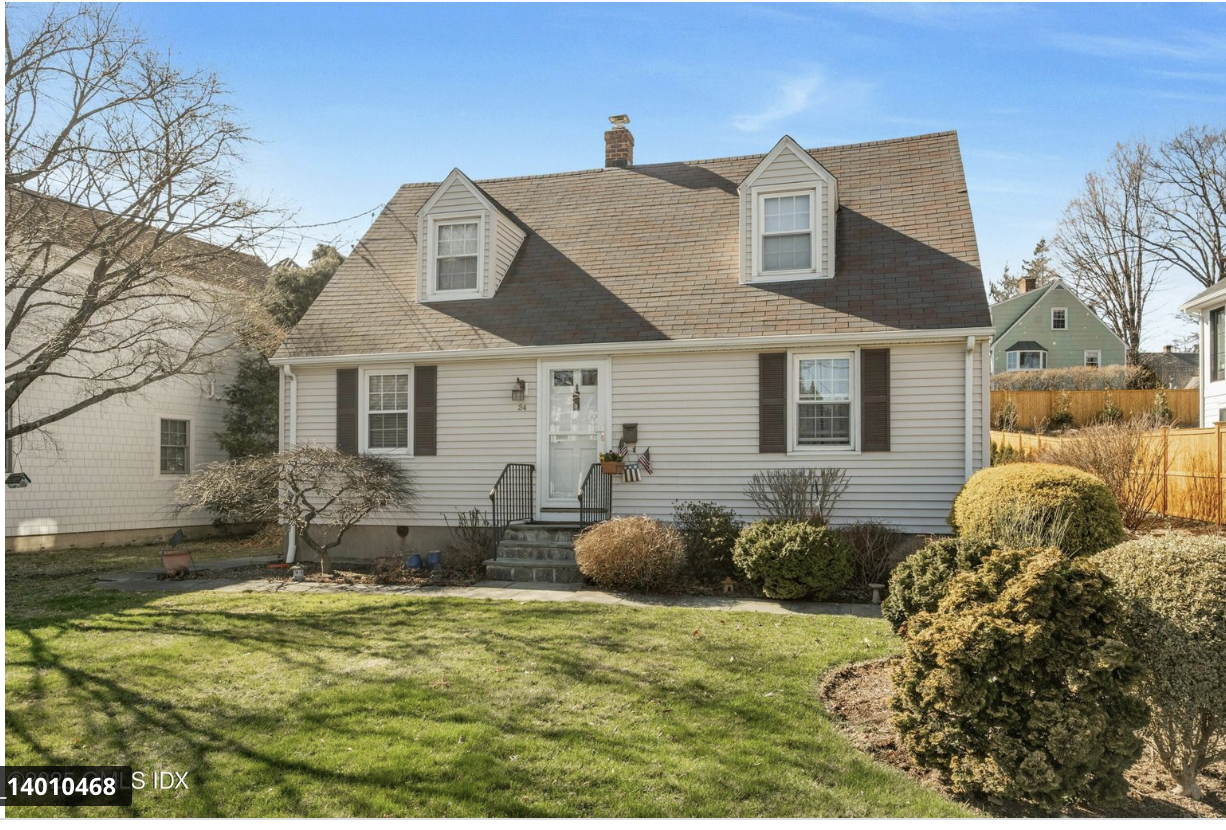
On a fundamental level, by what right does Mr. Luxemberg or any of his fellow looters claim the power aand the knowledge to determine what is everyone’s “fair share”, and distribute it accordingly. Does everyone in the state — the country — the world — have a right to live in”high opportunity neighborhoods”, whatever they are? Our own representative Steve Meskers lives literally around the block from 12 Innis Lane, that sold yesterday for $2.825 million. Not very long ago, that very basic house would have sold for less than half that sum; now, a person who could have afforded to live there has been priced out of the opportunity to join Meskers in his neighborhood. Does our all-knowing overlord have plans to “make things fair” for that excluded individual? If so, what? If not, why not?

And, even assuming Greenwich is compelled to build the 3,500 units of moderate income Meskers et al have determined is our “fair share”, who will decided which lucky members of the general public will get to live in them? Surely there are tens of thousands of state residents who would like to live in Greenwich and can’t. And millions more in the other states, and billions more around the globe. What’s the procedure here, Steve?

Too close to (his) home for Representative Meskers, I suspect

*Here’s what your betters have in mind for you with their “Towns Take The Lead” plan, of which the just-passed omnibus bill is but the beginning:

CT housing proposal would require towns to zone for more units

The agenda includes zoning reform, more money for homelessness services, a child tax credit and eviction protections

Advocates and key lawmakers said Monday they want to see towns plan and zone for a set number of new housing units — a policy that would be enforced by the state government — as one of several measures meant to make sure families can afford a place to live.

The proposal, which resembles sections of a fair share plan proposed in the past, was part of the legislative agenda shared by Growing Together Connecticut, a consortium of advocates and religious groups, during a press conference in Hartford.

The agenda includes proposals to reform zoning, put more money toward homelessness services, create a state-level child tax credit and make it harder for people to get evicted.

“Unlike many other areas of life, where the federal government plays a big role, here in Connecticut, we have 100% control over zoning, and the cost of meaningful changes are almost nothing,” [almost nothing to whom?- Ed] said Erin Boggs, executive director of the Open Communities Alliance, one of the leading organizations in Growing Together CT.

State housing experts have tied the lack of housing in Connecticut to restrictive local zoning laws that make it hard to build multifamily housing on the vast majority of the state’s residential land.

“On housing, towns have the power and the authority to do something about it, and it should be a partnership with the state,” Rojas said. “There’s a lot of discussion in this building about local control and making sure towns maintain that control, and I agree with that — to a point, though. We cannot be absolutist about this.

Housing Committee co-chair Rep. Antonio Felipe, D-Bridgeport, pushed back against some of the common opposition related to local zoning. Felipe said he also spoke in his capacity as the chair of the Black and Puerto Rican Caucus.

“I believe in local control, too. I don’t believe in local constraint,” Felipe said.

“They’re calling on these towns to take the lead, and that’s a nice way to put it. Do your part is what I’m going to ask. Do what you are supposed to be doing and make sure that people can live comfortably in your communities.” [What people? How many? Who decides?]

The Growing Together proposal, called Towns Take the Lead, would divide up the need for more housing between towns. Municipalities would then be responsible for planning and zoning for a set number of units, and documenting their goals in the affordable housing plans required to be submitted to the state every five years under Connecticut statute 8-30j.

Within a year of submitting the documents, which are next due in 2027, towns would need to put their plans in action by changing their zoning.

It has similarities to past proposals for a fair share policy that requires towns to plan and zone for a set number of units based on regional housing needs. Under fair share, enforcement would occur through lawsuits certain groups would be allowed to file against towns.

Under the new policy, it’s not clear how the law would be enforced, although speakers mentioned the possibility of attaching certain state funding priorities to compliance.

The group also supports changes to Connecticut’s eviction law that would require landlords to offer a reason when they evict someone. Such a measure would largely end no-fault evictions, or evictions that typically occur at the end of a lease.

The group also wants to see limits on the use of criminal records to deny people housing. They’re proposing banning the use of older criminal records.

The Deep State will never be defeated

Screen shot of reply to search query, “Did Biden Raise tariffs?”

The Republicans have demonstrated, as though any further proof were necessary, that they will not cut spending, or the reach of the pro-government regulatory system they’ve created — they’re as addicted to power and wealth as the Democrat members of the ruling class are. And the judiciary is right there alongside them.

There may be someone out there who has not lost hope for the republic, but I’m not one of them.

JEFFREY CARTER: Down to the Banana Republics.

“A judge just ruled that Trump’s tariffs are not kosher with him. . . . This same court, and these same businesses and states, were okay with Biden/Obama and anyone else charging tariffs. Hence, it’s political.

… The court rulings we see against Trump by activist judges will not undermine Trump. It will undermine the US legal system. We are a country ruled by law which are rooted in the Constitution and precedent. We are rapidly becoming a Banana Republic where the “law” is meaningless because of activist judges. These are judges who feel free to read into the law things that are not there. It is upsetting to people who want to have a life where they experience true liberty. When judges rule capriciously, liberty is in peril.

Glenn Reynolds, InstaPundit:

Maybe there’s a legal principle that can explain this. But there have been so many examples like this that people have stopped assuming propriety on the part of the judiciary. That’s unfortunate, but it was inevitable once a significant number of federal judges started positioning themselves as part of the “resistance,” and once the Supreme Court — and in particular, Chief Justice Roberts — decided not to put an end to this right away.

Your tax dollars at work

And you’re funding the effort.

Leave it to America’s Paper of Record to provide the proper weight to accord these whingers’ complaint:

Byram Foreclosure Sale

43 High Street, priced at $533,000, sold for $700,000. Foreclosure began in 2015, delayed (a bankruptcy stay helped) until February 2025, when it sold to this asset management company for $700,000; they didn’t do well on their “investment” it seems, if today’s sale price is all they got. The former owners stayed in the house until the bitter end and presumably paid nothing towards their debt during the past 9-10 years, so they, in contrast to the rest of the parties, made out just fine.