Small victory in relation to the trillions being wasted, but let's take it anyway

jumpin’ bureaucrats!

D.C. Appeals Court Lifts Injunction Barring Trump From Cutting Climate Funds

Stop filing claims lawsuits in district courts. Go to the Court of Federal Claims, whose purpose is *literally* in its name.

Mary Chastain, LegalInsurrection:

A three-judge panel of the D.C. District Court of Appeals voted 2-1 to lift an injunction stopping President Donald Trump’s administration from slashing $16 billion in climate funds.

Judges Gregory Katsas and Neomi Rao, who authored the opinion, voted in favor of the administration.

Rao wrote (emphasis added):

We conclude the district court abused its discretion in issuing the injunction. The grantees are not likely to succeed on the merits because their claims are essentially contractual, and therefore jurisdiction lies exclusively in the Court of Federal Claims. And while the district court had jurisdiction over the grantees’ constitutional claim, that claim is meritless. Moreover, the equities strongly favor the government, which on behalf of the public must ensure the proper oversight and management of this multi-billion-dollar fund. Accordingly, we vacate the injunction.

Background

The case revolved around the grants awarded by the EPA under the Greenhouse Gas Reduction Fund in August 2024:

In August 2024, EPA awarded $20 billion to eight nonprofits pursuant to two of the grant programs it created: the National Clean Investment Fund and the Clean Communities Investment Accelerator. Five of those grantees are plaintiffs in this case: Climate United Fund ($6.97 billion), Coalition for Green Capital ($5 billion), Power Forward Communities, Inc. ($2 billion), Inclusiv, Inc. ($1.87 billion), and Justice Climate Fund, Inc. ($940 million).

Instead of taking the usual route through the Treasury Department, Biden’s EPA used a middleman as a “financial agent” to hold the funds:

Treasury entered a Financial Agency Agreement (“FAA”) with Citibank. As set forth in the grant agreements, the funds were to be transferred from Treasury to Citibank in a “two-step transaction” involving a “drawdown” by the grantee and a subsequent “disbursement” to the appropriate Citibank account. J.A. 566. The disbursement by the grantee is deemed “an allowable cost” under “the EPA award.”

Then Biden’s EPA changed the rules of grant agreements when Trump won in November, making it harder for the department to terminate the grants.

It started crashing down after Trump took over. The FBI told Citibank to freeze the accounts associated with the grants.

Citibank complied. The EPA canceled the grants.

We then learned that Biden’s climate czar, John Podesta, funneled around $20 billion to recently founded environmental groups in 2022.

Litigation

The Republican controlled Congress repealed the Greenhouse Gas Reduction Fund during litigation.

The panel ruled that the regulatory, arbitrary, and capricious claims can only be heard in the Court of Federal Claims.

“Because the substance of the grantees’ notice claim sounds in federal contract law, the claim is essentially contractual and can be heard only in the Court of Federal Claims,” explained Rao. “The grantees cannot avoid the Tucker Act’s jurisdictional channeling by disguising a breach of contract claim as a claim that the government violated the regulations governing grantmaking.”

Second, the Court of Federal Claims has exclusive jurisdiction because the remedy the grantees seek is contractual in nature. The grantees requested an injunction barring EPA from terminating the grants, “except as permitted in accordance with the ACA, the grant award, and applicable law,” and ordering Citibank to resume disbursements “in accordance with the ACA.” The grantees maintain they own the funds and seek an injunction barring unlawful interference, rather than an order for specific performance. But the grantees’ “ownership” of the funds goes only as far as the grant agreements and the ACAs permit. And the funds are held by Citibank, which acts as a fiduciary of the government. Despite their characterization, in substance, the grantees are seeking specific performance of their agreements with the government. As then-Judge Scalia explained, “[t]he waiver of sovereign immunity in the [APA] does not run to actions seeking declaratory relief or specific performance in contract cases.” “[A] complaint involving a request for specific performance must be resolved by the [Court of Federal] Claims.”

Nobody's gonna steal MY house!

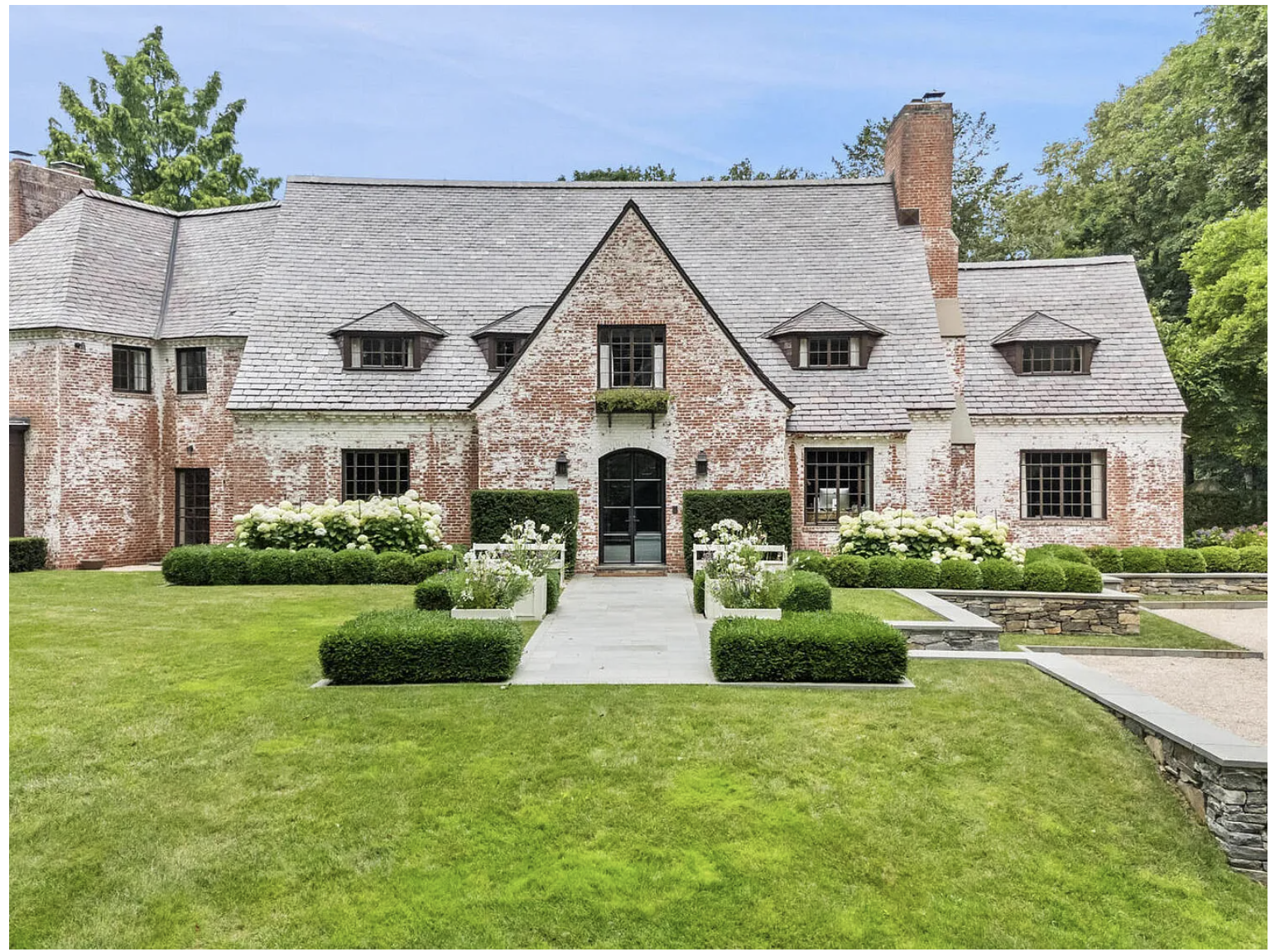
897 Lake Avenue’s listing has been renewed once again, still firmly lodged at the $5.2 million price it adopted last February after beginning in June ‘24 at $5.995. Whatever.

I include some interior shots taken from the House of Regrettable Design catalogue, just for the fun of it. Is it my imagination, or do many of the double-paned window seals appear to be broken?

Back on the market in Riverside

After failing to find a buyer in 2023 at $4.950 and $4.495, 177 Indian Head Road (all the way down at the bottom) will try again in this improved market at $4.995. Original 1960 construction with all that implies in way of design, but renovated since, the house sits in a low-lying patch of ground below Cathlow Drive, damp enough to preclude a basement.

Prior to those renovations, the previous owners tried for $5.925 million in 2007 before giving up and selling to the present owners for $4.250 in 2008. It will probably fare better this time.

seasonal water glimpses

And all these years I've assumed that "Guinea Road" referred to a historic gathering spot for our local masons; not so, apparently.

21 Guinea Road, 1938 house on 5+ acres, is new to the market at $12.450 million.

But if it didn’t involve the Italians, what is the explanation for such a fowl name?

AI Overview

It is not known with certainty where the name "Guinea Road" in Greenwich, CT, came from

. The most probable explanation is that the road's name is derived from one of the historical meanings of the word "guinea," which include a British gold coin and a colonial-era term for the west coast of Africa. 

Possible origins of the name include:

  • The British guinea coin: It's possible the road was named after the gold guinea coin, a historical British currency worth 21 shillings. The name could have been given to reflect prosperity or to commemorate a transaction or person of British descent.

  • A colonial-era geographical reference: The term "Guinea" was historically used as a European geographical term for the west coast of Africa. Early settlers may have named the road after this region, which was a source of gold and other trade goods, including enslaved people.

  • The guinea hen: The name may also be an old reference to the guinea fowl, a domestic bird that was originally imported from Africa. 

The derogatory meaning is unlikely to be the origin

It is highly unlikely that the name is connected to the modern use of "guinea" as a derogatory slur for people of Italian descent. 

  • The slur postdates the road's likely founding: This pejorative use of the word did not emerge in the United States until the late 19th century, well after the area was settled. It originated from the older term "Guinea Negro" and was applied to Italians because of their dark complexions relative to Northern Europeans.

  • The slur's origin does not connect to Greenwich history: There is no evidence suggesting a link between this ethnic slur and the naming of this specific road in Greenwich. 

But dig a little deeper, and we find this:

Guinea road greenwich ct name origin and meaning

Based on local history and the context of other historical place names, the name "Guinea Road" in Greenwich, CT likely refers to a historical connection to the Guinea Coast of West Africa, a region from which enslaved people were taken. The term "guinea" was sometimes used in colonial times to refer to Black people, regardless of their specific origin, or to an area with a Black population. 

Key details that support this origin include:

  • Greenwich's history with slavery: Greenwich had a significant enslaved population in the 1700s and early 1800s. The Greenwich Historical Society and other researchers have documented the presence of approximately 300 enslaved individuals in the town.

  • The "Hangroot" community: Local researcher Teresa Vega has identified a historic integrated community of Black, Native American, and white people in the Round Hill Road area of Greenwich, which was once known as "Hangroot". This community was home to enslaved and freed people of color and included notable Greenwich families.

  • Parallel place names: In the historic town of Ipswich, MA, a similarly named "Guinea Road" is explicitly identified as an area once home to Black people. This parallel suggests a common naming convention for areas with Black populations in colonial New England.

  • No alternative historical explanation: Local historical sources and online records do not point to an alternative, non-racial origin for the name, such as a connection to the guinea fowl or guinea hogs, whose naming is unrelated to the history of this specific road. 

The saga Continues: Cos Cob’s Chimblo Crime Family builds on tradition

Fortunately, thanks to CT’s tough gun laws, these weapons and large-capacity magazines don’t even exist, and felons like mr. chimblo wouldn’t have them in his possession if they did

I first wrote about the bad-seed branch of the Chimblos of Cos Cob in 2017*; — there’s a good branch, local, multi-generational, well-respected contractors — and eight years on, its third generation of imbeciles is still at it, so it’s probably time for an update.

January 23, 1975 marked the familes’ debut on the national stage.

From The New York Times:

3 Volunteer Firemen Held As Connecticut Arsonists

Jan. 23, 1975

GREENWICH, Conn., Jan. 22 (AP)—Three youths identified by authorities as members of the Sound Beach volunteer fire department have been charged in seven recent fires in Greenwich, including a blaze at the Riverside railroad station that caused $30,000 damage.

Steven Chimblo, 16 years old, of Old Greenwich, was charged with seven counts of third‐degree arson, and was released on $15,000 bond. His brother, Thomas Chimblo, 17, was charged with six counts of conspiracy to commit arson.

Albert Pirre, 18, of Old Greenwich, was charged with six counts of third‐degree arson and one count of conspiracy to commit arson.

The three were arrested last night.

Yesterday saw the latest installment; new generation, same old story.

Here’s the latest:

August 29, 2025: Greenwich police seize 4 assault rifles, 2 shotguns, 5 handguns in search of local home

Greenwich police seize 4 rifles, 2 shotguns, 5 handguns in ...

4 hours agoKristopher Chimblo, 36, was arrested after Greenwich police found rifles that had been converted into fully automatic weapons at his home, ...

A fond look over the decades reveals that this branch of the family has been keeping the police busy for years. Here’s just a sampling focused on Kristopher, but he’s had plenty of familial company over the years:

  • Mar 5, 2021 — Kristopher Chimblo, 32, of Harold Street in Cos Cob, allegedly threatened two victims causing them a significant amount of anxiety and fear of physical ...

  • Local man arrested twice in one day: cops

Greenwich Time

  • Jun 7, 2017 — Chimblo, 28, of Harold Street, was charged with assault in that case. He was released without .

  • Greenwich brothers accused of robbing masseuse at … Jul 17, 2017 — Frank Chimblo, 44, and Kristopher Chimblo, 28, were each charged with second-degree robbery, conspiracy to commit robbery, sixth-degree ... went to the Crowne Plaza Hotel after seeing an online ad for massage services in a hotel room, according to ...

  • Apr 14, 2015 — Shortly after 9 p.m. April 13, the suspect, identified as Kristopher T. Chimblo, of Coe Avenue, Stratford, was found in the neighborhood of his ...

  • Jun 6, 2017 — Disorderly conduct arrest in Cos Cob Kristopher Chimblo, 28, of Harold Street, was charged with disorderly conduct. He was released without bail and ordered to appear in court ...

  • Jan 18, 2018 — A local man, Frank Chimblo Jr., was sentenced to six years in jail in 2008 in connection with a drug sale to a Greenwich High School student ...

Man Familiar to Greenwich Police Faces Drug Charges ...

  • 2008, https://www.thehour.com/norwalk/article/Woman-charged-for-illegal-sale-of-narcotics-8247432.php..

  • Mar 5, 2021 — On March 1 Greenwich Police arrested a Cos Cob man by warrant stemming from an investigation where the suspect, Kristopher Chimblo, 32, ...

* Three generations of bad actors — no, not the Fondas; Henry Fonda was quite good

June 07, 2017 Chris Fountain

circa 2017

Kristopher Chimblo, 28, was arrested twice in one day (not his first arrest, not at all). There's one side of the Chimblo clan that has produced a long line of respectable citizens: builders, contractors, and such, and a 1948 Chimblo home, for instance, is still considered to be a solid, well-built structure.

And then you have their cousins, the Cos Cob Chimblos, who've been decorating the local police blotter for, I think, 3 generations. In, roughly, 1970, one of them burned down the Riverside train station, along with various other structures around Riverside, just for a lark. In the 90s a younger generation: Frank Chimblo Jr. and a sister and possibly other family members, were frequently arrested on various crimes: drug use, theft, etc. Frank ended up serving 6 years for supplying fentanyl and heroin that killed a 19-year-old town boy. Now young Kristopher has stepped up to continue that proud tradition.

There's no particular point to this posting, I suppose, but I find the long chain of criminality interesting: more a story you'd expect from Appalachian moonshiners than a Greenwich family, even if it is a Cos Cob one.

I don't remember voting to give a handful of judges the power to govern the country

Federal court strikes down Trump tariffs as illegal under federal law in appeals ruling

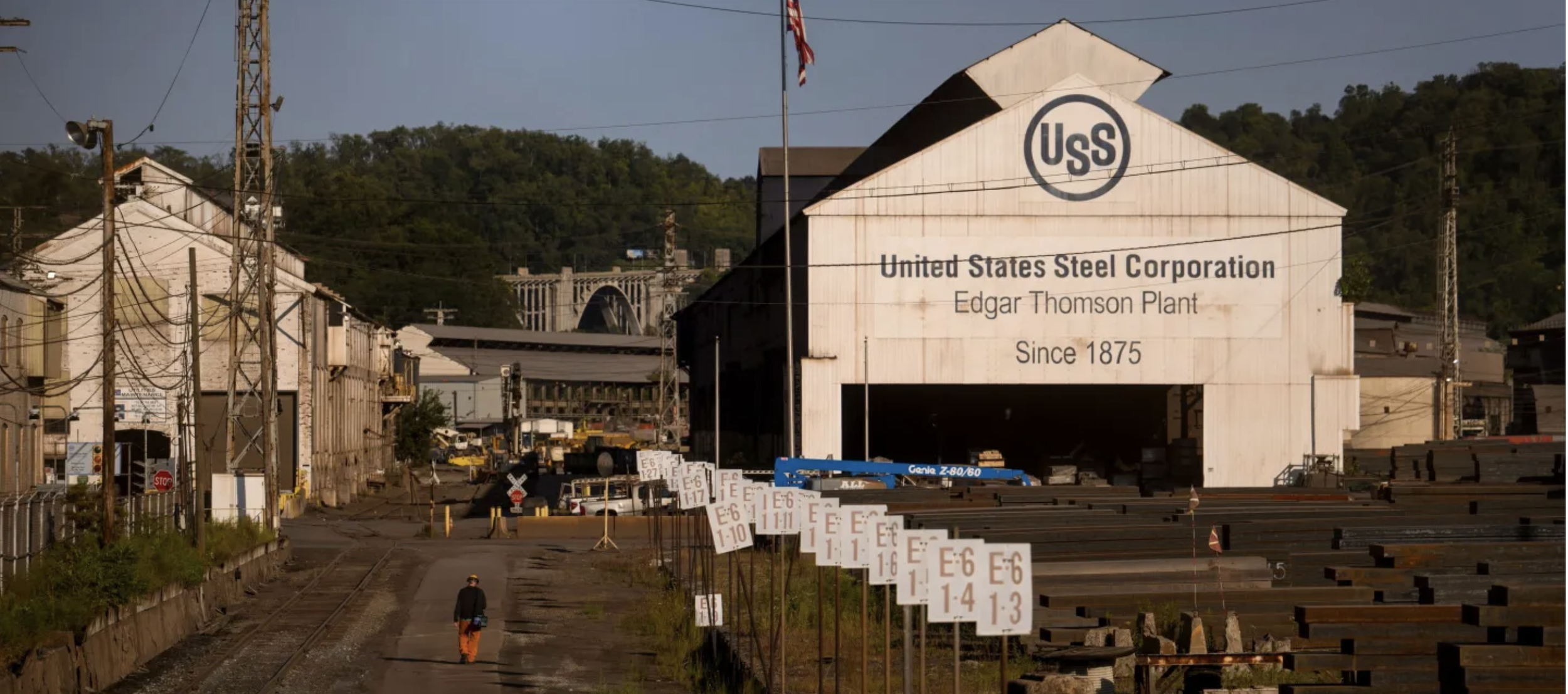
$142 billion in tariffs have come in just in the past 6 months alone, but importantly, because of the tariffs imposed by Trump, manufacturers that had shipped production offshore are bringing production back again, and foreign countries are making huge investments in American factories, like the Japanese partnering with and thus saving US Steel, and stories like this one, announced just yesterday:

South Korean Shipbuilder to Invest $5B in Philadelphia Shipyard.

“Hanwha is also reviewing the build-out of a new block assembly facility. Through this expansion, Hanwha aims to increase Philly Shipyard’s annual production volume from less than two vessels to up to 20,” the release continues. “As a global leader in [liquefied natural gas] vessels, Hanwha aims to produce LNG carriers, naval modules and blocks, and, in the long-term, naval vessels out of its U.S. shipyard.”

During the Monday meeting with South Korean President Lee Jae Myung at the White House, Trump acknowledged the length of time needed to ramp up shipbuilding.

“We really gave up the shipbuilding industry foolishly, many years ago,” Trump said. “But we’re going to start it up again.”

At least as significant, Trump, by using the tariffs as a heavy cudgel, has been able to negotiate new trade deals very favorable to the U.S. with a large number of foreign countries. The idea that any panel judges can control such a huge part of our international and domestic policies and programs is, or should be, untenable.

Culture Wars

(This is based on an old study — 1997 — and the article linked to is dated 2003, but it seems nothing has changed since except that things have gotten worse.)

Here are excerpts from the article in question. It’s lengthy, and much of it is given over to critics of Professor Ogbu — you can read those for yourself by clicking on the full article.

Rich, Black, Flunking

Cal Professor John Ogbu thinks he knows why rich black kids are failing in school. Nobody wants to hear it.

By Susan Goldsmith

May 21, 2003

The black parents wanted an explanation. Doctors, lawyers, judges, and insurance brokers, many had come to the upscale Cleveland suburb of Shaker Heights specifically because of its stellar school district. They expected their children to succeed academically, but most were performing poorly. African-American students were lagging far behind their white classmates in every measure of academic success: grade-point average, standardized test scores, and enrollment in advanced-placement courses. On average, black students earned a 1.9 GPA while their white counterparts held down an average of 3.45. Other indicators were equally dismal. It made no sense.

When these depressing statistics were published in a high school newspaper in mid-1997, black parents were troubled by the news and upset that the newspaper had exposed the problem in such a public way. Seeking guidance, one parent called a prominent authority on minority academic achievement.

UC Berkeley Anthropology Professor John Ogbu had spent decades studying how the members of different ethnic groups perform academically. He’d studied student coping strategies at inner-city schools in Washington, DC. He’d looked at African Americans and Latinos in Oakland and Stockton and examined how they compare to racial and ethnic minorities in India, Israel, Japan, New Zealand, and Britain. His research often focused on why some groups are more successful than others.

But Ogbu couldn’t help his caller. He explained that he was a researcher — not an educator — and that he had no ideas about how to increase the academic performance of students in a district he hadn’t yet studied. A few weeks later, he got his chance. A group of parents hungry for solutions convinced the school district to join with them and formally invite the black anthropologist to visit Shaker Heights. Their discussions prompted Ogbu to propose a research project to figure out just what was happening. The district agreed to finance the study, and parents offered him unlimited access to their children and their homes.

The professor and his research assistant moved to Shaker Heights for nine months in mid-1997. They reviewed data and test scores. The team observed 110 different classes, from kindergarten all the way through high school. They conducted exhaustive interviews with school personnel, black parents, and students. Their project yielded an unexpected conclusion: It wasn’t socioeconomics, school funding, or racism, that accounted for the students’ poor academic performance; it was their own attitudes, and those of their parents.

Ogbu concluded that the average black student in Shaker Heights put little effort into schoolwork and was part of a peer culture that looked down on academic success as “acting white.” Although he noted that other factors also play a role, and doesn’t deny that there may be antiblack sentiment in the district, he concluded that discrimination alone could not explain the gap.

“The black parents feel it is their role to move to Shaker Heights, pay the higher taxes so their kids could graduate from Shaker, and that’s where their role stops,” Ogbu says during an interview at his home in the Oakland hills. “They believe the school system should take care of the rest. They didn’t supervise their children that much. They didn’t make sure their children did their homework. That’s not how other ethnic groups think.”

It took the soft-spoken 63-year-old Nigerian immigrant several years to complete his book, Black American Students in an Affluent Suburb: A Study of Academic Disengagement, which he wrote with assistance from his research aide Astrid Davis. Before publication, he gave parents and school officials one year to respond to his research, but no parents ever did. Then Ogbu met with district officials and parents to discuss the book, which was finally published in January.

….

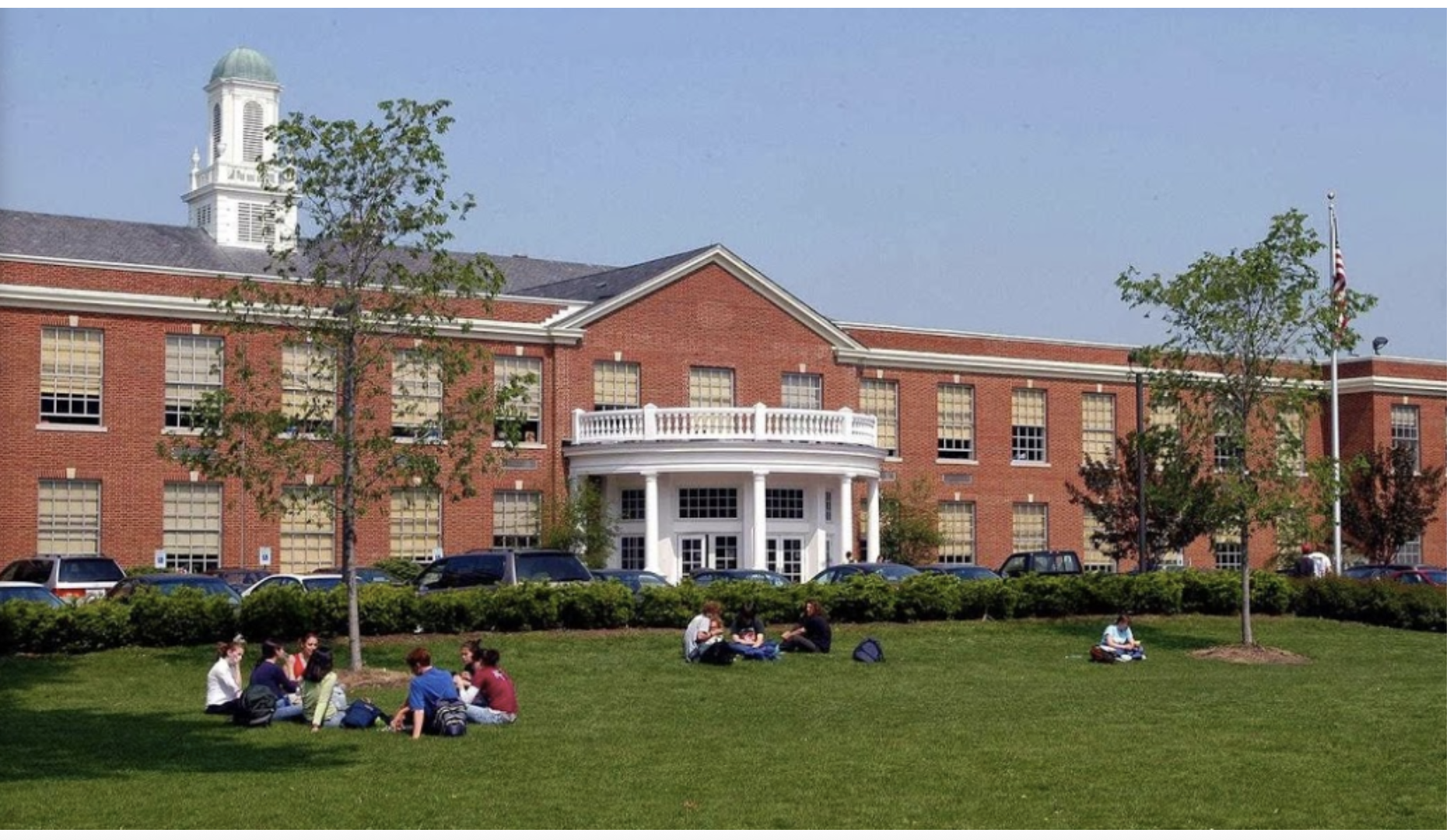
Shaker Heights is an upper-middle-class city whose roughly 28,000 residents live on lovely tree-lined streets that run through neighborhoods of stately homes and manicured lawns. Years ago, both blacks and Jews were prohibited from living in the community by restrictive real-estate covenants, but the civil rights era brought a new attitude to the Cleveland suburb, which voluntarily integrated and actively discouraged white flight. Today, blacks make up about one third of the community, and many of them are academics, professionals, and corporate executives.

Ogbu worked from the 1990 census data, which showed that 32.6 percent of the black households and 58 percent of the white households in Shaker had incomes of $50,000 a year or more — a considerable sum in northeast Ohio. It also was a highly educated community, where 61 percent of the residents graduated from college, about four times the national average. The school district was a model of success, too: Considered one of the best in the nation, it sent 85 percent of its students to college. Today, the district has approximately 5,000 students, of whom 52 percent are African American.

These were the kids of primarily well-educated middle- to upper-class parents, and yet they were not performing on a par with their white classmates in everything from grade-point average to college attendance. Although they did outperform other black students from across Ohio and around the country, neither school officials nor parents were celebrating.

….

The question of what students in Shaker Heights brought to school from their homes turned out to be profound. Black homes and the black community both nurtured failure, he concluded.

When Ogbu asked black students what it took to do well in the Shaker district, they had the right answers. They knew what to say about how to achieve academic success, but that knowledge wasn’t enough. “In spite of the fact that the students knew and asserted that one had to work hard to succeed in Shaker schools, black students did not generally work hard,” he wrote. “In fact, most appeared to be characterized by low-effort syndrome. The amount of time and effort they invested in academic pursuit was neither adequate nor impressive.”

Ogbu found a near-consensus among black students of every grade level that they and their peers did not work hard in school. The effort these students put into their schoolwork also decreased markedly from elementary school to high school. Students gave many reasons for their disinterest. Some said they simply didn’t want to do the work; others told Ogbu “it was not cool to be successful.” Some kids blamed school for their failures and said teachers did not motivate them, while others said they wanted to do well but didn’t know how to study. Some students evidently had internalized the belief that blacks are not as intelligent as whites, which gave rise to self-doubt and resignation. But almost all of the students admitted that they simply failed to put academic achievement before other pursuits such as TV, work, playing sports, or talking on the phone.

The anthropologist also looked at peer pressure among black students to determine just what effect that had on school performance. He concluded that there was a culture among black students to reject behaviors perceived to be “white,” which included making good grades, speaking Standard English, being overly involved in class, and enrolling in honors or advanced-placement courses. The students told Ogbu that engaging in these behaviors suggested one was renouncing his or her black identity. Ogbu concluded that the African-American peer culture, by and large, put pressure on students not to do well in school, as if it were an affront to blackness.

The professor says he discovered this sentiment even in middle- and upper-class homes where the parents were college-educated. “Black parents mistrusted the school system as a white institution,” he wrote. They did not supervise their children’s homework, didn’t show up at school events, and failed to motivate their children to engage in their work. This too was a cultural norm, Ogbu concluded. “They thought or believed, that it was the responsibility of teachers and the schools to make their children learn and perform successfully; that is, they held the teachers, rather than themselves, accountable for their children’s academic success or failure,” he wrote.

Why black parents who mistrusted the school district as a white institution would leave it up to that same system to educate their children confounded Ogbu. “I’m still trying to understand it,” he conceded. “It’s a system you don’t trust, and yet you don’t take the education of your own kids into your hands.”

….

In Ogbu’s work with other American minority groups, the anthropologist has identified a core distinction that he believes is central to academic success or failure. It is the idea of voluntary, versus involuntary, minorities. People who voluntarily immigrate to the United States always do better than the involuntary immigrants, he believes. “I call Chicanos and Native Americans and blacks ‘involuntary minorities,'” he says. “They joined American society against their will. They were enslaved or conquered.” Ogbu sees this distinction as critical for long-term success in and out of school.

“Blacks say Standard English is being imposed on them,” he says. “That’s not what the Chinese say, or the Ibo from Nigeria. You come from the outside and you know you have to learn Standard English, or you won’t do well in school. And you don’t say whites are imposing on you. The Indians and blacks say, ‘Whites took away our language and forced us to learn their language. They caused the problem.'”

….

Ogbu did, in fact, note that teachers treated black and white students differently in the 110 classes he observed. However, he doesn’t believe it was racism that accounted for the differences. “Yes, there was a problem of low teacher expectations of black students,” he explains. “But you have to ask why. Week after week the kids don’t turn in their homework. What do you expect teachers to do?”

….

John McWhorter, the author of Losing the Race: Self-Sabotage in Black America, says Ogbu’s book roiled the waters of academia, which he believes is too invested in blaming whites for the problems plaguing black America. “There’s a shibboleth in the academic world and that is that the only culture that has any negative traits is the white, middle-class West,” says McWhorter, a UC Berkeley professor of linguistics who is currently serving as a senior fellow at the Manhattan Institute, a New York think tank.

McWhorter’s own book, based largely on the author’s experiences as a black man and professor, blames a mentality of victimhood as the primary reason for most of the problems in black communities — including educational underachievement. “There’s an idea in black culture that says Plato and hypotenuses are for other people,” he says. “There is an element of black identity today that sees doing well in school as being outside of the core of black identity. It’s a tacit sentiment, but powerful. As a result of that, some of what we see in the reluctance of many parents, administrators, and black academics to quite confront the ‘acting white’ syndrome is that deep down many of them harbor a feeling that it would be unhealthy for black kids to embrace school culture too wholeheartedly.”

….

Ogbu is adamant in his belief that racism alone does not account for the distressing differences. “Discrimination is not enough to explain the gap,” he says. “There are studies showing that black African immigrants and Caribbean immigrants do better than black Americans even though some of them come with language barriers. It’s just not race.”

Ogbu believes he knows this firsthand. The son of parents who couldn’t read, he grew up in a remote Nigerian village with no roads. His father had three wives and seventeen children with those women. Ogbu has a difficult time explaining his own academic success, which has earned him numerous accolades throughout his career. He did both undergraduate and graduate work at Berkeley and has never left. When pressed, he says he believes his own success primarily stems from being a voluntary immigrant who knew that no matter how many hurdles he had to overcome in the United States, his new life was an improvement over a hut in Nigeria with no running water. Involuntary immigrants don’t think that way, he says. They have no separate homeland to compare things to, yet see the academic demands made of them as robbing them of their culture. Ogbu would like to see involuntary immigrants, such as the black families in Shaker Heights, think more like voluntary immigrants. In doing that, he says, they’d understand that meeting academic challenges does not “displace your identity.”