Not just Maine: State and local governments spent like drunken sailors during the Bidenomics free money spree as though there were no tomorrow, and now tomorrow has come

“Who knew?”

‘We’re screwed’: Washington County officials face outcry over proposed 40% budget hike

MACHIAS, Maine — Washington County commissioners presented a 2026 budget that includes a 40% budget hike at a lengthy and packed public hearing Thursday at which residents lambasted officials trying to manage a fiscal crisis.

The proposed budget is due to receive edits from an advisory committee. It undergirds a $11 million bond issue up for a referendum on the Nov. 4 ballot. Overhanging the budget meeting was the possibility that voters, outraged by mismanagement and frustrated by high taxes, might reject the bond the proposed budget is meant to support.

The bond would allow the county to refinance its debts after years of budget mismanagement drained its reserves. After years of spending money without verifying how much was really present in accounts, the budget ran dry earlier this year. That forced the county to take on millions more in debt that comes due in December.

With debts mounting and no cash to repay them, Washington County is on track to run out of money by the new year. Even without a bond, the county is legally obligated to provide a variety of services, making a total shutdown impossible, but the alternative remains unclear.

“We’re screwed,” Commissioner Courtney Hammond said ahead of the meeting.

The ultimate product will require far more from Down East towns. It means more budget battles between town select boards and their constituents in 2026 as governments weigh raising taxes, cutting services or both to cover county expenditures that would be fixed. A budget advisory Committee is the towns’ only chance to have a say on the county budget that they must pay for, though it remains unclear what may be cut.

“We simply won’t have enough cash to continue to keep the county functioning without doing something else dramatic, and I’m not sure what that is right now,” Eastport City Manager Brian Schuth said ahead of the meeting before being elected to chair the advisory committee.

“We’re screwed,” Commissioner Courtney Hammond said ahead of the meeting.

Background

September 4, 2025:

Washington County asks voters to borrow $11M to cover years of budget mismanagement:

Washington County is asking voters to approve an $11 million bond issue to help fill a multimillion dollar gap in its budget caused by years of mismanagement.

Inaccurate recordkeeping and slow audits caused officials to repeatedly overestimate the county’s reserves and underestimate how much it needed to raise taxes to cover its expenses. After using up millions from a federal COVID-19 stimulus bill and taking out millions more in short-term loans, the county is now deep in debt that it needs to refinance.

“It won’t be pretty,” Commissioner Billy Howard, a Republican from Calais, said of what would happen if voters turned them down. “We’re gonna be in a real pickle.”

The issue started more than five years ago. Between 2020 and 2024, county officials carried estimates of surplus cash from each year into the next year’s budget “without verifying that the funds were actually present,” said Renee Gray, Washington County’s manager.

The county’s 2021 audit was only completed this August. Auditors reported that the books were out of balance and that the county had done little to reconcile them. Compounding the problem, funds from the federal American Rescue Plan Act of 2021 were placed in the general fund, keeping cash flowing and preventing officials from noticing the dwindling balance.

“Had it not been for the ARPA funds, the county would have recognized the cash flow shortage a lot sooner,” Gray said.


Well, duh: Developers have to be able to afford to build affordable housing, or they won’t

A Maine city’s push to expand low-income housing has driven developers away

Portland voters changed a city rule in 2020 intending to force the creation of more affordable housing, but local experts argue it inadvertently stymied the development of any large housing projects in the city.

Now, Portland housing advocates want to see the city axe or alter that rule that requires new developments to make some of the units affordable for those earning less than area median income. 

“Only three projects have been done with a total of fewer than 200 units in the five years since that ordinance took effect,” said Jonathan Culley, managing partner at Redfern Properties, a multifamily housing developer in Portland. 

Portland’s inclusionary zoning rule requires developers of housing projects with 10 or more units to set aside 25 percent of the units as affordable housing. The units must be affordable to people earning up to 80 percent of area median income, which the Department of Housing and Urban Development sets annually. 

In Portland, 80 percent of area median income for one person is $72,700, or $83,100 for two people and $93,500 for a three-person household. 

While the rule appears to promote the creation of more affordable housing, it has instead made Portland less appealing to developers, many of whom have taken their business elsewhere or focused on smaller projects. This accidental effect doesn’t help the state meet its goal of adding as many 84,300 units by 2030 to fight a statewide housing shortage.

Portland’s rule would require a developer building a 100-unit project in Portland to ensure 25 of the homes are affordable for residents earning up to 80 percent area median income. If they can’t, the developer must pay a fee of $182,830 per unit, which goes into Portland’s Housing Trust Fund, according to the city’s website. That would total a fee of nearly $4.6 million for the 25 units. 

“We do rental apartments, and so we would never pay the fee-in-lieu because it would be far too expensive,” Culley said. 

High-end housing developers are more likely to pay the fee instead of creating the affordable units because they’re better able to pass the expense on to their residents, said Eamonn Dundon, advocacy director for the Portland Region Chamber of Commerce.

Developments that are smaller than 10 units, subsidized by MaineHousing or approved before the rule change took effect are exempt from the inclusionary zoning requirements, according to Dundon.

The rule was enacted by referendum vote in November 2020, which also means city officials can’t alter it for five years. But this was not the first time Portland had inclusionary zoning. 

…. Since the change took effect, only two projects totalling 119 units that had to comply with the rules have launched, according to Dundon, who has been collecting data on Portland housing projects dating back to 2014. 

Meanwhile, Dundon knows of four more large housing projects totaling 324 units that have been scrapped since the uptick in inclusionary zoning. More projects may be stalled because developers are waiting to see if building costs or interest rates fall, or if Portland changes its inclusionary zoning rules.

“It’s an impossible thing to quantify, but we know that people are holding back in hopes that there will be changes to the policy to make more developments feasible,” Dundon said.

Culley said his development company has projects totaling more than 800 units that are “stuck unless there’s a material change to the inclusionary zoning requirements,” Culley said.  

Councilor Pious Ali [Muslim immigrant from Ghana] said Portland “regularly reviews policies like inclusionary zoning to ensure they are meeting their intended goals,” but did not comment on whether a review of the ordinance has been scheduled for later this year. 

“Conversations about housing affordability and the effectiveness of our current tools are ongoing,” said Ali, who is also chair of the council’s housing and economic development committee. “Any updates or evaluations would be part of a broader, public process involving community input and council deliberation.” 

City leaders are not actively considering any proposed amendments to Portland’s inclusionary zoning law, according to Jessica Grondin, spokesperson for the city. 

Even if developers want to create workforce housing, Culley said external factors like high interest rates and the rising cost of materials and labor have driven up the cost to build. When that happens, property developers need to increase rental or sale prices in order to turn a profit and secure financing from banks and investors needed to make the project happen. 

If a certain number of units need to be priced at a point that people making less than area median income can afford, that increases the likelihood of a developer losing money. 

“A developer needs to be able to clear certain profitability thresholds to secure financing and if they can’t do that, they’re either going to pass that cost off to the consumer or they’re not going to build, and I think we’ve seen that play out in Portland,” Dundon said. 

To avoid losing money to the city’s inclusionary zoning restrictions, Culley said he’s seeing developers take their projects elsewhere. This is reflected in the Greater Portland Council of Governments housing database, which shows Scarborough, Biddeford and Westbrook permitted more than 460 units combined in 2024, while Portland permitted slightly more than 200 in the same year. 

“We have unrelenting demand for housing in the Greater Portland region and people who are going to put skin in the game to develop housing are going to follow the path of least resistance,” Dundon said. 

Portland’s burdensome inclusionary zoning requirements have also incentivized developers to build smaller developments, as the rule only applies to projects with 10 or more units, Culley said. 

While any additional housing helps the region’s gaping housing shortage, it slows the region’s progress on its goal of adding at least 76,4000 units by 2030 to make up for historic underproduction and account for expected population growth.

“We’ve definitely seen a lot of nine-unit projects,” Culley said. “We’re trying to do 200-unit projects because that’s how we’re going to solve our housing crisis. We’re not going to solve it with buildings of three, six or nine units.”

…. [C]ities shouldn’t shy away from welcoming market-rate housing, Culley said, as research shows increasing housing supply leads to lower rent prices across the board. 

“The biggest beneficiaries of Portland’s inclusionary zoning policy are the landlords because with no new production there’s limited competition, so they can be more selective and take the maximum allowed rent increases from their tenants.” 

Ed Markey has the sads, wishes we would jail election deniers

It’s unclear whether the senator is calling for the jailing of all who question election results, or just his political opponents, but in case it’s the latter, and we would expect no less than this fierce defender of democracy, here are some additional targets for him and his Brazilian allies:

greetings from alligator alcatraz!

Just one of the many reasons we wish New Yorkers and Massholes would shelter in place, at home


Artsy New York couple accused of poisoning their elderly neighbor's trees to get a better view at their summer house

A New York couple is accused of poisoning their blind, elderly neighbor's trees to get a better view from their Maine summer house.

Stephen Antonson, a painter and sculptor, and his wife, Kathleen Hackett, an interior designer and author, bought the $320,000 home in Rockport in 2017.

They immediately began asking their neighbor, Ruth Graham, a widow who was pushing 90 at the time, to remove trees in her garden which would have given them a stunning view of Penobscot Bay.

Graham refused but the couple allegedly persisted, at one point sending her a handwritten note ostensibly from their teenage children begging her to sell them the land.

She once again declined, but the following year in 2021, she began to note that her trees were dying, according to reporting from The New York Times.

An investigation was launched which revealed the trees were killed by 'herbicidal poison'.

The poisoning's impact was, 'limited to a distinct corridor of trees directly in line with the deck of the Antonson residence', according to a report from the Maine Board of Pesticides Control.

Antonson and his wife have denied any wrongdoing, but he has agreed to pay a $3,000 fine after signing a consent agreement earlier this year refuting responsibility.

The couple bought this summer home in Rockport, Maine  2017 and immediately began complaining about the trees on Ruth Graham's property that blocked their view of the Penobscot Bay, according to The New York Times

The neighborly dispute began almost as soon as the couple moved in, according to Graham's relatives, even though she allowed all her neighbors, including the Antonson-Hackett family, to freely use her dock to swim and launch boats.

….

Just before the summer of 2020, Antonson and Hackett sent Graham a note that was signed by their children, both of them teenagers at the time.

'It means a great deal to us to have such an accepting and generous neighbor,' the note read obtain by the NYT read.

 'As my brother and I grow older, and our activities become more active and outdoorsy, we’re always looking for an easy and more accessible place to play to maximise (sic) our number of outdoor activities.'

'We understand that the land behind our house is owned by you, and since my brother and I are looking for a backyard of sorts, think 25 feet of land is a reasonable number,' the note, penned in childish handwriting, continued.

Ruth Graham was pushing 90 years old at the time of the feud between her and the Antonson-Hackett family

'My parents have agreed to pay for the surveyor fees and the attorney fees. Would you consider selling us a slice of land?'

Graham showed this strange note to her son, Steven Graham, who was handling her affairs.

Steven told The Times that he and his mother thought the note 'was ridiculous'.

They both agreed that the note likely came from the parents themselves and was passed off as an innocent request from the boys.

Graham also believed Antonson and Hackett were using her old age and frailty to try to push her around, so she declined to sell her land.

When she began to notice her trees dying the following year, she contacted an arborist first, which triggered a series of escalations all the way up to Maine's Board of Pesticides Control.

Investigators from the board found that six to eight cedar trees and about four maple trees were dead or dying.

They all had bore holes in them. Liquid discovered in the holes were tested and was determined to be herbicidal poison.

The poisoning's impact was 'limited to a distinct corridor of trees directly in line with the deck of the Antonson residence', according to a report from the board.

Graham, afraid the dead trees would fall on her house, simply paid to have them removed.  

'She didn’t want to get involved in an adversarial situation with her neighbor and be uncomfortable every time she came out of her house,' her son said, explaining why his mother didn't pursue further action at the time.

That changed in the fall of 2023 when a friend of Graham's noticed a whole new road of trees had died on her lawn.

The pesticide investigators then returned to her home and found even more dying maples, each about 30 or 40 feet tall, with poison dumped on their bases.

Again, the trees were abutting Antonson and Hackett's rear windows.

'The Board finds that the positioning of the affected trees in addition to prior correspondence from the Antonson’s to the Graham’s requesting tree removal indicate that Antonson would have been the only one to benefit from the application of herbicides to the affected area,' the board's report read.

The report also noted that Antonson denied administering the poison. A lawyer for Antonson and Hackett said the couple has no comment.

Lucrezia Borgia of brooklyn

In a bio posted on Amazon, Ms. Hackett boasts of being the family’s “Chairman of the Ethics Committee”. She should admit her incompetency and resign.

Social Graces

hedgies celebrate at the now-annual Round Hill Club Ozempic party

A friend of mine, old money Greenwich, and intimate with all the proper clubs and organizations in town, recently told me that the new money 30-somethings finance crowd now infesting those same institutions are all on Ozempic and other weight-loss drugs. Not because they’re fat — their basement gyms take care of that — but because it’s the new thing, and one can’t possibly carry on a conversation with one’s peers at social gatherings unless you can knowledgeably discuss the respective merits of Ozempic vs Wegovy or Zepbound.

I was initially skeptical — who would voluntarily inject a drug into his body that sees new, dreadful and deadly side effects reported daily? – but I saw this related story today, and realized that my friend was probably not exaggerating and perhaps even understating the fad now sweeping through what passes for high society.

I ran into an investor friend who was summering in California. He ordered a glass of Santa Barbara pinot and told me: “I didn’t drink for a year. Then on New Year’s I woke up and realized how boring my life had become. So I had a few drinks that day, and suddenly life had color again.”

When I asked why he quit in the first place, the answer was simple: better sleep, fewer distractions, full immersion in work.

He’s the type who goes all in, which is part of what makes him world-class. So when he discovered longevity, he didn’t dabble. He installed a hyperbaric chamber, bought an infrared sauna, and swapped happy hours for tennis matches. A year later, he’d landed on a middle ground. Still disciplined, but now sipping a couple of glasses of wine. Nothing extreme. And he seemed lighter, even happier.

Listening to him explain his new regimen, I realized how far we’d drifted from our twenties. Back then it was shots of top-shelf tequila. Now it’s top-shelf supplements and IV shots of NAD+.

In Los Angeles, status used to mean a G-Wagon in the driveway, a Nobu reservation, a Riviera golf membership, or a Bird Streets house “next to Leo.” That game isn’t gone, but the subtler flex now looks less like Rodeo Drive and more like a medical lab. The question isn’t “What car are you driving?” It’s “What’s your protocol?”

Designer closets have given way to microdosing GLP-1. Hollywood Bowl tickets have been swapped for Hyrox race entries that sell out faster than Coachella.

Bryan Johnson, Andrew Huberman, and Peter Attia are the new A-listers. Nobody’s quoting movies anymore, but everyone’s comparing T levels.

In tech WhatsApp groups, biomarker screenshots now circulate with the same energy Porsche waitlist confirmations once did. Even the biggest celebrities have joined in, turning their “health journeys” into content. In August, the Kardashians flew to Mexico for stem-cell therapy banned in the U.S., a ban that only made it more exclusive. Naturally, it became both an Instagram flex with a million likes and a tabloid headline.

Part of it is just age. My friends are getting older, and the ones with early-adopter instincts—and money—have found a new playground in personalized medicine.

The same people who once hunted obscure apps or underground music are now swapping supplement stacks and sleep hacks.

COVID accelerated it. Locked indoors, people built home gyms, experimented with diets, and turned longevity from a fringe hobby into a mainstream obsession. The old signals also got boring. A Ferrari says money. A cold plunge says enlightenment.

Shades of the Ol’ Possum, No-Show Jones

A man has been arrested after police spotted him driving what appears to be a Power Wheels Barbie Jeep Wrangler in morning rush hour traffic. According to a report by the Prince George Royal Canadian Mounted Police, the man was intoxicated and had a suspended license. 

The incident took place on Friday, September 5, according to authorities, at around 9 a.m. Police officers in Prince George, British Columbia say spotted the man driving a toy car down Fifteenth Avenue near Nicholson Street, in the midst of the traffic-heavy morning rush; this, obviously, presenting a danger, the police stopped the driver. 

During the stop, authorities said that police saw signs the man in the toy car might be impaired; he was asked to perform two breath tests, and they both reportedly resulted in showing he was over the legal limit. Police also discovered that the man had a suspended license, according to authorities. 

The man was arrested, and charged with prohibited driving. He was issued a 90-day driving ban and has a court date scheduled for December. 

(Bonus background material courtesy of Google)

AI Overview

"She forgot to take away my John Deere" is a reference to a famous story and lyric about country music legend [and notorious drunk] George Jones, where his then-wife, Tammy Wynette, took his car keys to prevent him from going out, but he drove off on his lawn mower instead.

The line, "She might've took my car keys, but she forgot about my old John Deere," has become iconic and is widely used in country music and cultural references. 

The Story

  • The Setup:

    In the story, George Jones's wife, Tammy Wynette, was tired of his drinking and hiding alcohol. One night, she took all his car keys to stop him from leaving. 

  • The Escape:

    Undeterred, Jones went to his garage, found his John Deere lawn mower, and drove it to a nearby liquor store. 

  • The Legacy:

    The incident became a well-known anecdote in country music lore and was famously referenced in the Vince Gill song "One More Last Chance". The lyric and the story have been shared and repeated for decades in country music circles. 

This was reported (and commented on here) earlier this week, but it shouldn’t disappear under the tsunami of Charlie Kirk news

especially to burned-out homeowners expecting help

If FireAid benefited mostly ‘non-profit’ profiteers, Big Philanthropy is just a giant con

Nearly eight months after the FireAid concerts raised $100 million to help victims of the Los Angeles wildfires, essentially none of the cash has actually gone to help victims.

Instead, the Annenberg Foundation has showered the money on politically connected nonprofits that burn the donations on social-justice activism and other absurdities. 

Of course, the foundation honchos calls them “trusted local nonprofits” that are concerned with “connection and well-being across entire communities.”

Trusted by whoWhich communities?

Certainly not the actual people who were burned out of their homes.

So who did get helped?

  • The Alliance for a Better community, which “advances social, economic, racial equity and justice for the Latina/o community” got $350,000.

  • $250,000 went to FreeForm, which claims it “drives systemic change” on gender-based violence. Stopping violence against women (if that’s what the group actually does) is a fine cause, but has nothing to do with fire relief.

  • Even odder: The $100,000 for the California Native Vote Project, which says it assists “Indigenous leaders seeking to pursue elected office for the very first time.”

  • In perhaps the most “meta” grant, FireAid sent a quarter-million bucks to the Center for Nonprofit Management, which calls itself a “nonprofit capacity building organization” dedicated to “accelerating positive social change.”

Nonprofit groups donating money to nonprofit groups that teach nonprofit groups how to most effectively support other nonprofit groups . . . have we got that right?

In the 40 years since LiveAid set the pattern for benefit concerts, superstars have lined up to raise funds in the name of AIDS, farmers, 9/11 first responders, Haiti, African famine and a host of other worthy causes.

People rightly dug deep to help the needy, near and far.

Yet a whole industry of middlemen has evolved to divert this charity off into an unaccountable vortex of professed do-gooders who mostly seem to scratch each others’ backs.

It’s sure looking like Big Philanthropy has become one giant con.

Looking like?

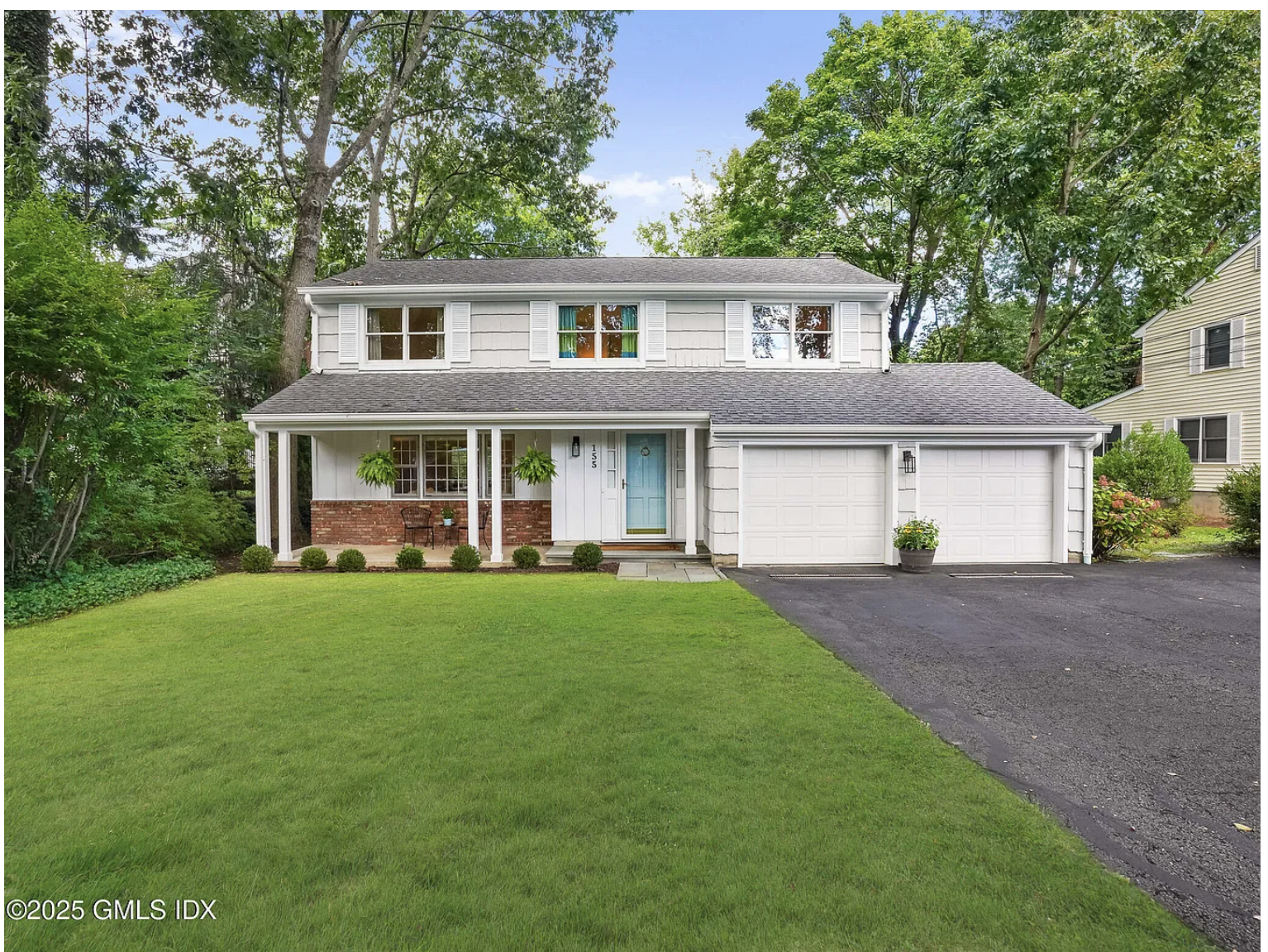
Riverside pending sale

155 Riverside Avenue, a 1965 Murphy house* built on a slab in a swamp, was priced at $1.689 million and is probably going for more, considering it went pending in just 10 days. It looks as though the kitchen and baths have been updated but it looks essentially the same as it did when my friend David Carlisle lived there in 1970; I don’t know who aged better, David or the house (I haven’t seen David since high school, but the house, at least, is still with us.

*So named by us locals in honor of a local builder, Murphy, who specialized in building marginal house on marginal land and selling them at marginal prices: I believe this one sold for $27,000 back then, which even in 1965 was pretty cheap.