
Two quick sales, each pending after bidding wars
/Photograph in july, sell in february
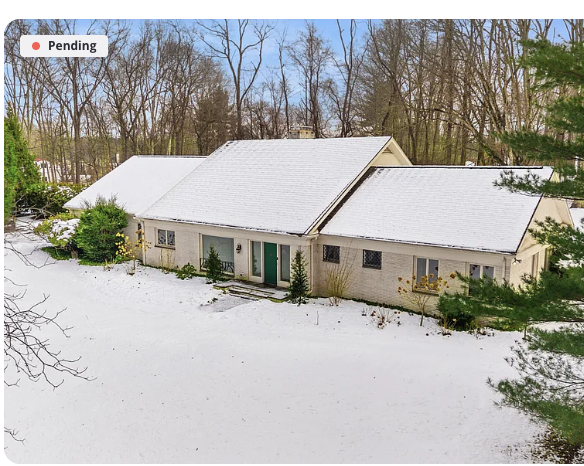
17 Pintail, $3.950 million asked.
31 Duncan Drive, $1.950 million and going higher.
Greenwich, Connecticut real estate, politics, and more.
Greenwich, Connecticut real estate, politics, and more

Photograph in july, sell in february
17 Pintail, $3.950 million asked.
31 Duncan Drive, $1.950 million and going higher.

WATCH: Alaska Senate Candidate Mary Peltola (D) explains that her "Eskimo name" is "the one who rolled."
— Townhall.com (@townhallcom) February 17, 2026
"Our names are non-gendered. We also do not have pronouns...We are so far ahead of the curve!" pic.twitter.com/hdeLfGW9E1

BUDGET CUTS: NYC Mayor Zohran Mamdani aims to cancel 5,000 NYPD officer hires and proposes a cut to the department's budget to address the city's deficit. https://t.co/PRmpodkVU6
— Fox News (@FoxNews) February 18, 2026
To be fair, what’s it matter? New York law and its courts have already turned enforcement into a meaningless catch and release exercise, so why continue the farce? All is going according to plan.
It’s almost like he told everybody what he was gonna do https://t.co/O9dEzuG3Lk pic.twitter.com/lNm3E8Rfmy
— Enguerrand VII de Coucy (@ingelramdecoucy) February 18, 2026

barbarians at the gate
Connecticut lawmakers are considering a bill that would create a “climate superfund” program requiring major fossil fuel companies help pay for the costs of adapting to climate change.
The proposal, recently introduced by the General Assembly’s Environment Committee, would force certain oil, coal and gas companies to compensate the state for their role in emitting large amounts of climate-warming greenhouse gases. The money would fund projects aimed at protecting communities from climate-related hazards that are becoming more common, such as floods and heat waves.
The idea of creating a climate superfund in Connecticut has become a hotly contested issue, stirring debate at the state Capitol and beyond. Supporters say it would hold corporate polluters accountable for climate-related damages already felt. Industry groups, however, argue it could further drive up Connecticut’s energy prices, already among the highest in the nation.
The program is based on a simple principal [for simpletons]: those responsible for polluting the environment should help cover the costs of cleaning it up.
I assume that means anyone who’s ever heated his house with fosil fuels, driven to work, or run a manufacturing machine must pay up, eh?
Connecticut’s superfund proposal applies that same concept to climate change. Rather than targeting contamination at a specific site, it would seek to recover costs associated with damage from global warming more broadly.
Kindergarten thinking by and for kindergartners
“At the core of this issue is a simple lesson we all learned in primary school — if you make a mess, you clean it up,” Julianna Larue, an organizer for Sierra Club’s Connecticut chapter, wrote in a recent op-ed.
Under the program, the state Department of Energy and Environmental Protection would collect payments from qualifying companies and deposit the money into a dedicated fund for climate adaptation projects. Companies would be held “strictly liable,” meaning that it doesn’t matter whether they intended to cause harm or not.
The program would only target entities that released more than 1 billion metric tons of greenhouse gases between Jan. 1, 1995, and Dec. 31, 2024. The bill doesn’t just look at what comes out of a company’s own facilities. It also counts emissions tied to extracting, refining and transporting fossil fuels.
Once the state determines which companies meet that threshold, it would put them into a “public registry” and send them “notices of cost recovery demands.” Each company would pay a share of Connecticut’s total climate-related costs based on its share of emissions above the 1 billion ton mark. For example, if a company emitted 1.5 billion tons during that time period, only the 0.5 billion above the threshold would factor into its payment.
And of course, there’ll be the usual graft for “minorities” to dip their beaks, else what’s a slush fund for?
Where would the money go?
The bill would create a nonlapsing “cost recovery fund” to pay for climate adaptation projects across the state.
Eligible projects could include fortifying coastal wetlands, upgrading stormwater systems, improving roads and bridges, protecting sewage treatment plants from flooding, expanding microgrids and adding green spaces to address urban heat islands. Funds could also support efforts to protect farms and fisheries, according to the proposal.
At least 40% of program spending would need to go toward projects that directly benefit environmental justice communities — usually low-income areas that are hit harder by pollution and climate change, the bill states.
Supporters say a climate superfund would help support critical infrastructure projects to shield communities from the worst effects of climate change, while shifting more of that cost away from taxpayers.
Critics, including some business and energy industry groups, argue the proposal would raise Connecticut’s electric rates, which were the third highest in the country last year. “A fee imposed on oil and natural gas will only increase our energy prices in Connecticut,” said Pete Myers, senior policy director for the Connecticut Business and Industry Association.
Because Connecticut’s electric grid “relies heavily” on natural gas- and oil-fired power plants, any fees on companies supplying those fuels would ultimately be passed on to consumers, the CBIA argues. The organization has also warned that the measure could face legal challenges.
Supporters counter that the fees are based on historic emissions, not current production, and wouldn’t automatically translate into higher energy prices. They argue Connecticut taxpayers are already paying for climate-related damage through infrastructure repairs and higher insurance premiums — costs that should be picked up by major fossil fuel producers instead.
It’s Magic!
“This policy makes polluters pay their fair share for the damage they’ve already done without raising prices for the rest of us,” Larue said.
They say it’s magic; in fact, it’s just another tax on residents, camouflaged under a green blanket. Unaddressed however, is how to account for the incredible wealth that cheap, abundant fossil fuels created, thanks to those Prometheuses who unleashed its power and brought it to the world. Mankind stayed poor and starving throughout history, unchanging, until the industrial revolution that was made possible by oll and coal. Which Hartford Democrat will be the first to acknowledge that debt and dig into her pocket to pay it back?


great, now they’ll say THAT’S bad for you https://t.co/RAN2C6wE9k
— Emo Philips (@EmoPhilips) February 18, 2026


Typically, the usual cast of racist, spoilsport naysayers have weighed in:
https://t.co/GgGqNO7m9p pic.twitter.com/2uDDMl8kPr
— jimtreacher.substack.com (@jtLOL) February 18, 2026
UPDATE 2/19 This popped up in my in box this morning:
Is he okay?
— Dan Bongino (@dbongino) February 18, 2026
This is insane. https://t.co/Rsply9y0Ne

coming to summit road
The Hartford Yahoos, having declared last month’s housing bill only a start, are beginning their next move.
Greenwich Free Press sums up the essential elements:
The bill proposes to cap residential lot sizes to about 1/9th of an acre wherever public water and sewer are available or planned, cap setbacks for homes to 10 feet in front and rear and 5 ft on the sides, ban lot coverage maximums for single-family homes and townhouses (no more height limits), require townhomes to be allowed in single-family zones and require towns to allow single-family zoned lots to be subdivided.
The actual bill can be found here. Excerpts describing what will be prohibited are below:
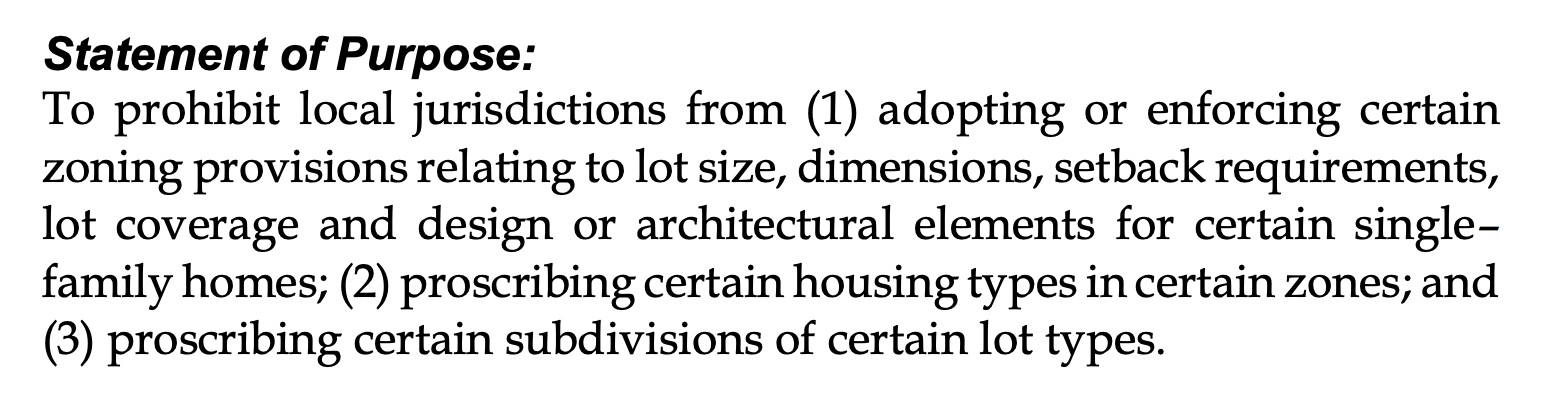
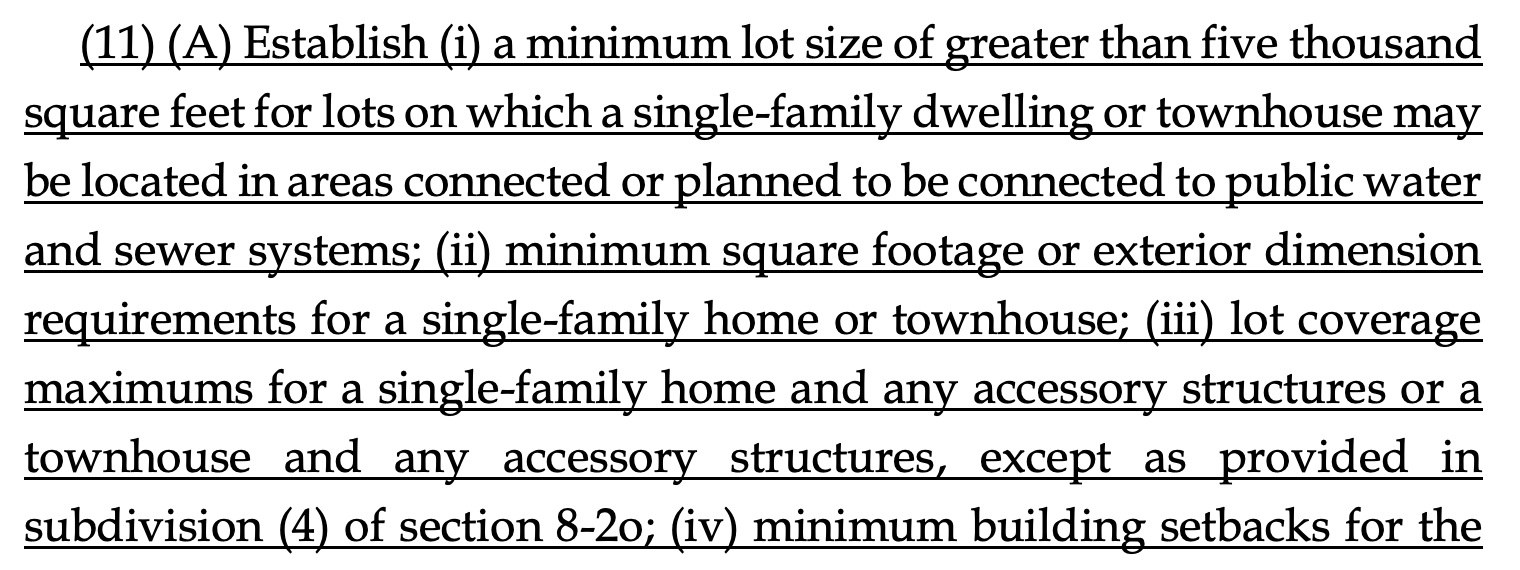
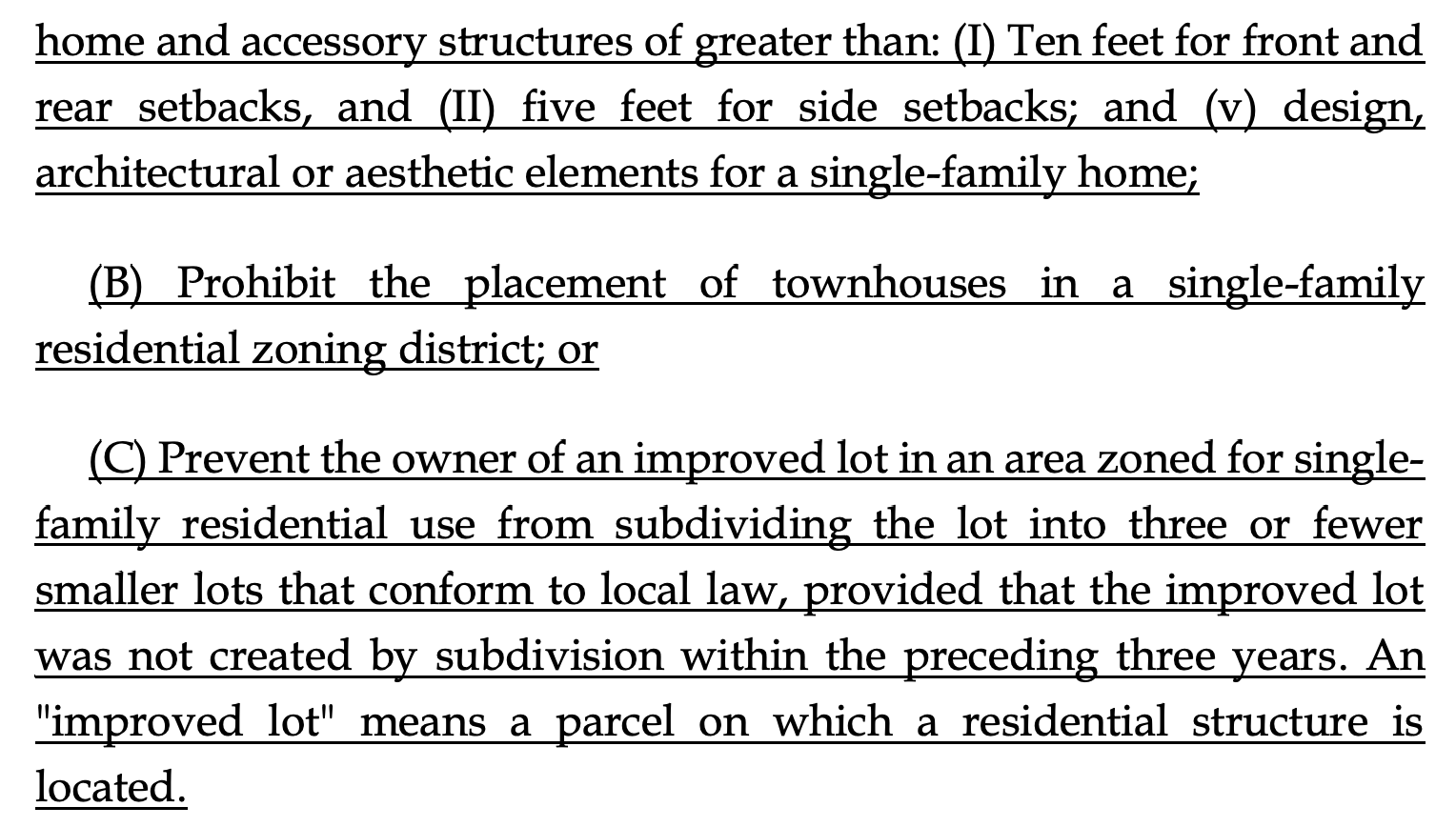
If you don’t think this is coming, think again: it’s already here in our wokest cities, and nothing about the current crop of under-40 voters makes me doubt it won’t spread; after all, these people have morality on their side!
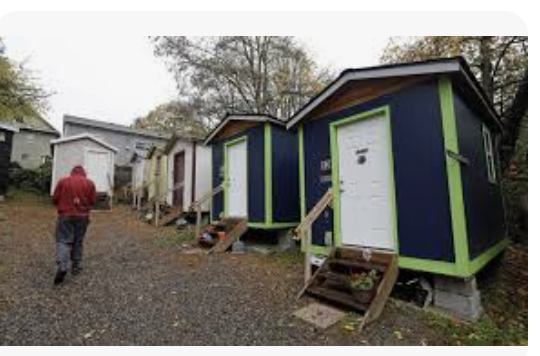
Ah, seattle!
…. Writer Hamilton Nolan said yes with a 2012 essayin Gawker titled "Huge Houses are Morally Wrong."
"Huge houses are immoral just like gold plated cars are immoral and massive private jets are immoral. Because you don't need them, and the money you waste on them could actually save people's lives," Nolan wrote.
…. Portland has abolished single-family zoning altogether, according to NPR.
Legislators there recently passed a law that requires cities with more than 10,000 people to allow duplexes on lots that were previously designated only for single-family homes. "In the Portland metro area it goes a step further, requiring cities and counties to allow the building of housing such as quadplexes and 'cottage clusters' of homes around a common yard," Laurel Wamsley reported.
This follows a similar action in Minneapolis, where the city council voted in December to allow duplexes and triplexes on single-family lots, a practice that has come to be known as "upzoning."
But … upzoning could add to the number of developers tearing down existing modest homes to make way for multiple rental units, just like teardowns enabled the construction of many McMansions two decades ago.
That's what Seattle seeks to end with its new restrictions on McMansions. The city has imposed limits on how big a new house can be, based on the size of the lot.
"For example, a new house on a 5,000-square-foot lot could have no more than 2,500 square feet of above-ground living space for a single family (not including accessory-unit space)," the Seattle Times reported.
"A new house on a 6,000-square-foot lot could have no more than 3,000 square feet of single-family space, and a house on a 7,000-square-foot lot could have no more than 3,500 square feet."
(The Connecticut Democrats’ new proposed law has no size limitations, but I’m sure they’ll come in time — for single family homes, not the preferred 4-story town houses and apartments.)
“But this will destroy the value of our homes and our traditional neighborhoods!” hat’s exactly the point, yiu morons.

Beege Wellborn, HotAir
It's a comfort to know we, as in the American taxpayer, are no longer footing the bill for these abominations, these rolling climate cult public transportation fantasies. That's cold comfort to any of the taxpayers in municipalities who, in their greed and wokeness, grabbed at the federal largesse flying from Washington, D.C., to encourage the purchase of these electric bus monstrosities. Money that was only available to the exclusion of any more purchases of what used to be considered 'reliable' transportation - those diesel buses that took children to school and folks to work or their appointments around town for decades upon decades.
It was electric or bust because the climate cultists and Green grifters had decreed the future of transportation for the rest of us without any consultation on either our wishes or the feasibility of what was being mandated.
Problems surfaced almost immediately.
As early as 2023, electric buses purchased to take tykes to school in Vermont were found to experience extreme range shrinkage when it was cold out.
This was most unfortunate, as 'cold' occurs with regularity in *checks notes* Vermont...most often in the winter...I'm guessing. That didn't stop true believers in the state.
The conversation went something like this:
Pilot Program Report: electric buses cost twice as much, all had charging issues, lost 80% of their range in the cold, some failed completely
….
Fast forward a couple years, and school districts that are saddled with these buses - or bought them giddy with virtue-signaling warm fuzzies - are fending off all sorts of issues.
Like parents who want to know why their children have to freeze on what should be a warm bus ride in 23° weather in upstate New York.
Some expensive buses never even made it into service.
The latest battery-only vehicle fire news this week is from Wilbraham, Mass., where four brand new buses operated by the Lower Pioneer Valley Educational Collaborative paid for with multiple taxpayer-funded grants went up in smoke while charging. The buses were so new they had not even carried a single student to class. The fire released harmful pollutants into the air and left behind a scene of carnage that will be difficult and costly to clean up. The loss of the buses caused delays to students in the Hampden-Wilbraham Regional and Ludlow school districts.
Electric school bus fraud, waste and disaster in Montgomery Country, MD:
— Steve Milloy (@JunkScience) July 31, 2024
- The county contracted to buy 326 electric school buses at a cost of $517,000 each.
- But late deliveries, and mechanical and charging problems forced the county to buy 90 new diesel buses at a cost of… pic.twitter.com/TaqA82nWMn
(cont.) “at a cost of $163,000 each”.
In Vermont, Burlington’s mayor — who else? — was ever so proud of her city’s grabbing a huge basket of Biden Bucks:
“Adding five more electric buses to the GMT fleet marks another significant step in Burlington’s efforts to fight climate change and make progress toward our community’s Net Zero Energy goals,” stated Mayor Emma Mulvaney-Stanak in a GMT press release. “These buses will help us decrease our reliance on fossil fuels, cut carbon emissions, and improve air quality in our City. I look forward to working with our partners to continue the electrification of the GMT fleet that serves Burlington and neighboring communities.”
Like they burned through eight million dollars.
GMT’s electric buses are less than a year old, but right now, they’re out of commission. The five “new flyer” electric buses’ batteries were recalled in November.
The manufacturer said they are a fire hazard, so they can’t sit in the GMT garage. That’s why they are all covered in snow.
The buses have to be 41 degrees to charge, and there’s not a day of 40s in sight.
Out Cold: Vermont’s Electric Buses Sidelined By Freezing Temps, Fire Hazards https://t.co/guRX6VeBg3 via @ccdeditor
— Andy (@AndyPhalanx30) February 11, 2026
Rely on old reliable. Not as sexy, but at least you eventually get there.
...With the electric fleet sidelined, GMT has been relying heavily on its remaining diesel buses, stretching an already tight budget and leaving little room for mechanical failures or disruptions.
And they're looking at suing the bus manufacturer if it doesn't come up with some sort of software update so they can charge their expensive lawn ornaments, since those new, garage safe replacements batteries won't be available for another eighteen months to two years.
...“In September 2025 we ordered 7 additional buses with a 2027 delivery date (but will be delivered with different batteries [than the recalled ones]), and 7 more slated for delivery in 2028,” Clark said. “This is the primary source of new buses for the next three years, as we have only 3 diesel buses anticipated.”
“Canceling the federal grant for electric bus purchases would result in us losing the grant funds,” Clark said. “It would not give us an opportunity to use the funds differently.”
“We will work with FTA to see if the grant can be modified for year 3 since those buses haven’t yet been ordered,” Clark said.
Clark also explained that the five electric buses were “operating well” until November 2025 when the batteries “were recalled for fire hazard.”
The recall prompted a software update from New Flyer to “decrease the likelihood for fire” that “included only allowing the bus to charge to 75% and to not allow charging when the battery is below 41 degrees,” Clark explained.
“Previously we could charge in any temperature to 100%,” Clark said.
As GMT’s bus garage “does not have suitable fire mitigation equipment to store or charge an electric bus indoors at this time,” the transportation system is unable to use its electric buses when temperatures hit below 41.
“Since the barrier to charging under 41 degrees is simply a software update, the manufacturer could find a technical solution that could resolve the problem this week,” Clark said. “We are seeking a financial remedy from New Flyer that could lead to litigation if not resolved.”
“New Flyer has indicated that replacement batteries will be installed within 18-24 months,” Clark said.
And these goobers went ahead and ordered seven more buses?!
Perhaps Burlington will also eventually get to a place where they reconsider their entire cultish devotion to the unworkable.
Everett, Washington, did, after much the same experience under far less trying conditions.
Everett's electric bus fleet faces setback, city turns to retrofitted diesel buses for now
Ongoing problems with a series of electric buses convinced Everett city leaders to scrap that part of the transit fleet and sell the vehicles.
Reliability issues and difficulty getting replacement parts drove the decision, which led to a city council vote earlier this week.
“It's kind of sad that whoever is providing them with the buses wasn't supporting them too well," said Paul Sheehan, transit rider.
Everett Transit owns nine of these buses and there are so many problems that right now only four are still in service. The city does have a backup plan and is looking to purchase reconfigured diesel buses so there are no gaps in service.

161 Pecksland Road hit the MLS this morning as a “coming attraction”, priced at $8.995 million. It sold new in January 2024 for $6.3 million, and while it’s possible that new pictures are being taken as I write and will be posted soon, as of today, they’re just using the originals.

Nice trees for a January listing
28 North Ridge Road, Havemeyer Park, sold for $2.5 million this past July, and has sold again for $3.1. The HVAC system got an update and some paint was sloshed around, but the pictures are literally the ones used in the previous listing, and that’s because nothing changed.
Be notified of new posts! Sign-up here:
