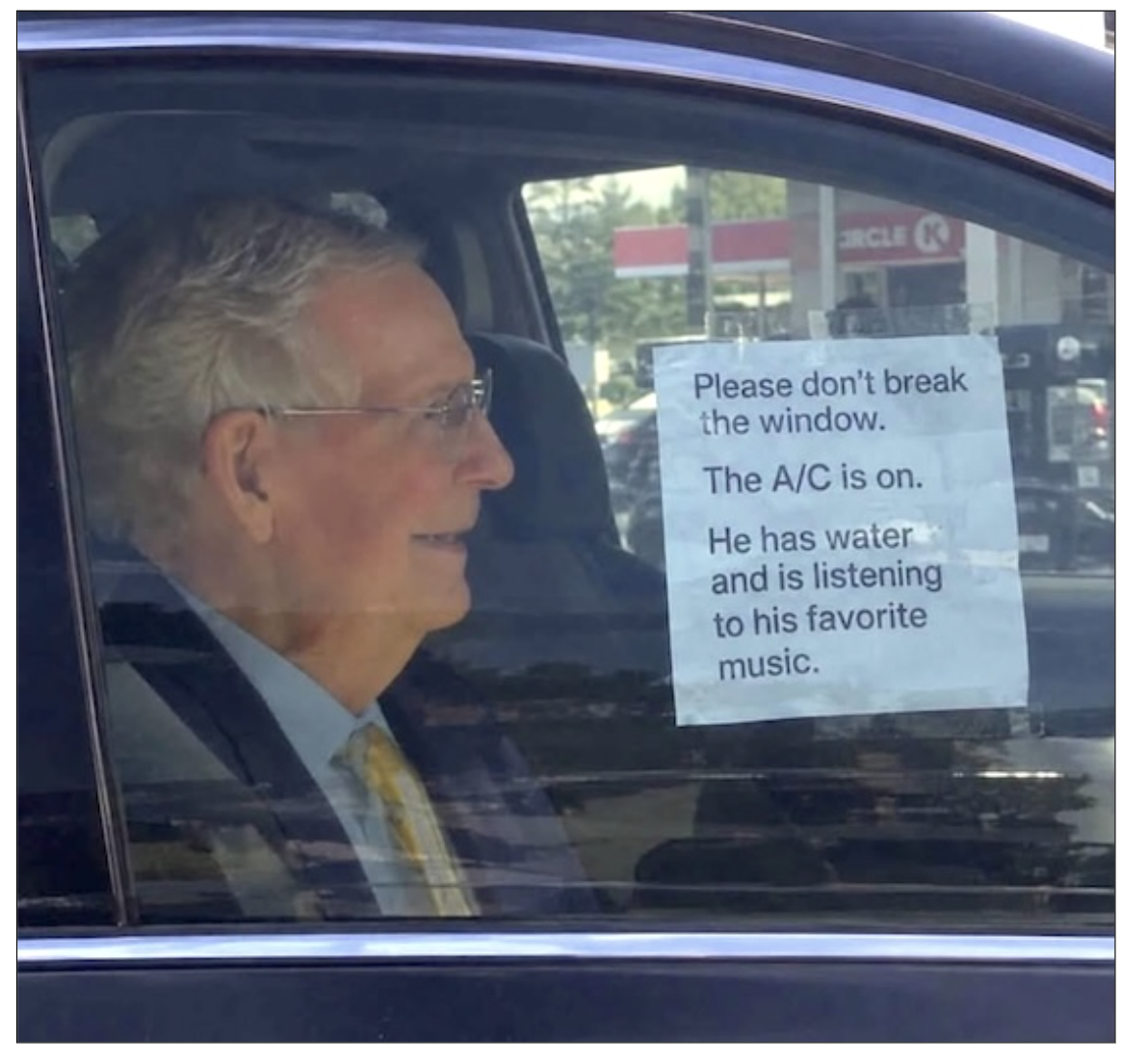
Who says contact tracing is useless? It's allowed billions to be spent hiring government new union employees, and allowed the authorities to maintain their bogus sense of "urgency"
/
It’s done nothing to stem the spread of COVID, but it’s always important to authoritarians to at least look as though they’re doing something. See, eg, TSA, Dept. of Energy, Dept. of Education, Congress.
The U.S. has spent billions on contact tracing, and California alone will have spent $300 million on it through the next fiscal year. But researchers have found that 2 of 3 people with confirmed COVID-19 in the U.S. were either not reached or wouldn’t name contacts when interviewed, and public health authorities haven’t been able to monitor enough cases to stem the tide.
Now, as the pandemic enters its third year, the highly contagious omicron variant spreads like fire through dry grass. The incubation period can be as short as two days. The Centers for Disease Control recommends isolation for as little as five days. More people are testing at home — cases authorities don’t even count in their tallies — and some officials are throwing their hands up and suspending contact tracing.
“(T)he sheer speed of omicron’s transmission means people are exposed, infected and then contagious before the local health department can even identify an outbreak, much less get word to those who are exposed,” said officials in Oregon’s Multnomah County. “Because of that dynamic, contact tracing has become much less effective at lowering COVID-19’s risk, especially when cases are surging so high and when spending time in any indoor public space is essentially considered an exposure for anyone who isn’t up-to-date on their vaccines.”
“As higher and higher levels of COVID-19 transmission occur in a community, the importance and efficiency of contact tracing becomes diminished and exceeds the capacity of health departments to effectively conduct such tracing in a timely manner when staff are overwhelmed by the sheer number of cases,” said Dr. Robert Kim-Farley, professor of epidemiology and community health sciences with the UCLA Fielding School of Public Health, by email.
“Also, with so much asymptomatic spread occurring, contact tracing of known cases becomes a smaller part of the total transmission occurring in the community. Under these circumstances, everyone needs to take increased precautions (e g, vaccination, masking, and testing) under the assumption that some of the people they are in contact with may be infected.”
Kim-Farley is not alone.
“Omicron has an average incubation period of about three days,” said Dr. John Swartzberg, clinical professor emeritus with UC Berkeley’s division of infectious diseases and vaccinology, by email. “Individuals may be contagious up to 48 hours before they become ill. Thus, many infected people will be spreading the virus a day or two after being infected. This would represent a temporal challenge to effective contact tracing.”
Andrew Noymer, an epidemiologist and demographer at UC Irvine, agrees.
“It is widely understood by now that omicron is the most contagious COVID variant yet,” Noymer said by email. “Under-appreciated, I think, is how its shorter incubation period (which is probably not unrelated to the contagiousness) is acting synergistically to drive the explosiveness of the current omicron wave. Which brings us to the question of contact tracing.
“Public health experts are often loathe to cast aspersions on the usefulness of contact tracing, because it is a cornerstone principle of our field. But the sheer contagiousness of omicron, plus its shortened incubation period, both affect the margin of error for contact tracing on a case-by-case basis, and really hamstring it in the aggregate. For the moment, doubling-down on contact tracing is not where I would allocate additional resources. The money is better spent on securing N-95 masks for those willing to wear them, who aren’t already, and on making tests available to safety-net populations.”
Richard Carpiano, a public health scientist and medical sociologist at UC Riverside, laments the nation’s underinvestment in vital pieces of the pandemic puzzle — particularly clear communication and public education to combat rampant mis- and dis-information — and passionately believes we need to direct more money there.
Notice, they’re still pretending that it served a purpose until Omicron came along. It never did, as many experts, censored by social media and the government, have been saying for the past two years.