Tearing down Chesterton's fence
/
I was reading a typically depressing post on the latest trend in transgenderism when its author linked to what turned out to be a far more interesting article in an online publication, the Farnum Street Blog entitled Chesterton’s fence: a lesson in second-order thinking.
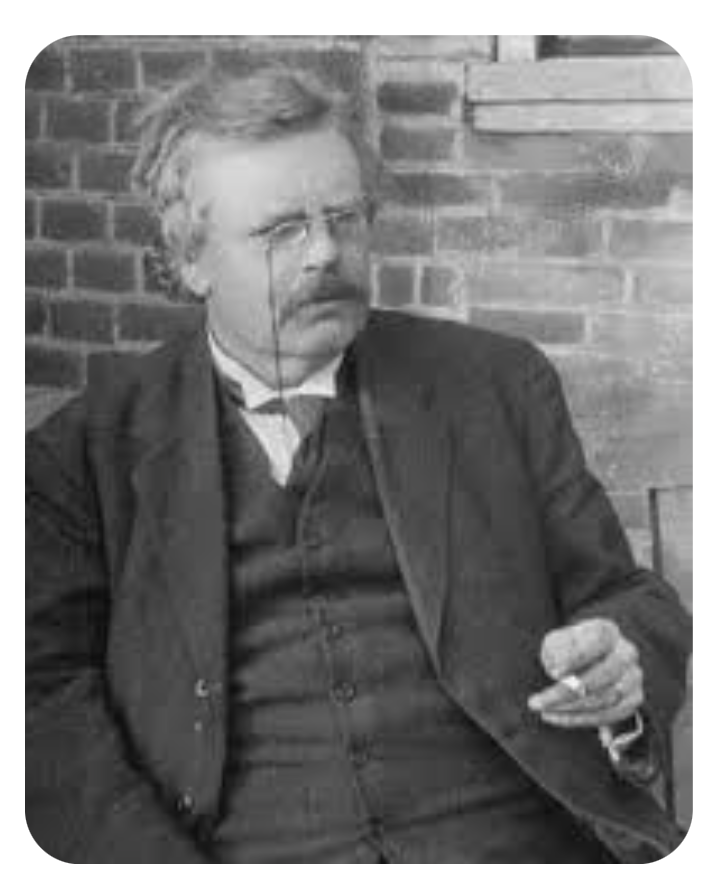
Although I’ve heard the expression “Chesterton’s Fencee”, I’d never learned that it refers to a heuristic coined by G.K. Chesterton, which shows just one of the many gaps in my education. Here it is:
Do not remove a fence until you know why it was put up in the first place.
A core component of making great decisions is understanding the rationale behind previous decisions. If we don’t understand how we got “here,” we run the risk of making things much worse.
***
When we seek to intervene in any system created by someone, it’s not enough to view their decisions and choices simply as the consequences of first-order thinking because we can inadvertently create serious problems. Before changing anything, we should wonder whether they were using second-order thinking. Their reasons for making certain choices might be more complex than they seem at first. It’s best to assume they knew things we don’t or had experience we can’t fathom, so we don’t go for quick fixes and end up making things worse.
Second-order thinking is the practice of not just considering the consequences of our decisions but also the consequences of those consequences. Everyone can manage first-order thinking, which is just considering the immediate anticipated result of an action. It’s simple and quick, usually requiring little effort. By comparison, second-order thinking is more complex and time-consuming. The fact that it is difficult and unusual is what makes the ability to do it such a powerful advantage.
Second-order thinking will get you extraordinary results, and so will learning to recognize when other people are using second-order thinking. To understand exactly why this is the case, let’s consider Chesterton’s Fence, described by G. K. Chesterton himself as follows:
There exists in such a case a certain institution or law; let us say, for the sake of simplicity, a fence or gate erected across a road. The more modern type of reformer goes gaily up to it and says, “I don’t see the use of this; let us clear it away.” To which the more intelligent type of reformer will do well to answer: “If you don’t see the use of it, I certainly won’t let you clear it away. Go away and think. Then, when you can come back and tell me that you do see the use of it, I may allow you to destroy it.”
***
Chesterton’s Fence is a heuristic inspired by a quote from the writer and polymath G. K. Chesterton’s 1929 book, The Thing. It’s best known as being one of John F. Kennedy’s favored sayings, as well as a principle Wikipedia encourages its editors to follow. In the book, Chesterton describes the classic case of the reformer who notices something, such as a fence, and fails to see the reason for its existence. However, before they decide to remove it, they must figure out why it exists in the first place. If they do not do this, they are likely to do more harm than good with its removal. In its most concise version, Chesterton’s Fence states the following:
Do not remove a fence until you know why it was put up in the first place.
Chesterton went on to explain why this principle holds true, writing that fences don’t grow out of the ground, nor do people build them in their sleep or during a fit of madness. He explained that fences are built by people who carefully planned them out and “had some reason for thinking [the fence] would be a good thing for somebody.” Until we establish that reason, we have no business taking an ax to it. The reason might not be a good or relevant one; we just need to be aware of what the reason is. Otherwise, we may end up with unintended consequences: second-and third-order effects we don’t want, spreading like ripples on a pond and causing damage for years.
As simple as Chesterton’s Fence is as a principle, it teaches us an important lesson. Many of the problems we face in life occur when we intervene with systems without an awareness of what the consequences could be. We can easily forget that this applies to subtraction as much as to addition. If a fence exists, there is likely a reason for it. It may be an illogical or inconsequential reason, but it is a reason nonetheless.
“Before I built a wall I’d ask to know
What I was walling in or walling out,
And to whom I was like to give offence.”
— Robert Frost, “Mending Wall”
Chesterton also alluded to the all-too-common belief that previous generations were bumbling fools, stumbling around, constructing fences wherever they fancied. Should we fail to respect their judgement and not try to understand it, we run the risk of creating new, unexpected problems. By and large, people do not do things for no reason. We’re all lazy at heart. We don’t like to waste time and resources on useless fences. Not understanding something does not mean it must be pointless.
…..