News you won't find on YouTube — its censors will provide all the protection you need
/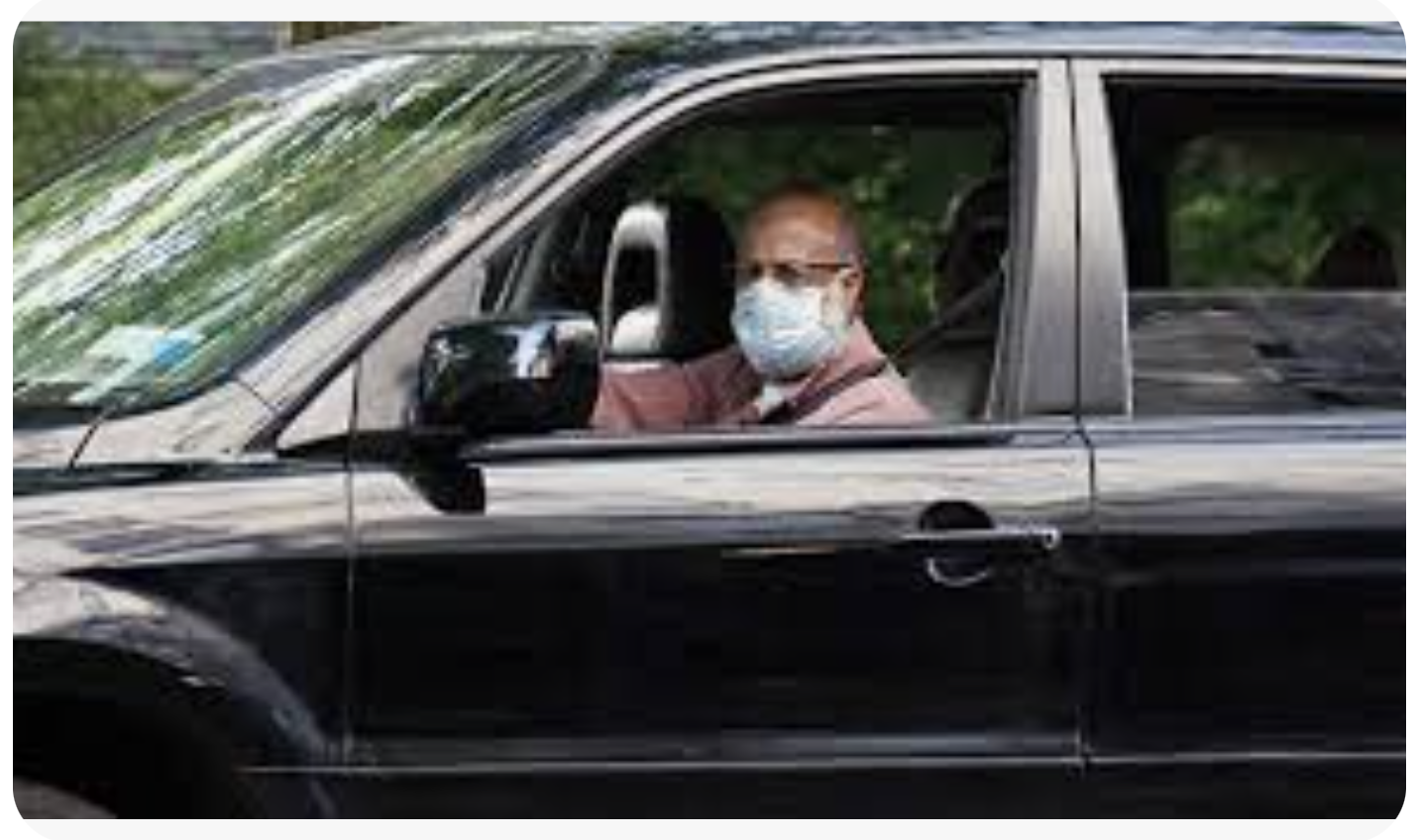
“Take it off? But …. my left-hand virtue signal is broken!”
Randomized control trials: masks do nothing
David Strom: Cochrane Library, an extremely well-regarded service that aggregates a database of high-quality medical studies and analyzes them, has published a new analysis of randomized controlled trials on physical interventions designed to reduce the spread of respiratory viruses.
Main results
We included 11 new RCTs and cluster‐RCTs (610,872 participants) in this update, bringing the total number of RCTs to 78. Six of the new trials were conducted during the COVID‐19 pandemic; two from Mexico, and one each from Denmark, Bangladesh, England, and Norway. We identified four ongoing studies, of which one is completed, but unreported, evaluating masks concurrent with the COVID‐19 pandemic.
Many studies were conducted during non‐epidemic influenza periods. Several were conducted during the 2009 H1N1 influenza pandemic, and others in epidemic influenza seasons up to 2016. Therefore, many studies were conducted in the context of lower respiratory viral circulation and transmission compared to COVID‐19. The included studies were conducted in heterogeneous settings, ranging from suburban schools to hospital wards in high‐income countries; crowded inner city settings in low‐income countries; and an immigrant neighbourhood in a high‐income country. Adherence with interventions was low in many studies.
The risk of bias for the RCTs and cluster‐RCTs was mostly high or unclear.
Strom: “That last point about adherence is vital to acknowledge. Human beings are only human, so even if the best-designed interventions could theoretically work–which is unlikely with surgical masks and not especially likely with N95s even used by medical professionals–chances are good that adherence to protocols will be low.
“A couple of examples: how many people have not reused a mask? Stuffed it in their pocket and brought it out again to wear it somewhere when it is required? Almost everybody. Probably everybody. That reused mask is likely worse than useless. If it has virus particles on it you just handled it, probably deposited virus on the inside, and now you are breathing them in.
N95s? What percent of the time are they used as intended? Almost never. The seal must be perfect to prevent the infiltration of the virus, and without long preparation in nearly sterile conditions, the seal will be bad. You can check out the CDC instructions for yourself. That’s why studies show no appreciable difference between N95 effectiveness and surgical mask effectiveness, and that neither is effective.
“Remember: the intervention only has to fail once to be a complete failure. And it will fail everybody at some point. Here is a good discussion on why N95s will over time do nothing.
Medical/surgical masks compared to no masks
We included 12 trials (10 cluster‐RCTs) comparing medical/surgical masks versus no masks to prevent the spread of viral respiratory illness (two trials with healthcare workers and 10 in the community). Wearing masks in the community probably makes little or no difference to the outcome of influenza‐like illness (ILI)/COVID‐19 like illness compared to not wearing masks (risk ratio (RR) 0.95, 95% confidence interval (CI) 0.84 to 1.09; 9 trials, 276,917 participants; moderate‐certainty evidence. Wearing masks in the community probably makes little or no difference to the outcome of laboratory‐confirmed influenza/SARS‐CoV‐2 compared to not wearing masks (RR 1.01, 95% CI 0.72 to 1.42; 6 trials, 13,919 participants; moderate‐certainty evidence). Harms were rarely measured and poorly reported (very low‐certainty evidence).
N95/P2 respirators compared to medical/surgical masks
We pooled trials comparing N95/P2 respirators with medical/surgical masks (four in healthcare settings and one in a household setting). We are very uncertain on the effects of N95/P2 respirators compared with medical/surgical masks on the outcome of clinical respiratory illness (RR 0.70, 95% CI 0.45 to 1.10; 3 trials, 7779 participants; very low‐certainty evidence). N95/P2 respirators compared with medical/surgical masks may be effective for ILI (RR 0.82, 95% CI 0.66 to 1.03; 5 trials, 8407 participants; low‐certainty evidence). Evidence is limited by imprecision and heterogeneity for these subjective outcomes. The use of a N95/P2 respirators compared to medical/surgical masks probably makes little or no difference for the objective and more precise outcome of laboratory‐confirmed influenza infection (RR 1.10, 95% CI 0.90 to 1.34; 5 trials, 8407 participants; moderate‐certainty evidence). Restricting pooling to healthcare workers made no difference to the overall findings. Harms were poorly measured and reported, but discomfort wearing medical/surgical masks or N95/P2 respirators was mentioned in several studies (very low‐certainty evidence).
One previously reported ongoing RCT has now been published and observed that medical/surgical masks were non‐inferior to N95 respirators in a large study of 1009 healthcare workers in four countries providing direct care to COVID‐19 patients.
Strom: “The bottom line is that an enormous amount of money, time, effort, and social unity has been sacrificed on the altar of a near-religious devotion to a totally useless action. There were studies published before COVID arrived that showed masks to be useless, and all our public health officials were well aware of them.
“They were gaslighting us, and getting us used to complying with their diktats. Fauci himself, well before COVID arrived, dismissed masks as a useful intervention.”