The cheese eating, taxpaying peasants in the Land of Pepé Le Pew can only hope that they'll get a visit from L'équipe DOGE
/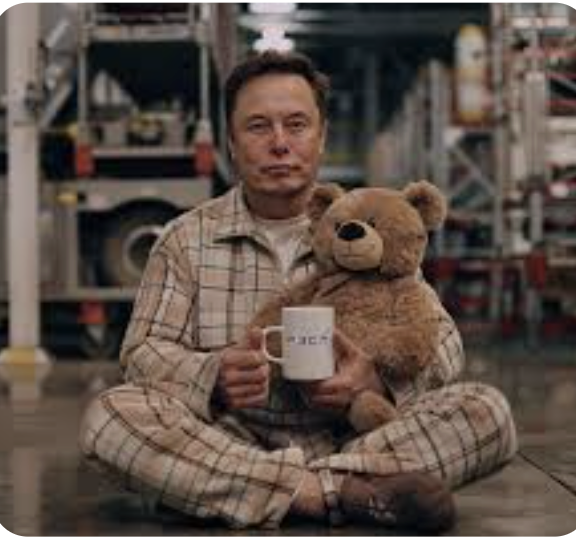
Now French “Experts” Say Our Teddy Bears Need More Diversity and Realism
From LegaIInsurrection:
“Too Cute to be Wild: What Teddy Bears Reveal about Our Disconnection from Nature” argues that the staple of children’s toys, teddy bears, may also distort their understanding of real wildlife because the toys often bear little resemblance to actual animals. Dr. Nicolas Mouquet and colleagues analyzed over 400 teddy bears and found their forms and colors diverge sharply from real bears, and from their “biodiversity”-oriented perspective determined that stuffed animals lead children to hold unrealistic mental models of animals.
For over 100 years, teddy bears have been a hallmark of childhood nurseries, ubiquitously embedded in our early memories and rarely the object of deep scrutiny.
However, according to a paper in BioScience by Dr. Nicolas Mouquet (CRNS) and colleagues, the humble teddy bear is much more than a mere plaything. Instead, the authors suggest that the beloved plushes play a pivotal role in our early conception of nature, potentially shaping the ways we interact with the natural world throughout our lives.
“For many Westerners, the very first intimate, emotional bond with nature may not come from a walk in the woods, but from early exposure to representations of nature, through illustrated books, toys, or plush animals,” explain the authors, who argue that emotional bonds such as these can persist for a lifetime.
At issue, then, is whether childhood toys are up to the task of fostering a realistic conception of nature. Unfortunately, say the authors, there may be serious downsides when they fall short: “If the bear that comforts a child looks nothing like a real bear, the emotional bridge it builds may lead away from, rather than toward, true biodiversity.”
#Teddy bears shape early perceptions of nature, but their unrealistic features may distort understanding of biodiversity. More accurate designs could strengthen conservation awareness in children. @AIBSbiology https://t.co/SElp1N0H6u https://t.co/mykvQ8kfbs
— Phys.org (@physorg_com) September 27, 2025
Eastman: “The actual study is a real hoot. The authors want toy manufacturers to make more realistic bears.”
Designers and educators should therefore reflect on the visual and tactile traits embedded in the plush toys we offer children. More generally, diversifying the plush palette to include ecologically grounded forms, species with more accurate morphologies and colorations, could help restore some alignment between emotional connection and biological reality. Enhancing the emotional relevance of biodiversity through tangible objects offers indeed a low-tech, high-impact complement to traditional conservation outreach.
“There is so much to unpack here, I hardly know where to begin.”
For starters, perhaps in the nearly childless work of eco-activists, there is clearly a lack of understanding of the purpose of toys, which is comfort and familiarity, not zoological education. A child’s affection for a plush toy fosters empathy, imagination, and emotional development more than factual misconceptions.Research in developmental psychology suggests that symbolic play strengthens empathy and cognitive flexibility, even when it is based on fantasy.
All of the above are essential for the development of social skills and emotional intelligence. A more trustworthy study reveals a link between “emotion regulation” and success in education and careers.
Furthermore, by preschool age, most children recognize that teddy bears are symbolic of something. Studies on cognitive development show that while children may attribute feelings to toys, they rarely confuse them with real animals, minimizing the risk of “warped” ecological perceptions.
I am sure that by the age of 3, I could distinguish between "Tedsy" and a grizzly bear. pic.twitter.com/ywsFMxIyW0
— Leslie Eastman ☥ (@Mutnodjmet) October 4, 2025
Reviewing the acknowledgements, I note that this “study” was funded by LabEx CeMEB (Laboratory of Excellence – Mediterranean Center for Environment and Biodiversity). LabEx CeMEB is a French research center in Montpellier focused on pushing environmental activist agendas that usually have human activities as the root cause of any problem.
Until this day, I had never considered that lack of realism in my stuffed toys a problem. And, it’s still not. This study simply confirms the bias of scientists funded to provide data supporting agendas and narratives. Here is confirmation of my assessment under real-world conditions:
Lord thundering armpits. What a stupid recommendation. It sounds like psuedo-science and assininely correlative psychology from granola zonked karen-hippies.
— Randy Blain (@NeuschwabiaDev) September 27, 2025
FWIW: Abandon all hope, ye who enter here — the French government doesn’t seem to be receptive to the idea of eliminating useless departments and programs and the people in them.
Here, for instance, was state-owned France24’s take on Musk and his DOGE Team:
Musk's DOGE team raises major cyber security concerns
Washington (AFP) – Young engineers deployed across the US government as part of Elon Musk's Department of Government Efficiency have triggered alarm throughout Washington's security establishment.
Issued on: 13/02/2025 - 02:43
Never before has a group of unvetted and inexperienced outsiders gained such access to the nerve center of the US government, according to security experts.
The campaign, led by Musk's DOGE team, began at the Treasury Department when they took control of the US government's payment system -- a move justified as monitoring public spending.
From there, it expanded into an unprecedented cost-cutting initiative, with software engineers spreading across federal agencies, taking control of computer systems.
They have disrupted and in some cases effectively shuttered organizations such the United States Agency for International Development (USAID), the Department of Education, and the General Services Administration (GSA), which manages much of the government's infrastructure and building portfolio.
"In the span of just weeks, the US government has experienced what may be the most consequential security breach in its history," wrote Bruce Schneier, a security technologist at the Harvard Kennedy School, and Davi Ottenheimer of Inrupt, a data infrastructure company, in Foreign Policy.
The situation is particularly critical at the Bureau of Fiscal Services, the Treasury unit managing all federal payments -— a crucial chokepoint of the US economy.
….
The computer systems in question rank among the world's most complex and sensitive.
Yet DOGE is staffed primarily with individuals connected to Musk's companies and young tech professionals in their 20s -— virtually none of whom have been vetted, or have government experience.
As for Musk himself -- who is unelected -- there are concerns about his conflicts of interest, as his companies hold several major government contracts, and whether access to sensitive data will give his business empire an even greater advantage.
Meanwhile, senior government workers with decades of system expertise have been blocked from buildings and sidelined by DOGE teams, raising concerns among those who understand the intricate vulnerabilities of government technology.
The consequences are already emerging.
At the Office of Personnel Management, the government's HR department, reports indicate DOGE-associated individuals connected an unauthorized server to the network and are using AI software on US citizens' personal data -- in violation of federal privacy laws.
The blitz on government has sparked numerous lawsuits, forcing some retreat from DOGE, with a Trump official on Wednesday acknowledging to a judge that a staffer should not have had full system access.
In another security slip-up, according to The New York Times, the CIA sent an unclassified email listing all employees hired by the spy agency over the last two years to comply with cost-cutting efforts spearheaded by DOGE.
Too much power
Security experts Schneier and Ottenheimer are especially troubled by the removal of career officials who managed security measures.
"The Treasury's computer systems have such an impact on national security that they were designed with the same principle that guides nuclear launch protocols: No single person should have unlimited power," they wrote.
Making changes to critical financial systems "traditionally requires multiple authorized personnel working in concert," they said.
Musk, who frequently posts on the social platform he owns, X, dismisses government workers as either inept or politically compromised -- a "deep state" aligned with Democrats and opposed to Trump.
The risk of mistakes has alarmed cybersecurity experts, including Michael Daniel, former White House cybersecurity coordinator under Barack Obama and current head of the Cyber Threat Alliance.
"The Chinese, the Russians, other intelligence services -– they put their A-teams on projects that target the US government, and they will exploit any opportunity they have," Daniel warned.
"This assumption that obviously everybody that works for the federal government is stupid and incompetent, and it's so simple that it doesn't even matter who you put on the job... that's just incorrect."
"With government systems, things are not necessarily obvious on the surface. And it takes experience to understand what some of those issues are."
© 2025 AFP