Oops (Updated)
/
I recently made a lightning trip down to Greenwich, a distance of 245 miles, 4 hours of driving. Coincidentally, the mileage range of the average EV is, for 2025 model years, 280 under ideal conditions; the day I left for town, the temperature was 13°, so that range would have been reduced by at least 20-25% to, say, 210 miles, and even more if I’d used the car’s heater, but who needs heat when a fuzzy sweater, long johns and mukluks are handy?
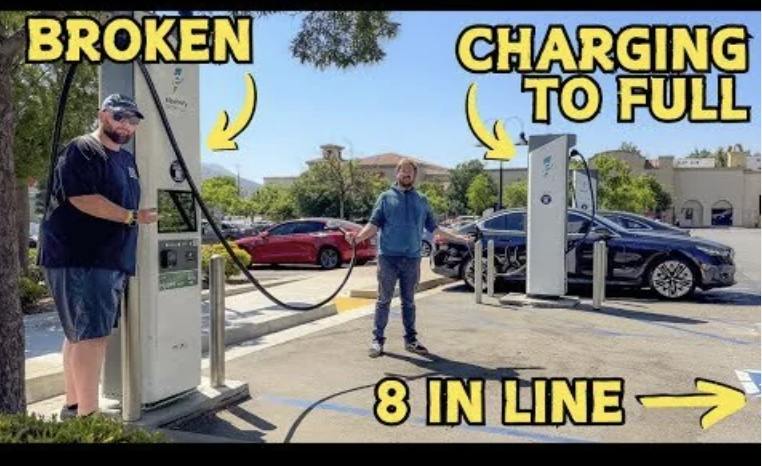
We can adjust those number still further downward, mind you, because EV batteries should be charged to no more than 80% capacity, according to car manufacturers — 0-80% is relatively quick, but recharging slows dramatically after that, and gaining that remaining 20% will add hours to your wait and the waiting time of the driver in line behind you, — so we’re at 210 before deducting an additional 25% to account for cold weather — 157 mile range. For an amusing, if horrifying recounting of a Kelly Blue Book writer’s attempt to take a 1,000-mile road trip in an EV, see this one: How to Take an EV Road Trip:
Our road trip was 1,082 miles long. The Leaf’s trip computer showed 26 hours of driving. By comparison, I spent about 13 hours connected to chargers or waiting to connect (11 hours of charging; two hours of waiting). We encountered one fast charger that was offline and had to drive 8 miles to another one.
Fortunately, I was driving a conventional ICE vehicle, so I wasn’t forced to stop for 1-3 hours at a highway charging station, nor did I arrive at Gideon’s house with a completely drained battery that I’d have to recharge if I wanted to return home.
My point being, EV’s are not suitable for those peasants who wish to leave their village and travel more than shank’s mare will take them. And that’s exactly what our would-be masters intend.The road to serfdom begins and ends at the serf’s village’s boundaries.
But I digress from the original intent of this post, which is this:
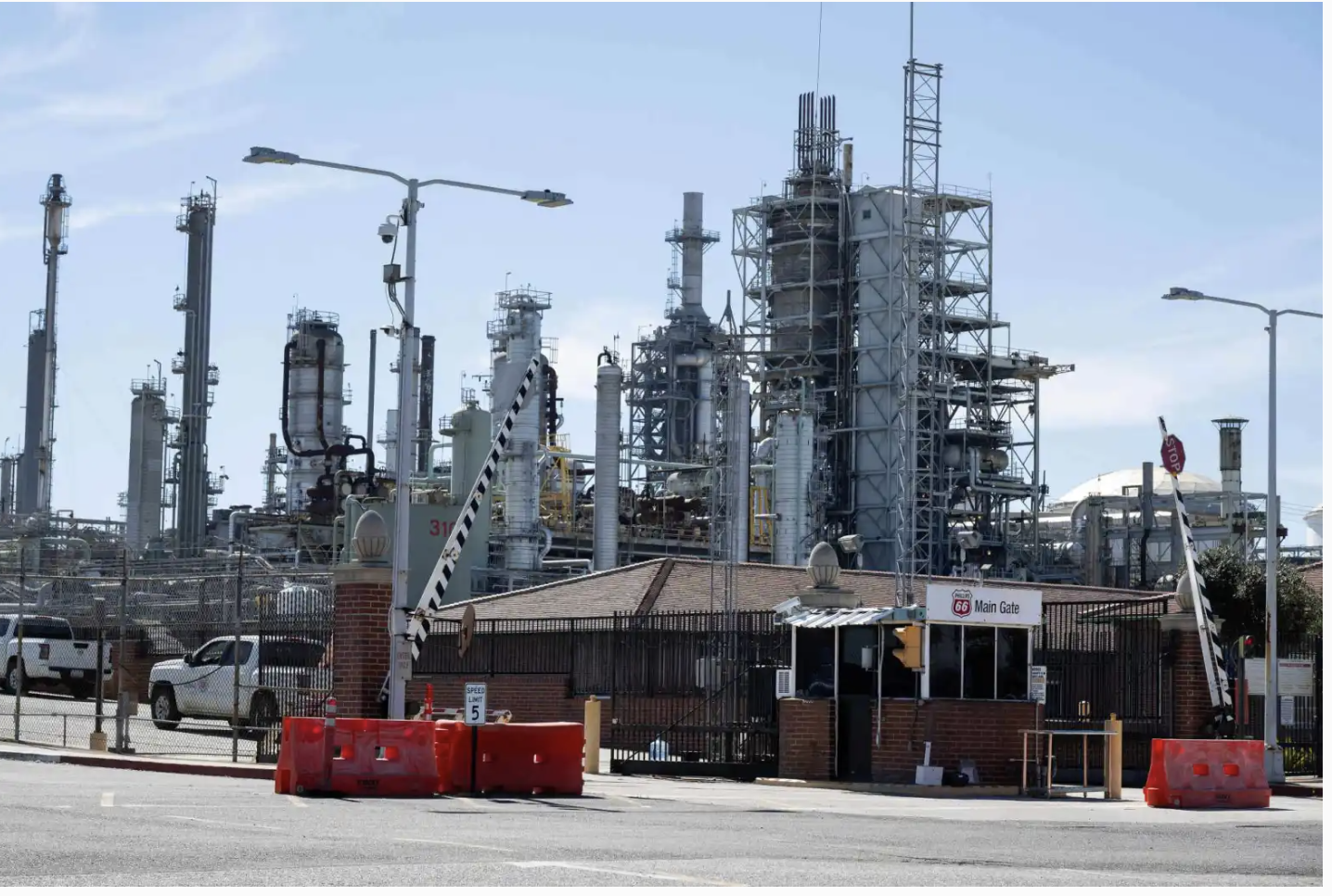
I ran across this not-so-old article in my browsing history, dated February 15, 2022. Let’s just say that word of the demise of gasoline dispensaries was, er, premature.
US: EV Chargers Will Eventually Outnumber Gas Stations
We don't really know when, but it could be by decade's end if the Biden administration's plans come to fruition.
[FWIW: A number of readers, including this one, pointed out one fundamental error back then, and that resulted in this editor’s correction which, of course, negates the entire claim. Oh, well]:
EDIT: It looks like the study we cited from Jerry is comparing individual charging stalls to entire gas stations, not individual pumps, thus making the information they presented inaccurate. While the information that there are up to 150,000 individual gas stations is true, they each have multiple pumps, so the number of pumps is many times higher than the number of EV charging outlets.
We have adjusted the story to reflect this.
The charging station infrastructure in the United States will catch up to and surpass traditional fuel stations for the number of individual pumps, or charging stalls if the Biden administration's plans to add 500,000 of them by 2030 is fulfilled. There are currently between 110,000 - 150,000 fuel stations (each with multiple individual pumps) and the number of EV charging outlets is around 110,000.
The number of gas stations has been going down for the last two decades, while increasing sales of electric vehicles has spurred constant and sometimes rapid expansion of the charging infrastructure. ….
One major challenge ahead will be for the charging infrastructure to keep up with the rapidly increasing number of EVs in the US. Projections say that by 2030 the country will have 30-million EVs on its roads, and according to the source, that would require the construction of 478 charger stalls per day for eight years in order to meet the need.
The study also notes which states are best when it comes to the ratio of charging stalls to EVs. North Dakota, Wyoming and West Virginia are the three states where you are most likely to find an empty charging stall, while the worst are New Jersey, Hawaii and Arizona. In the last three there is a higher chance that you may find all local public chargers are taken and you may have to wait or find a way to charge the EV at home.
…. According to a report from the U.S. Department of Energy, the ideal ratio of EVs to charging stations is 40 Level 2 charging ports and 3.4 DC fast chargers (DCFC) per 1,000 EVs. (A DCFC charger usually has 3 ports.)
Currently, there are 41 Level 2 charging ports and 5.7 DCFC charging ports per 1,000 EVs, respectively, or about 21 EVs for every charging port.
Conversely, there are 2,514 internal combustion engine (ICE) cars per gas station.
EVs are currently at a disadvantage compared to ICE vehicles when it comes to their average range - 259 miles versus 360 miles. And the time it takes to charge an EV is longer than simply filling up a gas tank, so vehicles will be occupying more of the available charging stalls for longer.
[FWIW: “Longer”; That would be 5 minutes to fill up with gasoline, 1-5 hours for a battery car]
Edmunds offers additional information on the topic:
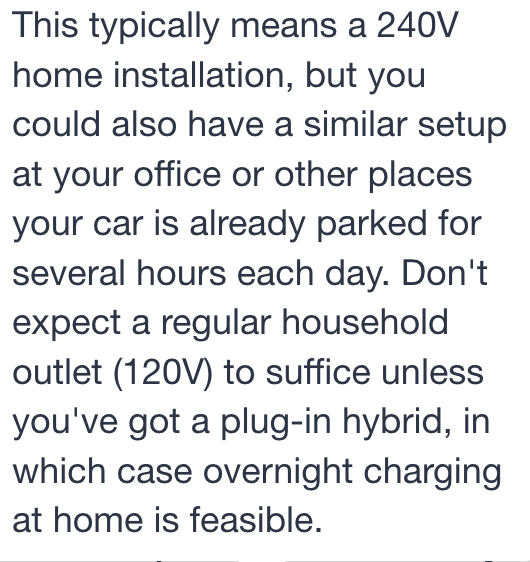
EV ownership works best if you can charge (240V) at home or at work
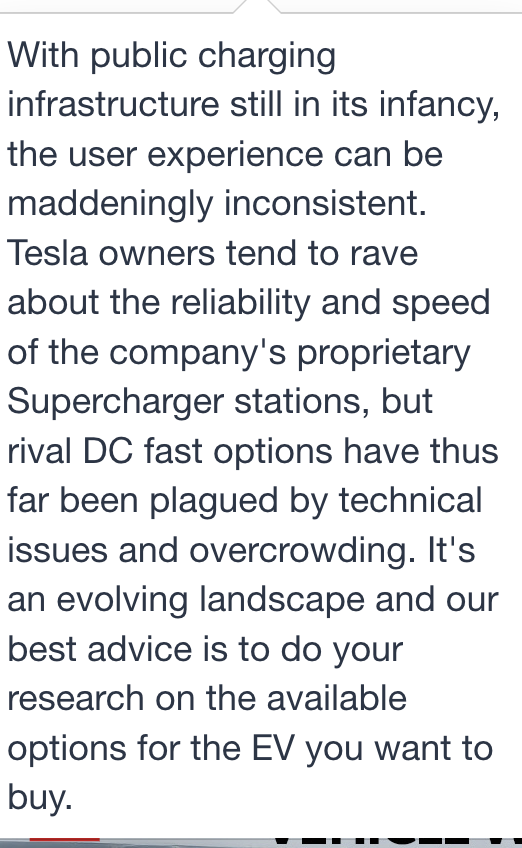
If you can’t charge at home, charging at a charging station could take at least 10x longer than at a gas station
And still more from Edmunds: Key Details on EV Range
Average vs. Median Range: The average range of EVs sold in the US is approaching 300 miles. The median range (the midpoint of all available models) was 283 miles for the 2024 model year.
Typical Range: Most new EVs fall within the 200 to 300 miles range bracket, which is sufficient for most daily driving needs since the average American daily commute is around 41 miles round trip.
Longest Range Models: The maximum range for available models can exceed 500 miles. The 2025 Lucid Air Grand Touring sedan currently has the longest EPA-estimated range at 512 miles.
Factors Affecting Range: The actual range experienced by a driver can be impacted by several factors, including:
Driving Style: Aggressive acceleration and high speeds reduce range.
Weather Conditions: Cold temperatures can significantly decrease battery performance and range (sometimes by 20-30% or more), while hot weather and the use of A/C also consume extra energy.
Use of Climate Controls: Running the heater or air conditioning uses battery power.
Battery Degradation: Batteries naturally lose a small amount of capacity over time, typically around 2% per year.
UPDATE (actually, it’s old news, but it’s hit the press again, so …)
THE EV BUBBLE CONTINUES TO DEFLATE: Ford’s electric hopes unravel as it pulls the plug on battery-powered F-150 after $19.5bn loss.