Powerline’s John Hinderaker offers a good take on yesterday's Supreme Court decision, and what's at stake
/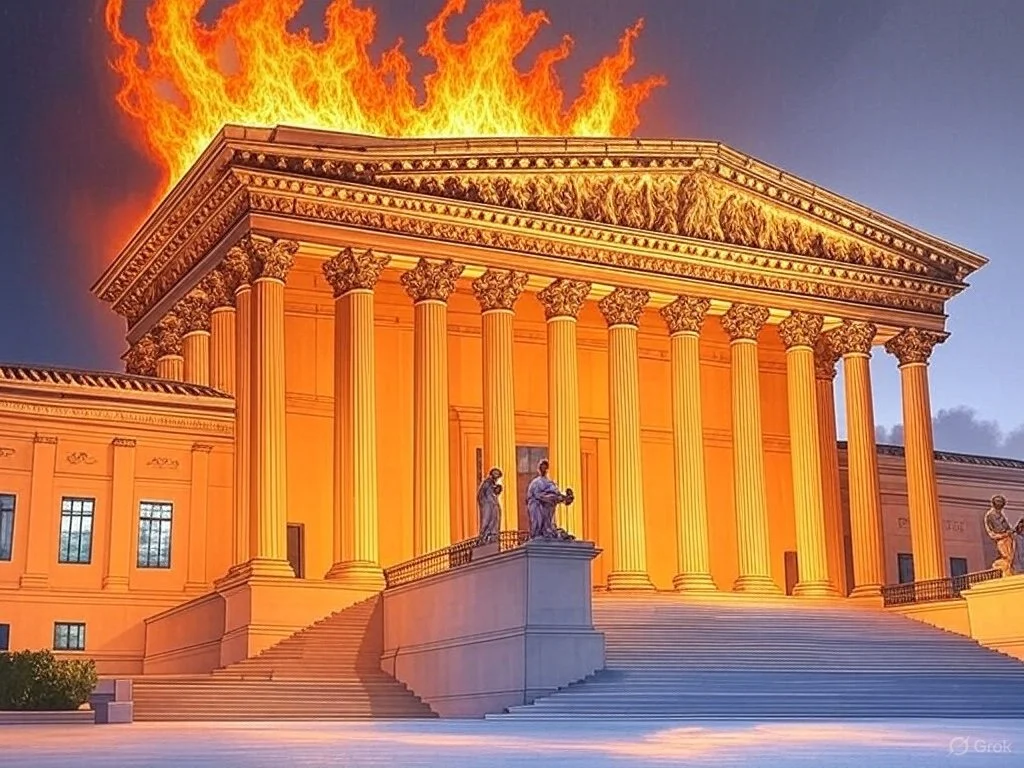
I was appalled by the court’s upholding of a single federal judge’s nationwide injunction against cutting off funds to USAID; appalled, and so discouraged by what’s happened to our judicial system that I lost my usual interest in commenting or even reading about politics, and wrote nothing on it yesterday. I don’t really care whether the Democrats waved pickleball paddles at he president, or were mean to a very young cancer patient: these are sideshows to the fundamental battle we’re engaged in.
Still, as John Hinderaker writes below, it’s early days: this fight has only just begun, and good things may yet be possible. Maybe.
An Opening Salvo
John Hinderaker:
“On February 13, a left-wing judge in the District of Columbia entered a temporary restraining order barring the federal government from enforcing executive orders that paused the disbursement of certain foreign aid funds. On February 25, the same judge ordered the federal government to make some of the payments that had been “paused”–namely, those to federal contractors for work that had been completed.
“The case wound up in the Supreme Court on an application by the federal government to vacate or stay the district court’s February 25 order. That application was denied earlier today, on a 5-4 vote, with Chief Justice John Roberts and Justice Amy Barrett joining the liberals–an alignment that we have seen in several high-profile cases. Today’s decision has generated a fair amount of comment, mostly by people who haven’t read it.
“The case, in its present posture, raises technical issues relating to federal court procedure, as well as substantive issues relating to sovereign immunity, and whether it has been waived under the Administrative Procedure Act. The majority decision–there isn’t a full-fledged opinion–resolved nothing:
Given that the deadline in the challenged order has now passed, and in light of the ongoing preliminary injunction proceedings, the District Court should clarify what obligations the Government must fulfill to ensure compliance with the temporary restraining order, with due regard for the feasibility of any compliance timelines. The order heretofore entered by THE CHIEF JUSTICE [an administrative stay] is vacated.
“Justice Sam Alito wrote a dissenting opinion on behalf of the four conservative justices. Finding more significance in the current proceeding, it begins:
“Does a single district-court judge who likely lacks jurisdiction have the unchecked power to compel the Government of the United States to pay out (and probably lose forever) 2 billion taxpayer dollars? The answer to that question should be an emphatic “No,” but a majority of this Court apparently thinks otherwise. I am stunned.
Hinderaker:
“I’m not. There are major constitutional battles coming, over the separation of powers and the roles of Congress and the President in spending money. Major issues will be addressed: Does the President have the power to refuse to spend money that Congress has appropriated? Does the President have the power to re-allocate money appropriated by Congress among various uses or programs? If so, under what circumstances? What is the President supposed to do, for example, if he learns that a particular program is riddled with fraud?
“The Democrats’ answer to that last question is, Nothing. This is what we have seen play out in Minnesota, in the Feeding Our Future scandal. State agencies knew that the program was close to 100% a criminal fraud, yet the Tim Walz administration did nothing until the FBI finally stepped in. That is the model the Democrats would follow at the national level.
“Today’s brief encounter in the Supreme Court was the opening salvo in a long, and very important, war. I don’t think there are any tea leaves to be read from the 5-4 decision. What we hear in the background is the distant thunder of major constitutional issues that are about to be fought out.”