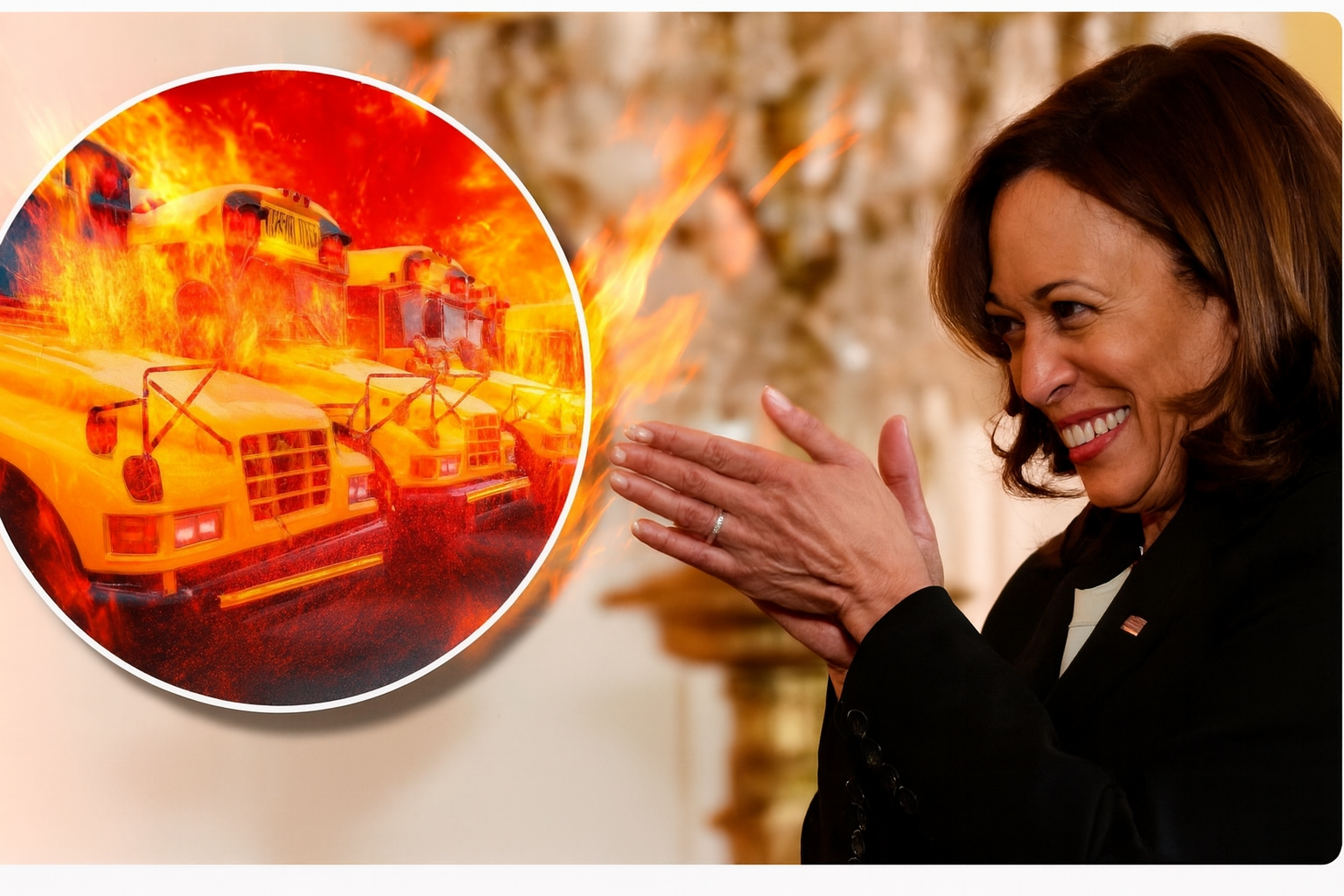
Fortunately it was just taxpayers’ money that was burned up, not school children
/
$400,00 per ev bus, $135,000 diesel
Remember All Those Electric Buses Kamala Paid For and We Didn't Get?
$160 million shipped north to Canada for buses that never worked, and burned up on a regular basis; the company’s gone belly-up.
Here’s an earlier report on the subject that appeared last month:
The Biden administration awarded Canadian electric bus maker Lion Electric $159 million to manufacture 435 school buses between 2022 and 2024, making it the third-largest recipient of such funding. The company has since fallen into bankruptcy, failed to deliver hundreds of the buses it promised, and warned school districts that its dire financial straits prevent it from servicing those in circulation.
As a result, many of those districts are turning back to diesel.
The Washington Free Beacon reported earlier this year that Lion, then nearing bankruptcy, had yet to deliver $95 million worth of the electric buses it pledged to produce as part of the Biden administration's $5 billion Clean School Bus program. Since then, Lion was sold for just $6 million during bankruptcy proceedings after being valued at $4.7 billion as recently as June 2021. The company also permanently shuttered multiple manufacturing plants, fired the majority of its employees, and told consumers that it could no longer honor warranties and purchase orders in the United States.
EPA head Lee Zeldin says the Biden administraiton sent $160 million dollars to a Canadian electric vehicles company.... which then pocketed the money, didn’t send the school buses promised and then declared bankruptcy!
— Mike Netter (@nettermike) August 16, 2025
“There was $160 million that went to a Canadian electric… pic.twitter.com/hANBqhFPfm
I’ve been following this story in Maine for quite a while now, including the loud objections by some to the purchase of battery buses in cold-winter Maine in the first place.
Google’s AI provides a good summary of the problems in the land of the lobster, all of which were predictable and were predicted. I focus on Maine because I’m familiar with the unfolding disaster there, but the entire billion dollar was spread across the whole country.
AI Overview
Defective Lion Electric school buses in Maine, including during cold weather, have led to safety concerns and malfunctions like power steering failure and brake issues, forcing schools like Winthrop Public Schools to take them off the road. The issues stem from the manufacturer, Lion Electric, which has faced financial problems and an unresponsive approach to repairs and warranties, while school officials report problems with heating systems, emergency exits, and high voltage warnings. While electric school buses can be effective in cold weather, the problems in Maine are attributed to manufacturing defects, not the climate itself, with cold weather only potentially reducing battery range.
Key Problems
Safety Concerns: Serious malfunctions, including loss of steering and braking, have occurred during operation.
Mechanical Failures: Issues include problems with power steering, brake systems, and emergency exits.
Heating System Malfunctions: Some buses have experienced issues with their heating systems.
High Voltage Warnings: School districts have reported warnings related to high voltage.
Part Recalls and Leaks: One recall was for a faulty part that could lead to short-circuiting due to water leaks.
Manufacturer Issues
Company Financial Problems: Lion Electric has faced financial issues, which impact its ability to fulfill obligations to schools.
Lack of Responsiveness: Lion Electric has been described as unresponsive to school officials' questions and concerns.
Warranty Issues: The company has stopped honoring warranties for buses shipped to the U.S.
Cold Weather Impact
Range Reduction:
While electric buses can operate in cold weather, their range and efficiency can be reduced.
Manufacturing Defect, Not Climate:
The problems in Maine are attributed to the specific Lion Electric buses, not to electric buses as a whole.
Current Status
Buses Off the Road: Several schools, including Winthrop, have taken their Lion Electric buses out of service due to the recurring problems.
Failed Inspections: Buses sent for repair failed state inspections, leading to further delays.
School Districts Awaiting Resolution: School officials are seeking solutions and answers, as they have been waiting for repairs for months, or even years.
From January 30, 2025, by which time Biden’s control panel had already dispensed $1 billion to electric bus builders (1/3 of which was pocketed by Lion Electric):
Some Maine school districts may face costly setbacks due to Lion Electric school buses
And from a year earlier:
Harpswell, ME, January 31 2024
An electric school bus averages about $350,000, and a charging station is $20,000 to $25,000 for a Level 2 charger or $60,000 for a Level 3 charger that can charge up to two buses in less than half the time.
For comparison, a gasoline-powered bus costs about $135,000, DiCara said. An electric bus would likely last about as long as a gasoline-powered one, roughly 10 to 12 years, district officials agreed after initially misstating that they only last five years.
There’s also the issue of range. An electric bus can go about 120 miles on one charge, which limits the routes it could be used on, because district buses usually make four trips per day. Cold weather can reduce that range by up to 33%. District staff said MSAD 75’s first electric bus, if it acquires one, would likely be used for shorter routes in Topsham.