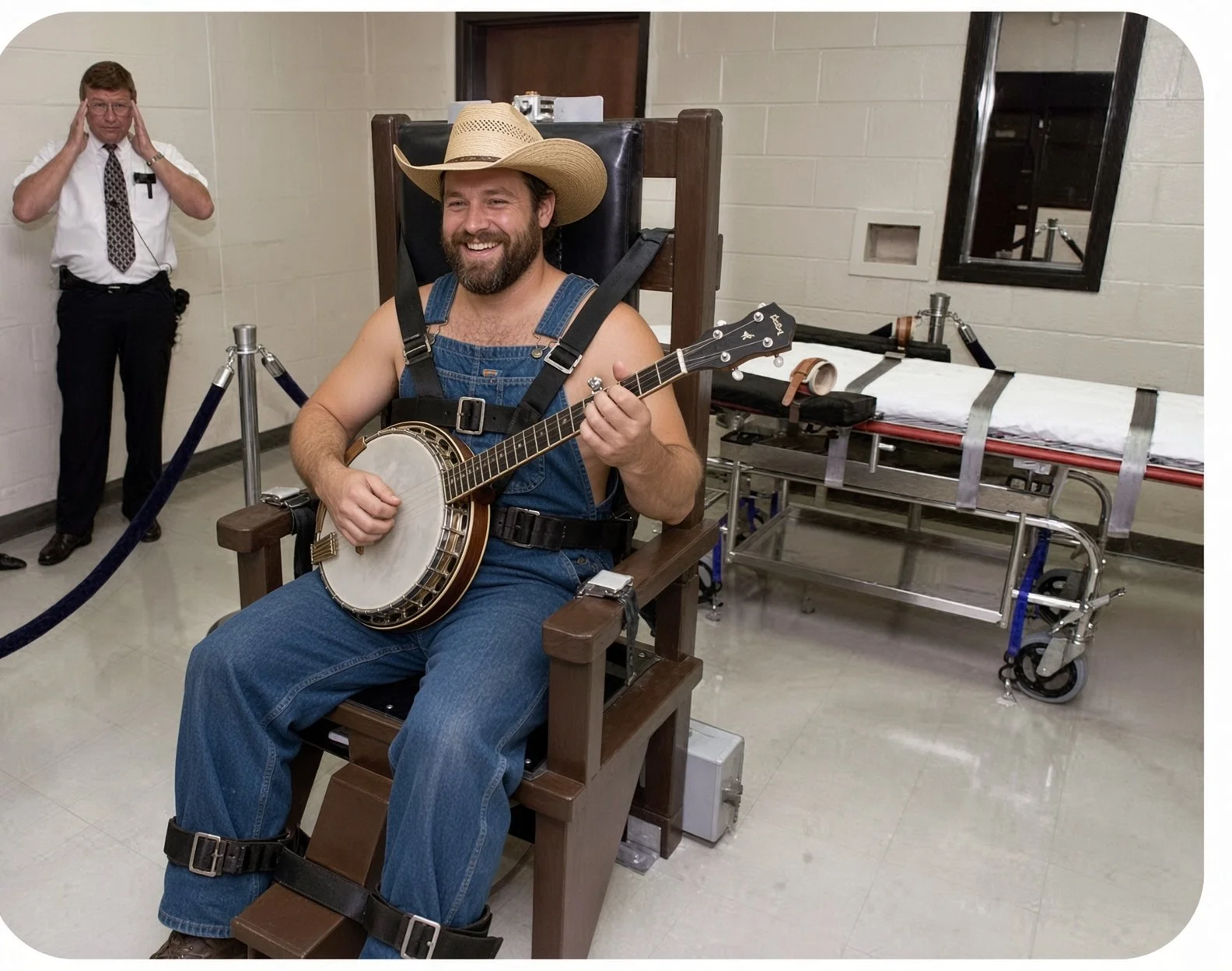
Gee, where have I heard this before?
/
Ford Motor Company is doubling down on a comprehensive quality transformation to end years of persistent reliability struggles. For several consecutive years, the Dearborn automaker led the U.S. automotive industry in total recall campaigns and warranty expenditure. The financial burden and reputational impact prompted leadership to initiate a structural overhaul across engineering, procurement, and assembly operations.
Under Chief Executive Officer Jim Farley, the company has begun shifting away from short-term fixes toward systematic process changes. Recent third-party evaluation reports show early indications of progress, with Ford making measurable strides toward top quality metrics in several vehicle segments. However, executive leadership emphasizes that fully rectifying institutional quality gaps will require sustained discipline across multiple product cycles.
Speaking at the recent 2026 Automotive News Conference, Farley explained that execution now hinges on a “complete obsession with details” across every phase of design and production. He stressed that earlier quality breakdowns often stemmed from rushed launch schedules or overlooked minor component variations during assembly. The revised mandate requires engineering teams to resolve potential failure points long before assembly lines begin rolling.
Blah, blah, blah
2020:
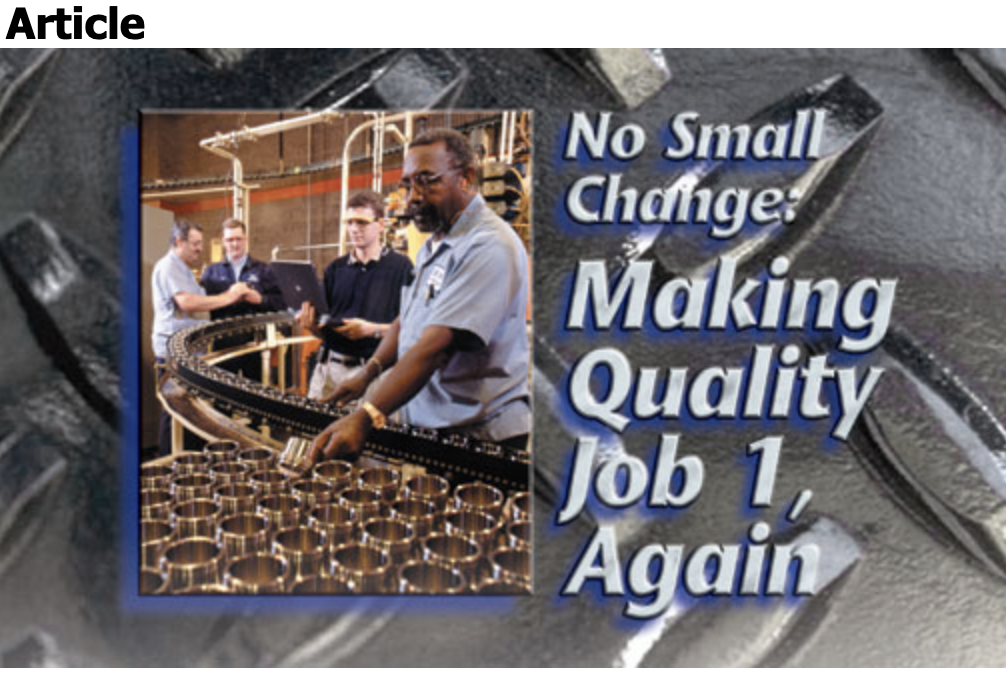
Consumer-driven Six Sigma saves Ford $300 million.
Ford Motor Co. made "Quality Is Job 1" a household slogan in the 1980s as it introduced revolutionary new products and used Total Quality Management to drive down costs and capture market share. Lately, however, the No. 2 automaker has been plagued by quality gaffes that have cost it dearly in customer satisfaction and market share. In fact, according to a recent J.D. Power & Associates survey, Ford has fallen behind arch-rival General Motors Corp. in overall quality and now ranks last among the big-seven automakers.
15 paragraphs of the simply marvelous work Ford had been doing in 2020, and then this concluding paragraph.
…. Ford's experience with Six Sigma proves that even a huge organization can be nimble enough to quickly implement a major restructuring in the way it thinks about the customer, approaches quality improvement and utilizes its most valuable resource -- its people. With the help of Six Sigma, Ford may yet make Quality Job 1, again.
Twenty-six years later, Ford has yet to accomplish that.
Does anyone else remember Renault’s 1967 apology ads that admitted they’d been selling crap to Americans for years but promised they’d mend their ways? Apology not accepted, and they no longer darken our shores. Ford continues the tradition.
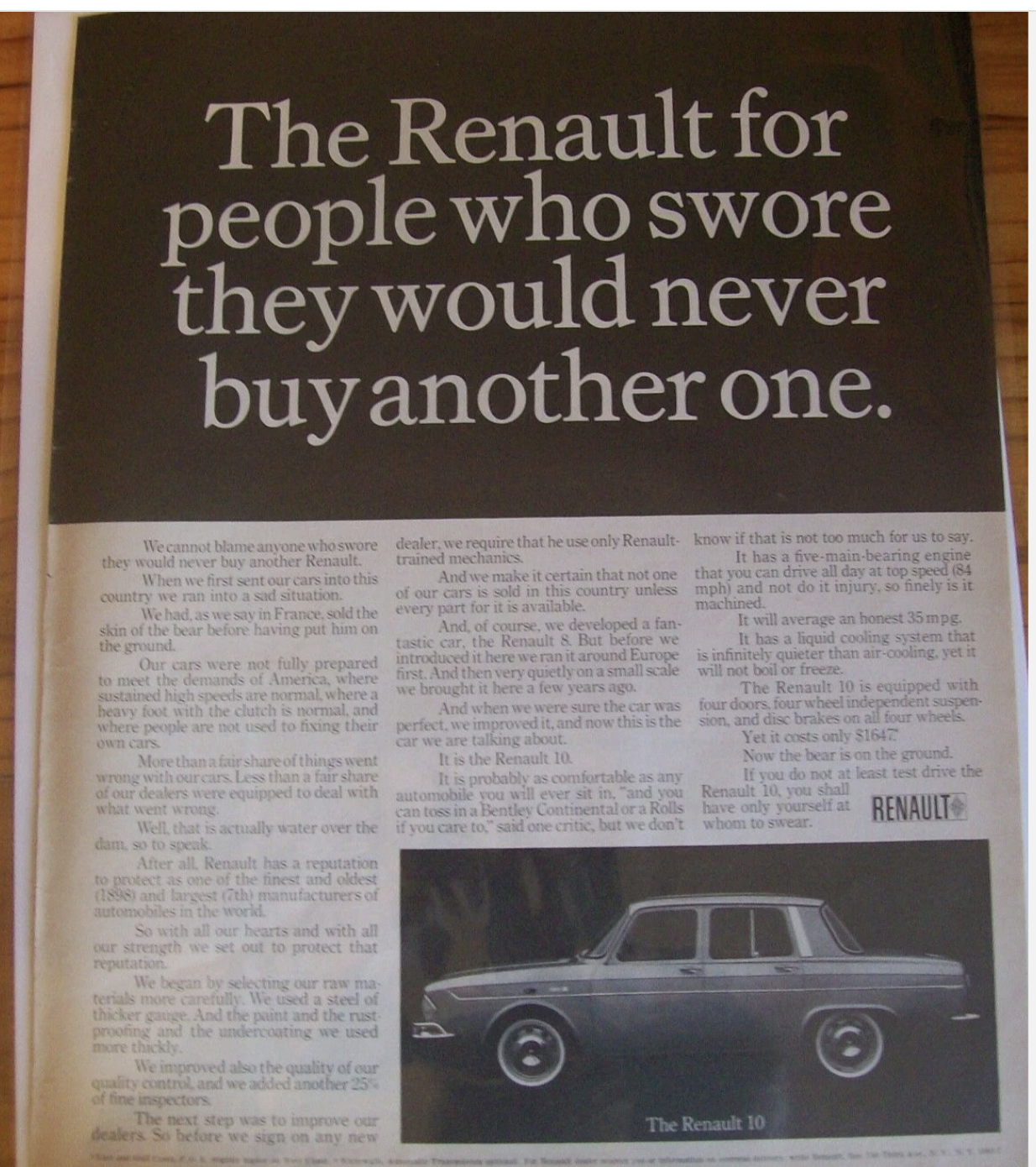
“In France, a man will spend his Saturday afternoons tinkering with his car. He considers it a labor of love. We didn’t realize that in America, you don’t work on your cars on weekends. You want them to work for you.”