Who, what, where, where, yes; but don't forget the “why”; tip for young reporters (and their editors)
/
Greenwich Free Press published a decent article on a recent event at Tod’s Point:
Volunteers Work to to Reestablish Eelgrass Growth in Offshore Waters
The trouble is, either the young high school student who wrote the article forgot, or his editor dropped, the most important question that readers will ask: why? Why does this event matter, why should I care?
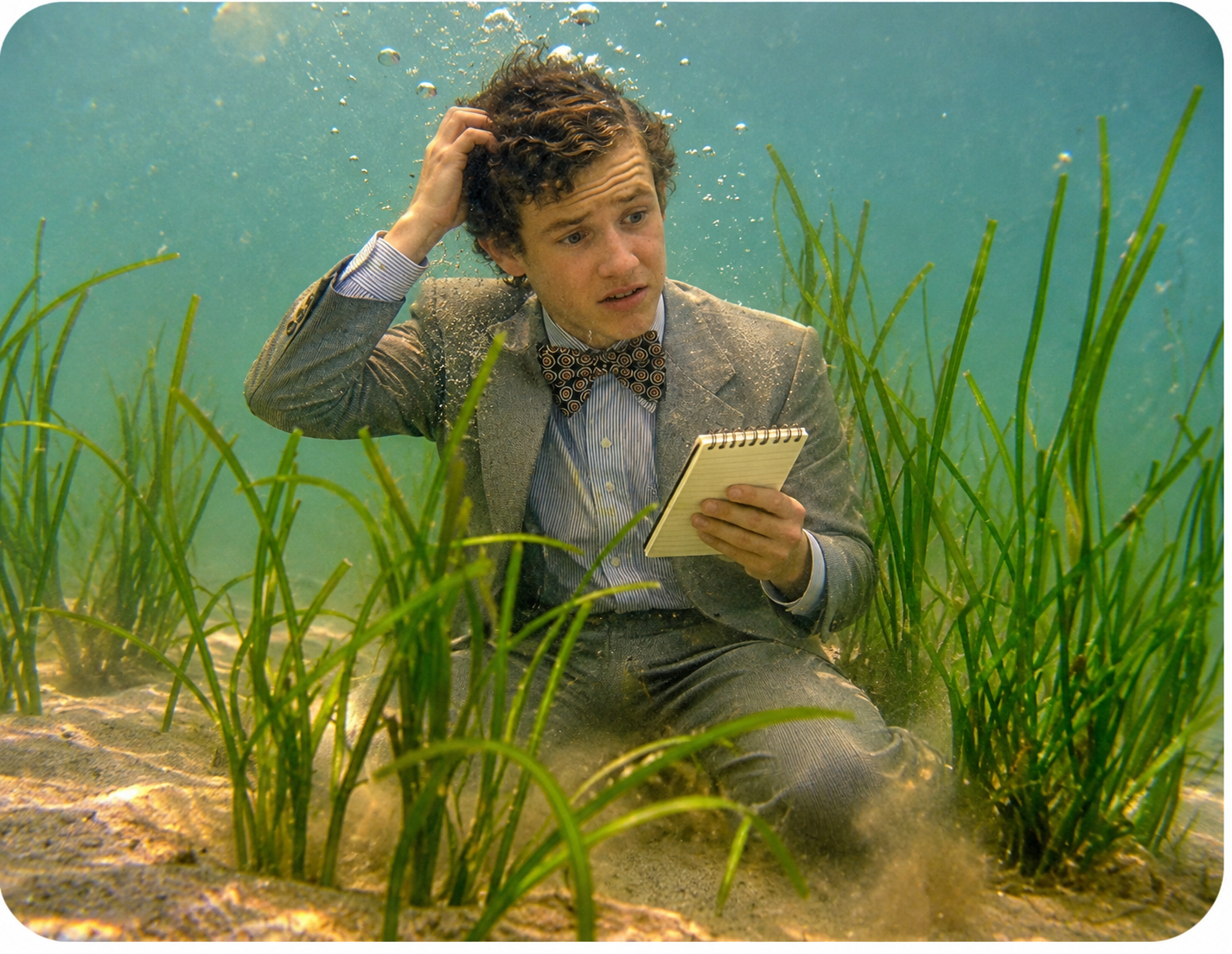
I spent a lot of time back in the day volunteering with the Shellfish Commission, and, knowing the importance of eelgrass to the marine environment, I was annoyed at this article’s omission. I put aside my irritation when I saw that the reporter was a high school student, but the efforts of these volunteers are important, so I asked ChatGTP to help Jimmy Olsen out:
Eelgrass is one of those unassuming plants whose ecological importance is wildly disproportionate to its appearance. A healthy eelgrass meadow is rather like an underwater forest, nursery, water-filtration system, and shoreline stabilizer rolled into one. And its disappearance from Long Island Sound has had consequences extending well beyond the loss of some underwater greenery.
What makes eelgrass so important?
Eelgrass (Zostera marina) is a true flowering plant, not seaweed. It has roots, produces flowers and seeds, and forms extensive underwater meadows in shallow coastal waters.
Its importance comes from five interrelated functions.
1. It's a nursery for marine life. Young fish, crabs, shrimp, and other creatures find shelter among its blades. The vegetation provides protection from predators and abundant opportunities to feed. Species such as bay scallops are particularly dependent on eelgrass habitat.
2. It supports the marine food web. Tiny organisms grow on the eelgrass blades, attracting small invertebrates, which in turn feed fish and larger predators. Eelgrass also contributes organic material to the food web as it decomposes.
3. It improves water clarity. Its leaves slow currents, allowing suspended particles to settle. Its roots help hold bottom sediments in place, reducing the amount of mud stirred up by waves. Clearer water, in turn, allows more sunlight to reach the plants.
4. It protects shorelines. By reducing wave energy and stabilizing sediment, eelgrass meadows help limit erosion, particularly in sheltered coastal environments.
5. It captures and stores carbon. Like land plants, eelgrass absorbs carbon dioxide through photosynthesis. Some of that carbon can be stored in the sediments beneath its meadows for long periods. This is part of what's known as blue carbon.
The third function is especially interesting because it creates a feedback loop: eelgrass helps keep water clear, and clear water helps eelgrass survive. Conversely, once a meadow disappears, sediment can become more easily disturbed, making it harder for eelgrass to reestablish itself.
What happened to eelgrass in Long Island Sound?
There have been several major causes:
Disease: In the early 1930s, an epidemic of eelgrass wasting disease devastated meadows along the Atlantic coast, including Long Island Sound.
Nitrogen pollution: Fertilizer runoff, sewage, and other nutrient sources encourage algae to proliferate. These algae block sunlight, sometimes coating eelgrass directly.
Warming water: Eelgrass is a cool-water species. Prolonged summer heat can damage or kill it.
Coastal development: Dredging, construction, boat traffic, and changes to shorelines have destroyed or degraded suitable habitat.
Invasive algae can also compete with eelgrass, but the evidence points primarily to pollution, warming, disease, and physical disturbance as the major causes of its decline in the Sound.
Why plant seeds instead of letting nature take its course?
This is another fascinating aspect of the problem.
Even where water quality has improved sufficiently for eelgrass to grow again, there may be no nearby eelgrass meadows to supply seeds. The habitat has become suitable, but the plants can't easily recolonize it.
Researchers are experimenting with an ingenious solution: attaching eelgrass seeds to live clams, which carry them down to the seabed and burrow into the sediment. An October 2025 report described plans to deploy 40,000 seed-bearing clams near Duck Island in Westbrook, Connecticut.
The idea is to establish enough healthy plants that they eventually reproduce and maintain the meadow without further human intervention.
So, this blogger’s helpful, if unwanted advice, is to try inserting a “why” paragraph into your next article early on, to tell the reader why he should keep reading. No need for a lengthy essay, something short will do, like this:
Eelgrass meadows are among Long Island Sound's most valuable marine habitats, providing shelter and feeding grounds for young fish, crabs, and shellfish while improving water clarity, stabilizing sediments, and reducing shoreline erosion. Once widespread, these underwater meadows have declined dramatically because of pollution, disease, coastal development, and warming waters. Restoring them could help rebuild the Sound's marine ecosystem.
Class dismissed.