Change: I was musing about professions that have been eliminated by advances in technology, so I asked about just one small type (so to speak)
/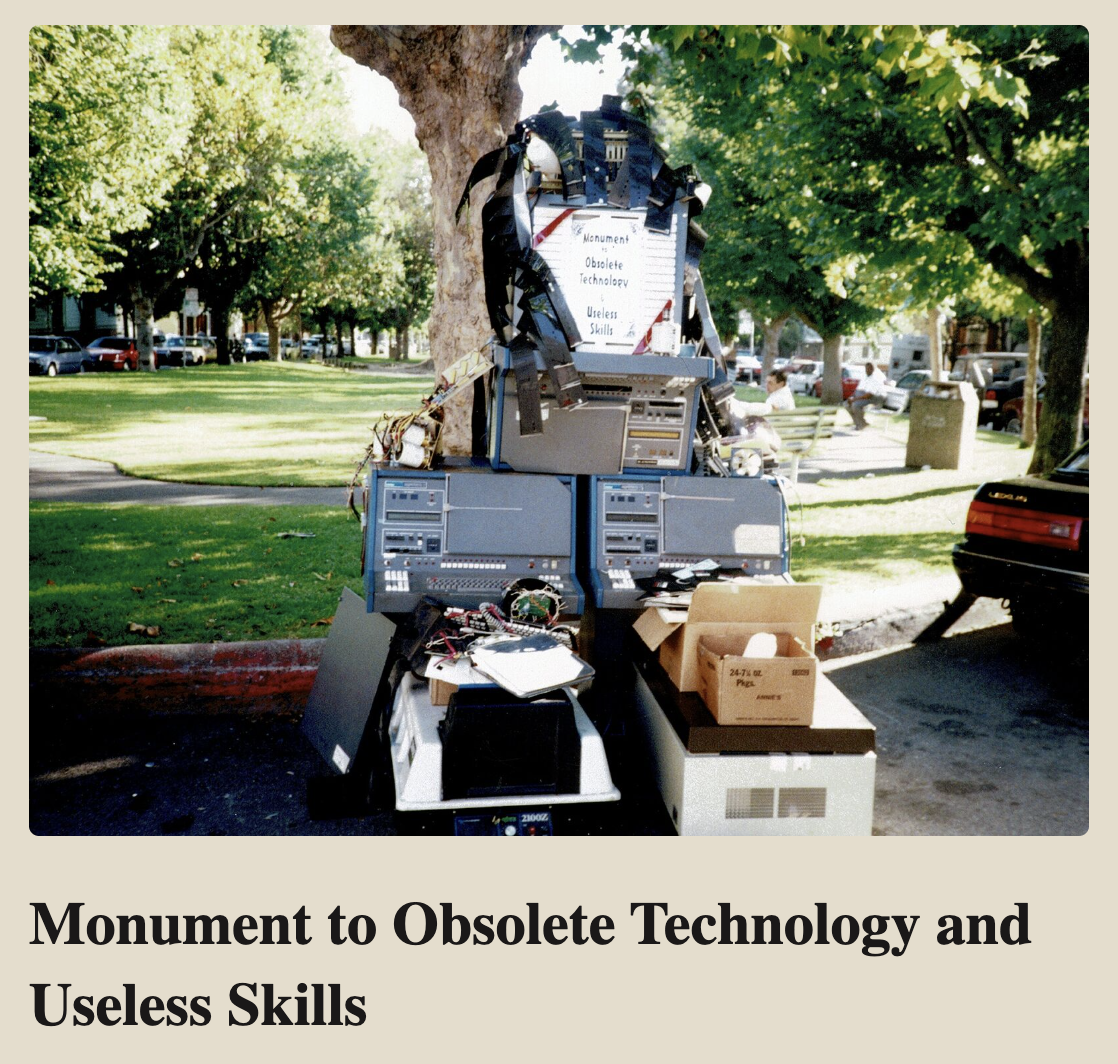
Carlsson provides an interesting first-person narrative of what happened, and it’s well worth reading, but here’s a broader, general view:
Q: Is there any estimate of how many typesetters were employed in the US at the peak of the printing press? I’m thinking about professions that have been made obsolete by technological changes (buggy whip manufacturers being the classic example)
AI Overview
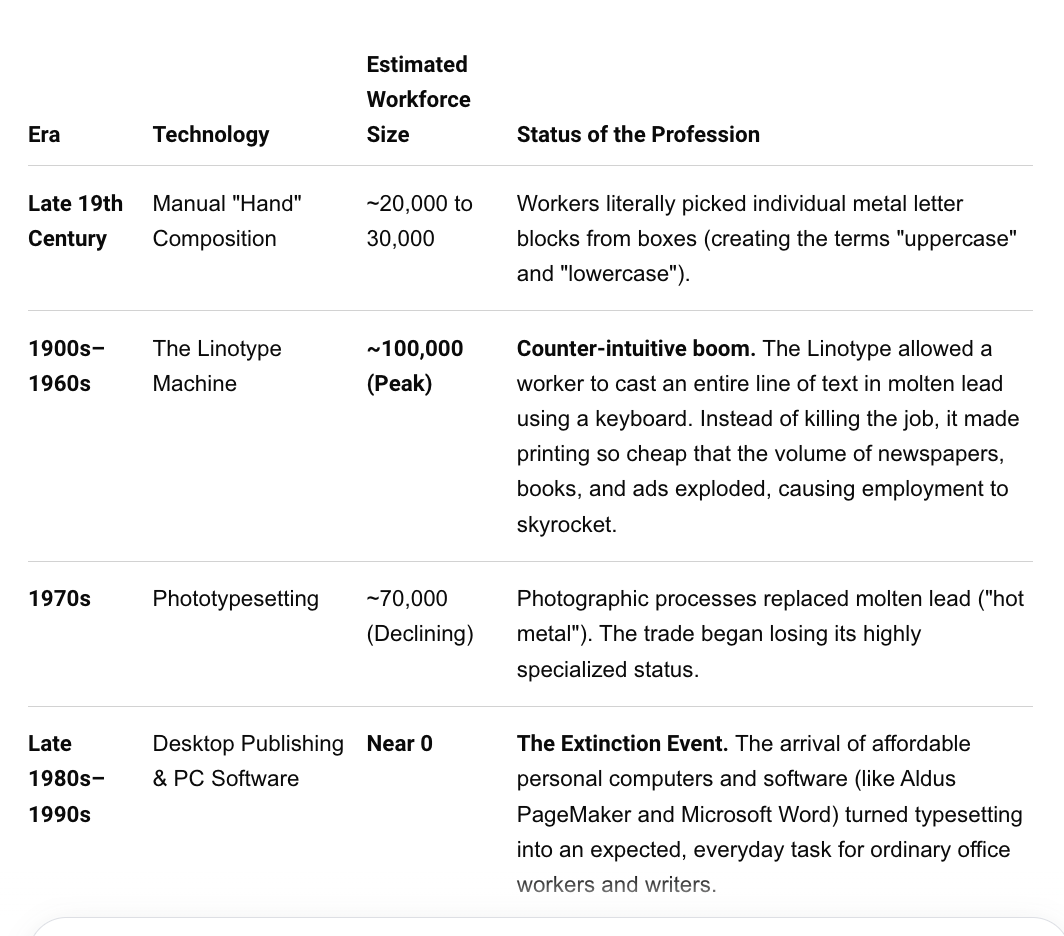
At the absolute peak of the typesetting industry in the United States, there were approximately 100,000 professional typesetters and printers working across the country. [1, 2]
The industry reached its employment zenith in the 1960s. This peak is tracked most clearly through the membership records of the International Typographical Union (ITU)—the nation’s oldest national labor union, which represented the vast majority of the specialized workforce in newspaper rooms and print shops. [1, 2]
The Lifespan of the Profession
The story of the typesetting industry mirrors your "buggy whip" example, but with a fascinating twist: it was actually saved by one wave of technology, only to be entirely wiped out by the next.
The "Buggy Whip" Parallel
Typesetters were among the highest-paid, most fiercely protected blue-collar intellectuals in the American workforce—often called "the aristocracy of labor". Because they read everything they set, they were highly literate and politically organized. [1]
When desktop publishing arrived in the 1980s, the decline was devastatingly fast. By 1987, the decimated ITU was forced to dissolve and merge into the Communications Workers of America. Within a decade, a centuries-old craft went from a highly paid, specialized career path to a completely automated background function of personal computing. [1, 2]
2. The Absolute Peak (1950s–1960s)
By mid-century, massive newsrooms maintained sprawling fleets of machines. For context, The New York Times operated a peak crew of 160 Linotypes, and the Los Angeles Times ran 120. [1]
3. The Digital Cliff (1970s–1980s)
The death of the trade happened in two rapid phases:
The 1970s (Phototypesetting): The introduction of photographic and cold-type machines replaced heavy molten lead with film and chemical paper. The famous New York Times documentary Farewell, Etaoin Shrdlu captures July 1, 1978—the final night the paper was put together using hot metal.
The 1980s (Desktop Publishing): The ultimate blow came with the personal computer, laser printers, and page layout software like Aldus PageMaker. Overnight, typesetting transformed from a highly guarded, specialized craft to an ordinary clerical skill that writers, editors, and administrative assistants performed themselves. [1]
By 1987, the centuries-old ITU could no longer survive independently and was forced to merge into the Communications Workers of America. [1]