Rich New Yorkers voted for this, so they can live with it, even if the homeless can't (Updated)
/
won’t you be my neighbor? Oh! I guess you already are
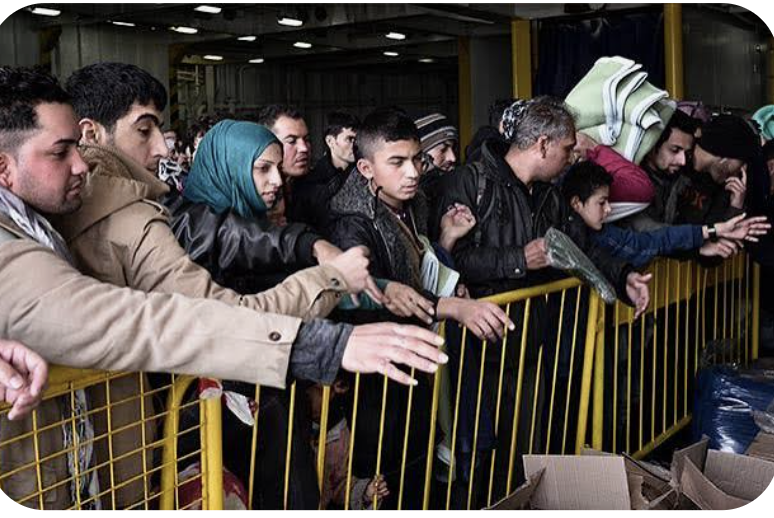
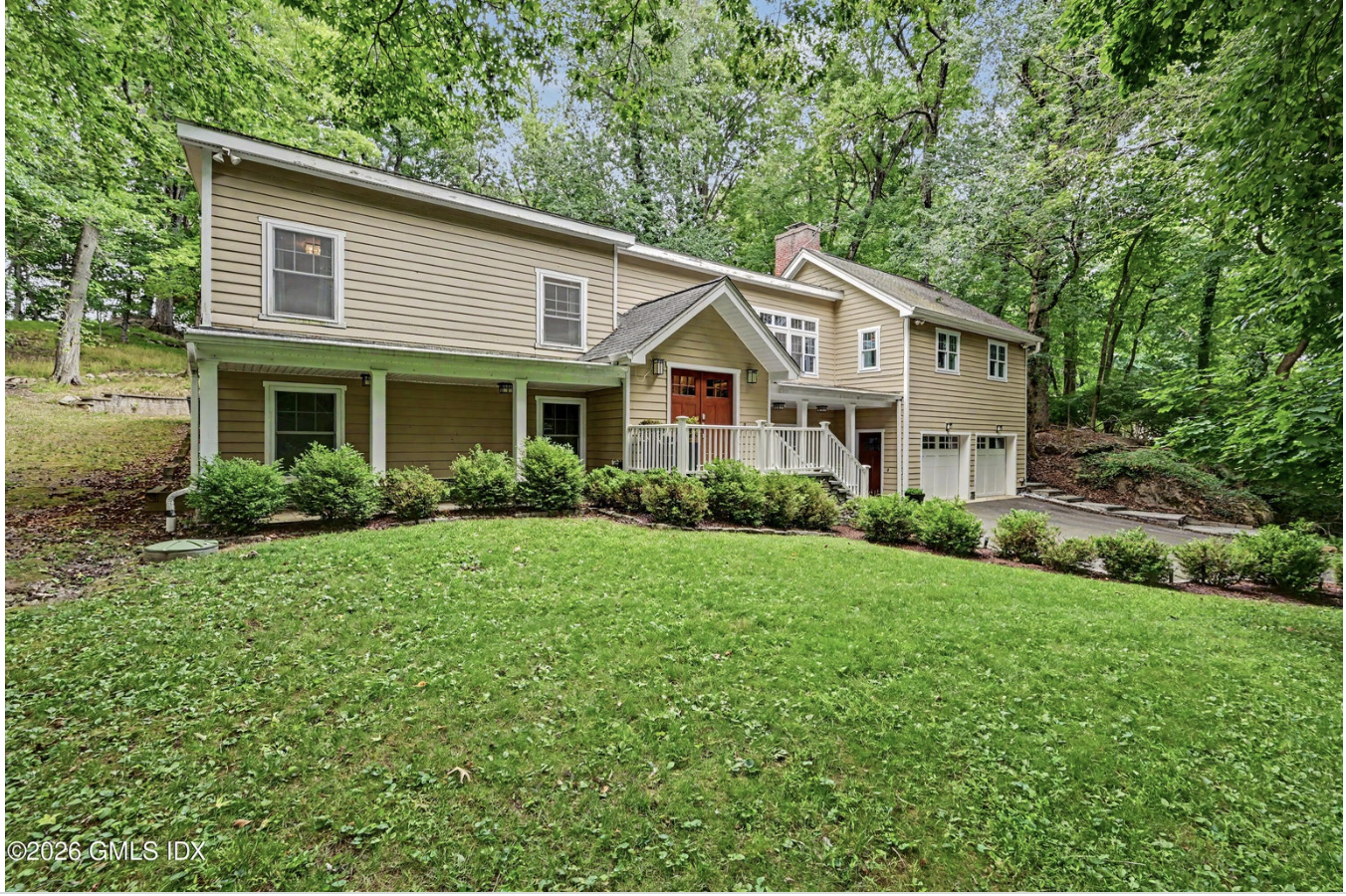
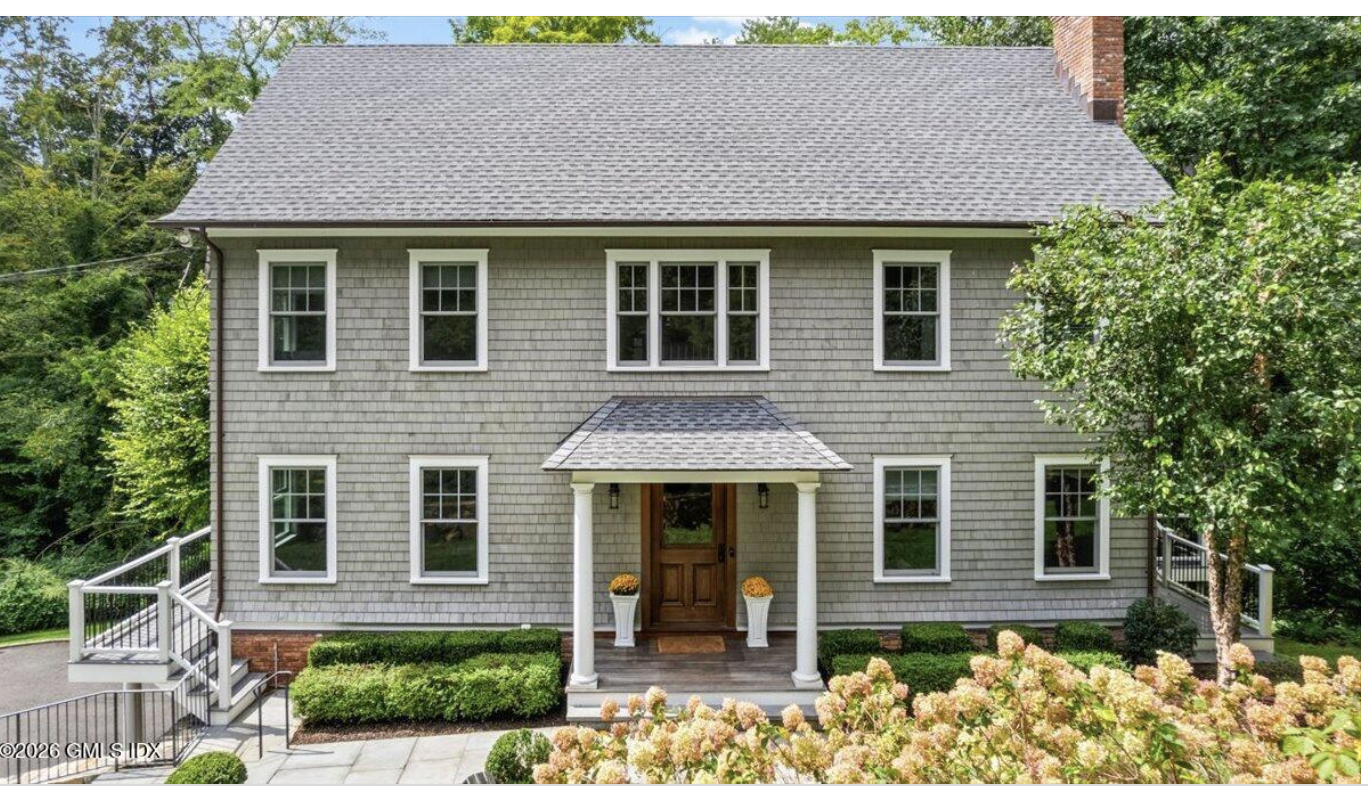
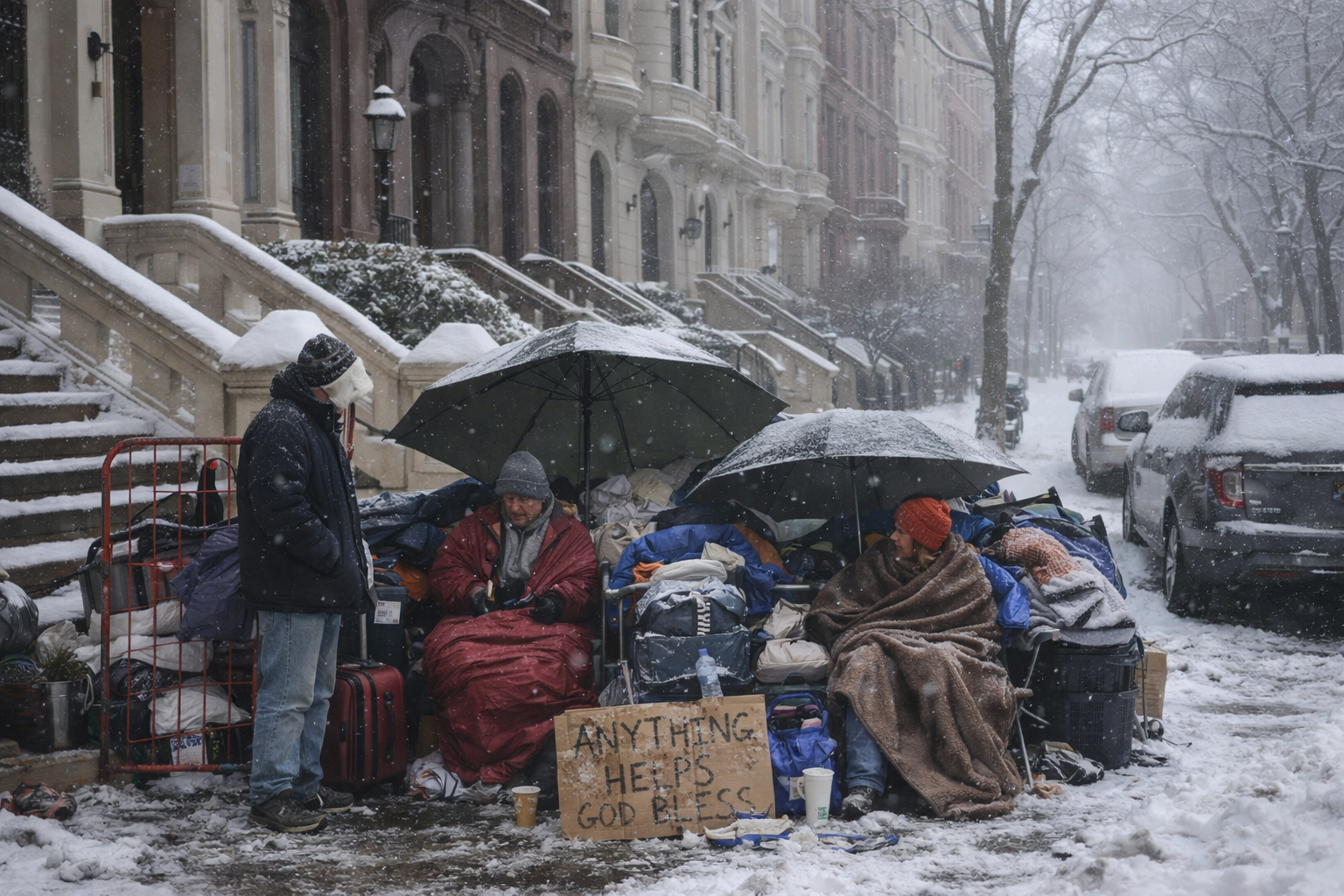
Due to their communist mayor’s policy forbidding NYC police from forcing the homeless off the streets and into shelters, dead bodies are piling up like cordwood. Thats an effective and innovative approach to reducing their numbers, although some critics describe it as unnecessarily harsh. Meh —no port in a storm, eh? What I find particularly amusing is where some of these people are turning up and what they’re doing when they get there:
Mamdani's Cruel Homeless Policy: Frozen Corpses and Blighted Neighborhoods
The Big Apple is about to take on a new name -- Tent City, or Filth City. Or perhaps Lepto City, after leptospirosis, a bacterial infection increasingly found in homeless encampments.
New York's new mayor, Zohran Mamdani, is barring the New York Police Department from closing down encampments.
Since Mamdani previewed his policy in December, new encampments are emerging in many neighborhoods. The consequences are dire both for vagrants and for the city's viability.
Between Friday, when the city was hit with a bone-chilling winter storm, and Sunday night, eight people were found dead outdoors [13 and counting as of Saturday — Ed], suggesting they were homeless. Mamdani conceded that several of the victims were known to the city's shelter system.
As the encampments pop up, neighborhood residents call 311, but the NYPD is now powerless. Even New York's Strongest -- the sanitation workers -- are barred from clearing the encampments. They've got orders to remove garbage and human waste but leave mattresses, clothing, makeshift cardboard huts and other items intact.
…. Mamdani is showing a misguided brand of compassion for the homeless, and no compassion for residents and business owners. Encampments bring crime, filth and a distressing decline in street civility.
Bringing the fun back to Fun City
Even local Democrats are infuriated by Mamdani's unwillingness to clear encampments. Gale Brewer, a City Council member representing the Upper West Side, said, "You cannot have defecating, you cannot have food on the street, you cannot have all these boxes." So far, Mamdani insists you can.
His predecessor, Eric Adams, aggressively removed encampments, saying, "We cannot tolerate these makeshift, unsafe houses on the side of highways, in trees, in front of schools, in parks. This is just not acceptable."
But Mamdani's policy is all about the homeless, not about the rest of the public: "We are going to take an approach that understands its mission is connecting those New Yorkers to housing."
Sorry, that's one mission, Mr. Mayor. But you are also responsible for ensuring the safety and comfort of the rest of the city's population, as well as its tourists and business visitors. Your policy is giving all of them the middle finger.
No town or city should have to tolerate encampments. Weighing the "rights" of the homeless against the needs of communities, the U.S. Supreme Court ruled in 2024 that towns can remove encampments.
Justice Neil Gorsuch explained that otherwise, "with encampments dotting neighborhood sidewalks, adults and children in these communities are sometimes forced to navigate around used needles, human waste, and other hazards to make their way to school, the grocery store, or work."
That's what New Yorkers are facing now.
Here’s an interesting statistic, Connecticut residents:
Los Angeles Police Department crime data show that from 2018 to 2022, the homeless made up 1% of the population but 11% to 15% of all violent crime suspects.
Nationwide, 13% of the homeless in encampments are registered sex offenders, and in some states, such as Connecticut, Massachusetts and Rhode Island, that figure is a staggering 50% or more, reports the Cicero Institute.
Mamdani says he's doing what's right for the homeless, keeping their presence a visible eyesore, putting pressure on the city to provide them with housing.
In truth, he's making them victims too, mere ploys in his political calculations. The life expectancy of someone living on the streets is, on average, 27 years lower than that of someone who is not. Some fall victim to crime or disease, but most die from alcohol or drug overdoses, often lying under a cardboard box or on a urine-soaked mattress.
Adams said it best, lamenting that there is nothing compassionate or "'progressive' about leaving people to freeze in makeshift encampments. It ... dehumanizes the very people who need help."
We were warned
UPDATE: not particularly related to the lead story, but here’s more on global warming experts from 2014. 107 are listed (full list at the link) so they’ve had another 11 years to come up with more. Here are the first 30 of the original list:
The Big List of Failed Climate Predictions
The question wasn’t “what do people think is caused by global warming”, but “what was predicted by scientists and activists 25 years ago that would be a result of global warming.” Big difference.
OK. Hang on to your hat!
The original post was asking for a list of failed climate predictions, so here are 107:
FAILED CLIMATE PREDICTIONS (and some related stupid sayings)
1. “Due to global warming, the coming winters in the local regions will become milder.”
Stefan Rahmstorf, Potsdam Institute of Climate Impact Research, University of Potsdam, February 8, 2006
****
2. “Milder winters, drier summers: Climate study shows a need to adapt in Saxony Anhalt.”
Potsdam Institute for Climate Impact Research, Press Release, January 10, 2010.
****
3. “More heat waves, no snow in the winter… Climate models… over 20 times more precise than the UN IPCC global models. In no other country do we have more precise calculations of climate consequences. They should form the basis for political planning… Temperatures in the wintertime will rise the most… there will be less cold air coming to Central Europe from the east…In the Alps winters will be 2°C warmer already between 2021 and 2050.”
Max Planck Institute for Meteorology, Hamburg, September 2, 2008.
****
4. “The new Germany will be characterized by dry-hot summers and warm-wet winters.”
Wilhelm Gerstengarbe and Peter Werner, Potsdam Institute for Climate Impact Research (PIK), March 2, 2007
****
5. “Clear climate trends are seen from the computer simulations. Foremost the winter months will be warmer all over Germany. Depending of CO2 emissions, temperatures will rise by up to 4°C, in the Alps by up to 5°C.”
Max Planck Institute for Meteorology, Hamburg, 7 Dec 2009.
****
6. “In summer under certain conditions the scientists reckon with a complete melting of the Arctic sea ice. For Europe we expect an increase in drier and warmer summers. Winters on the other hand will be warmer and wetter.”
Erich Roeckner, Max Planck Institute, Hamburg, 29 Sept 2005.
****
7. “The more than ‘unusually ‘warm January weather is yet ‘another extreme event’, ‘a harbinger of the winters that are ahead of us’. … The global temperature will ‘increase every year by 0.2°C’”
Michael Müller, Socialist, State Secretary in the Federal Ministry of Environment,
Die Zeit, 15 Jan 2007
****
8. “Harsh winters likely will be more seldom and precipitation in the wintertime will be heavier everywhere. However, due to the milder temperatures, it’ll fall more often as rain than as snow.”
Online-Atlas of the Helmholtz-Gemeinschaft, 2010
9. “We’ve mostly had mild winters in which only a few cold months were scattered about, like January 2009. This winter is a cold outlier, but that doesn’t change the picture as a whole. Generally it’s going to get warmer, also in the wintertime.”
Gerhard Müller-Westermeier, German Weather Service (DWD), 26 Jan 2010
****
10. “Winters with strong frost and lots of snow like we had 20 years ago will cease to exist at our latitudes.”
Mojib Latif, Max Planck Institute for Meteorology, Hamburg, 1 April 2000
****
11. “Good bye winter. Never again snow?”
Spiegel, 1 April 2000
****
12. “In the northern part of the continent there likely will be some benefits in the form of reduced cold periods and higher agricultural yields. But the continued increase in temperatures will cancel off these benefits. In some regions up to 60% of the species could die off by 2080.”
3Sat, 26 June 2003
****
13. “Although the magnitude of the trends shows large variation among different models, Miller et al. (2006) find that none of the 14 models exhibits a trend towards a lower NAM index and higher arctic SLP.”
IPCC 2007 4AR, (quoted by Georg Hoffmann)
****
14. “Based on the rising temperature, less snow will be expected regionally. While currently 1/3 of the precipitation in the Alps falls as snow, the snow-share of precipitation by the end of the century could end up being just one sixth.”
Germanwatch, Page 7, Feb 2007
****
15. “Assuming there will be a doubling of CO2 in the atmosphere, as is projected by the year 2030. The consequences could be hotter and drier summers, and winters warmer and wetter. Such a warming will be proportionately higher at higher elevations – and especially will have a powerful impact on the glaciers of the Firn regions.”
and
“ The ski areas that reliably have snow will shift from 1200 meters to 1500 meters elevation by the year 2050; because of the climate prognoses warmer winters have to be anticipated.”
Scinexx Wissenschaft Magazin, 26 Mar 2002
****
16. “Yesterday’s snow… Because temperatures in the Alps are rising quickly, there will be more precipitation in many places. But because it will rain more often than it snows, this will be bad news for tourists. For many ski lifts this means the end of business.”
Daniela Jacob, Max Planck Institute for Meteorology, Hamburg, 8 Aug 2006
****
17. “Spring will begin in January starting in 2030.”
Die Welt, 30 Sept 2010
****
18. “Ice, snow, and frost will disappear, i.e. milder winters” … “Unusually warm winters without snow and ice are now being viewed by many as signs of climate change.”
Schleswig Holstein NABU, 10 Feb 2007
****
19. “Good bye winter… In the northern hemisphere the deviations are much greater according to NOAA calculations, in some areas up to 5°C. That has consequences says DWD meteorologist Müller-Westermeier: When the snowline rises over large areas, the bare ground is warmed up even more by sunlight. This amplifies global warming. A process that is uncontrollable – and for this reason understandably arouses old childhood fears: First the snow disappears, and then winter.”
Die Zeit, 16 Mar 2007
****
20. “Warm in the winter, dry in the summer … Long, hard winters in Germany remain rare: By 2085 large areas of the Alps and Central German Mountains will be almost free of snow. Because air temperatures in winter will rise more quickly than in summer, there will be more precipitation. ‘However, much of it will fall as rain,’ says Daniela Jacob of the Max Planck Institute for Meteorology.”
FOCUS, 24 May 2006
****
21. “Consequences and impacts for regional agriculture: Hotter summers, milder plus shorter winters (palm trees!). Agriculture: More CO2 in the air, higher temperatures, foremost in winter.”
Dr. Michael Schirmer, University of Bremen, presentation of 2 Feb 2007
****
22. “Winters: wet and mild”
Bavarian State Ministry for Agriculture, presentation 23 Aug 2007
****
23. “The climate model prognoses currently indicate that the following climate changes will occur: Increase in minimum temperatures in the winter.”
Chamber of Agriculture of Lower Saxony Date: 6 July 2009
****
24. “Both the prognoses for global climate development and the prognoses for the climatic development of the Fichtel Mountains clearly show a warming of the average temperature, whereby especially the winter months will be greatly impacted.”
Willi Seifert, University of Bayreuth, diploma thesis, p. 203, 7 July 2004
****
25. “Already in the year 2025 the conditions for winter sports in the Fichtel Mountains will develop negatively, especially with regards to ‘natural’ snow conditions and for so-called snow-making potential. A financially viable ski business operation after about the year 2025 appears under these conditions to be extremely improbable (Seifert, 2004)”.
Andreas Matzarakis, University of Freiburg Meteorological Institute, 26 July 2006
****
26. “Skiing among palm trees? … For this reason I would advise no one in the Berchtesgadener Land to invest in a ski-lift. The probability of earning money with the global warming is getting less and less.”
Hartmut Graßl, Director Emeritus,
Max Planck-Institute for Meteorology, Hamburg, page 3, 4 Mar 2006
****
27. “Climate warming leads to an increasingly higher snow line. The number of future ski resorts that can be expected to have snow is reducing. […] Climate change does not only lead to higher temperatures, but also to changes in the precipitation ratios in summer and winter. […] In the wintertime more precipitation is to be anticipated. However, it will fall more often as rain, and less often as snow, in the future.”
Hans Elsasser, Director of the Geographical Institute of the University of Zurich, 4 Mar 2006
****
28. “All climate simulations – global and regional – were carried out at the Deutschen Klimarechenzentrum [German Climate Simulation Center]. […] In the winter months the temperature rise is from 1.5°C to 2°C and stretches from Scandinavia to the Mediterranean Sea. Only in regions that are directly influenced by the Atlantic (Great Britain, Portugal, parts of Spain) will the winter temperature increase be less (Fig. 1).”
Max Planck Institute for Meteorology, Press Release, Date: December 2007/January 2013.
****
29. “By the year 2050 … temperatures will rise 1.5ºC to 2.5°C (summer) and 3°C (winter). … in the summer it will rain up to 40% less and in the winter up to 30% more.
German Federal Department of Highways, 1 Sept 2010
****
30. “We are now at the threshold of making reliable statements about the future.”
Daniela Jacob, Max Planck Institute for Meteorology, Hamburg, page 44, 10/2001