New Listing up on the Banksville* border
/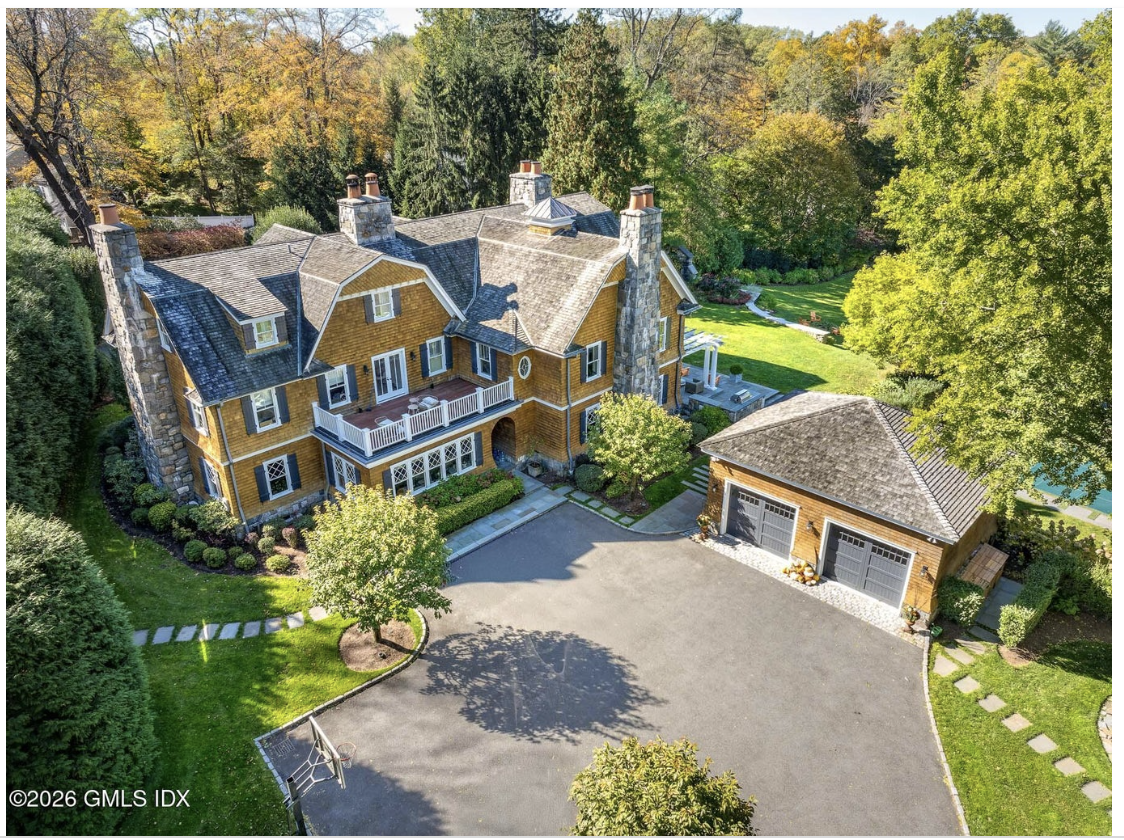
212 Bedford Road, looking for $8.895 million. Originally built in 1840 and, back then known as the “John Sands house”, it was completely rebuilt in 2005 and done well. I toured it back in 2005, before the rebuild, and it was in pretty bad condition, with not much remaining of the 1840 structure due to extensive additions and remodeling over the years, and its 190 acres reduced to the present 2.8.
There was still, however, what had been a pub/bar with a separate entrance in the basement; no longer active, but I suppose back in the day it was long way by horse to Augie’s in Cos Cob for a beer, so local farmers must have appreciated the convenience.
It was profiled in the Greenwich Time/Stamford Advocate back in 2010, a month after it had been put on the market at $6.495 (it eventually sold to these owners for $4.6 in October 2012). It’s an interesting history.
Sunset Farm house
By Susan Nova, Correspondent April 1, 2010
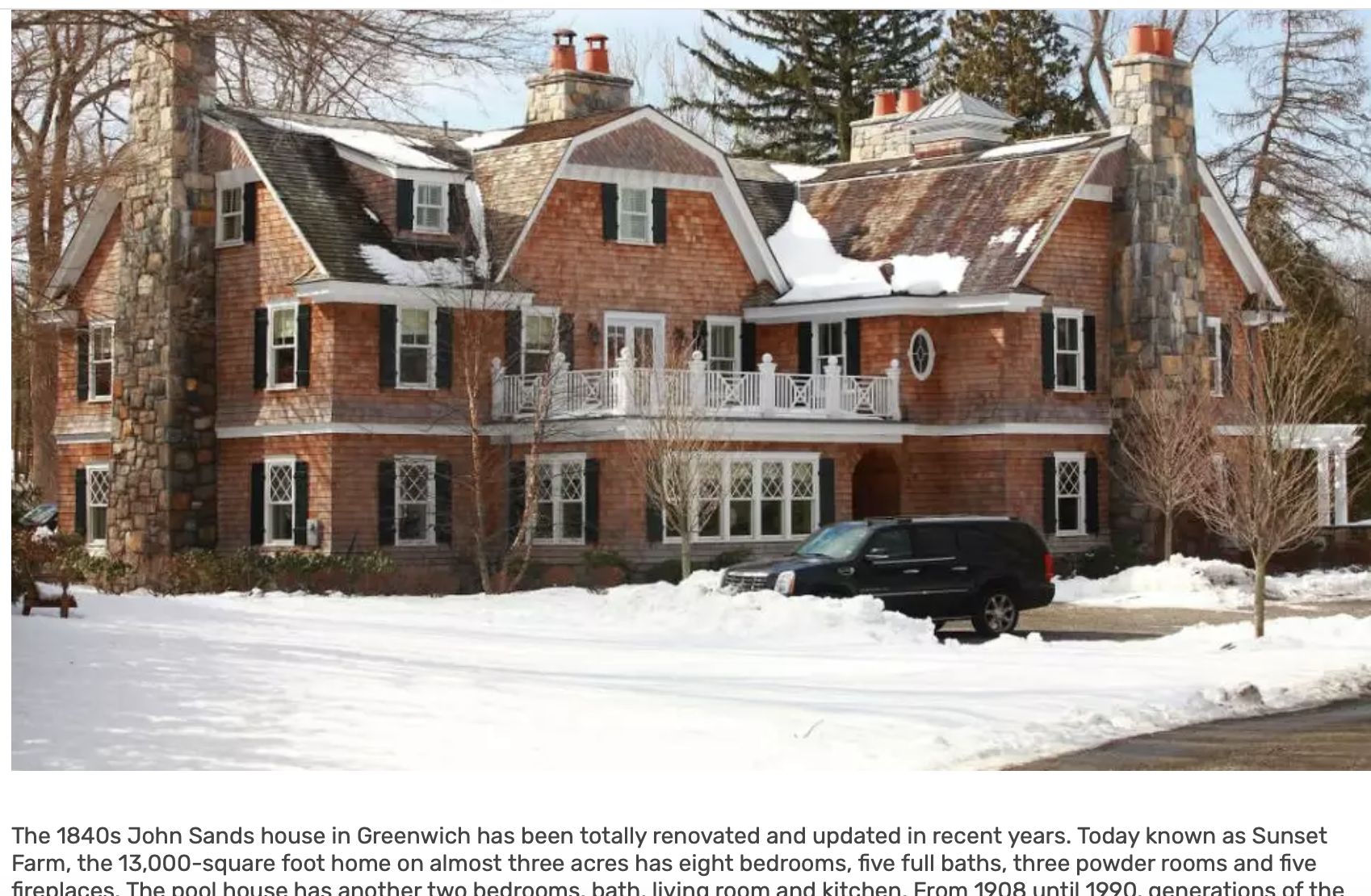
The 1840s John Sands house in Greenwich has been totally renovated and updated in recent years. Today known as Sunset Farm, the 13,000-square foot home on almost three acres has eight bedrooms, five full baths, three powder rooms and five fireplaces. The pool house has another two bedrooms, bath, living room and kitchen. From 1908 until 1990, generations of the Herbert L. Nichols family lived in the house, farming the land into the 1970s.
The John Sands House … once sheltered the Palmer House, the Welsh House, the mills on Wampus Brook and a lime kiln, a stone structure in the shape of a bottle that produced quicklime, which is used in mortar and plaster and as fertilizer.
Today known as Sunset Farm, the rebuilt 13,000-square-foot main house is as varied as its history.
It was built circa 1840 by John Sands Jr. in the Greek Revival style, and is now a Dutch Colonial with a cedar-shake roof. By 1857, in financial difficulties, Sands had lost the house and land to his niece, Sarah Sands, and Mary Mead. The land was expanded with the purchase of the Byram Swamp 30 years later, and there were later land additions.
In 1908, after more than a half-century, the property, by then 190 acres, was sold to banker Herbert Nichols, whose family farmed the land into the 1970s and lived in the frequently renovated house until 1990. Two years after moving in, Nichols had added two bays and a third floor with a gambrel roof. The clapboard exterior was sheathed in shingle, and the original entrance was moved to the center of the house.
The house later was sold by Nichols to C.L. Welsh, a photographer and advertising executive.
Its 2005 redo by the present owners was designed and managed by Rocco Lettieri of The HomeFront Organization in Westhampton Beach, N.Y., and builder Mark Mariani of Greenwich, and was completed in 20 weeks.
Mention of that 190 acres reminded me that not so long ago the Back Country really was back in the country, and would be totally unrecognizable today; the 100-150 acre spreads have almost all been split into 4-acre lots, and although that sounds like a generous area, the look and feel is entirely different.
I still have faint memories of driving up there in the early 60s, accompanying my mother and older sister Lorin to a stable where Lorin took riding lessons. On dark, fall afternoons, it seemed like a trip to a world completely different from Riverside, and I loved it. And miss it today.
*(Gideon has written to inform me that Bedford Road is jammed up against the Armonk, not the Banksville border. I responded by pointing out that north of the Post Road, it’s all Chinatown.)