Here’s Grey News!
/
Excellent article in, unexpectedly, Greenwich Time, written by their own Robert Merchant.
Why everything looks gray now, from Connecticut homes to new developments
By Robert Marchant, Staff WriterMarch 20, 2026
Take a drive through Connecticut and one color stands out — or rather, fades into the background: gray.
From the REI sporting goods stores in Milford and Norwalk to Heights Crossing in Darien and the new Delamar Hotel in Mystic, neutral palettes abound, evoking an overcast Connecticut day with leaden skies. Once famous for barnyard red, the region’s landscape has shifted toward shades with names like "antique pewter,” “sea wind” and “iced marble.”
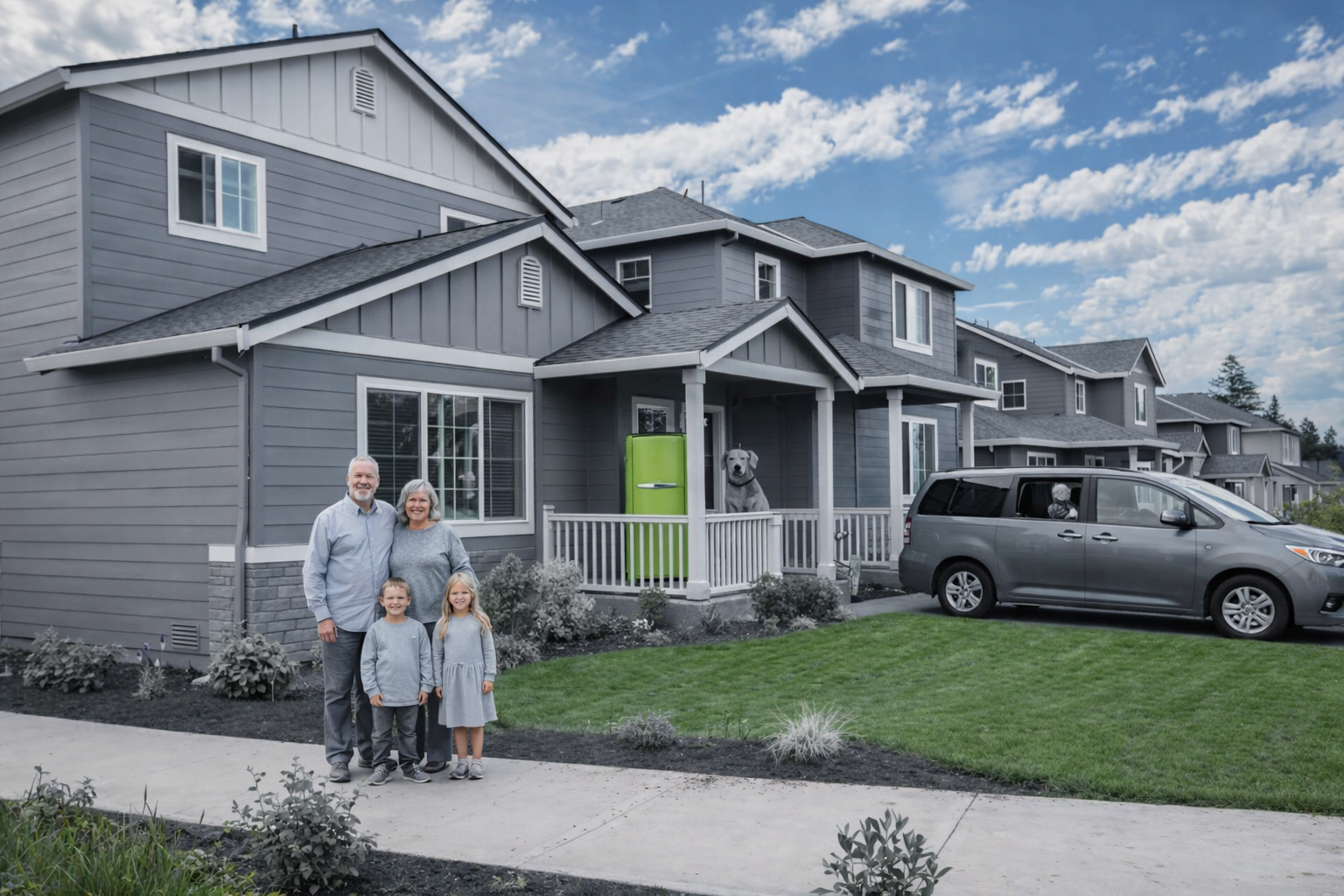
For the past decade, architects, designers, influencers and real estate agents have been painting the world gray — or its close relative, “greige,” a blend of gray and beige. In a 21st-century twist on Henry Ford's famous line about the Model T — they could be in “any color the customer wants, as long as it’s black” — gray seems to be only color in the paint box for many developers and home builders.
Architectural and design pundit Kate Wagner has dubbed the era the “age of gray supremacy,” while others have described it more broadly as the “graying of America.”
“In the past decade, gray was everywhere,” said Shawna Feeley, a Westport designer. “And before that, we were doing gray walls, gray floors — just everything gray.” Though, she notes, a backlash is beginning to take hold: “It has turned the corner.”
So, what’s behind the ubiquitous neutral color scheme?
Architects and builders say gray has universal appeal, and few people actively dislike it. That makes it a safe bet, especially in real estate, where agents often recommend neutral tones to attract the widest pool of buyers. Television, too, has played a role. For years, home renovation shows on channels like HGTV have promoted gray as the go-to solution for modernizing older properties.
Gray also has a lot of fans in the fields of construction and design.
Toll Brothers, the national building company working on a large townhouse development in Stamford’s Waterside neighborhood, cited a desire for “a cool, neutral palette” in its filings with City Hall. Design drawing called for “pearl gray” on the Hardie board siding and a “charcoal gray” roof, raising concerns among city planners about how much gray is too much.
“Maybe have a couple of other building colors?” asked Vineeta Mathur, Stamford's principal planner. “It’s all the same white and gray colors.”
Ray Mazzeo, a planning consultant for the project, defended the design as “understated and elegant,” reflecting a consumer preference for neutral colors and gray tones.
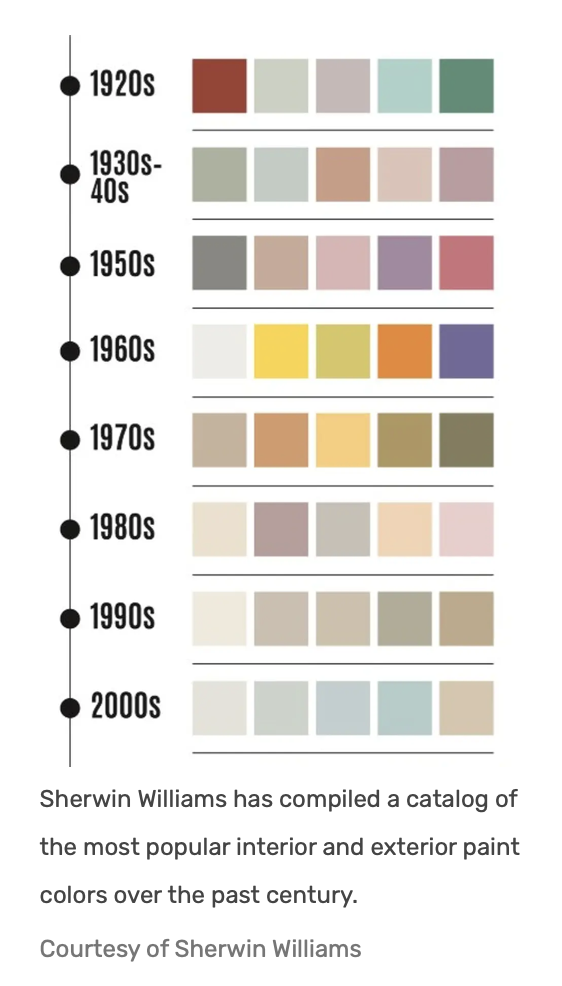
Consumers do seem to have a taste for gray and muted colors. Sherwin Williams, the paint manufacturer, has tracked color trends over the past century. Bright hues dominated the earlier part of the 20th century. In the 1970s, brown and beige were big. A pronounced shift toward gray began in the 2010s. In the current decade, five of the top 10 exterior house colors are shades of gray, according to the paint company’s marketing department.
Duo Dickinson, an architect based in Madison, traces the trend back even further. Earlier in his career, clients wanted their kitchens to be “all white everything, all the time.” About 40 years ago, Dickinson said, there was a shift toward gray — influenced by European fashion trends.
“In the late '80s and '90s, those gray tones were super big in fashion — shiny gray fabric," Dickinson said. "Gray became hip. It was fashion first, and then the architects had this palette of materials to make exterior buildings with. There’s an aesthetic, descended from high modernism, of gray, aluminum and glass exteriors. It’s chic and cool, like an Armani suit.”
Gray’s versatility is another factor. It can lean warm or cool, pair with almost anything and hide wear better than stark white. “Real estate agents push common applicability; there’s no ‘turn-off’ with gray,” said Dickinson, who writes regularly on architecture and has appeared on HGTV as a commentator.
Feeley, a designer who lives in Fairfield, said a group mentality can take hold among builders and real estate brokers.
“Realtors and (speculation) builders, they get very comfortable with cookie-cutter trends," Feeley said. "What worked once — like a Hollywood movie that was successful — they make six more of them. They stay with a trend.”
>>>>
The popularity — and unpopularity — of gray paint has also been topic of debate on social media.
“No one actually loves grey; it’s just that no one hates it,” one post said.