Fog of War, as seen by a clueless armchair strategist (me)
/
First in news this morning is this story:
Trump says Iranian navy ‘destroyed’ as US preps for blockade
"Their military is destroyed. Their whole Navy is underwater. You know that 158 ships are gone. Their navy is gone. Most of their mine droppers are gone."
But then there’s this:
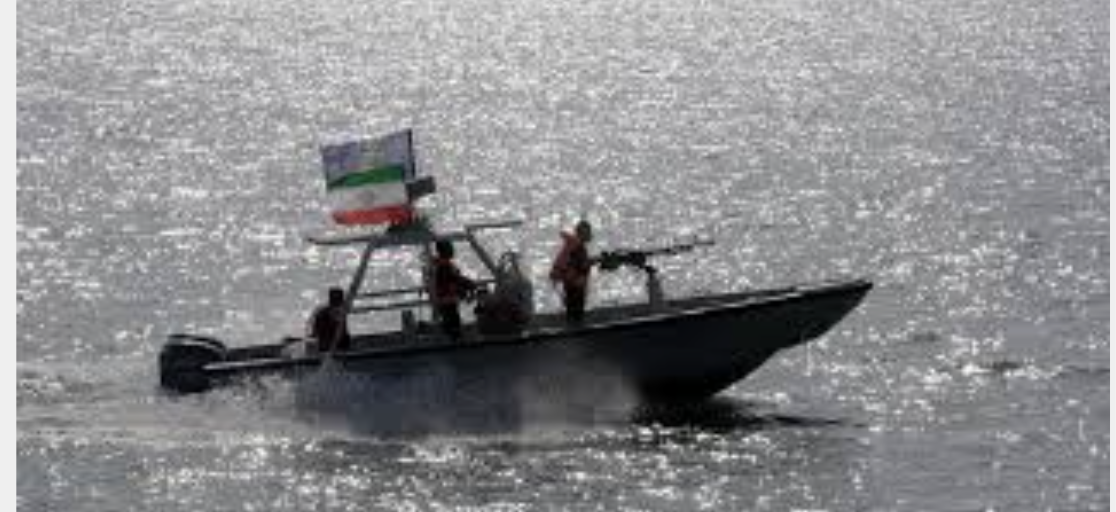
Majority of Iran’s fast attacks ships patrolling Strait of Hormuz still in tact [sic]
More than 60% of the Islamic Revolutionary Guard Corps’ fast attack ships in charge of patrolling the Strait of Hormuz are still intact despite six weeks of US-Israeli airstrikes on Iran’s navy, according to a new report.
While America has decimated Iran’s standard navy, sinking more than 155 vessels, the ships under the IRGC’s control are still largely operational and capable of policing the key water route President Trump has vowed to reopen, The Wall Street Journal reported.
The IRGC’s navy is vast, small, and speedy, allowing the attack vessels to evade satellite detection and hide in underground pens along the rocky coast of the 20-mile-wide strait, said Chris Long, a former British navy official in the Persian Gulf.
“It will be a long time before the US can take all those out,” Long told the WSJ.
The formation of the fleet was a direct result of the so-called Tanker War of the 1980s, when the US sank much of Iran’s active fleet in a single-day strike.
Since then, the Islamic Republic has pivoted to an asymmetrical navy, with the IRGC tasked with policing the Strait of Hormuz while Iran’s conventional navy patrols other waterways in the Gulf.
Iran previously showed off the speedy boats during live-fire military drills in February as a show of force against the US naval buildup in the Middle East prior to the start of the war.
The ships were shown to be armed with rocket launchers and able to lay mines in the strait, with the boats capable of moving at high speeds as they moved in and out of their underground pens.
The strategy appears to have paid off for Tehran, given the IRGC’s survival rate compared with that of the conventional navy, which US officials touted as completely destroyed in the first three weeks of the war.
And then there’s John Hinderaker, who says it doesn’t matter either way, because we’re pursuing a different strategy:
We’re Blockading Iran, Not the Strait
So we aren’t closing the Strait, we are blockading Iranian ports. This means that Iran won’t be able to sell any oil. Two countries will be hurt: Iran and China, which buys 80% of Iranian oil. The Gulf States will be able to ship their oil through the Strait as soon as they choose to do so.
Meanwhile, we are sending vessels to the Strait to try to dispose of the mines that Iran may or may not have laid there. Other countries may aid in that effort. Iran still has a lot of small boats that they have used to harass shipping, but they will be useless against our ships. And reportedly, a number of oil tankers have diverted from other courses and are heading to the Gulf of Mexico America to load up on American oil and gas.
Maybe I am missing something, but this seems like an excellent solution. In the short term, China will have an incentive to lean on whoever is left in the regime to open the Strait. In the meantime, we aren’t destroying Iran’s petroleum infrastructure, merely preventing it from selling any oil. That means that Iran’s supply will be added to the global total before long, one way or another, and if the Iranian people are able to throw off the yoke of Islamic tyranny, they will take over an intact oil infrastructure.
Medium term, the Strait will be rendered mostly irrelevant once the Israeli-Saudi pipeline that will connect the Gulf States to the Mediterranean has been constructed. At that point, I believe the only countries that will need Hormuz to ship oil will be Iran and perhaps Iraq.
Hinderaker’s final, optimistic point about “the Israeli-Saudi pipeline” being the “medium term solution” makes me question his entire post, because no such pipeline has even been designed, let alone begun construction.
April 2, 2026:
Gulf states consider bypassing Strait of Hormuz with new oil pipelines via Haifa - FT
The Financial Times reported that the Gulf states aim to create a new network of pipelines, roads, and railways to stop relying on the Strait of Hormuz.
A network like that, especially if, as has been proposed, it runs through Israel, is a long term solution, if at all, and probably a pipe dream, so to speak.
Just for fun, here’s a video about these fast boats, origin unknown, but I’d guess it was prepared or supplied to the mulahas for propaganda purposes. Still, it does provide a look at what they are, and the various models being deployed.