They said it, I didn't
/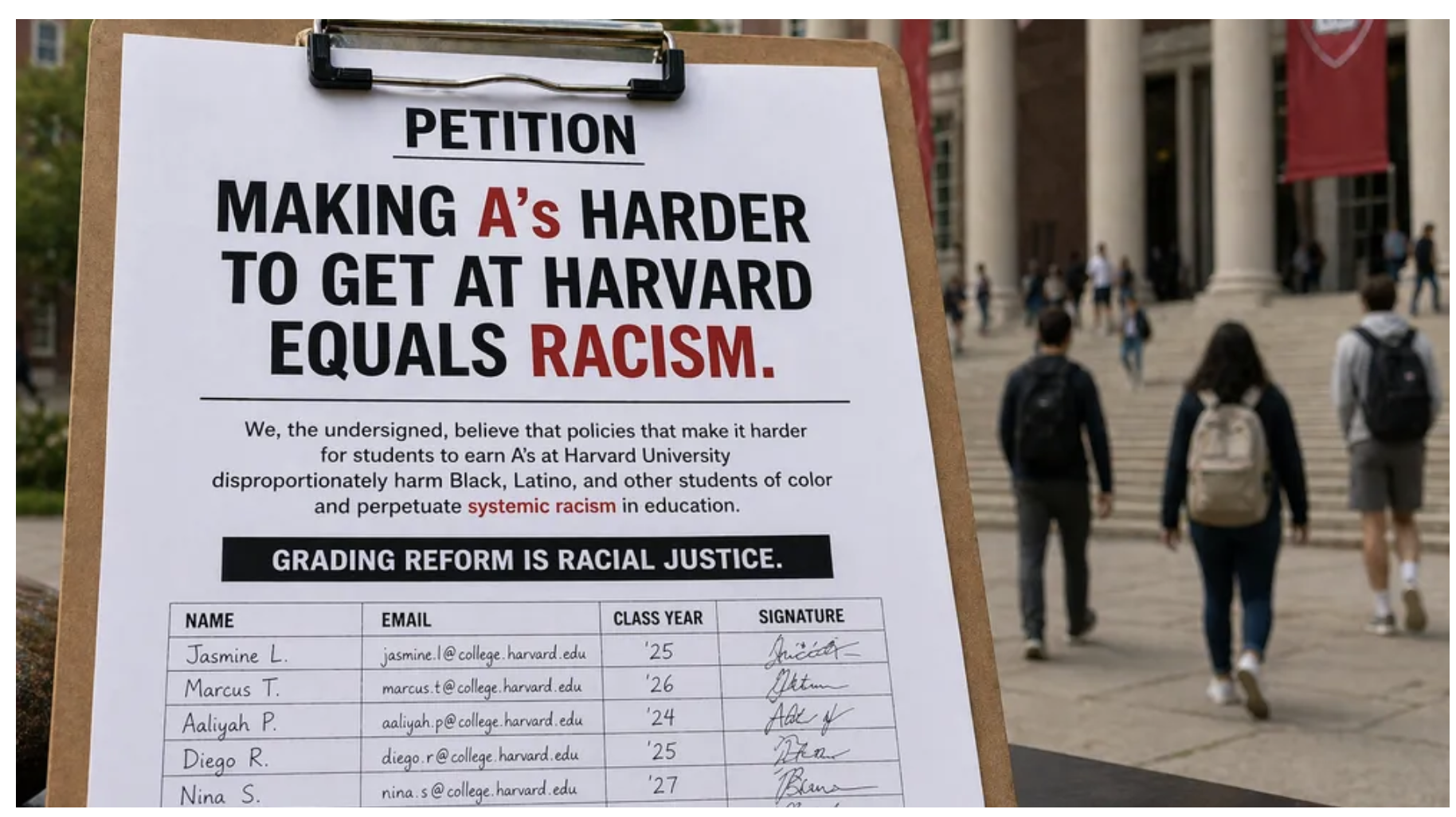
The petition, organized by freshman Angie Agostini, urges Harvard to reject a plan that would limit the number of top grades awarded in courses. Organizers claim the policy would “mirror and reinforce existing racial and socioeconomic hierarchies,” according to the petition’s description.
Harvard officials introduced the proposal Feb. 6 as part of an effort to address grade inflation. The policy has been delayed until the fall of 2027.
Under the proposal, professors would limit “flat A” grades to about 20 percent of students in a class, though there would be no cap on A-minus grades. The plan follows internal data showing that more than 60 percent of grades awarded in 2025 were A’s, compared to roughly one-third in 2010.
Dean of Undergraduate Education Amanda Claybaugh stated that current grading practices “are not only undermining the functions of grading; they are also damaging the academic culture of the College,” in a university report.
Student organizers, however, argue that limiting top grades could disproportionately affect first-generation and low-income students. In an open letter, they described the proposal as “blatantly racist” and warned it could increase competition among students.
[RELATED: “Professors say Gen Z students can’t read, forcing colleges to lower academic standards”]
Supporters of the reform say the changes would restore academic rigor and reduce pressure on students to maintain perfect GPAs. Critics of the petition argue that merit-based grading systems should reflect academic performance rather than demographic considerations.
AI Overview
Harvard students are heavily opposing a proposed 2026-2027 grade reform aiming to cap 'A' grades at 20% per class, with nearly 85% of surveyed undergraduates against it. Opponents, including student petitioners, argue the policy is "racially harmful," creates excessive pressure, and disproportionately burdens marginalized, low-income (FGLI), and students of color.
Key Points of Opposition:
Allegations of Inequality: A petition led by student activists argues that strict grade caps function as a "system of ranking and sorting that mirrors and reinforces existing racial and socioeconomic hierarchies".
FGLI and Student of Color Impact: Students argue the policy disproportionately affects first-generation, low-income students and students of color who may face structural inequalities, calling the policy "blatantly racist" in its effects.
Extensive Pressure and Mental Health: Students expressed that the potential cap would cause severe stress and reduce the enjoyment of the college experience.
Diminished Value Proposition: Some students argued that, as consumers paying for a top-tier education, limiting high grades reduces the value of their performance signals.
Survey Data: A Harvard Undergraduate Association survey found nearly 85% of respondents opposed the cap on A grades, with over 72% opposing an accompanying internal ranking system.
Revisions and Status:
Following the backlash, Harvard officials delayed the implementation by a year, to the 2027-28 school year, and added a new "SAT+" grade.
While student reaction is overwhelmingly negative, some faculty members have expressed cautious support for the change to address rampant grade inflation.
The debate continues with concerns that the reforms will lead to increased, counterproductive competition, rather than the intended improvement of academic standards.