How disappointing: A "Vomitorium" actually had nothing to do with vomiting between courses
/
I saw a comment on another blog that claimed the Romans had “vomitoriums” that they used during banquets to make room for more gluttony. That sounded a bit dubious to me, so I looked it up. There was such a word, but it had nothing to do with extra slices of pie.
Purging the Myth of the Vomitorium
Ancient Romans used the word, but pop culture has the concept all wrong
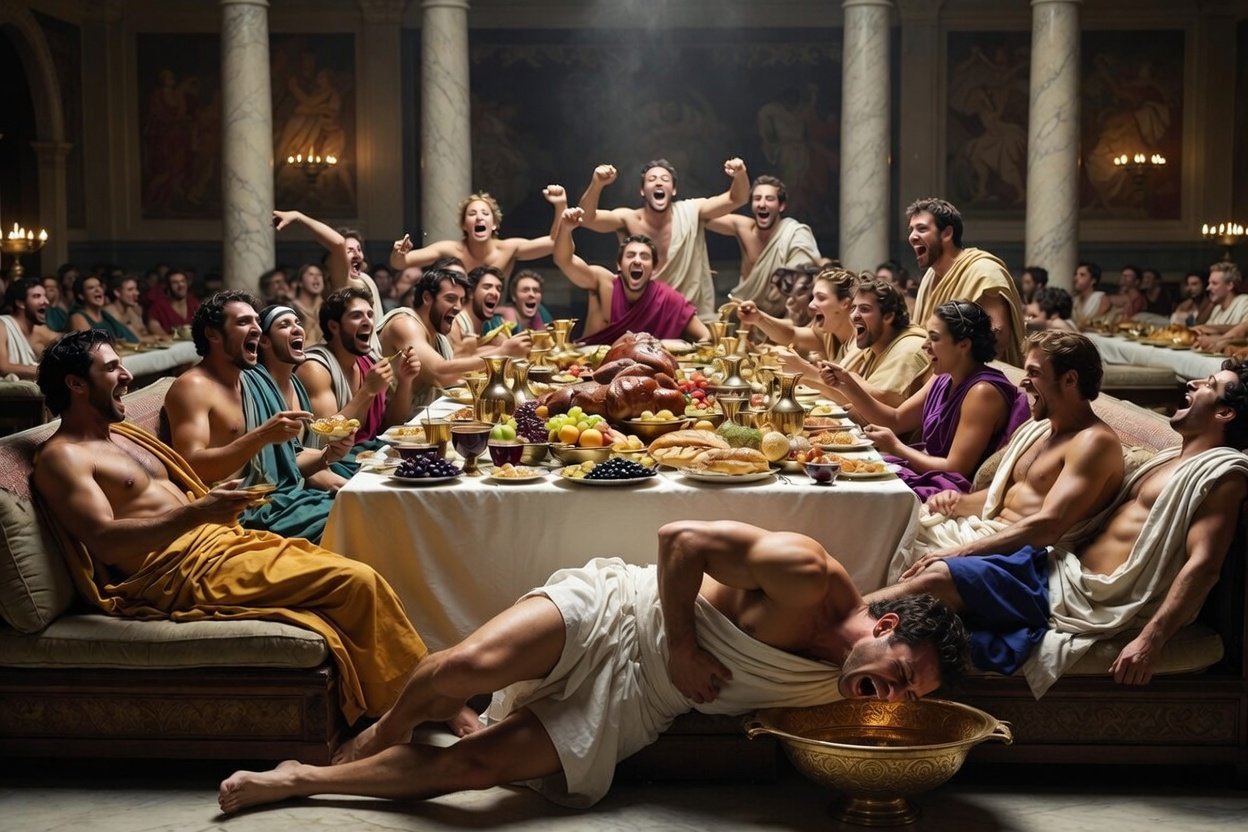
As far as pop culture is concerned, a vomitorium is a room where ancient Romans went to throw up lavish meals so they could return to the table and feast some more. It's a striking illustration of gluttony and waste, and one that makes its way into modern texts. Suzanne Collins' "The Hunger Games" series, for example, alludes to vomitoriums when the lavish inhabitants of the Capitol—all with Latin names like Flavia and Octavia—imbibe a drink to make them vomit at parties so they can gorge themselves on more calories than citizens in the surrounding districts would see in months.
But the real story behind vomitoriums is much less disgusting. Actual ancient Romans did love food and drink. But even the wealthiest did not have special rooms for purging. To Romans, vomitoriums were the entrances/exits in stadiums or theaters, so dubbed by a fifth-century writer because of the way they'd spew crowds out into the streets. [Who Were the Barbarians?]
"It's just kind of a trope," that ancient Romans were luxurious and vapid enough to engage in rituals of binging and purging, said Sarah Bond, an assistant professor of classics at the University of Iowa.
Vomit. Vomitus. Vomitorium.
The Roman writer Macrobius first referred to vomitoriums in his "Saturnalia." The adjective vomitus already existed in Latin, Bond told Live Science. Macrobius added the "orium" ending to turn it into a place, a common type of wordplay in ancient Latin. He was referring to the alcoves in amphitheaters and the way people seemed to erupt out of them to fill empty seats.
I’m sure Hunger Games fans — I’m not one, never read (saw?) them — will be disappointed, but, like “the rule of thumb” cited by feminists as limitation on the permissible thickness of a rod used to beat one’s wife, it ain’t so. Now ask me about “niggardly”.