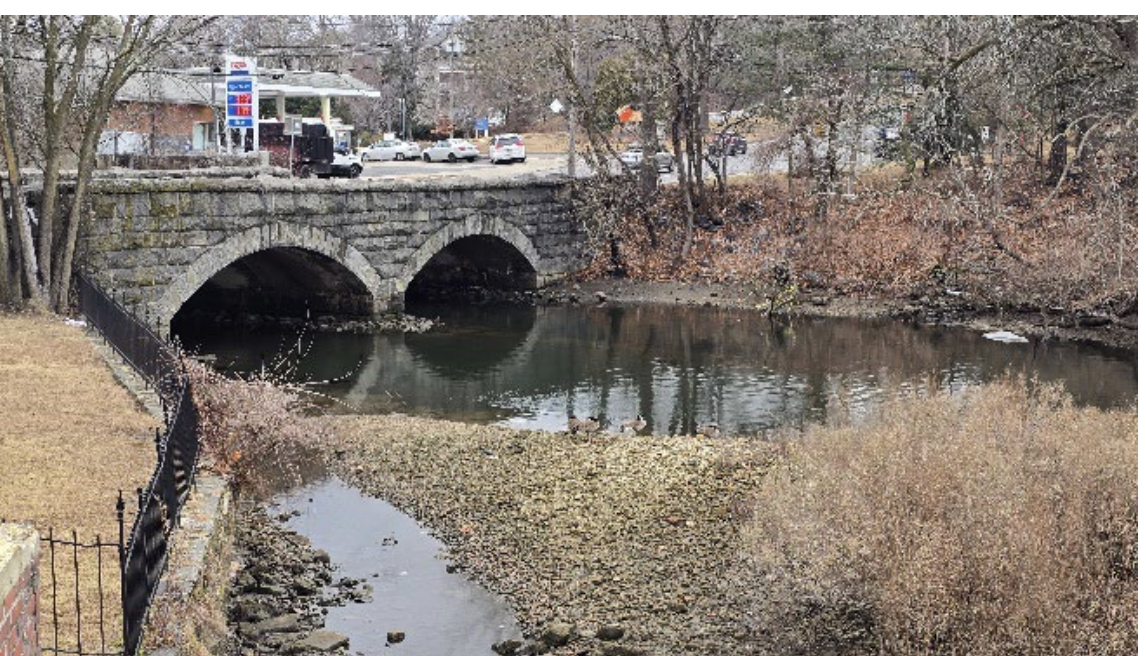
Government (not) at work: Six years after deciding to replace the (tiny) Byram River Bridge, the DESIGN work is "expected" to be finished in 2027, “unless it takes longer".
/
And when might it actually be built? “Oh c’mon, man, don’t ask embarrassing questions.”
Connecticut, New York lawmakers push to speed up Greenwich flood-control bridge project
GREENWICH —
Connecticut's Sens. Richard Blumenthal and Chris Murphy and Rep. Jim Himes, D-4th District, along with New York's Rep. George Latimer, D-6th District, sent a letter to the commander of the New York district of the Army Corps of Engineers, Col. Eric Swenson, last week to urge the replacement of two bridges they say are long overdue.
….Improvements were authorized years ago, yet the projects remain unfinished, according to the federal officials.
First Selectman Fred Camillo said he’s been working with various entities involved with the bridge replacements for years.
“I share the frustration because we worked really hard to get this project moving and done as quickly as possible, without any shortcuts being taken, and then to hear that there’s been another delay is extremely frustrating,” he said. “I support the effort by the federal officials to advocate to the federal government to get this project started and completed.”
In 2020, the Army Corps of Engineers completed a Byram River Basin Flood Risk Management Feasibility Study, which recommended removing and replacing both the West Putnam Avenue and Hillside Avenue bridges because they were major contributors to flooding the area.
[Blumenthal, Murphy and Himes] said they are “extremely disappointed to learn that the project schedule has slipped once again.”
The current projection has the design not being completed until 2027 and more funding may be necessary to complete the design phase, which the group called “deeply concerning,” particularly considering Congress approved the Infrastructure Investment and Jobs Act specifically to move authorized projects from planning to construction.
Ah, progress! The original bridge, built in an eara before the EPA and its ever-accelerating,massive regulations (all of which are fiercely defended by this Democrat trio of bozos) moved from proposal to design to completion in less than one year in 1888-1889.
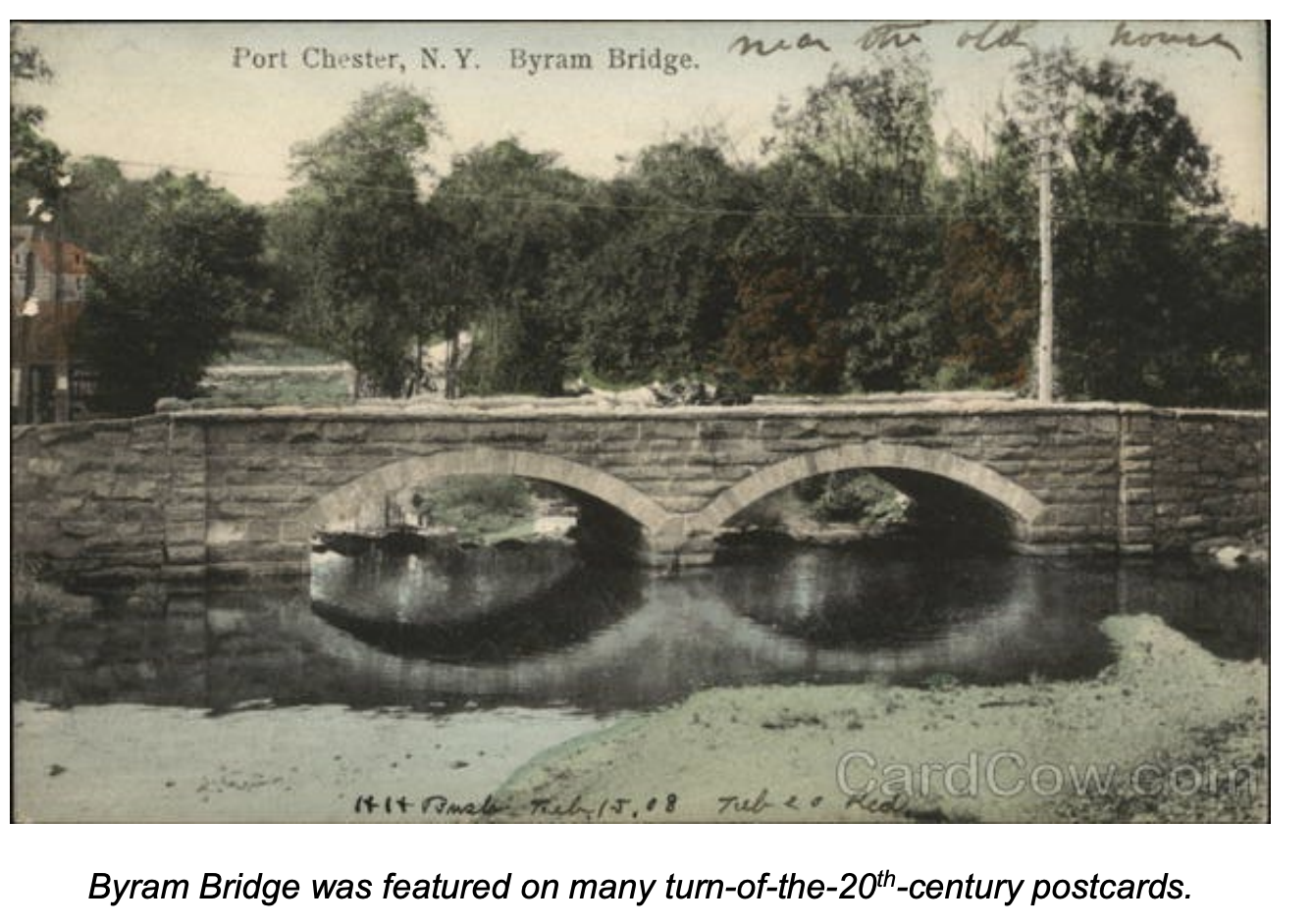
How do we know that? Because of one very small, but typical time-consuming component of the current delay, a requirement that the history of the bridge be researched and a report prepared: They
As per the Memorandum of Agreement (MOA) with the New York and Connecticut State Historic Preservation Offices (SHPOs), the Corps of Engineers is required to provide a publication for public distribution that summarizes the historical research completed as part of the Historic American Engineering Record (HAER) documentation of the bridges. For information on the history of the Route 1 Bridges (also referred to as the Byram River Bridges), please read A Brief History of the Byram River Bridges.
Byram Bridge (1888) At the request of Westchester County, J.A. Kirby, Port Chester’s village engineer, developed two bid options for the new bridge, which was to be either an iron truss or a stone arch. Although bridge building companies had developed low priced, mass-produced, industrially manufactured rolled iron shapes, which were cheaper and easier to erect, the lowest bid was for a new stone arch bridge submitted by contractor William McCabe of Mamaroneck, New York. The two-span stone-arch bridge was constructed for $14,750.00, [$535,000 in current dollars —ed] which was $127 cheaper than the lowest iron truss option. After completion in early 1889, the bridge quickly became a regional landmark associated with the “Gateway to New England” because it straddled the Byram River along the Boston Post Road, the principal route between New York and Connecticut. Because of its popularity along the Boston Post Road, the bridge was also featured on early 20th-century postcards and admired for its elegant arches and rusticated masonry. The bridge was widened in 1911 to accommodate an increase in traffic and dedicated sidewalks were added at this time.
What’s all this going to cost (before overruns)?
AI Overview
The overall estimated cost for the Byram River flood mitigation and bridge replacement project (targeting the Route 1 bridges near the Greenwich, CT and Port Chester, NY border) is $35 million for construction, alongside a $5.47 million pre-construction engineering and design (PED) phase. [1, 2, 3]
Project Cost Breakdown
Design & Pre-construction Phase: $5.47 million (100% federally funded).
Construction Phase: Estimated at $35 million, cost-shared 50% by the federal government and 50% non-federal sponsors.
Local Town Capital Allocation: Greenwich's local capital budget inputs feature targeted segments (such as initial municipal allocations around $4 million) toward advancing the local share of the bridge and flood work. [1, 2, 3]
Fun Fact: While you’re contemplating the sorry mess our massive regulatory system of government has become, crushing both new construction and maintenance of our infrastructure, here’s a look at two projects that you may hqave heard of, each built before the power to control those actives was surrendered by Congress and state legislatures to agency bureaucrats and private, evirnomental special interest groups:
The Empire State Building
AI Overview
The physical construction of the Empire State Building took a record-breaking 1 year and 45 days (410 days), beginning on March 17, 1930, and completing on April 11, 1931. The total cost at the time was approximately $40.95 million (including the land and demolition of the old Waldorf-Astoria hotel), which equals roughly $680 million today.
Timeline Details
Land Assembly & Prep: Land purchase and demolition of the Waldorf-Astoria occurred across 1929 and early 1930.
Construction Start: March 17, 1930.
Building Pace: Steel frameworks rose at an astonishing rate of 4.5 stories per week.
Structural Completion: April 11, 1931 (12 days ahead of schedule).
Official Opening: May 1, 1931, when President Herbert Hoover turned on the lights from Washington, D.C.
The Hoover Dam
AI Overview
It took five years to build the Hoover Dam. Construction started in 1931 and finished in 1936. The dam itself cost $49 million back then. That is about $850 million to $1 billion today. The power plant and generators cost another $71 million, which makes the total project cost about $120 million then and roughly $2 billion today. [1, 2, 3, 4, 5]
Construction Timeline
Start date: April 1931 (preliminary work began in July 1930)
Concrete pouring: Started in June 1933
Dam completion: May 1935, two years ahead of schedule
Cost Breakdown
Dam structure cost (1930s): $49 million
Power plant and gear cost (1930s): $71 million
Total combined cost (1930s): $120 million
Total cost in current dollars: Roughly $2 billion when including the power plant and machinery.
Instead of staging a PR photoshoot on the banks of a small stream while wringing their hands and whining piteously and ineffectively, this trio might better serve their constituents by returning to Washington and undo and dismantle some of the ruinous regulatory world they and their colleagues have created over the past 6 decades.