"The Rule of Law" or “Rule of Judges?” He claims the first, practices the second
/
Can We Start Impeaching Judges Now?
David Strom:
Judges are supposed to use judgment.
It's in the name of the position. They aren't supposed to become a second executive branch or override the legislature unless it violates the Constitution, and they certainly aren't supposed to become political actors who run campaigns to influence public opinion.
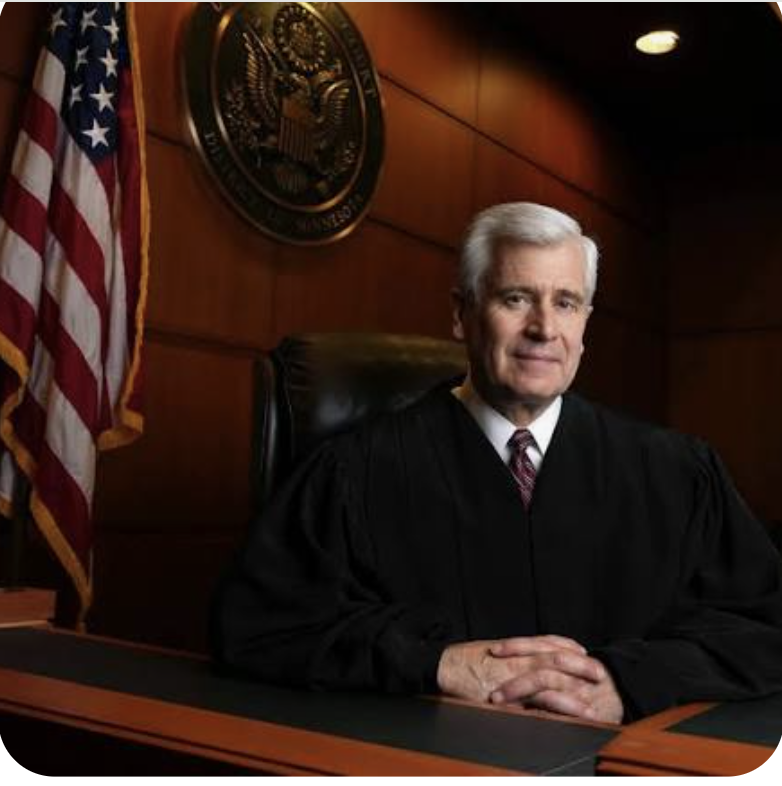
…. A case in point is Judge Patrick Schiltz, who sat down with The New York Times to discuss the conspiracy among Minneapolis federal judges to thwart the Trump administration's efforts to deport criminal illegal aliens from Minnesota because they didn't like the policy.
He explains, in loving detail, how they threw out their responsibilities to judge cases by the facts before them and created a system that pretty much automatically impeded the application of federal law. And he's proud of it as a card-carrying member of the #resistance.
Now, I am a big fan of the rule of law, and I believe the law applies to all of us; if the president or his agents break the law, they should be held accountable.
But the same holds true for judges: it is not their role to create systems that decide which laws apply to them and which do not, and they should not take pains to thwart the enforcement of laws they do not like. Creating systems where the decisions are not based on the application of the law and just rubber-stamping decisions not applicable to the case before you is banana republic stuff.
At issue, Schiltz says, was ICE's failure to follow court orders in a timely manner, but he leaves out a basic fact that changes the story entirely: the orders were churned out at such a pace because the judges never actually considered the cases that it was literally impossible for ICE to keep up.
In other words, the judges intentionally made it impossible for ICE to meet the deadlines, and then the judges used that as an excuse to torture ICE's lawyers and the federal officers doing their jobs.
One of the key issues left out of the Times story was this important fact: as the cases went up the ladder to the Supreme Court, the Trump administration was vindicated in most of them. It was the judges who were ignoring the underlying law, not the Trump administration. Most of the decisions were intentional delaying tactics, using cookie-cutter, often sloppy reasoning based on feelz, not the law.
David Strom’s not the only Minnesota lawyer who’s appalled by this judge, there’s Bill Glahn, of PowerLine:
The rule of judges
…. Until he aged out a few months ago, Schiltz served as chief judge of the Minnesota federal district. He was appointed to the bench by George W. Bush in 2006.
Schiltz and the Times look back to the period early this year when Operation Metro Surge was in full swing and habeas corpus petitions, seeking to free detainees, were being filed at a rate of more than one per hour. We’ve already debunked the lie that “hundreds” of court orders were defied by the Trump Administration. Not a single order was ever disobeyed. Not one. Not once.
As it happens, it is Judge Schiltz who is defying the law. Back on March 25, the regional 8th circuit court of appeals ruled that the applicable law says that aliens facing deportation “shall be detained.” Schiltz ended up on the wrong side of this issue.
I have been tracking every one of the more than 350 habeas cases filed in Minnesota since the 8th circuit ruling. You can see the list here.
Judge Schiltz has decided 12 cases since late March, denying two habeas petitions and releasing 10 detainees. So much for “shall be detained.” Luckily, since moving into semi-retired status, he has not taken on any new cases since late June.
It’s not just being wrong on the facts, and wrong on the law, it’s the sanctimony, Schiltz and his fellow judges, as quoted in the Times and relayed by the outlet Minnesota Reformer,
The federal judges described to the Times a chaotic environment where the number of cases ramped up as more people challenged their detention in court. The judges described being constantly near their devices in case they missed a petition.
“The cost of me enjoying a movie could be somebody waking up in New Mexico the next day when they shouldn’t have,” Schiltz told the Times.
“New” Mexico? Rest assured that this concierge, bespoke-level of 24/7 service isn’t available to mere citizens. It is only provided to those that everyone involved acknowledges to be in open defiance of America’s immigration laws.
For my friends, everything.
For my enemies, the law.
As for that interview with the Times? Schlitz may have aged out of his position as Chief Judge of the Minnesota Federal District, but he’s still active, still deciding cases, and so is very much still required to obey the Federal Code of Conduct; he didn’t. Immigration cases are still active, Schlitz is still deciding them
AI Overview
Federal judges are not allowed to grant interviews or comment publicly on active or pending cases.
The Rules on Active Cases
No active case comments: Under the Code of Conduct for United States Judges, federal judges must not make any public statements about cases currently before them or cases that may come before them on appeal.
Speaking through the court: Judges communicate strictly through their written legal opinions, orders, and statements made during official court proceedings in the courtroom.
Avoiding bias: This ban protects the integrity, fairness, and impartiality of the judicial process so that outside public pressure does not influence a ruling.
General Public Speaking and Interviews
General topics: Outside of pending litigation, federal judges are generally permitted to speak at educational events, law schools, or bar associations, or discuss the general administration of justice.
Remaining cautious: Even during general interviews or lectures, judges avoid expressing personal views on controversial political or legal issues that could reasonably cast doubt on their impartiality i
Ask the Model Code: When may a judge talk to the press?
A: The Model Code does not expressly prohibit a judge from speaking with the press. Judges may speak with the press at any time—but not about any matter.
Educating the press and the public about the judicial process is always OK.
But judges should avoid speaking to the press or making any “public statement that might reasonably be expected to affect the outcome or impair the fairness of a matter pending or impending in any court … or might substantially interfere with a fair trial or hearing” (Rule 2.10). Translation: Don’t comment on a trial that is in progress or about to start, whether or not it’s your trial.
In Republican Party of Minnesota v. White, 536 U.S. 765 (2002), the Supreme Court ruled that judicial candidates may air their views on disputed legal and political issues. However, any active judge who decides to speak with the media to announce a view can be subject to discipline for failing “to perform all duties of judicial office fairly and impartially” (Rule 2.2).
Judges likely already know that their decision to become a judge comes with limitations on judicial speech.