Maine Fail
/
vertical fraud
So, we were talking about Maine’s “Green Energy” initiatives the other day, and that prompted a response from a reader who’s been enjoying the benefits of that scheme. Just for fun, I’m including a related story that’s making the news this week, on an ongoing federal/state-funded scam. First, the reader:
Sidebar to your blog post about Maine residents putting their money where their mouths are...
My wife and I own a cottage in a large development in Wells. A few years ago, to fund green energy initiatives, The state regulators and CMP decided one source of revenue could be the "monthly meter fee". Their brilliant plan was to raise it from $20 per month to $200 per month, on commercial properties only. I assume the whole thing would have gone down in flames if they tried that with residential properties. Our residential development is deemed commercial, for reasons unimportant to this tale. We also have a total of 24 meters. So our association's cost went from $480 per month to $4,800 per month. THAT should fund an EV charger or two! Way to go, Maine. Letters to state legislators asking for relief have gone unanswered.
Cheers,
"A Reader Up North"
And on a larger scale, there’s this report from The Maine Wire. Small beans, perhaps, but multiply these boondoggles across 50 states, add in USDAID projects across the world, instructing Afghan men on women’s rights, funding Peruvian transvestite dance groups and such, and pretty soon you’re talking real money.
Salad Tossed: $88M “Green” Project Celebrated by Maine Democrats Faces Foreclosure
The “urban farm” received tens of millions of dollars in taxpayer funding, both from the Biden Administration and from the State of Maine, with Maine Gov. Janet Mills even visiting the alleged salad producer for a photo op.
At the time, we peeped through the windows to see millions of dollars in equipment sitting idle, with maybe one or two bags worth of microgreens growing.
We reported with much irony that Vertical Harvest CEO Nona Yehia told me the fantastic contraption would be “churning out salad at close to full capacity by the end of the year.”
“The facility is currently churning out salad at a limited capacity,” Yehia said.
In April Jon Fetherston and I visited the offices of the much-ballyhooed “Vertical Harvest” to find a ghost town, unpaid taxes, and barely a bag of micro greens.
The “urban farm” received tens of millions of dollars in taxpayer funding, both from the Biden Administration and from the State of Maine, with Maine Gov. Janet Mills even visiting the alleged salad producer for a photo op.
Fast-forward to today: Vertical Harvest is facing foreclosure on one of the many “green” loans from the government.
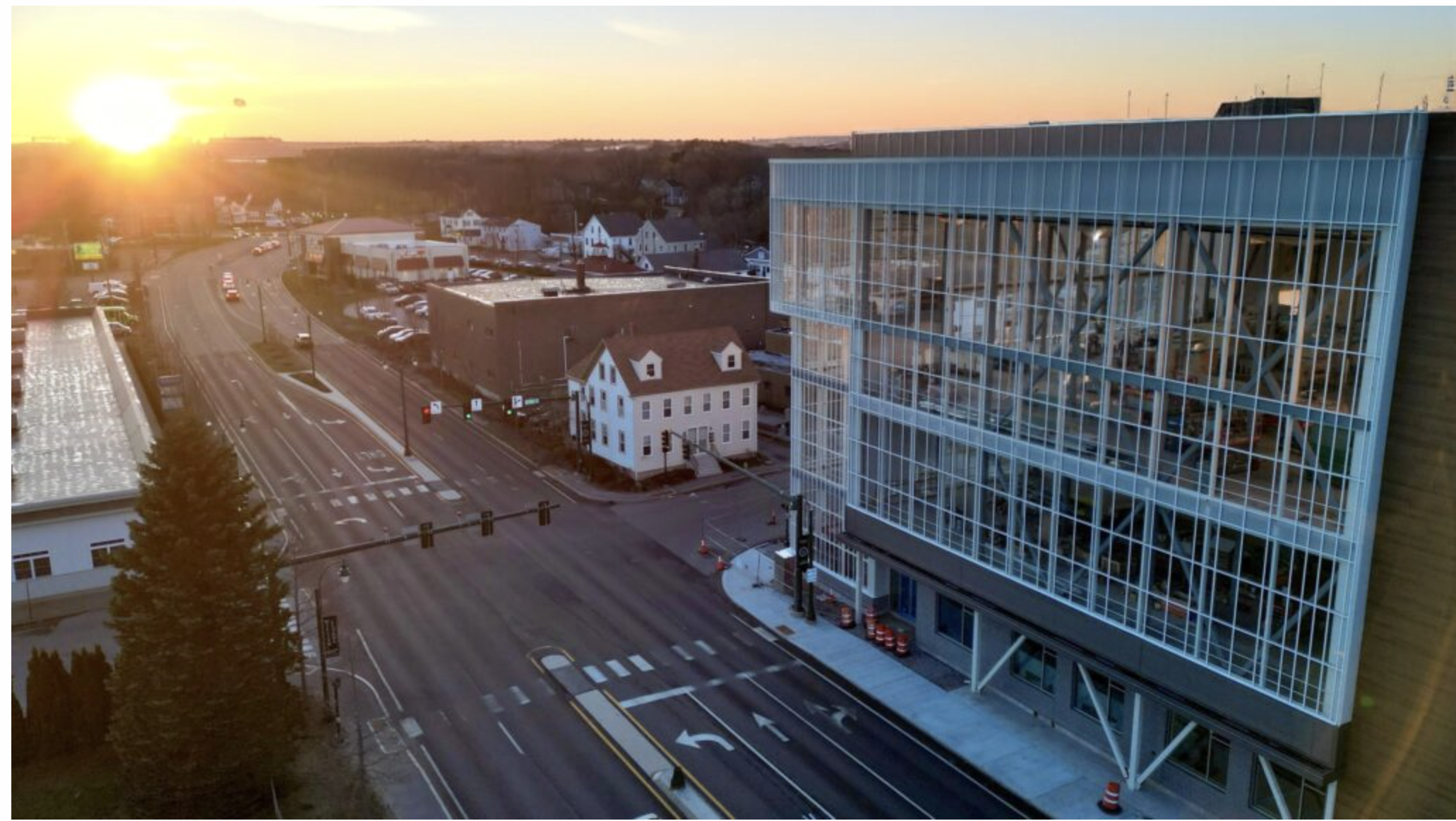
An $88 million hydroponic farming project in downtown Westbrook that received tens of millions of dollars in federally backed financing, state loans and other public support is now facing foreclosure over an approximately $8.6 million clean-energy financing agreement, adding another serious financial challenge to a project the Maine Wire previously reported was operating well below its projected capacity.
The Portland Press Herald reported Monday that Foundation Infrastructure Debt Fund I LP filed a foreclosure action last month against Vertical Harvest Maine L3C involving the company’s facility at 5 Vertical Way.
According to court records cited by the Press Herald, the foreclosure stems from a Commercial Property Assessed Clean Energy, or C-PACE, financing agreement originally entered into in December 2023 between Vertical Harvest, the City of Westbrook and Greenworks Lending LLC.
The financing initially totaled roughly $8.25 million and was structured over 22 years at a 12 percent annual interest rate, according to the Press Herald’s reporting. Greenworks later transferred its interest in the financing to Foundation Infrastructure Debt Fund, and the total financing amount was subsequently revised to approximately $8.66 million. The interest rate is scheduled to rise to 18 percent in 2028.
Efficiency Maine has previously identified Vertical Harvest as Maine’s first approved C-PACE project, saying the program facilitated more than $8 million in financing for the Westbrook facility.
The foreclosure action seeks to enforce the C-PACE lien against Vertical Harvest’s leasehold interest and improvements at the downtown property. Vertical Harvest does not own the underlying land outright.
The foreclosure action adds yet another obstacle to the Westbrook farm ever becoming a viable agricultural concern — in addition to the other mathematically insurmountable obstacles.
In our original report, we revealed that Yehia had previously entered into a financial arrangement, separate from the C-PACE agreement, the Westbrook financing, the FAME financing, and the federal financing, in which it agreed to pay massive interest to the Canadian broker who helped secure the federal windfall.
The broker subsequently sued Vertical Harvest alleging fraud.
According to the complaint, Vertical Harvest was unable to pay a two percent brokerage fee—$975,000—when the nearly $49 million federal loan closed in April 2024. Instead, the company scraped together just $75,000 at closing and deferred the remaining $900,000 into a highly punitive subordinated note.
Under that agreement with broker Waterside Commercial Finance, Vertical Harvest’s debt doubled to $1.8 million by month eight and continues to accrue a 25 percent annual default interest rate.
Depending on how the subordinated note calculates interest, Vertical Harvest’s obligation to its broker is increasing anywhere from $37,500 to $39,000 per month.
That’s a lot of salad!
Operating at 2% capacity, 6 employees
AI Overview
Vertical Harvest in Westbrook, Maine, is a four-story, 70,000-square-foot hydroponic vertical farm and mixed-use development located at Mechanic Street and William Clarke Drive, designed to produce millions of pounds of fresh produce year-round and champion inclusive employment.
🗓 📅 Chronological History
2010–2016: Company founded in Jackson, Wyoming; opened first flagship vertical farm.
Mid-2020: Project announced for downtown Westbrook by CEO Nona Yehia and co-founder Caroline Estay.
Mid-2022: Ground broke on the Mechanic Street site with local leaders like Mayor Mike Foley.
2023–2025: Steel framing and vaulted glass completed; facility prepared for hydroponic installation and first crops.
💡 📌 Background & Mission
Social Impact:
Employs individuals with intellectual and physical disabilities.
Targets 40% to 50% inclusive workforce representation.
(“While the company aims to have 40 percent of its workforce identify as having physical or intellectual disabilities, Yehia confirmed that during this current limited ramp-up phase, the Westbrook facility employs only two people who meet that criteria.”)
Agricultural Tech:
Soil-less hydroponic growing systems.
Yields greens and microgreens 365 days a year.