This'll knot Chris Murphy's knickers: the adults in his party have admitted that the budget and opening our borders are two separate matters. Chris and his supporters are upset.

Screen Shot 2018-01-24 at 10.03.27 PM.png

Poltico reports that Democrat leaders have agreed to decouple spending bill from immigration "reform"

Politico reports:

Senate Democrats are willing to drop their demand that relief for Dreamers be tied to any long-term budget agreement — a potential breakthrough on spending talks, but one that could face opposition from their House counterparts…
“We’re viewing [immigration and spending] on separate terms because they are on separate paths,” Senate Minority Whip Dick Durbin (D-Ill.) said Tuesday.

Despite the predictions of a Democrat Party sweep of the 2018 elections, the party's leaders must have discovered the polls that show a majority of American voters — voters who are citizens, that is — oppose opening our borders to the world's unwashed. The fringe zanies are already in rebellion and with luck, will give their votes to candidate like the traitor Bradley Manning, who advocates closing all prisons and insists that every person in the world has an absolute right to settle here, if they wish.

This is why you simply MUST order up a thorough home inspection, even when buying a foreclosed property

Norma Bates drops in to say hello, and welcome!

Norma Bates drops in to say hello, and welcome!

HOUSTON — Authorities say skeletal remains found inside the wall of a Houston house are the former homeowner who apparently fell through the attic floor and became trapped.
A spokeswoman for the Harris County Institute of Forensic Sciences said Wednesday there wasn’t enough physical evidence to determine cause or manner of death for Mary Cerruti. Tricia Bentley says it appears that Cerruti, who was 61 at the time she disappeared, “accidentally fell from her attic.”
Neighbors reported Cerruti missing in February 2015. Her home in the Heights neighborhood was later sold at a foreclosure auction. The new owners discovered the remains in a wall space after noticing a broken floorboard in the attic in March 2017.

All is not lost, however: "The skeleton was found with a pair of glasses and shoes". The new owners can probably get a decent deduction if they donate those to Good Will.

Have Greenwich house prices recovered from the 2008 bust?

7 Binney Lane

7 Binney Lane

In some cases, yes, but not all houses, even in the more popular neighborhoods of Old Greenwich and Riverside. Case in point: 7 Binney Lane, Old Greenwich. Purchased new in 2007, the last gasp of the boom, for $4.950 million. After extensive, and expensive, add-ons and improvements, including a pool, it was placed back on the market in 2009 at $5.995, but finally sold for $3.925 in 2013 (it was rented out for some of those years). This time around, it was put on last November at $4.250, and reduced today to $3.995. Even assuming it sells at that price, soon, it's at best holding steady at its post-bust price, five years after its last sale.

That's better than losing money (although it hasn't sold yet, so let's reserve judgment), but it does put paid to the fantasy that buying a depreciating asset is an "investment". Moral: buy a house to shelter your family in whatever comfort you choose to pay for, but don't expect it to fund your retirement.

Well of course they should, duh; what's taken our country so long to recognize this need?

AND OBAMACARE, NATURALLY

AND OBAMACARE, NATURALLY

There's a petition going around that's already collected 80,000 signatures, demanding that food stamps be given to pets.

“It’s potentially game-changing,” said Matt Bershadker, the president of the American Society for the Prevention of Cruelty to Animals. “I think we should get behind this in a big way.”
Advocates say a food-stamp program that includes pet food would address a little-discussed gap in the social safety net: Currently, there is no federal program that helps low-income people care for their pets.

Personally, I feel the same way about poor people owning pets as I do about them having children: if you can't support them, don't have them.


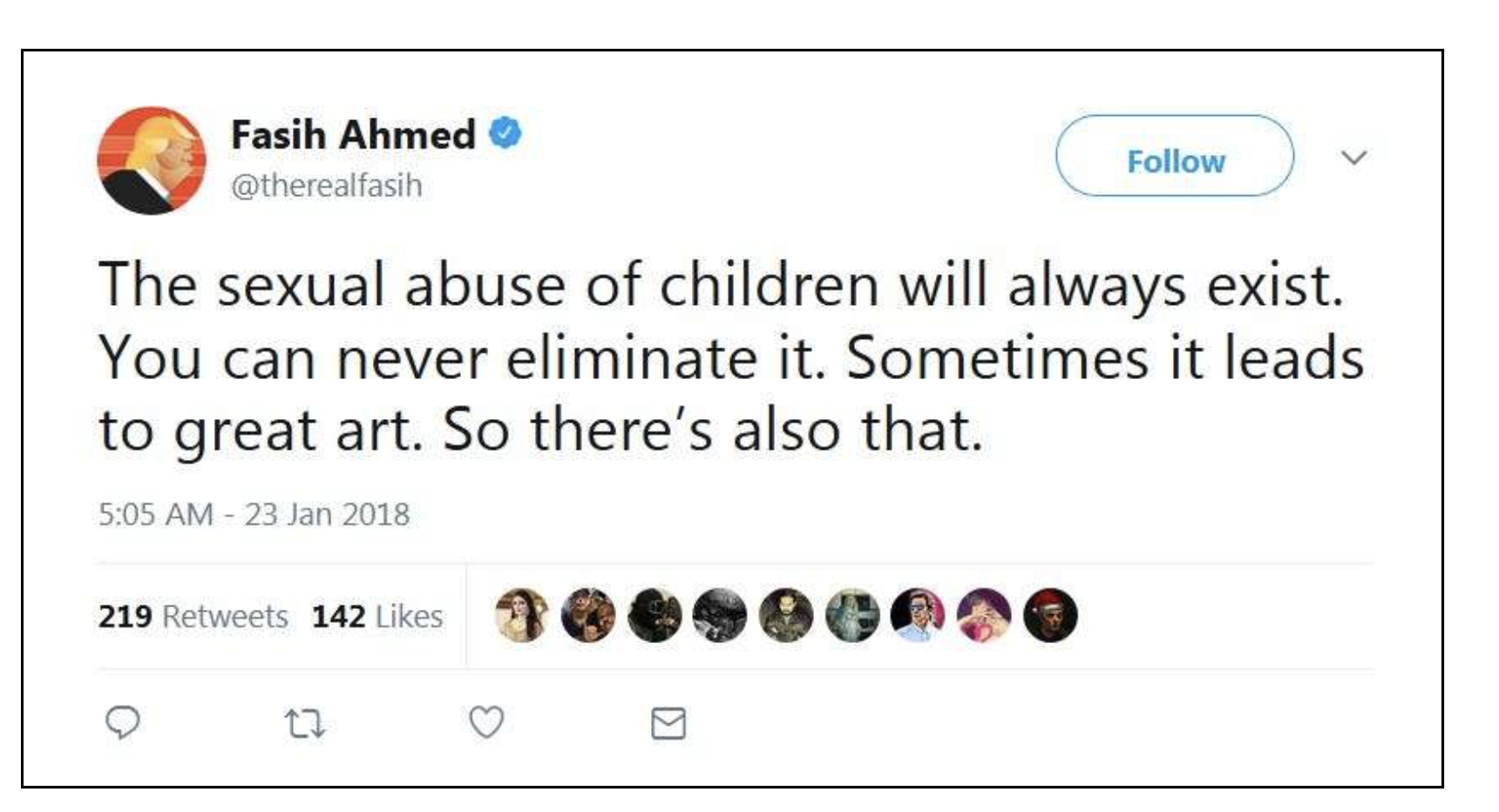
Ah, Newsweek. Ah, those whacky Pakis*.

From Newsweek's Pakistan Editor in Chief. And no, this is authentic — no one hacked his account.

But who are we to judge another culture? White privilege! White privilege!

Easy to see why newsweek was sold for a dollar last year.The comment was Ahmed’s take on the current furore in Pakistan surrounding the rape and murder of 12 children as young as 6 years old by a serial killer in the city of Kasur.The sexual ab…

Easy to see why newsweek was sold for a dollar last year.

The comment was Ahmed’s take on the current furore in Pakistan surrounding the rape and murder of 12 children as young as 6 years old by a serial killer in the city of Kasur.

The sexual abuse of children will always exist. You can never eliminate it. Sometimes it leads to great art. So there’s also that.

— Fasih Ahmed (@therealfasih) January 23, 2018

The Newsweek journalist also appeared to think it was a good thing that the killer’s victims were all female, tweeting: “On the bright side, at least he’s straight.”

He explained, “Straight better than not. From an Islamic perspective” in another tweet, adding: “Men are superior than women in Islam. Damaging boys who become men would ruin society as we know it.”

* From "Urban Dictionary" : 
Paki is also sometimes used by mistake as a short form of Pakistani. Even this is frowned upon though, as it is an indicator of a person's ignorance towards people of different cultures and nations.

This was either a very, very good deal, or is a preposterous price — time will tell

The lot

The lot

0.8 acre building lot at 351 Find Point Road has been put on the market at $3.175 million. It's very nice land, though outside the Belle Haven Association's boundaries (beyond the pale?) and, with all approvals in place, ready for the bulldozers to start their engines, so that should have great appeal.

What catches my eye, though, is that the 2.7-acre lot this was carved from sold for $5.7 million in 2015, and that included a large house. Tamara Lurie, as is her wont, listed the original house and land for $10.995 back in 2007 (talk about preposterous prices), and, after the owners finally dumped her, they sold it, as noted, for $5.7 eight years later. The house is rather grand, and if it still retains almost a full two acres, I'm not sure $3.175 in a reasonable price for a small portion of the back yard. On the other hand, what's a building lot on the Belle Haven peninsula worth? Maybe this price is appropriate, in which case, as I said in the headline, buying the entire package for $5.7 will prove to have been a really smart purchase ( I note that the original listing mentioned the possibility of a third lot being carved out —  I'd want to make sure yet another house lot isn't being planned for construction next door). 

One other note: the lot's current listing shows that as of 2017, the town appraises this lot at $5.142 million, and the 70% assessment as $3.599. In fact, those numbers are for the full, 2.7 acres, with the existing building. Your results may differ.

tHE MOTHER SHIP

tHE MOTHER SHIP

Up in smoke: CT is spending zero on anti-smoking efforts, despite billions received from tobacco industry settlement payments and cigarette tax revenue

I'll quit next year

I'll quit next year

The report points to several weak spots in Connecticut for which the state received an F, including the lack of state funding for tobacco prevention programs. According to the report, the state is one of only two in the nation that provide no money for the programs. The Centers for Disease Control and Prevention has recommended that tobacco prevention programs in Connecticut be funded at $32 million.
Canovi pointed out that Connecticut is tied with New York for the state with the highest cigarette tax and, between that tax and settlement payments from tobacco companies, the state receives more than $516 million a year, and at least some of that should go to prevention programs.

You can argue that anyone dumb enough to smoke deserves his fate (ignoring the cost of medical care to treat those dummies down the road), but the example of what's happened to the settlement proceeds should serve as a perfect example of what will happen to any money generated by the new highway tolls being proposed by Hartford: just like our gasoline taxes, none will go to road maintenance, all will go to the general fund, to be redistributed to unions and their pension funds, with a hefty chunk going to pay off the other element of the Democrat base, the poverty pimps.

How bad it this situation? This bad:

“There is a danger to the euphoria that surrounds an unexpected source of revenue. This is the first session since I have been here [in 1992] that there seems to be so little concern with the overall increases in spending, and I think the tobacco settlement is part of that. It’s a problem. Legislators have proposals to spend it five times over, and we don’t have it once.”
— Connecticut State Senator Robert Genuario, on the eve of receiving the first infusion from the 1998 Tobacco Settlement.1
“My greatest achievement was going after the tobacco companies. But my biggest disappointment is not being able to determine how the nearly $5 billion in settlement money allocated to Connecticut has been spent.”
—Connecticut Attorney General Richard Blumenthal, one of the top five lead attorneys in the 1998 Tobacco Settlement, ten years later.2
Executive Summary
In 1998, Connecticut became one of 46 beneficiaries of the multi-state, $246 billion Tobacco Settlement, a deal hammered out in backrooms between Attorneys General and the four major tobacco companies. For Connecticut, the settlement amounts to between $3.6 and $5 billion over the first 25 years of the in-perpetuity agreement. At the time, public health advocates and state Attorney General Richard Blumenthal, who represented Connecticut in the lawsuit, expected that tobacco prevention and treatment programs would receive much of these funds. Ten years later Blumenthal was calling the state’s handling of the tobacco revenue ―a moral and social failure.‖3 Key findings of this report:
  •   Connecticut has received nearly $1.29 billion from the settlement since distributions began in Fiscal Year 2000.
  •   Of that, only $23 million, or less than 2% of the total Tobacco Settlement Funds, have been used on programs specific to reducing the number of smokers or anti-tobacco efforts.
  •   86% of Tobacco Settlement funds, $1.1 billion, ended up in the General Fund for unrestricted spending.
  •   The Tobacco Health and Trust Fund, set up to fund tobacco prevention, cessation and health programs, received only $134 million from the Tobacco Settlement over time.
  •   Raids on that Trust Fund by the General Assembly have resulting in just $9.2 million in spending and a projected balance of just $11.1 million.
2
  •   The terms of the agreement allowed the tobacco companies to shift the cost of the settlement to consumers without fear of losing market share.
  •   Connecticut collected an additional $2 billion in cigarette tax revenue since settlement funds started flowing to the state, bringing the state’s total cigarette-related revenue to more than $3 billion during these nine years.
  •   In 2008, smokers paid the state of Connecticut nearly half a billion dollars in combined cigarette taxes and settlement money.
  •   Despite all the revenue the state takes in from smokers, Connecticut was ranked 51st in the nation by the Campaign for Tobacco-Free Kids in 2008 for failing to spend enough on tobacco prevention. That year Connecticut spent just $1.19 million on tobacco prevention. For comparison, the Centers for Disease Control recommended $43.9 million. 

That's just a snippet from the Yankee Institute's examination of what the legislature has done with its revenues, and the entire document makes for fascinating reading, but know this: give a politician a dollar, he'll spend three, and none of it will be spent on what he promised.

Will a 4% price cut on this house make a difference? Guess we'll find out. (Bumped)

boulders.jpg

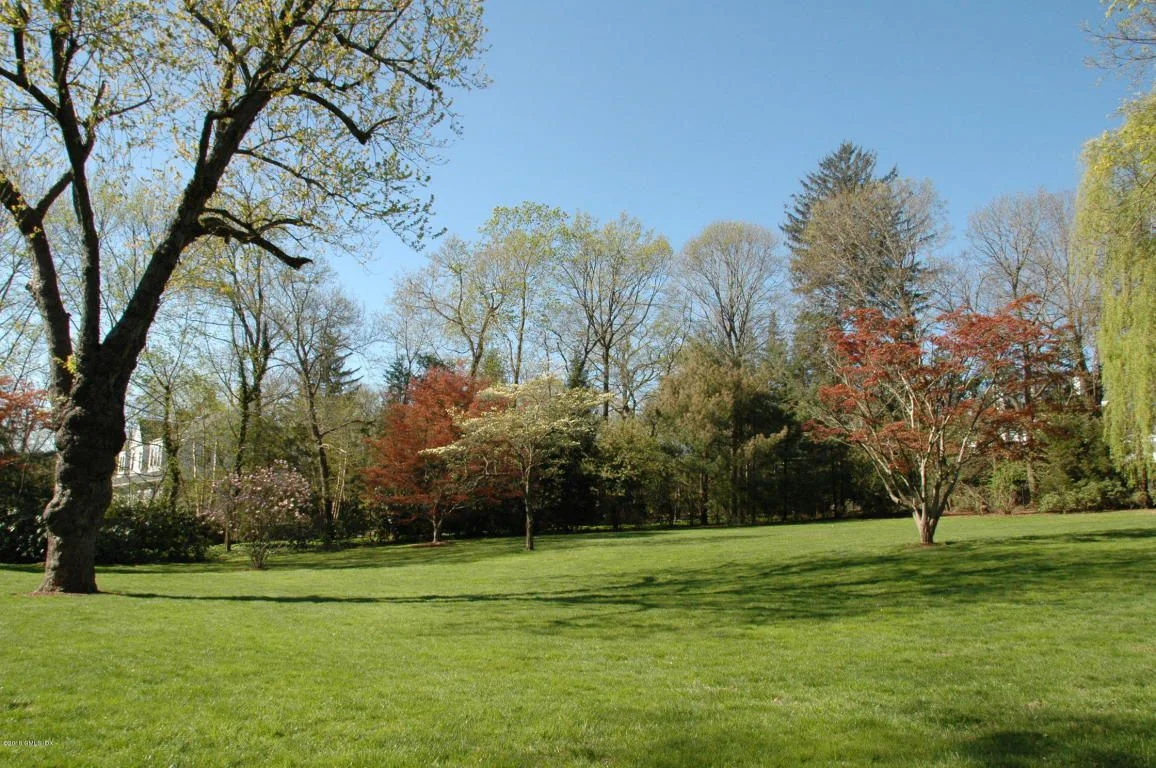
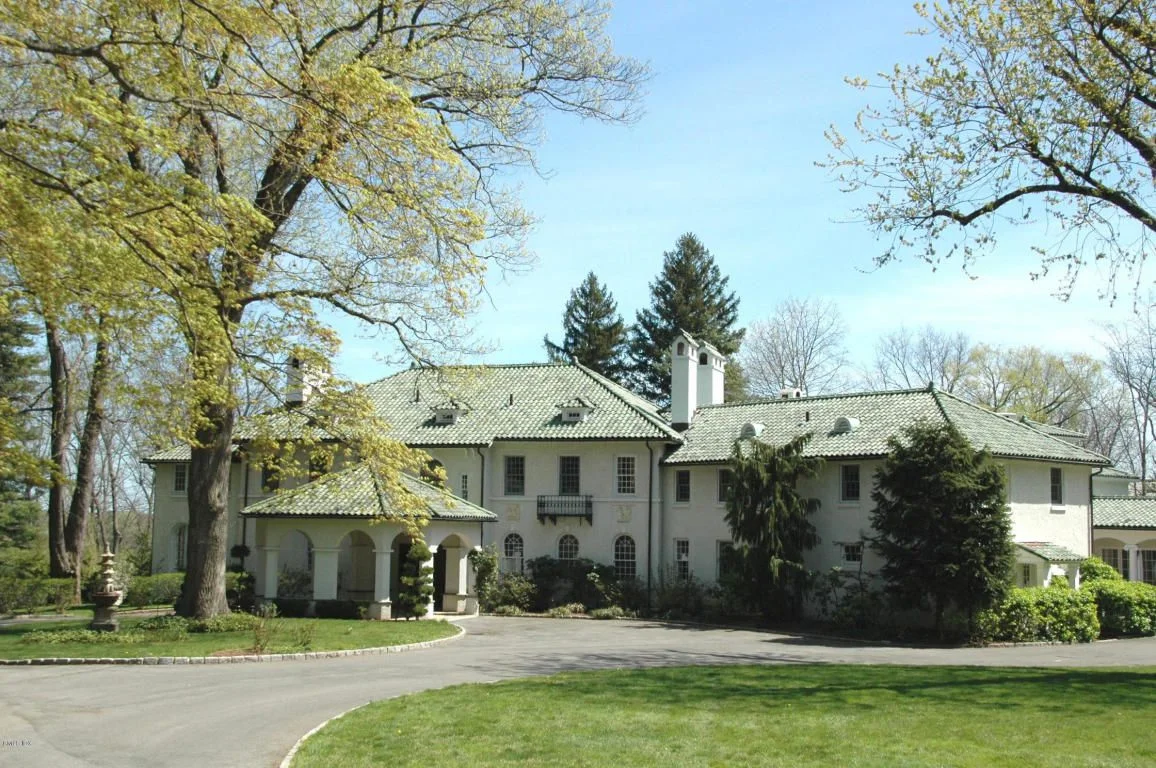
432 Field Point Road, known as "The Boulders" for some reason, dropped its price today from $5.199 million to $4.990 . I understand the owners' reluctance to budge on price, but they put this property up for sale in 2013 at $5.995 million, and if it hasn't sold in five years, a more substantial price cut may be called for.

When Ogilvy (of course) represented the previous owners, he priced it at $8.5 in 2003, and finally sold it in 2006 for $4.3 million (I used to get calls from the owner from time to time, asking me why her house wasn't selling. She finally got the message, but stayed loyal to David til the end, nor did I encourage her to leave him — I don't operate the way). It was, and remains, a lovely house inside, but I think the stone exterior put off a number of buyers. That, its price, and the ancient mechanicals. These owners didn't change that exterior, but put an extraordinary amount of money into modernizing it inside, and building a two-car garage to replace the original car port — back in 1880, I doubt the owners gave much thought to garaging  vehicles.

Of the Belle Haven peninsula, but not in the association's boundaries. 

The original staircase, one of the most beautiful I've seen, remains, but the kitchen is new, walls have been moved, new mechanicals installed, and so forth. I'm doubtful that those changes amounted to the $1.7 million they added on to the price they paid for the house. Or maybe it did, which would explain the owners' refusal to cut its original 2013 price of $5.995 from 2013 to 2016; alternatively, I note that the seller is a real estate agent, and agents are notorious for overpricing their own houses. 

Still and all, if you can get past those rocks, and the nine bedrooms, a very nice home awaits you inside.

UPDATE: Oops!

I was just reminded of the basic flaw of this house: it has a narrow, windowless galley kitchen, which probably worked fine when only servants labored there back at the turn of the last century, but not so popular now. I've seen some redo/fixes of this problem in other old homes — one in Rockwood comes to mind — but because of the stone construction of this house, I don't see how one could grab some of the space from the dining or family room without screwing up the windows in those rooms. Then again, I'm neither an architect nor a builder, so perhaps there is a solution. The fact that these owners spent so much money renovating the place but left the kitchen as is makes me suspect that there isn't. (But see architect Formerly 06820's thoughts in the comments section about demoing the mudroom etc. Might be possible, though if I were representing a buyer, I'd expect the price to reflect the cost of that renovation/addition).


Screen Shot 2018-01-23 at 4.26.32 PM.png
Screen Shot 2018-01-23 at 4.25.48 PM.png