Housing the homeless: "Everyone deserves granite countertops"

Social-Experiment-Homeless-Addict-VS-Homeless-Father-Featured.jpg

Even if (ahem) the cost problem were overcome, because almost all homeless are mentally ill and addicted, they’d rip them out and sell them, along with the coper piping.

Today, many of California’s leading homelessness advocates insist that the current crisis is due mostly to the housing shortage. 

Homelessness experts and advocates disagree. “I’ve rarely seen a normal able-bodied able-minded non-drug-using homeless person who’s just down on their luck,” L.A. street doctor Susan Partovi told me. “Of the thousands of people I’ve worked with over 16 years, it’s like one or two people a year. And they’re the easiest to deal with.” Rev. Bales agrees. “One hundred percent of the people on the streets are mentally impacted, on drugs, or both,” he said.

Most of the time what people mean by the homelessness problem is really a drug problem and a mental illness problem. ”The problem is we don’t know if you’re psychotic or just on meth,” said Dr. Partovi. “And giving it up is very difficult. I worked in the local jail, and half of the inmates in the women’s jail were Latinas in their 20s, and all were in there for something related to meth.”

The people who work directly with the homeless say things worsened after California abandoned the “carrot and stick” approach toward treating the severely mentally ill and drug addicts who are repeat offenders. “The ACLU will come after me if I say the mentally ill need to be taken off the street,” said Dr. Partovi, “so let me be clear that they need to be taken care of, too.” 

Liberal idealism also wasted much of the $1.2 billion that L.A. voters raised in 2016 when they voted to tax themselves to build housing for the homeless. “It was supposed to build 10,000 units but in truth will create half that because each one costs $527,000 to $700,000,” said Bales. “They will take ten years to build, at which point 44,000 lives will have been destroyed by living on the street.”

Why did progressive housing activists in L.A. insist on building such expensive apartments for so few people, so slowly, rather than quickly building cheaper units faster for 44,000 people?

“[Housing First] is a dogmatic philosophy,” said Bales. “I’ve lost friends. One of my closest friends is attacking me for pushing for housing that costs $11,000 instead of $527,000 per person. He can’t get that we can’t provide a $527,000 to $700,000 apartment for each person on the street. I’ve been in planning meetings where people said, ‘Everybody deserves a granite countertop,’ but that isn’t going to work for 44,000 people.” 

L.A.’s woke housing advocates have intimidated the city’s mayor. “I think the mayor’s unwilling to put out bridge shelters because of backlash from some homeless advocates,” said Bales, “and is concerned about NIMBYs, and may be concerned about union workers because the shelters may not be built by the unions.”

The quotes above are excerpted from a lengthy Forbes article written by columnist Michael Shellenberger, who, like the doctors and aid workers he quotes, is hardly an enemy of the homeless; just a realist. Read the whole thing.

Catch and release and party favors in NYC

De Blasio’s newly-released prisoners use their gift cards to buy booze and Juul pods

The ex-inmates have been flooding area booze shops, ever since the recent launch of a soft-on-crime city initiative that provides them with two $25 gift cards, merchants said Saturday.

“Yet to see one person use it to buy food,” Ahmed, a worker at the Plaza Deli Grocery, noted.

In addition to the Metrocards and cash, plans are also in the works to set up newly released inmates with burner phones, the Post reported Saturday.

The handouts are part of a larger initiative from Mayor de Blasio that awards the swag to prisoners released under New York’s new bail reform law. The goal is to incentivize the jail birds to show up for their court appearances, but the scope of the program will cover anyone released from Department of Corrections custody, sources told The Post.

Other goodies will include winter coats, Steve Madden shoes and Mets tickets.

The programs are being run by city-funded non-profits and the whole initiative will cost $500,000, officials said.

Cigs and nips? Don’t leave Riker’s without ‘em!

A spokesman for the mayor defended the giveaways, saying that sending ex-inmates home “with essential resources needed to survive is critical to ensuring the safety of themselves and others, and maintaining our status as the safest big city in America.”

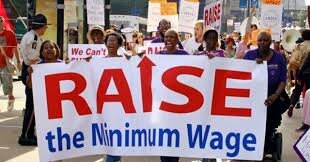
Too many jobs? There's a solution for that

minimum wage.jpg

Whenever you’re faced with an explanation of what’s going on in Washington, the choice between incompetency and conspiracy, always choose incompetence.

Charles Krauthammer.

The late Mr. Krauthammer was usually spot on, but I wonder about his use of “always” here; what he would have made of the now-revealed FBI/CIA/Obama conspiracy against a sitting president? And, for purposes of this post, is it just economic stupidity behind the national push to increase workers’ wages beyond the point of affordability? Three-month parental leave, three weeks of “any time, any reason” paid personal time off? Huge minimum wage hikes? The Democrats’ largest hurdle to unseating Trump this coming year and holding control in the future is the booming economy and record low unemployment. Anything that hurts that economy and boosts the numbers of the unemployed is a boon to the Democrats.

Regardless of the motives and intellectual capacity of Leftists, here’s a report from the front lines:

Seattle: “I’m a progressive, but the minimum wage law killed jobs, including mine”. She’s yet to figure out that there shouldn't be a “but” in that statement.

This city’s minimum wage is rising to $16.39 an hour on Jan. 1. Instead of receiving a bigger paycheck, I’m left without any pay at all due to the policy change. That’s because the restaurant where I’ve worked for six years is closing as a consequence of the city’s harmful minimum-wage experiment.

I work for Tom Douglas, one of the best-known restaurateurs in Seattle. Mr. Douglas is in many ways responsible for the city’s reputation as a foodie paradise, and he recently celebrated his 30th anniversary in business. He’s a great boss, and his employees tend to stay at the company for a long time.

But being an established chef and a good employer doesn’t save you from the burden of a sharp minimum-wage increase, up 73% from $9.47 in 2015. For large-scale employers like Mr. Douglas, there’s no separate rate for workers who earn tips. In Washington and a handful of other states, tips aren’t counted as income earned on the job. That means restaurateurs are expected to pay servers like me the full minimum wage in addition to our considerable tip income.

When rent is too high, labor costs too much, and customers don’t want to pay $40 for a roast-chicken entree, the only way for many operators to ease the pain is to close.

[…]

I’ve lived in this city for almost 20 years, supporting my family thanks to the full-service-restaurant industry. Today I’m struggling because of a policy meant to help me. I’m proudly progressive in my politics, but my experience shows that progressives should reconsider minimum-wage laws that hurt the very workers they’re trying to protect.

Snowflake brigade strikes again

UNCF.png

University apologizes to students for their professor using the word “negro”

 According to the Daily Mail, students were “distressed” upon hearing the word, which came from passages by (black) writers William Edward Burghardt Du Bois and Fritz Fanon.

One of the former’s works actually is titled “The Philadelphia Negro.”

When the offended undergrads complained to English Department Chair Helen Smith, she responded with a letter of apology. Smith noted that while the word wasn’t used “offensively,” she recognized the “considerable distress” it had caused:

I am extremely sorry that this happened, and I have written to all staff in the department to make it clear that they should not pronounce racial slurs as part of their teaching and that if those words appear in texts or on PowerPoint slides, they should be prefaced with an appropriate content warning.

Smith followed that up with a message to the department: Don’t use “negro” henceforth. (Or, as she wrote in her email, “n*gro.”) If lecturers must read aloud the term, Smith suggested the following preface:

I am going to be using quotations which feature racial slurs, in an attempt to fully explore the topic, and in no way to condone the use of such words in other contexts by those who are not members of the specific racial groups who have chosen to reclaim these terms.

And we won’t discuss the inequity of colored men being barred by major league baseball, because the Negro League just didn’t exist

negro league.jpg

Martin Luther King? We don’t talk about him, thank you very much.

There are no colored people, only people of color

There are no colored people, only people of color

"Tax reform" with a twist

The city’s property tax is based on the assessment and not the market value, and the politicians want that missed money

A bipartisan group of city lawmakers is pushing Albany to approve tweaks to the state tax laws that would allow them to hit new homebuyers with tax bills based on the actual market prices of their properties.

The coalition of 13 Republican and Democratic city council members says that taxes would not go up for existing owners.

New York’s famously opaque property tax system offers big breaks to new homebuyers by taxing them at assessed values that are often millions of dollars less than the market price.

For instance, a buyer who snapped up a Clinton Hill brownstone for $3 million in 2017 only has to pay taxes on a sliver of that amount — $24,000, leaving the lucky owner with a tax bill of just $4,297 a year.

Meanwhile, the owner of a relatively modest half-million-dollar Bergen Beach bungalow pays nearly an identical amount, despite being worth just one-sixth the price on the market.

The current system amounts to a giant giveaway for gentrifiers, Staten Island Councilman Joe Borelli told The Post.

“People are just getting fed up with the loophole, and they’re demanding action,” the GOP politician added.

The bipartisan coalition also includes Park Slope Democrat Brad Lander and Bay Ridge Democrat Justin Brannan.

They’re backing a resolution that calls on state lawmakers to change the tax law to require new homebuyers to pay property taxes on the market rate instead of the heavily discounted assessed value.

The change would boost the Clinton Hill gentrifiers bill by $1,600 a year while keeping the Bergen Beach old timer’s costs the same.

The way these things usually work, in places other than NYC, is that property tax revenue is treated as a fixed-size pie; if one group of property owners’ slice is increased, others should see their slice diminished, and there is no change in total revenues collected. Not so under this plan, which aims to increase the size of the pie: rich homeowners will pay more, the hoi polloi’s tax burden will remain unchanged.

It’s a clever dodge, because that Brighton Beach taxpayer, smarting at the injustice of the current system will see that his rich neighbor is being screwed, finally, and his schadenfreude will blind him to the fact that, once again, the politicians have just found a new way to increase spending. The more money available to spend, the more to devote to corruption and graft. So essentially, nothing will change.

New York's still number one

Outta my way, asshole

Outta my way, asshole

Poll recognizes NYC residents as rudest people in the country

Can you believe these shmucks?!

Americans think New Yorkers are the biggest jerks in the country, according to a new survey — released just days before Christmas, no less.

The slap-in-the-face Business Insider study found 34.3 percent of the knuckleheads who responded believe Big Apple residents are the rudest in the US.

But many locals were too polite to respond to the diss Monday.

“F–k off!” one man told a Post reporter on 125th Street in Harlem when asked his opinion of the study.

Others thoughtfully questioned the methodology.

“Screw those people. Half the people probably haven’t been here!” said Carmen, 52, of The Bronx.

The study surveyed 2,000 adults online about the rudest city in the country. New York finished first going away.

Los Angeles came in a distant second with 19.7 percent.

Residents of Washington, DC. were rated the third surliest, followed by Chicago, Boston, Detroit, Buffalo, Baltimore, Philadelphia and San Francisco.

But Harlem man Sergio Villanueva, 26, suggested people in New Jersey are “much ruder” than New Yorkers.

Villanueva admitted New Yorkers can be rude, but insisted “it’s not personal.”

“Like, we don’t mean anything by it. It’s just the way we live,” he said.

“People got places to be, people to see. If I bump into you, sorry . . . but not really.”

Many others agreed that we’re just misunderstood.

Madison Scott, 27, moved from California to New York two years ago and insisted her new neighbors have hearts of gold.

“They’re not outgoing or super friendly but I remember I was on the train and some guy just started puking everywhere and a lot of people just started handing him napkins and water bottles,” she said, recalling one moment of Big Apple ­camaraderie. ….

In Harlem, Diane Powell, 36, dismissed rude New Yorkers as a “stereotype.”

“We’re just strong-willed,” she said….

There’s a story, probably apocryphal but sworn to as true by a friend of mine, of a Sunday morning on the Vineyard: a line of people qued up to buy newspapers and coffee, when one of those Women In Black sweeps in and goes directly to the counter. “Excuse me”, says someone behind her, “there’s a line here.” “[Not] sorry”, WIB responds, refusing to budge, “I’m from New York: we don’t do manners”.

I don’t know why I even doubt the veracity of that tale.


Boeing's CEO should have been fired long ago

Fish rot from the head down

Fish rot from the head down

Although yesterday’s firing of Dennis Muilenburg was blamed by the media on Boeing’s 767 debacle, there was another problem, exposed last March, that, at least to this humble real estate agent, indicated an even worse, company-wide failure that Muilenburg allowed to persist: construction debris left inside planes being delivered to the military.

Boeing has “a severe situation” in an assembly-line culture that allowed tools and parts to be left inside tankers delivered to the U.S. Air Force, the service’s acquisition chief said Wednesday.

Will Roper recently met with executives at Boeing’s plant in Everett, Washington, where the company builds commercial widebody aircraft — and the KC-46 tanker, a version of the 767 jetliner.

[snip]

Boeing was supposed to get its first KC-46 in 2017, but design and software problems delayed the first delivery until January. After receiving a handful of the tankers, the Air Force began finding tools and parts inside some of the planes, prompting the service to suspend deliveries. The items are known as foreign object debris, or FOD.

“I have big concerns about the FOD issue because that’s simply adherence to process,” Roper said Wednesday. “It has nothing to do with design, it has nothing to do with production. It’s simply following processes that Boeing has on the books and having a culture all the way down to the mechanic level that embraces them.”

The debris issue is the latest setback for the tanker project, which has been beleaguered by development issues. Boeing has had to eat more than $3 billion correcting deficiencies with the planes.

“Safety and quality are our highest priority,” [Boeing spokesman] Blecher said. “We are committed to deliver FOD-free aircraft to our customer and have an agreed-upon action plan in place going forward. We will continue to work with the Air Force on the schedule for upcoming deliveries.”

The company has also declared this Friday to be “FOD Amnesty Day,” according to an internal company email reviewed by Defense One. The email, which does not mention the KC-46 by name, cites “multiple foreign object debris escapes involving some of our most critical programs.”

“This includes the identification and removal of unnecessary tools, equipment, electronic files, documents and refuse,” said the email from Gena Lovett, vice president for manufacturing, safety and quality, and Ursula English, vice president of total quality. “We all have a responsibility to maintain safe, clean, efficient and FOD-free working areas and it’s so vitally important to who we are we’re making it a [Boeing Defense, Space and Security]-wide priority.”

Boeing teams are sweeping already-built, not-yet-delivered Air Force tankers for debris.

But it will take more than a one-day cleanup to restore Roper’s trust in the company.

“FOD is really about every person, everyone in the workforce, following those procedures and bringing a culture of discipline for safety,” he said. “This is an issue of safety and culture.”

And Roper does not expect a cultural change immediately, even if Boeing starts delivering plans without debris.

“I’m going to believe it [a culture shift] when I see month after month for a long time, that yes, those practices are now things that aren’t just being done because they have to be done, they’re being done because the workforce says this is a product that we deliver to the Air Force, they’re counting on it being high quality and we own the quality of our product,” he said. “That is how we feel [about] our depots and our production lines and I expect to see that reflected in industry partners that are building critical systems for us.”

Boeing’s corporate culture reminds me of GM’s, back in the 70s and 80s, when it was producing crappy cars because of a “good enough” management policy that opened a door for high quality, inexpensive Japanese to enter and then dominate the market. Heads, beginning with but not limited to Muilenburg’s, should have rolled years ago.

And this week’s failure of Boeing’s Starliner just makes that clear.