Did this deal catch the flu?

dempsey.jpg

Probably not, its demise was probably due to some other cause. 7 Dempsey Lane, has been carried on our MLS roll as under contract since December 28, 2018, but never closed. Today it’s been reactivated, at $3.299. It was listed at $3.990 back then, so presumably, that accepted offer was in the $3.2s; at least, usually, when a deal falls through, a property is brought back in at a price close to what was accepted originally.

So what happened to this deal? Why didn’t it close somewhere between 2018 and now? Beats me, but I’m sure the estate of the seller is disappointed: the listing is an old one, starting at $4.490 back in August 2018.

Not to be outdone by their younger peers who last week demanded they all get 4.0 averages, Harvard Law students also confess to be unable to stand up to stress

Harvard Law students demand the cancellation of state bar exams and the automatic awarding of licenses.

Because this is the same law school where students demanded that professors drop discussion of rape law cases because the topic was “triggering”, it’s no surprise that they’re too stressed out to study for the bar. Still.

The Ivies are known as places where success is guaranteed not by what you know but who you know, so this latest display of immaturity and ignorance shouldn’t prevent Harvard L grads from taking their accustomed places as federal judicial clerks and associates at the country’s largest law firms. i don’t think I’d want one of them representing me, though.

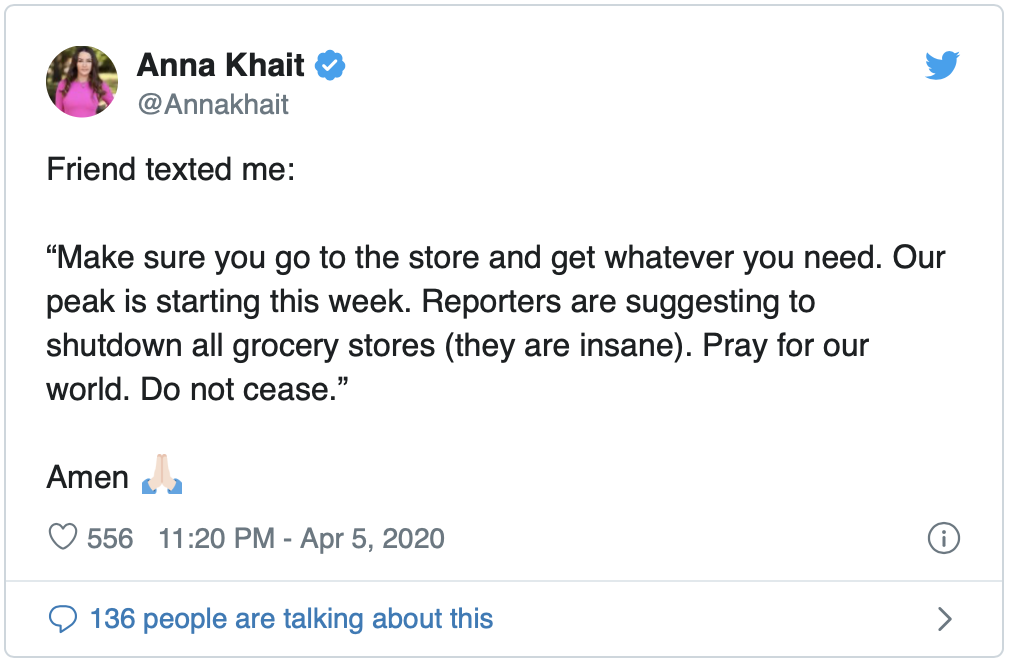
I thought non-essential people weren't supposed to leave their house?

“So why even have a few businesses open? Why don’t they shut everything down? Groceries stores are open, fast food places — why even take a little chance? Just shut all of it down temporarily,”

“So why even have a few businesses open? Why don’t they shut everything down? Groceries stores are open, fast food places — why even take a little chance? Just shut all of it down temporarily,”

Hack reporter demands to know why Trump hasn’t shut down grocery stores ((Video at the link, because I can’t seem to embed it here)

Yesterday I posted on the White House Corona Virus Response Coordinator Deborah Birx’s veiled hint that grocery stores might be closed. Now the press is joining in this latest lunacy, and I’m not the only one to notice.

Screen Shot 2020-04-06 at 9.54.02 AM.png


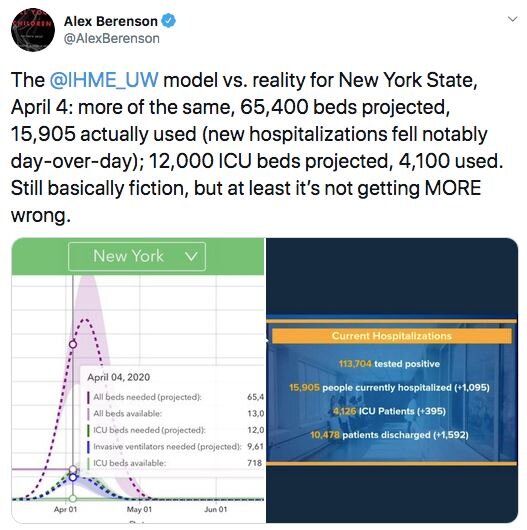
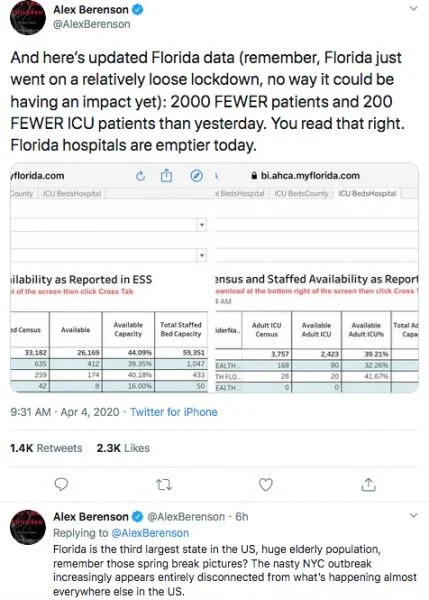
How reliable are the models being used to justify shutting down the world? Not very.

Screen Shot 2020-04-06 at 7.25.25 AM.png
Screen Shot 2020-04-06 at 7.25.02 AM.png

South Korea reports that new cases of Kung Flu have dropped below 50 a day. That brings the national cumulative tally to 10,284. The death toll rose by three to 186, while another 135 people have recovered from the virus for a total of 6,598. So 10,284 infections, 6,598 recoveries, 186 deaths.

In England Neil Ferguson, the Imperial College statistician who made the model so often cited by medical authorities and the media, “revised” his estimate of 500,000 deaths in England to 20,000,. Mr. Ferguson’s prediction of 2.2 American deaths is equally suspect.

How about he University of Washington model, which has been given as much or more credence than Imperials? Same story.

Screen-Shot-2020-04-04-at-3.47.01-PM.jpg
Screen-Shot-2020-04-04-at-3.48.16-PM-429x600.jpg

Over at Town Hall they ask “Is what we’re being told about the coronavirus pandemic wrong?

There’s no question the coronavirus is deadly and dangerous, but is it going to kill hundreds of thousands in the US and millions around the world? We have no idea. All we have are guesses. But if you’re going to destroy the economy and severely restrict people’s lives, you’d better have some damn good information backing up your actions. There are questions about the computer models being used to impose just that.

One prominent model in the shutdown is from the University of Washington, from their Institute for Health Metrics and Evaluation (IHME), funded by Bill and Melinda Gates. How closely does what they predicted track with reality so far? Turns out, not so well.

While the reporting data from some states are lagging, others have provided information that calls into question the validity of the whole model, and with it, all the actions taken by government.

On April 4th, for example, the IHME model predicted there would be between 120,963 and 203,436 Americans requiring hospitalization, with the average of that range being 164,745. In reality, there were 18,998.

Before your jaw goes through the floor, it must be noted that not all states have reported their numbers, so the actual total is incomplete. The largest states have reported, so the missing numbers from places like Kansas or even Michigan will add to that total, but still will not get it anywhere near the projections.

That’s just hospitalizations, when it comes to intensive care beds, the difference between the projections and reality show an equally large gap. The average projected ICU beds needed on April 4th was 31,057; the reality was 4,686. That’s across the country, not just New York. Even after factoring in the caveats about missing states, that’s a miss akin to swinging and striking out on a pickoff to second base.

If there’s any bright side to this disaster it’s that when we come out of it and the country turns its skepticism and fury on these expert modelers, we might also reconsider the validity of the global warming models so dear to the hearts of the collectivists.

UPDATE: Washington State is returning 400 of the 500 ventilators received from the federal government, as they aren’t needed. Governor Inslee credits the imposition of his stay-at-home order of March 25th with slowing the disease, rather than admit that the models he was relying on were wrong. If a ten-day shutdown was that effective, great. I remain skeptical.

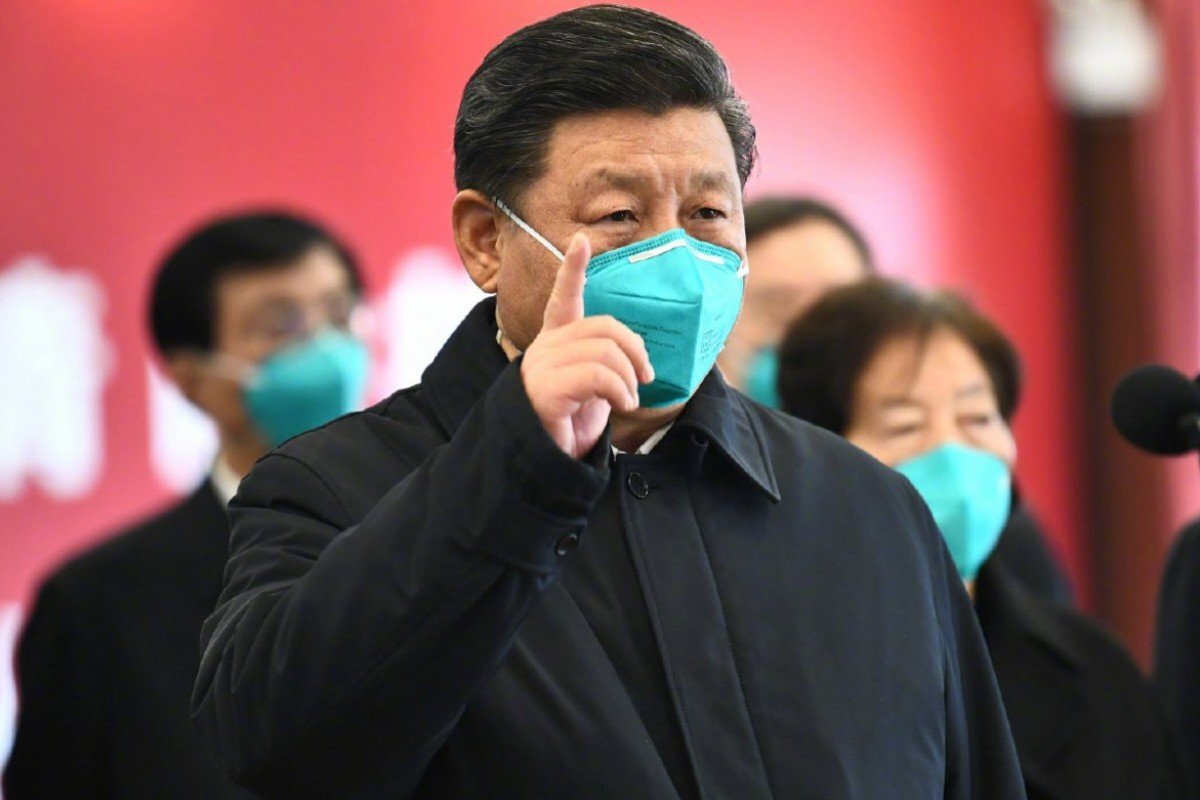
Our friends the Chinese: not only did they share their virus with us, not only are they prohibiting the export of PPE gear, they're shopping abroad for PPE and bringing it home to corner the market

More flu for you!

More flu for you!

If we ever recover (and according to the WSJ our national output has already dropped 29% with far worse to come if the shutdowns extend beyond 60 days) we should isolate China, completely and forever.

Executives from 3M and Honeywell told US officials that the Chinese government in January began blocking exports of N95 respirators, booties, gloves and other supplies produced by their factories in China, according to a senior White House official.

China paid the manufacturers their standard wholesale rates, but prohibited the vital items from being sold to anyone else, the official said.

Around the same time that China cracked down on PPE exports, official data posted online shows that it imported 2.46 billion pieces of “epidemic prevention and control materials” between Jan. 24 and Feb. 29, the White House official said.

The gear, valued at nearly $1.2 billion, included more than 2 billion masks and more than 25 million “protective clothing” items that came from countries in the European Union, as well as Australia, Brazil and Cambodia, the official said.

“Data from China’s own customs agency points to an attempt to corner the world market in PPE like gloves, goggles, and masks through massive increased purchases – even as China, the world’s largest PPE manufacturer, was restricting exports,” the official said.

Food shortages next?

No sense crying

No sense crying

Dairy Farmers dumping milk as markets disappear

And this FEMA internal report is discouraging

The document, titled “Senior Leadership Brief COVID-19” and dated April 2, 2020, bears the seals of the Federal Emergency Management Agency, the Department of Homeland Security and the Department of Health and Human Services. It contains a brief description of findings made by the Food Supply Chain Task Force on the availability of PPE. [Personal Protective Equipment]

Such equipment has been in short supply in hospitals, where doctors and nurses are routinely exposed to high amounts of coronavirus. The food industry also relies on a variety of protective equipment for food safety.

The April 2 briefing warns that the task force had completed an analysis and there could be “commodity impacts if current PPE inventory is exhausted.” There would be shortages of milk within 24 hours and of fresh fruits and vegetables “within several days.” The document estimates that “meat, poultry, seafood, and processed eggs” would become scarce within a period of two to four weeks, while “dry goods and processed foods inventories” — that is, the non-perishables that are pantry staples — could become scarce “as soon as four weeks” after face masks and gloves run out across the food supply chain.

But as the first story from Wisconsin shows, it’s not just a lack of PPE or food workers that’s the threat, it’s the bankruptcy and closure of the farmers who make the food in the first place.

And then there’s this interview with Gary Shilling, who predicts that, because we’ve overturned the global supply chain, we’re in for a long, serious recession: we haven’t seen the bottom of the market yet. As for federal stimulus,

The only problem is it takes a long time to get really fueled up. You remember they had the so-called shovel ready projects? It turns out the shovels hadn't even been made and they were being made in China. The federal government allocates the money, but then it is spent by the states and they have to draw up all the contracts and the environmental impact statements and all that stuff and get it ready. Two years later, only 30% of that money was spent.

Singapore sling shot

India Virus patrol

India Virus patrol

Singapore cracked down early and massively when the flu appeared and stopped it. But now it’s coming back

At the first sign of infection, it implemented an aggressive test, track, and isolate approach. It tested those who were showing symptoms. If they tested positive, it tested those with whom they had been in close contact. And so on. Those who tested positive were, of course, kept in isolation.

[It seemed to work, but the Flu was taking a temporary leave of absence, alas]

In response to the reemergence of the virus, Singapore is imposing new restrictions on its population. According to this report, the government has ordered most workplaces to close and schools to switch to online instruction. 

Temperatures in Singapore have been around 80 degrees lately. Yet, the virus is making a comeback. Hot weather doesn’t appear to be bringing Singapore relief from this particular virus.

I kind of wish I hadn’t looked into the Singapore experience. To me, it suggests the futility of even best practices to combat the spread of this virus over the long term. Singapore beat it back, only to be treated to a second wave. 

Even with the U.S. in lockdown, it might take the U.S. many months to beat the virus back, with no reason to be confident that there won’t be a second wave once we go back to work. It will probably be more than a year until a vaccine is ready for general use. In the meantime, our best hope might reside in keeping hospitals adequately supplied and in the development of treatments to minimize deaths among the infected. 

If we are largely helpless in preventing the spread of this virus, that’s an argument for reopening the economy sooner rather than later. The more helpless we are on the epidemiological side, the fewer lives we can save through restrictive measures. We are less helpless, I hope, on the economic side.

It seems to me that everyone is conceding that the flu will be with us until most of us have been infected and no longer capable of serving as its hosts. If so, then all we’re accomplishing by hiding indoors is toe delay that happy day.

Ventilators are no panacea for Kung Flu

Stockpiled ventilators

Stockpiled ventilators

So says this former director of a critical care unit, Dr. Matt Strauss

‘More ventilators!’ cried the journalists on Twitter. ‘Yes, more ventilators!’ replied the politicians. ‘Where are the ventilators?’ demanded the journalists, now screaming on television. ‘Yes, even more!’ replied the government, somewhat nonsensically.

I am a critical care physician, specializing in the use of such machines. I’m flattered by all the attention our tools are receiving. But I fear the current clamor reminds me of nothing so much as the panic buyers of toilet-paper stampeding over each other in early March. When the history of the COVID-19 pandemic in the Western world is written, I do not believe ‘massive ramp-up of ventilator manufacturing,’ will be credited with our deliverance. Let me explain why.

Ventilators do not cure any disease. They can fill your lungs with air when you find yourself unable to do so yourself. They are associated with lung diseases in the public’s consciousness, but this is not in fact their most common or most appropriate application.

There are many reasons a person might not be able to fill their lungs with air. Undergoing a major abdominal surgery under general anesthesia is perhaps chief among them. Other causes of coma, like drug intoxication or head trauma, also necessitate mechanical ventilation. While some neurological disorders, such as Guillain-Barré syndrome or polio, leave a person awake, but too weak to work the bellows of the lung (the diaphragm.) In all of these cases, the ventilator pushes fresh air containing oxygen into healthy lungs which can transmit the oxygen to the bloodstream.

Conversely, when a person has a severe lung problem, you might imagine that some proportion of their lung tissue continues to receive air when they breath, but fails to transmit this oxygen to the bloodstream. To compensate for these malfunctioning bits of lung tissue, the person breathes harder and faster, as though they were running a marathon.

You can only run a marathon for so long before those same bellows of the lung fatigue, and eventually fail. My job is to identify those folks before their lungs stop working, and to put a plastic tube down their windpipe, hooking it up to a ventilator to do their breathing for them. This drastic step is generally predicated on the hope that I can do something to treat their lung problem and liberate them from their ventilator dependence within a few days. This might typically involve antibiotics for a bacterial pneumonia, or anti-inflammatories for asthma.

Clinical trials of new and old medications are ongoing. But right now, I am sorry to say there is no proven treatment for COVID-19 infection. It is therefore at least conceivable that putting patients on ventilators for COVID-19 pneumonia could be a bridge to nowhere.

Now of course, hope springs eternal. The patient may recover on their own while we keep them alive with our machines. But this is not a risk-free wager. Dr Paul Mayo, perhaps New York City’s most illustrious critical care doctor expressed the risks pithily: ‘putting a person on a ventilator creates a disease known as being on a ventilator.’

When we mechanically blow air into your damaged lungs faster and harder than humanly possible, ventilator-induced lung injury may result. Generally, for a person to tolerate the undertaking, we have to sedate them, leading to immobility and severe weakness. While sedated, the person cannot cough or clear their airway effectively, leading to superimposed bacterial pneumonia.

This is an awful lot to survive. And in the case of COVID-19, the preliminary outcome data is rather dismal. On Monday, the New England Journal of Medicine published a case series of very ill COVID-19 patients in Seattle with data up to March 23: of the 20 patients who went on a ventilator, only four had so far escaped the hospital alive. Nine had died. Three remained in suspended animation, going on three or four weeks of ventilation. Four escaped the ventilator but remained in hospital.

…. Every clear-eyed critical care doctor will admit that we sometimes ventilate people more out of wishful-thinking, desperation, or fear of lawsuit, than scientifically-based hope for recovery.

…. To put it simply, we do not know how many lives ventilators could or will save. It seems that at least two-thirds of attempts to stave off death with their use will fail in the short term. Of the remaining third, we do not know how many will be successful in the medium or long term. This doesn’t quite seem like a convincing rationale to shut down the economy, redirect previous manufacturing output towards ventilators and suspend civil liberties to give us more time for the attempt. And those bemoaning the government’s failure to demand more and more ventilators should pause for a moment and ask themselves whether that is really the right solution.

Matt Strauss is the former medical director of the critical care unit at Guelph General Hospital, Canada. He is now an assistant professor of medicine at Queen’s University. This article was originally published on The Spectator’s UK website.