Mad Rush to regulate

Red State: Biden Admin Fast-Tracking Rule Changes As Trump Victory Becomes a Threat

The administrative state is preparing for former President Donald Trump to win reelection by implementing a surge of bureaucratic regulations before a deadline that renders them difficult to undue [sic] by a potential Trump administration. ...

Biden’s administrative state published 111 more regulations than Trump implemented at the same point in his term, Axios reported. Many of the rules will protect the progressive agenda of “climate change,” such as limiting auto tailpipe emissions and forcing power plants to cut carbon dioxide emissions.

The rules implemented during an upcoming “lookback period” can be reversed in a potential Trump administration via the Congressional Review Act. Any rules put into action before the deadline cannot be reversed. When the “lookback period” begins in 2024 is murky, but Axios reported Biden’s deadline to range between next week and September.

They can be reversed, but it will take longer to accomplish. However, if the White House rushes these through by violating the Administrative Procedure Act (APA), a court will reverse them immediately if challenged. The APA is a potent tool for plaintiffs seeking to reverse arbitrary imposition of regulations. 
READ MORE FROM BREITBART

Presidential administrations have historically rushed to issue regulations in their final few months in office, but with nine months still left in this presidential term, that rush to the finish line is already evident. Polls show a tight race between President Biden and former President Trump, and the Biden administration appears to be working overtime to codify their regulatory priorities in time to shield them from change if the November election doesn’t go their way.

April was the busiest month on record for big ticket rules (those with estimated annual impacts of $200 million or more). The Office of Information and Regulatory Affairs (OIRA), which reviews all executive branch agency rules before publication, concluded its review of a whopping 42 such economically significant final rules in April, compared to fewer than five in an average month. According to the American Action Forum, in the first four months of 2024 alone, the Biden administration has issued regulations that—by agencies’ own estimates—will impose new costs on the public of more than $1 trillion dollars per year.

What accounts for this burst of regulatory activity with so many months to go in the term? A once obscure law known as the Congressional Review Act (CRA). If the November election brings Republican control of the White House and Congress, rules issued later in the summer or fall may be subject to review and disapproval in 2025. The CRA provides for expedited Senate procedures after which Congress can send a joint resolution disapproving a regulation to the president’s desk. Presidents tend to veto such disapprovals of their own administration’s rules, but a presidential transition offers a unique window in which a disapproval resolution could land on a sympathetic president’s desk. This is what happened in 2017, when newly inaugurated President Trump signed 15 resolutions disapproving regulations issued toward the end of the Obama administration. President Biden himself signed three disapprovals of Trump-era rules when he took office in 2021.

[Before Trump left office in 2021, he signed an executive order (EO) to reclassify federal government employees into Schedule F, which would have allowed the president to enhance accountability and job performance within the bureaucratic agencies. “You have some people that are protected that shouldn’t be protected,” Trump said in May about Schedule F.

Biden canceled the order when he assumed office in 2021, but if Trump reclaims the White House, he will reportedly reimplement the executive order and purge the unelected technocrats artificially running the federal government. “It would effectively upend the modern civil service, triggering a shock wave across the bureaucracy,” Axios previously concluded about the EO’s impact.

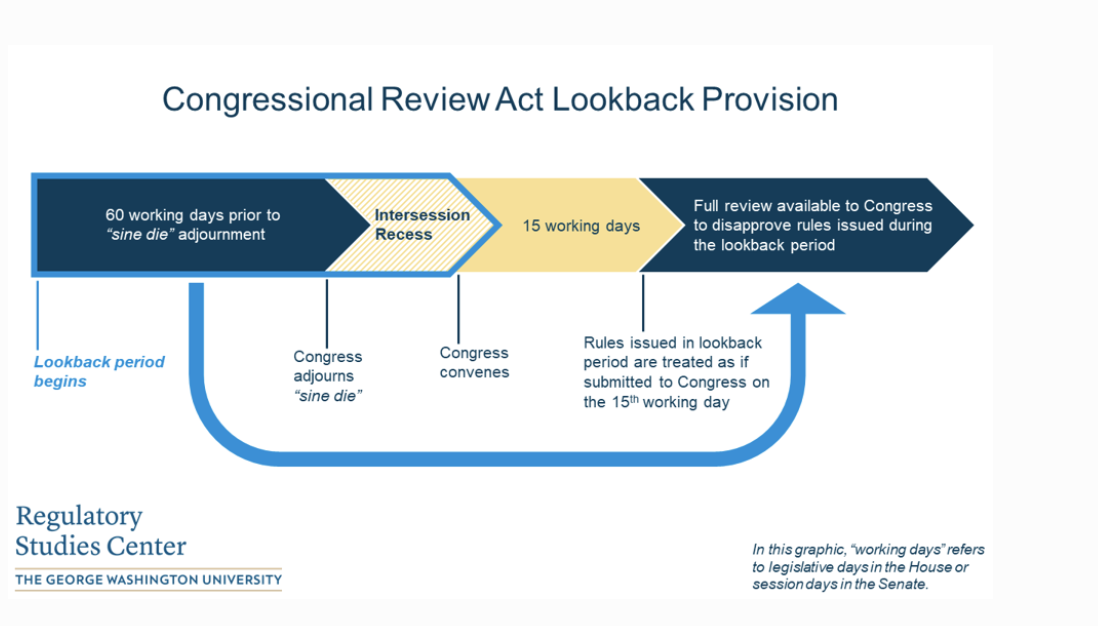
Exactly when the Biden administration’s deadline is for avoiding a similar fate for its priority rules is uncertain. The CRA gives Congress a 60 working day window during which disapprovals can be introduced and considered. But, if a rule is submitted late enough in the year that either the House or Senate doesn’t get the full 60-day review period, a “lookback” provision ensures the next Congress can review the rule (see graphic).

More here

The CRA allows Congress to overturn rules issued by the Executive Branch by enacting a joint resolution of disapproval that cancels the rule and prohibits the agency from issuing a rule that is “substantially the same.”  One of the CRA’s most unique features—a 60-day “lookback period”—allows the next Congress 60 days to review rules issued near the end of the last Congress.  This means that the Administration must finalize and publish certain rules long before Election Day to avoid being eligible for CRA review in the new year.  

Overview of the CRA

The CRA requires federal agencies to submit all final rules to Congress before the rule may take effect.  It provides the House with 60 legislative days and the Senate with 60 session days to introduce a joint resolution of disapproval to overturn the rule.  This 60-day period counts every calendar day, including weekends and holidays, but excludes days that either chamber is out of session for more than three days pursuant to an adjournment resolution.  In the Senate, a joint resolution of disapproval receives only limited debate and may not be filibustered.  Moreover, if it has been more than 20 calendar days since Congress received a final rule and a joint resolution has not been reported out of the appropriate committee, a group of 30 Senators can file a petition to force a floor vote on the petition.   

If a CRA resolution receives a simple majority in both chambers and is signed by the President, or if Congress overrides a presidential veto, the rule cannot go into effect and is treated “as though such rule had never taken effect.”[1]  The agency is also barred from reissuing a rule that is “substantially the same,” unless authorized by future law.[2]    

Election Year Threat: CRA Lookback Period

These procedures pose special challenges for federal agencies in an election year.  If a rule is submitted to Congress within 60 days before adjournment, the CRA’s lookback provision allows the 60-day timeline to introduce a CRA resolution to start over in the next session of Congress.

This procedure ultimately requires the current administration to assess the threat of a CRA resolution against certain rules and determine whether to issue the rule safely before the deadline or risk a potential CRA challenge. 

Mid-May Deadline Estimated for Biden Agency Actions

Agency leaders are working to finalize rules in time to meet this deadline.  At a recent conference held by the American Law Institute’s Continuing Legal Education, Vicki Arroyo, the Environmental Protection Agency’s (EPA) Associate Administrator for Policy, explained that the deadline is “something that [the EPA is] very focused on.”[3]  Although the deadline is uncertain, she noted that to be cautious, agencies may submit rules as “early as the end of April or May.”[4]

Federal agencies have already begun or plan to submit rules to Congress before the late May deadline, including:  

(FWIW interpretation in brackets)

  • An EPA rule that sets new standards to reduce air pollutant emissions from cars and a rule that requires fossil fuel plants to rely on new technologies to reduce pollution levels. [Bans ICE vehicles, cars and trucks, closes gas and coal-powered energy plants]

  • A Department of Labor rule that modifies Wage and Hour regulations to clarify the criteria for classifying workers as independent contractors as opposed to employees and a rule that narrows the standards to classify as exempt from the Fair Labor Standards Act’s minimum pay and overtime requirements. [Bans GIG jobs]

  • A Department of Justice rule that takes additional steps to implement the Bipartisan Safer Communities Act, which makes various changes to federal firearm laws, including expanding background check requirements and broadening the scope of existing restrictions. [Gun control]

  • The Energy Department’s regulations setting consumer water heater energy efficiency standards to lower utility costs for American families and increase energy savings. [and drive the prices of those heaters higher]

  • An Office of Personnel Management rule that would implement stronger guardrails for career employees, allowing them to keep civil service protections unless they voluntarily accept a political appointee position and adding requirements when reclassifying career positions as political appointments. [protect the federal bureaucrats — permanent employment]

  • A Bureau of Land Management rule setting management standards that put conservation on par with resource extraction to protect public lands and restore degraded habitats. [places most federal lands off-limits for coal and oil production]

    The fate of these rules will depend on how soon the Administration can finish these rulemakings and submit them to Congress.  Otherwise, the outcome of the 2024 election will determine whether these rules ever take effect. 
Flash from the past

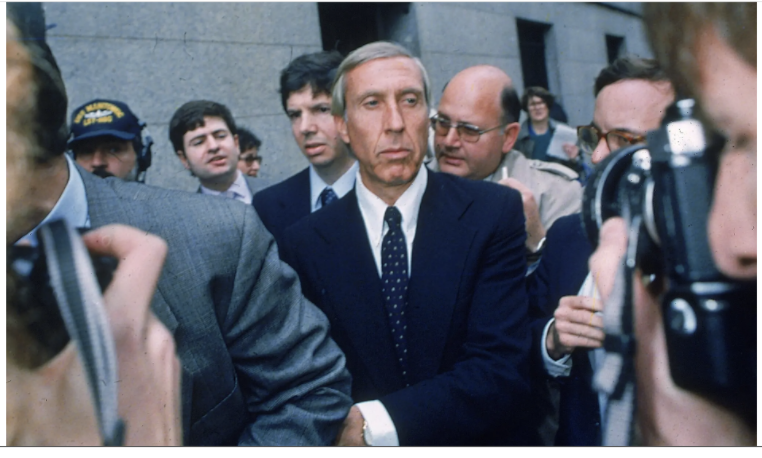
Ivan Boesky, dead at 87

Ivan F. Boesky, Rogue Trader in 1980s Wall Street Scandal, Dies at 87

An inspiration for the Gordon Gekko character in the movie “Wall Street,” he made a fortune from insider trading before his downfall brought a crashing end to a decade of greed.

Those were interesting days, when Wall Street money exploded to previously unheard-of levels and newly-minted multi-millionaires flooded into Greenwich, transforming its culture and, of more immediate notice, its housing market.

I won’t say that change was for the better, but change it did, and Boesky, who himself stayed in Westchester, was one of its most prominent symbols.

Language

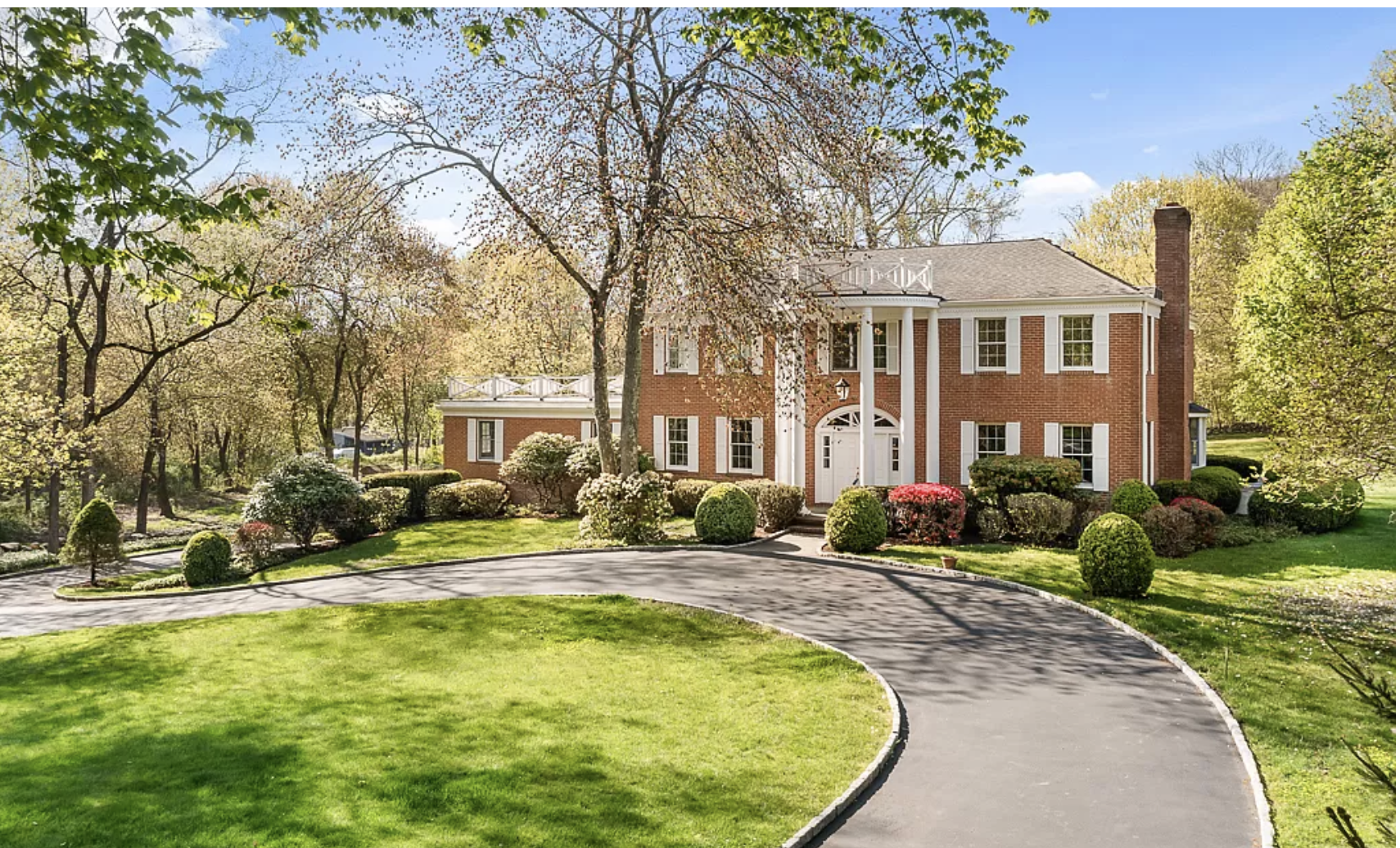
9 Mountain Wood Road, priced at $3.5 million, reports a contract after 9 days. It will be interesting to see what it’s final price will be, and what happens to the house itself. The listing’s description doesn’t seem to hold much hope for the building escaping the dumpster, but you never know; certainly, prospective buyers were given fair warning:

“The interior is a vision from the past, awaiting a discerning buyer or builder's inspiration.” **BRING ALL OFFERS** This is an estate, property being sold as-is where is and no property condition disclosures are provided. Seller makes no representations about the condition or legality of structures or improvements on the property. Buyers are encouraged to conduct their own due diligence.

“A vision from the past” is a wonderfully creative phrase for an obsolete house — I shall put it on the vocabulary shelf, right next to “deferred condition”, and use both to describe the next derelict (house) I list. ell done, sir.

If you like your car, you can keep your car; you just won’t be able to buy a new one by 2032

i got mine, jack — no joke

I’d thought — silly me — that most Americans realized that the upcoming mandates restricting ICE vehicles to 20% of all new car sales will end production of most gasoline powered cars, and drive the price of the few that will be allowed to be sold out of reach of the great unwashed. Apparently not, so the auto industry is trying to bring that to their attention, again. They won’t listen, I predict, until it’s far too late to throw it into reverse.

Auto industry experts warn Biden's EV mandate may limit gas car options in the future

'The policy is going to both limit the availability of new gas cars and push the cost of remaining gasoline-powered vehicles out of reach,' says industry expert

When President Biden said that Americans can "buy any kind of car they want," he failed to factor in new emissions standards his administration is putting in place that will reduce consumer choice, industry experts say.

During a speech delivered on Tuesday outside the Rose Garden, Biden focused on protecting U.S. jobs from unfair foreign trade practices and promised to not allow China to control the market for internal combustion engines or electric vehicles (EVs).

"I want to make this clear, notwithstanding what the other guy is saying – can buy any kind of car they want… but we're never going to allow China to unfairly control the market for these cars, period," he said, as "the other guy" appeared to be a reference to former President Trump, who made waves for predicting an auto industry "bloodbath" if Democrats continue their EV push.

Geoff Moody is senior vice president of American Fuel & Petrochemical Manufacturers (AFPM), a trade association representing companies like Chevron, ExxonMobil, Koch and others. He said that Biden's Environmental Protection Agency (EPA) regulation "is functionally a ban on sales of most new gas cars by 2032."

"The policy is going to both limit the availability of new gas cars and push the cost of remaining gasoline-powered vehicles out of reach for most Americans," he said, adding that EPA compliance scenarios he has viewed project new internal-combustion-engine car sales to fall drastically from 84% at present to below 30% in 2032.

"The whole point of the rule is to push American drivers toward electric vehicles by limiting their other options," Moody said.

American Petroleum Institute executive Will Hupman echoed some of that sentiment, predicting that it could effectively eliminate most new gas-powered vehicles in the future. 

… While Biden's EPA's emissions standards do not constitute a blanket prohibition on internal combustion engines, automobile and fossil fuel trade organizations claim that to them, they may as well have.

When asked about Biden's comments and consumer choice concerns in regard to the new mandates, a spokesperson for General Motors said it is continuing to grow its electric vehicle fleet while retaining a broad suite of gas-powered options for customers.

The spokesperson also called it "challenging."

America, meet your future:

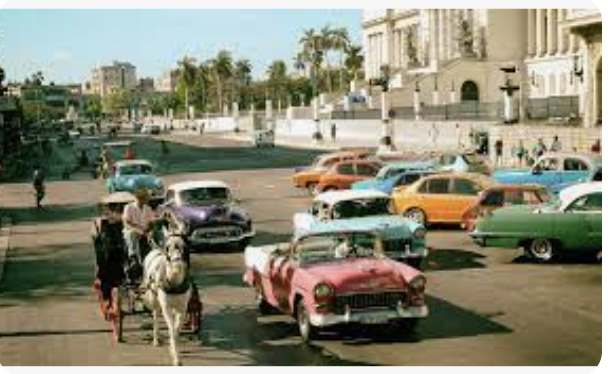
havana today

In 2016, Fidel Castro’s brother, Raul Castro, relaxed the need for permission to buy foreign cars and finally lifted the ban on importing American cars and parts. This led to an influx of brand-new cars onto Cuba’s roads.

Many wondered if this would signal the end of Cuba’s classic car industry. While Cubans’ love of vintage cars is ingrained in their culture and makes up a vital part of their tourism industry, there is another reason why you will still see plenty of old cars in Cuba – the cost.

New car imports are still highly regulated, and the pricing makes purchasing a car unrealistic for most Cuban locals. The state still has a monopoly on Cuban car sales, which means prices are high. A Peugeot 508 which typically retails at $29,000, costs a whopping $262,000 in Cuba. With the average Cuban citizen earning around $20 a month, it is unlikely that new imported cars are going to be part of a buying boom.

How long do you think copper piping, wiring, and anything else that can be sold for drugs will last in those $1 million homeless units?

Oakland locals blame homeless encampment for city removing traffic lights to stop copper thieves

A California city removed the traffic lights from a four-way intersection as the city grapples with thefts attributed to a massive homeless encampment nearby. 

Oakland has been experiencing high crime and theft, including people stealing copper wires and the city's infrastructure, according to locals who spoke to CBS News. The city attempted to thwart criminals tampering with its electrical boxes by placing cement barriers over them – to no avail. Now, the city has taken to removing the traffic lights at a busy intersection and replacing them with stop signs. 

It’s been said of junkies that they’ll steal anything that’s not nailed down (and then help you look for it), but in fact, they’re perfectly happy to first steal the nails, and then finish the job. Placing active drug addicts into separate, brand new apartments might provide them with decent shelter for a few weeks, but the denizens will soon have them reduced to a junkie’s natural habitat.

Series Of Copper Thefts Sets Back Property Owner’s Affordable Housing Renovations

So an alcoholic and a trio of transvestites open a daycare center, and you'll never guess what happened next!

“The women of manchester” : Sally Dreckmann, 52, the day care owner; and her employees Traci Innie, 51; Kaitlin Filardo, 23; and Jessica Foster, 23, all of Manchester, were charged with 10 counts of endangering the welfare of a child,

New Hampshire daycare workers sprinkled melatonin in children’s food unbeknownst to parents, police say

The current (check in tomorrow for the next one) lefty outrage is over a football player, speaking at a women’s Catholic college commencement ceremony to Catholic young women, telling graduates that staying home and raising children can be more fulfilling than a career spent in a cubicle. Better to entrust your children to professionals like these, because … reasons.

Solar energy bust

Here’s an article on Australia’s struggles with converting the country to solar. It’s interesting in itself, but the real meat is found in the comments, where a number of engineers weigh in, arguing a bit with each other, but, combined, provide a better look at the pitfalls awaiting us; something the media’s flying monkeys can’t do.

ICMYI, the Biden Administration released a plan to cover 22 million acres of western lands with solar panels. That is an area about the size of Ohio. The Biden Administration is crowing that it will generate enough energy to power 3.5 million homes. Would anyone care to bet on that?
Hey, but 3.5 million homes sounds pretty good until one realizes there are over 14 million homes in California.
This is the level of thinking that creates the results we see in Australia.

Biden Solar Plan

GlobalTrvlr

  • That is 34,375 square miles. You could put enough solar panels to more than power the whole US by about 4x. However, it would only do so for a few hours per day, and good luck trying to collect all that energy and shipping it to where it could be used.

    Where did you see him crow about that? And is it in the same vein as his other lies like he inherited 9% inflation?

    • piscorman GlobalTrvlr5 hours ago edited

      I didn't see Biden crow about it. The Biden Administration's report made the claim, which you can see at the link (click Biden Solar Panel to see their report). As you note, this only works for a few hours a day.

      I don't know where you get your number of powering the whole US by 4x. The report at the link says it will power 3.5 million homes. For now, I'll go with that. You can Google it, but there are give or take 14 million homes in California. So, covering the west with an area the size of Ohio in solar panels will meet 25% of Cali's needs. This is the data from the study.

      Reports and studies tend to use average values for usage. However, power grids must be configured to the maximum. So, how would the thing work in the middle of a North Dakota winter when it is 20 below zero with no wind? These Green Energy grids must meet that requirement.

      • GlobalTrvlr piscorman2 hours ago

        Here is how I got to the 4x number. I am in the electricity space. I have done economics, proposals and design build for the electrical portion of projects or turnkey for every kind of generation: nuclear, coal, coal gasification, gas simple cycle, gas combined cycle, geothermal, hydro, wind, solar, diesel, and storage from pumped storage and Batteries. In the last few years I have been working on the economics of wind, solar, islanded systems, hybrid systems, etc. I know the average acreage per MW or per 100MW.

        Recently, Elon Musk has been claiming that you could serve all of the power in the US with a 100 square mile plant in Arizona. The peak demand of the US has been about 750GW once a year, and as you state, you have to plan for peak plus reserve. So, if you pick texas, or AZ areas which is the most favorable place, and you use a 21% conversion of sunlight to electricity, and the given sunlight per sq meter is about 1kw. which gives .21kw per square meter. convert that to a square mile you get around 543MW. 100 sq. miles would be about 54TW. In 2023 our peak day was 750GW, and our average hourly use was 456TW. So, obviously you can't do that. So, then he also was quoted as saying he need 100 mile by 100 miles. That is not 100 sq miles, that is 10,000 sq miles. So, 10,000 sq miles would be about 540TW. So, theoretically you could run the US for the average consumption, but not the peak. If you have 38,000 sq miles, which is around 22 million acres, that would scale up to 20,500 TW, so you could power the US with that. But, not for long.

        Now, those are basically using ever sq inch as a solar panel, given the spacing needs, and the needs for control houses to collect and convert, and substations and transmission stations to carry it away, you would really be down to about 60% of that. Now, given that they never run at 100% nameplate because of the temperature issues, they only have 4 hours of peak, and only about 10-12 hours of any kind of generation per day, the average output of a solar farm is 20%. Applying those numbers to the 20,500 theoretical would bring you down to about 2,460TW, so that is why I said it could provide about 3-4x what the country needs.

        But, to get your mind blown, think about how many MWH of battery storage you would have to have to provide 456 TW per hour for at the minimum 12 hours, and then add in all of the solar panels you would need extra just to charge them while you are still producing 456TW/ hour to the grid during the day.

        BTW, whenever you see the "could supply XX million homes" just turn your head. Those are BS numbers. It is using 100% of the nameplate rating of either wind or solar, divided by a ridiculously low average hourly usage for a home. But neither wind or solar EVER put out 100% of nameplate. Peak on wind is usually around 75% once or twice a year and averages 33% for the year. Solar can reach 80% of nameplate, but average is only 20% of nameplate. Of course both of those can go to zero, sometimes for days or over a week on end.

        • piscorman GlobalTrvlran hour ago

          The 3.5 million homes was provided by analysts in the Biden Administration, as was the 22 million acres of solar panels to provide it. You are claiming that the Biden Administrations proposal is pure BS. I agree.
          This is the gang that spend $7 billion for 7 EV charging stations.

          That's great you know all of the engineering about Green Energy. You must also know about the fallacies of large-scale engineering (by the way, I've published papers in this field). But I digress.

          Economic Fallacy: Green Energy is free. Yes, the availability is. So, is the availability of water, gold, silver, and other stuff. The cost is from the exploitation of the material. It takes money to get free water to the citizens of a city. So too it is with Green Energy. I'm glad you've looked at the economics.

          Engineering Fallacy: This is known as the Diseconomy of Scale: because things can be built at a small scale does not mean they will scale up well. The Big Dig (a tunnel under downtown Boston for a freeway) is an example of that principle. Many Civil Engineering firms can dig a tunnel, but building one big enough for a freeway under Boston is so much different in scale as to be different in kind. The original bid was $2 billion and the final cost was over $20 billion. That will surely be the case for Green Energy.

          Power Density: it takes about 100x more land to generate electricity with solar than with Nuclear. Fossil fuels are somewhere in between. The greatest demand for power is in the urban areas, where land is most expensive and least available. Therefore, Green Power will necessarily be generated away from the locations of greatest demand. This will require a significant upgrade to the power distribution systems. That's not going to be cheap.

          It Looks Silly: Because Green doesn't provide energy 24x7 it must have batteries to store the power for demand when the sun isn't shining or the wind isn't blowing. It is fair to look at Green Energy as battery chargers. So, a Green Energy system will charge batteries at a remote location to transfer the electricity to a city to charge another battery. That sounds expensive. Oh, and you know this, the voltages must be stepped up for transmission. There are a whole set of circuits to be added to do this work. All of that so a solar panel can charge a battery to charge another battery at a remote location. That doesn't sound economical to me.

          As an engineer, I'm sure you know that prototypes are a good way to explore options and risks to find the best way forward. California stepped up and volunteered itself as a prototype. How's that going? They are having brown outs and telling people to to charge their autos. Also, Newsom petition to keep the Diablo Nuclear facility open. It seems to me to be wise to figure this thing out in California first.

          If you look at the Netherlands they are taking farm land to put these things out. If people have nothing to eat, what good is the Green Energy. So, I would strongly urge the proponents of this thing to show the rest of us what the real costs are and how it can work, by making California go entirely Green first. When that's done, then we'll be ready to take on the bigger challenges.

Greenwich housing prices

24 Gilliam Lane (expanded and modified by successive owners, but basically the same 1954 house)

I noticed in the post below that the cost of that Jacobsen mower in 1954 was $375, and, curious, I plugged that number into this inflation calculator to see what its present value would be: $4,71.02. That’s a bit pricey, but I don’t think similar lawnmowers cost much more than that today.

So that set me thinking about what’s happened to Riverside housing prices over the past 70 years. Hmmm. They have outperformed lawnmowers, certainly, and that’s completely transformed who can afford to move in now. The current value of the $50,000 my father paid in 1954 for a beautiful house on Gilliam Lane,with an acre-and-a third of land is, according to that calculator, $582,802.97; the smaller house my grandmother bought for $15,000 in 1957 would cost $167, 374,38 today. I’m guessing here, but I’d be surprised if those houses couldn’t sell for at least $4.5 and $1.750 million, respectively, in 2024. Obviously, changes have been made to them over the years, and, especially in the case of Gilliam Lane, some expansion has been performed, but the point is, someone with a $600,000 house buying budget today won’t be looking on Gilliam Lane or even William Street — or anyplace in Riverside, for that matter.

granny’s “magic cottage”