Chief Dan George need not apply, but Rachael Dolezal is welcome to.

Three years after Evanston proudly became the first local government in the US to start paying reparations to its black citizens – in this case technically to atone for decades of ‘institutional racism’ in local housing – it is being sued in a federal court for exhibiting exactly the sort of prejudice it decries.

A conservative activist group, Judicial Watch, has filed a legal challenge to Evanston’s controversial $20 million (£15.7million) programme, claiming that it discriminates against non-black people – including whites, Hispanics and Asians – as they are ineligible for the $25,000 (£19,600) handouts.

To qualify for this extraordinary largesse, recipients must be black Americans – or their direct descendants – who lived in Evanston as adults between 1919 and 1969, the year when the town finally ended what it admits was an official policy of ‘racial segregation’ in housing. The lawsuit also claims that the reparations should be limited to people who can actually prove that they suffered discrimination.

Using money from taxes levied on cannabis businesses – the drug is legal in Michigan – and a special levy on the sale of homes worth more than $1.5 million (£1.2million), Evanston has so far set aside $10 million (£7.9million) and paid half of that to 193 residents.

The radical initiative, adopted in 2019 after a city council vote rather than a public referendum, doesn’t specifically mention slavery, which was abolished in the US in 1865, but it hardly needs to. Many of Evanston’s 12,000 black residents (16 per cent of its 75,000 population) are descended from slaves.

Nationally, six in ten African-Americans believe their ancestors were slaves. And their belief that they deserve reparations runs deep – few black children aren’t taught about the pledge by Civil War Union General William Sherman in 1865 that every freed slave family should be given up to 40 acres and a mule. They also know the US Government never honoured that promise.

Reparations campaigners argue that even if slavery ended, discrimination lived on in myriad ways. In Evanston, housing included restrictive covenants and a policy known as ‘redlining’, in which banks refused mortgages to black people if they tried to buy homes in white areas.

This now-illegal practice – once widespread across the US – forced most of Evanston’s African-American community to live in just one small, poor neighbourhood, the ‘5th Ward’ on the west of town. Evanston officials say successive generations of black people have suffered as a result of not being able to invest in valuable homes.

Critics deride reparations as tokenistic white guilt – but Evanston’s liberal leaders are basking in plaudits from activists calling their town the ‘new Montgomery’ – after the Alabama birthplace of the civil rights movement. Officials insist this is only the start of their reparations plans. The project’s driving force, local black campaigner Robin Rue Simmons, has been touring the US and was even asked to address the United Nations as demands for reparations grow around the world.

‘The moral urgency of the issue does not allow us to just keep on talking,’ intoned Evanston’s earnest Democrat mayor Daniel Biss. ‘And it can be scary to go first... but someone’s got to go first.’

However, it could prove a short and very expensive experiment, if Judicial Watch gets its way.

The Washington-based group, intent on nipping the concept of reparations in the bud, has filed its lawsuit on behalf of six named plaintiffs who say they lived in Evanston over the relevant period and would have otherwise qualified for the reparations but for the fact they’re not black.

They and their backers say the reparations scheme breaches the 14th Amendment to the US Constitution, which states all Americans are given equal protection under the law. Ironically, the amendment was added to protect freed slaves after the Civil War.

‘This programme redistributes tax dollars based on race,’ said Judicial Watch president, Tom Fitton. ‘That’s just a brazen violation of the law.’

He called his civil rights lawsuit a ‘historic defence of our colour-blind Constitution’.

>>>>Evanston’s reparations creators insist they’re undaunted.

‘This lawsuit is not a surprise,’ said Rue Simmons at a meeting last week.

[A]fter some people complained that it was ‘demeaning’ to be told how to spend their money – initially it had to be spent on housing – there are no restrictions on how it is used. One recipient splurged the lot on installing a lavish marble bathroom in her home.

>>>>

Kelly Burke, a white kindergarten teacher who has an allotment in the 5th Ward but lives in another part of town, admitted she was sticking her neck out when she said: ‘I’m all for equality and helping people, but Native Americans have as much right to reparations as anyone, as do all aboriginal people across the planet.

‘I’m of German and Irish ancestry, and my people were brought here as indentured servants. Hasn’t everyone suffered discrimination? Everyone is liberal in Evanston and wants to do the right thing, but then people stop and say, “Who’s going to pay for it?” ’

>>>>

Retired African-American rubbish collector Toylee Stanley insisted that, when he and his young family arrived there in 1970, ‘if you could pay, you could live wherever you wanted in Evanston’ – although his wife then reminded him that the first house they tried to rent suddenly became unavailable as soon as they turned up.

Reparations are ‘OK’, said Mr Stanley, as long as they don’t involve a big cash handout.

‘Sometimes if you get things easy, you don’t take care of the things you should take care of,’ he explained. ‘People got a handout during Covid and they didn’t want to work any more.’

The rest of the US, and beyond, is watching keenly to see what happens with the Evanston lawsuit.


Powerline's Steven Hayward, who reads the NYT so that the rest of us don't have to, reports an amazing, one-time occurrence at the Babylon Bee's inferior

even a stopped clock can be right, for one second, twice a day

A HICCUP AT THE NY TIMES

“Churchill once remarked, I think with Stanley Baldwin in mind, that “Men occasionally stumble over the truth, but most of them pick themselves up and hurry off as if nothing had happened.”

“That could be a good description for today’s Nicholas Kristof column in the New York Times. Kristof is usually a reliable liberal, but now and then he goes off the reservation. Today’s column:

What Have We Liberals Done to the West Coast?

As Democrats make their case to voters around the country this fall, one challenge is that some of the bluest parts of the country — cities on the West Coast — are a mess.

Centrist voters can reasonably ask: Why put liberals in charge nationally when the places where they have greatest control are plagued by homelessness, crime and dysfunction? . .

We [liberals] are more likely to believe that “housing is a human right” than conservatives in Florida or Texas, but less likely to actually get people housed. We accept a yawning gulf between our values and our outcomes. . .

[M]y take is that the West Coast’s central problem is not so much that it’s unserious as that it’s infected with an ideological purity that is focused more on intentions than on oversight and outcomes. . . Politics always is part theater, but out West too often we settle for being performative rather than substantive.

For example, as a gesture to support trans kids, Oregon took money from the tight education budget to put tampons in boys’ restrooms in elementary schools — including boys’ restrooms in kindergartens.

Hayward: “Despite all of Kristof’s caveats and pandering, I expect many Times readers will be upset by this column.”

The mark of genius in a man (or woman) is the extent to which they agree with you

Just two days ago, discussing the failure of Chicago’s schools, I asserted that a big part of the problem in Chicago and in most of our schools lay with the parents of the children, and not just the schools themselves. Then today, this:

Paula Bolyard: The Real Reason Johnny Can't Read: Bad Parenting.

There is no “science of reading.” There is no “science of teaching math” or any other academic skill or study. If someone can identify a district where every single student reads at a proficient level on state tests, I will change my view. I await the evidence.

Like No Child Left Behind and Common Core before it, the "Science of Reading" is just another excuse to line the coffers of education bureaucrats and textbook publishers. 

A story at AMP Reports titled "'Science of reading’ movement spells financial trouble for publisher Heinemann" notes that "The educational publisher raked in hundreds of millions of dollars in revenue during the 2010s selling reading programs based on a disproven theory [the now disfavored Common Core]. The company now faces financial fallout, as schools ditch its products." More: 

The three biggest educational publishers — Heinemann’s parent company, Houghton Mifflin Harcourt, along with McGraw Hill and Savvas — are all now marketing their core reading programs as aligned with the science of reading.

Lather, rinse, repeat. 

My home state of Ohio has allocated "$86 million for educator professional development, $64 million for curriculum and instructional materials, and $18 million for literacy coaches." 

More money down the drain that will do next to nothing to improve the reading ability of children. 

According to The Nation's Report Card, reading scores have been essentially flat since 1992, despite billions (perhaps trillions) of dollars spent implementing the Next Big Thing in education. Scores dipped a few points during and after the Covid lockdowns, but overall, there has been little change over the last half-decade. 

>>>>

[T]here is no magic bullet when it comes to teaching reading. It's really not complicated, despite states coercing kindergarten teachers with 20 years of classroom experience to get master's degrees, which has been a huge boon for online universities that receive government funding. Follow the money, and it always ends up in the hands of government bureaucrats while they insist it's "for the children." 

Back in the '70s, most children didn't learn to read until first grade. [True in my own experience at Riverside School in 1958 — Ed]. My first-grade class had 30 students, and we all learned to read without drama, specialists, IEPs, or "interventionists."  Mrs. Hole patiently taught us using the "Tip and Mitten" book series. We sat in circles, and she used flip charts to instruct us on phonics. She sorted us into reading groups—kids who needed a little extra help got more attention from the teacher—and we learned to read. I know you will find this hard to believe, but we didn't even have computers back then!!!!! We also didn't have homework. It was expected that kids would be read to at home and that parents would encourage literacy. 

This wasn't some upper-crust prep school, either. A majority of the kids in my school had parents who were second-generation immigrants, most of whom were blue-collar workers without college degrees—families with names like Ikeda, Georgeopolis, Ciarniello, and Kibelbek (my maiden name). It wasn't unusual for two languages to be spoken in these homes, including mine. In fact, my father was held back in first grade because he couldn't speak English well enough. These days, he'd be placed in an ESL program and encouraged to learn to read in Slovak. 

As a homeschooling mom, I taught both my boys (one a stealth dyslexic and the other with ADD) to read in kindergarten. We started using a phonics-based program in September, and by Christmas, they could read. THIS IS NOT ROCKET SCIENCE. 

Talk to any primary school teacher, and they will tell you that the problem isn't that teaching reading is complicated.

The problem isn't that they need a magic bullet program with "science" in the name to unlock the secret to teaching what American children have been learning to do since the first settlers arrived here. 

The problem is that many students come to school unprepared to learn. Their parents are checked out, fathers are absent, the kids stay up playing video games all hours of the night, and their diets consist mostly of highly processed junk food. Many of them have experienced neglect and witnessed violence and drug use by the time they enter kindergarten. 

Pouring billions of dollars down the toilet to pay for fancy new teaching methods is not going to address the real problem. Putting one in ten American children on dangerous stimulant drugs is not going to solve the problem because the problem is cultural. 

A few weeks ago, I saw a video on Facebook showing a high school student who couldn't read but received passing grades every year until he finally graduated. Most people, including the mother, blamed the school (and COVID) for failing to teach him, but what about that mother? Where was she during his thirteen years of public education? Was she overseeing his homework, looking online at his test scores, attending parent-teacher conferences, and feeding him a healthy breakfast before school? Was she reading to him and making him read aloud to her? 

Illiteracy doesn't happen in a vacuum. Sure, there are some terrible teachers out there, and a lot of schools are spending more time on woke ideology than the three Rs, but there is no excuse for a child with even a below-average IQ to be unable to read. Again, it's not rocket science. It's time we start pointing out that bad parenting is why Johnny can't read. 

All the government boondoggles in the world cannot fix bad parenting. 

I’ll add that my parents read to us every day beginning when we were, I dunno, two? Three?, had bookshelves (with books) in almost every room, and we had no television in the house until Little Gideon made such a fuss about it that my father finally relented and allowed us to put a portable in the laundry room, with strict rules that limited viewing to one hour, later extended to two, after homework was done (Gideon’s obnoxious whining was also the impetus that brought sugared cereal onto the breakfast table, but that’s another story). To this day, all of us still read for entertainment, as well as learning.

UPDATE: Of course, not everything is the fault of schoolchildren’s parents:

Oh, just shut up

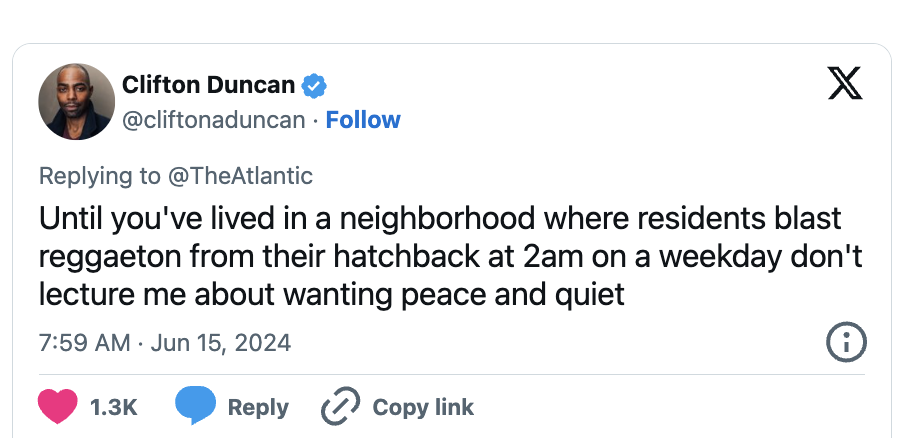
Twitchy: Like Peace and Quiet? Congrats, The Atlantic Says You're a Racist

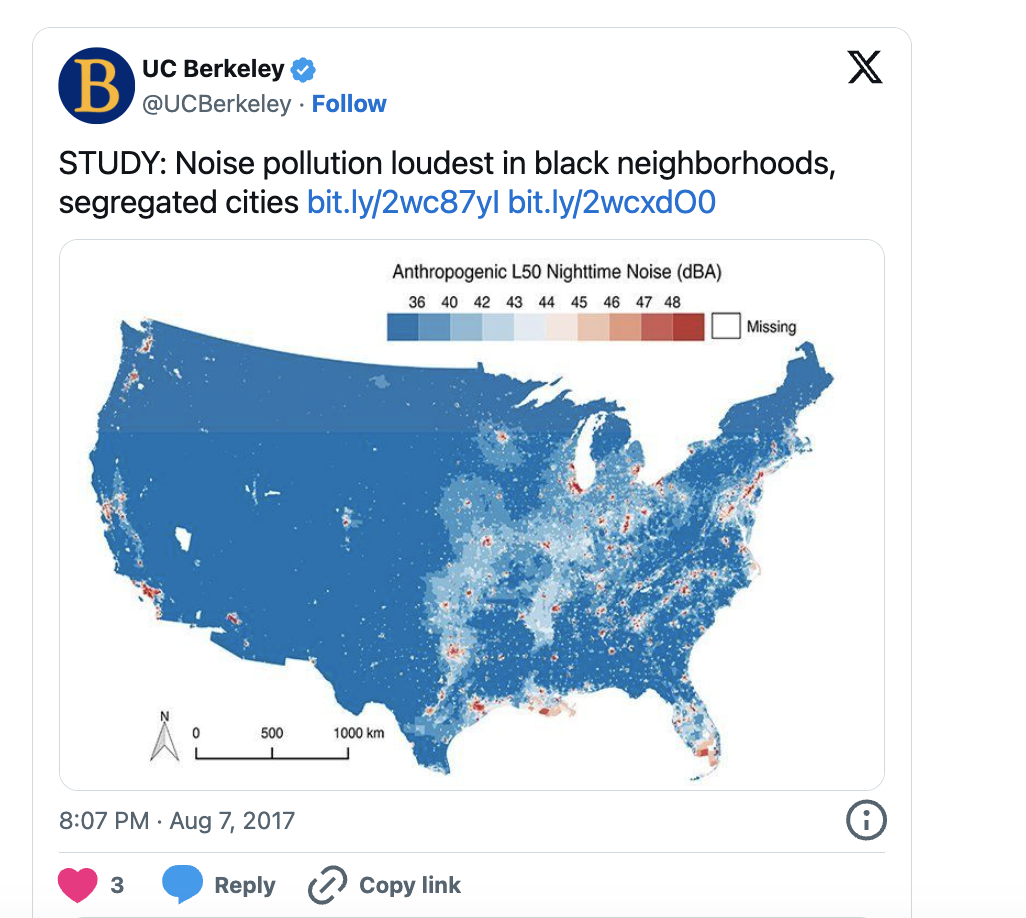
Take a trip down memory lane with us. Back in 2017, the Left was all up in arms about noise pollution. The loud sounds of the city -- the places they want us all to live, because climate change -- were racist. No, really.

But because everything is racist, and logical consistency is anathema for the Left, silence is also racist.

Just ask the folks at The Atlantic:

Miss Gonzalez:

New york in the summer is a noisy place, especially if you don’t have money. The rich run off to the Hamptons or Maine. The bourgeoisie are safely shielded by the hum of their central air, their petite cousins by the roar of their window units. But for the broke—the have-littles and have-nots—summer means an open window, through which the clatter of the city becomes the soundtrack to life: motorcycles revving, buses braking, couples squabbling, children summoning one another out to play, and music. Ceaseless music.

I remember, the summer before I left for college, lying close to my bedroom box fan, taking it all in. Thanks to a partial scholarship (and a ton of loans), I was on my way to an Ivy League college [Brown —Ed]. I was counting down the days, eager to ditch the concrete sidewalks and my family’s cramped railroad apartment and to start living life on my own terms, against a backdrop of lush, manicured lawns and stately architecture.

I didn’t yet know that you don’t live on an Ivy League campus. You reside on one. Living is loud and messy, but residing? Residing is quiet business.

I first arrived on campus for the minority-student orientation. The welcome event had the feel of a block party, Blahzay Blahzay blasting on a boom box. (It was the ’90s.) We spent those first few nights convening in one another’s rooms, gossiping and dancing until late. We were learning to find some comfort in this new place, and with one another.

“Then the other students arrived—the white students.”

I just hadn’t counted on everything that followed being so quiet. The hush crept up on me at first. I would be hanging out with my friends from orientation when one of our new roommates would start ostentatiously readying themselves for bed at a surprisingly early hour. Hints would be taken, eyes would be rolled, and we’d call it a night.

“One day, when I accidentally [sic] sat down to study in the library’s Absolutely Quiet Room, fellow students Shhh-ed me into shame for putting on my Discman.

I soon realized that silence was more than the absence of noise; it was an aesthetic to be revered. Yet it was an aesthetic at odds with who I was. Who a lot of us were.

Within a few weeks, the comfort that I and many of my fellow minority students had felt during those early cacophonous days had been eroded, one chastisement at a time. The passive-aggressive signals to wind our gatherings down were replaced by point-blank requests to make less noise, have less fun, do our living somewhere else, even though these rooms belonged to us, too. A boisterous conversation would lead to a classmate knocking on the door with a “Please quiet down.” A laugh that went a bit too loud or long in a computer cluster [emphasis added] would be met with an admonishment.

In those moments, I felt hot with shame and anger, yet unable to articulate why. It took me years to understand that, in demanding my friends and I quiet down, these students were implying that their comfort superseded our joy.

>>>

I loved the learning that I did in college—academic and cultural. And I managed to have a lot of fun, in the spaces that the students of color claimed as our own. We had our own dormitories, our own hangouts; we even co-opted a room in the computer center where we could work the way we preferred, with Víctor Manuelle or Selena playing in the background. Some white students resented that we self-segregated. What they didn’t understand was that we just wanted to be around people in places where nobody told us to shush.

When i moved back to Brooklyn after college, I found that the place had changed. Neighborhoods that had been Polish and Puerto Rican and Black [when did the Polacks replace the bog trotters as honorary blacks? Just askin’ — Ed] were suddenly peppered with people who looked better-suited to my college campus than to my working-class home turf. Many of them needed the affordable rents because they had opted into glamorous but poorly paying white-collar jobs [glamorous jobs like working as Lincoln Center ushers? MOMA ticket takers?] . Alas, these newcomers hadn’t moved here to live alongside us; they’d come to reside.

The first time it happened was the night before Thanksgiving. Three or four of us—all people of color—were eating takeout in my best friend’s studio apartment. [At what time of night?] The radio was playing, and we were debating, as we often did, who was the best rapper alive. There was a knock at the door and when we opened it, my friend’s neighbor, a 20-something woman new to Brooklyn, was standing there, exasperated. “Did your mothers not teach you the difference between inside voice and outside voice?”

>>>>

Attempts to regulate the sounds of the city (car horns, ice-cream-truck jingles) continued throughout the 20th century, but they took a turn for the personal in the ’90s. The city started going after boom boxes, car stereos, and nightclubs. These were certainly noisy, but were they nuisances? Not to the people who enjoyed them. [And their pleasure rules]

>>>>

I find many city noises nerve-racking and annoying: jackhammers doing street maintenance, the beeping of reversing trucks, cars honking for no good reason. Yet these noises account for a small minority of all noise complaints.

Nearly 60 percent of recent grievances center on what I’d consider lifestyle choices: music and parties and people talking loudly. But one person’s loud is another person’s expression of joy. As my grandmother used to say, “I’m not yelling, this is just how I tawk!”

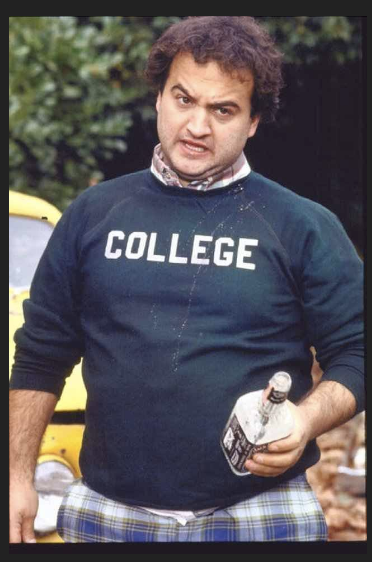
All properly-woke universities have responded to complaints of self-centered individuals like Gonzalez by creating segregated dormitories and colored peoples study halls, where they may whoop, shout, and dance about with abandon, but rudeness and inconsiderateness of others is not restricted solely to “people of color” — cretinism comes in all shapes, sizes and race — so why not designate one dorm as a “Blutarsky House”, or several, depending upon demand, and let them have at it, while serious students get on with their work?

As for this privileged woman’s insistence that her “lifestyle choices”; her preference for drenching her neighborhood in noise, takes priority over the desires of others, this Atlantic reader offers a fitting riposte:

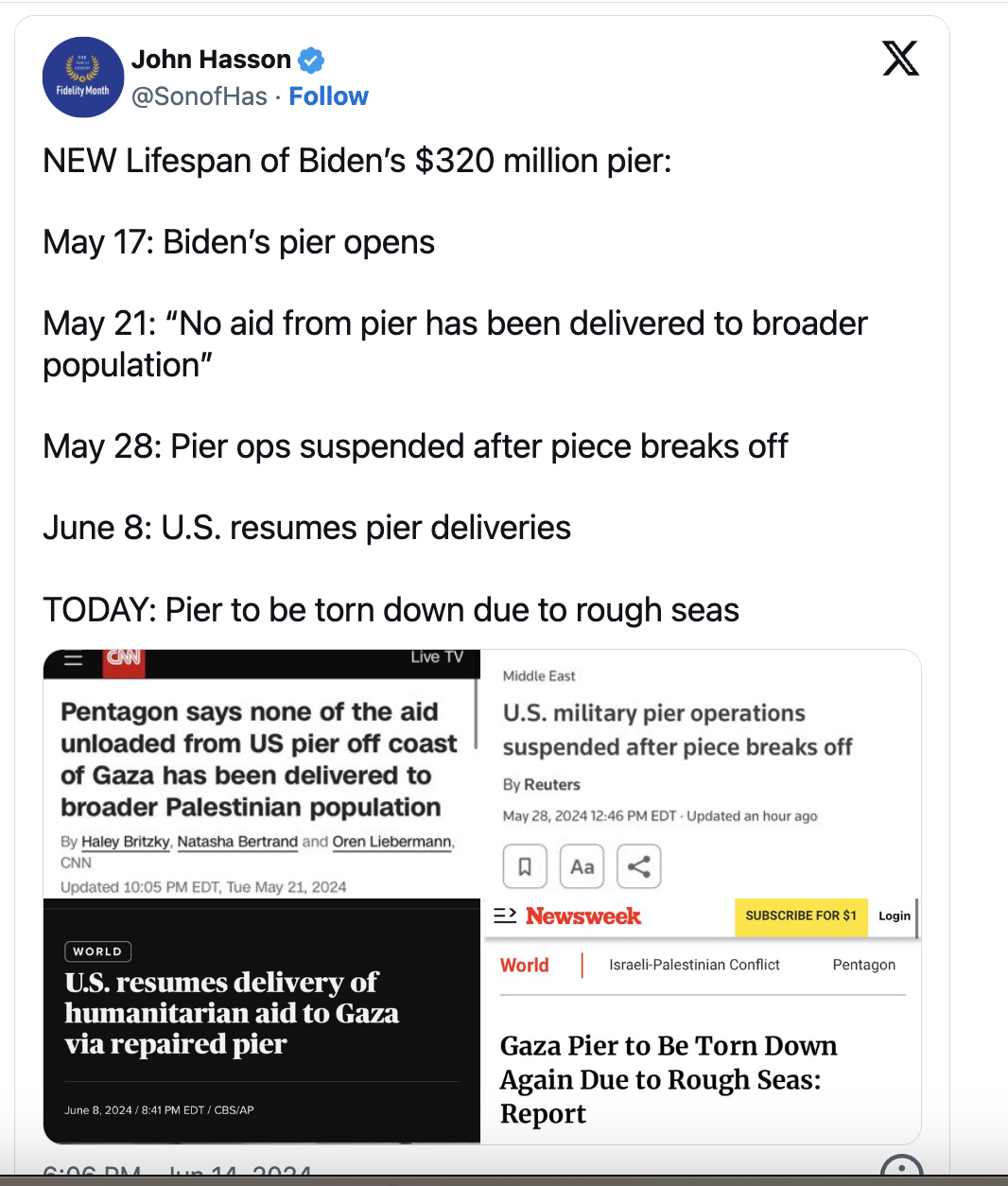
Bridge to nowhere (UPDATED)

biden brain trust

RIP to Biden's Gaza Pier As He Chalks Up Another Foreign Policy Disaster

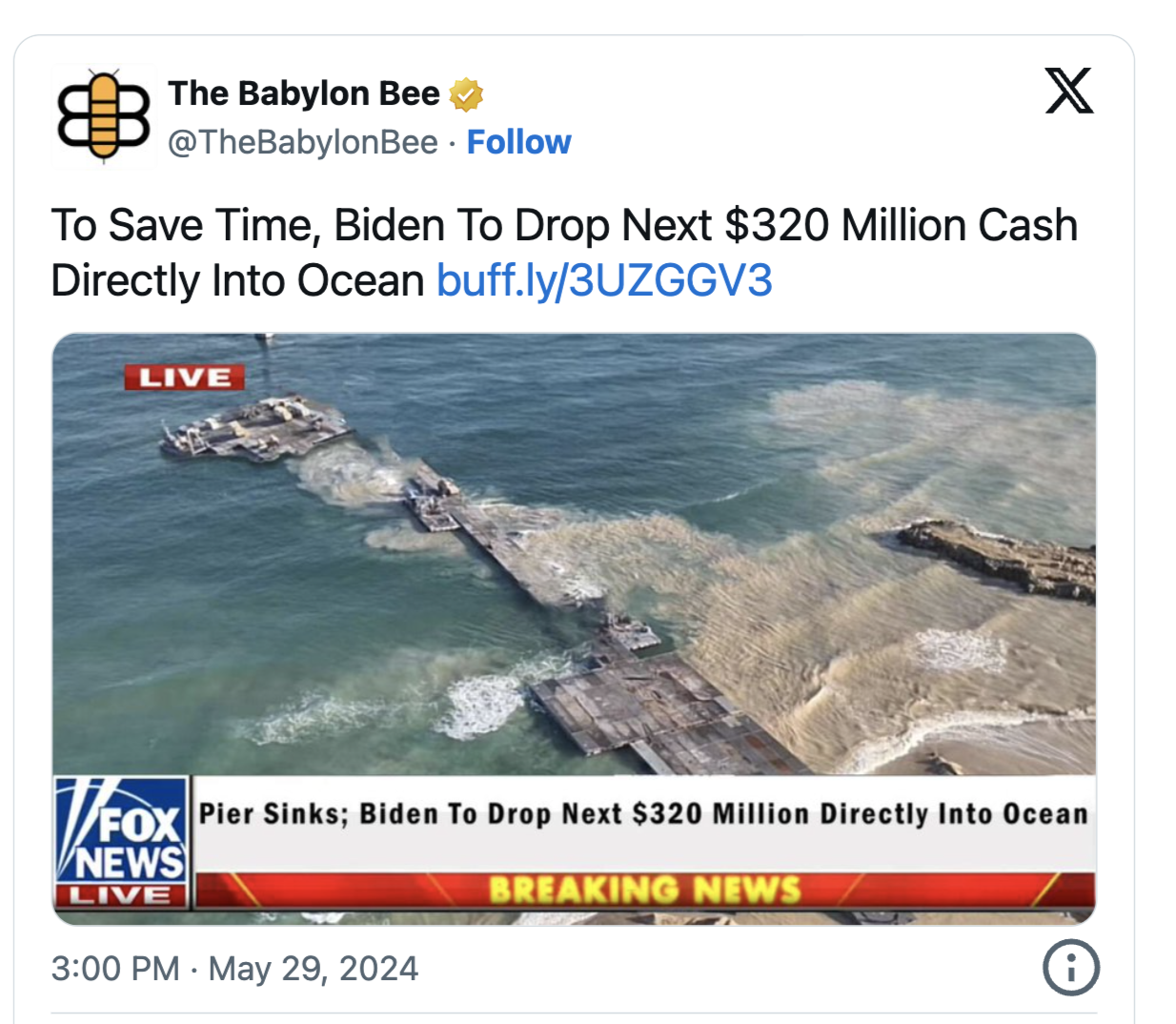
Proposed and administered by the State Department, not the military, denounced as folly by retired (and thus free to speak out) military commentators, what few supplies did make across the ship-to-shore ramp were immediately seized by Hamas. $320 million dollars, gone in the blink of an eye.

UPDATE. The Bee’s usual powers of prophesy have been demonstrated again.

Modern academics’ wet dreams persist, unchanged since Charles Fourier's nightmare of utopian socialism and a new world order was first revealed in 1822

It’s curious that Marx and his successors accepted and adopted Fourier’s belief that utopia was achievable if only capitalism (and the Jews) were eliminated, yet, so far, haven’t gotten behind his prediction that the world’s seas will lose their salinity and turn into pink lemonade, nor his assertion that 3-year-olds could be put to work cleaning sewers and collecting a community’s garbage “because they like doing that sort of thing” — curious, because neither idea is any less, or more, believable than the rest of his vision.

In any event, here’s the latest modern version of Fourierism:

You know, man, we got all these people in the world who are, like, really, really poor, you know? I mean, like, they don’t even have Starbucks — well, okay, maybe there are some of those, but like, these people can’t afford lattes, let alone, like, you know, a trenta cold brew with 30 shots, you know? And then we also got this problem with like, the world’s dying, man, ‘cause all this oil stuff is making things really hot, and the polar bears and are gonna come down from the North Pole ‘cause the penguins will have all disappeared and that’s what the bears eat, you dig, so they’re gonna eat us instead and that’s gonna really suck, right? So we got this idea, see, that’s gonna deal with both problems, cause we’re gonna tax those oil companies like a trillion-trillion dollars, see, and give it to everybody in the world, so everyone’s gonna be really rich and have lots of food and even trente lattes, and there’ll be lots of money ‘cause the oil companies are just gonna give like everything they collect over to the government and like never increase the cost of their oil ‘cause they’re gonna stop making it anyway and then there’ll be no money but that won’t matter ‘cause, like, everybody’s gonna be rich by then anyway.

So anyway we came up with this really cool solution that, like, no one’s ever thought of before or if they have it didn’t work ‘cause they didn’t really try it or they didn’t do it right or maybe the Jews sabotaged it ‘cause that’s what those people do, you know man? So, like, you know, here it is:

Universal Basic Income Could Double World's GDP And Slash Emissions

What if we could keep everyone out of poverty while also tackling the climate crisis? It sounds too good to be true, but it could be possible with a universal basic income scheme funded by taxing carbon emissions, a new study shows.

Universal basic income (UBI) proposes that a regular payment to every person – with no questions asked or any means testing – could replace all other forms of welfare payment, and perhaps make us all happier at the same time.

The new research, led by a team from the University of British Columbia in Canada, shows UBI could not only improve living standards but also boost global gross domestic product (GDP), a standard measure of economic prosperity.

The downside of UBI is that it costs an awful lot. According to the researchers, the companies that pollute the environment could pay for it because taxing carbon emissions alone would generate about US$2.3 trillion a year.

>>>>

"By requiring that major polluters pay to clean up their own messes, or the 'polluter pays principle', you have a creative approach to address both issues."

Sumaila and his colleagues looked at data across 186 different countries, combining modeling with an analysis of economic factors such as marginal propensity to consume – how likely people are to spend their extra disposable income.

According to the team's calculations, it would cost US$41 trillion to give a basic income to all of the 7.7 billion people on the planet, or US$442 billion to only help the 9.9 million people below the poverty line in developing countries.

Worldwide basic income would lead to a boost in global GDP of US$163 trillion or 130 percent, the researchers estimate. To put it another way, every dollar spent on UBI generates up to seven dollars in economic impact, as that money gets spent on food, rent, and other goods.

"Our findings show a positive economic-impact-to-cost ratio for basic income implementation across all scenarios examined," Sumaila and team write in their published paper.

Previous research has linked similar schemes with environmental benefits too. The environmental tax would encourage more eco-friendly policies, the team suggests, although to be sustainable long term, it would need to transition to other funding sources.

>>> "

“[E]xtraordinary times call for commensurate measures," says Sumaila.

So why isn't UBI in place already? It would require a lot of political will and agreement, and there remain questions over the extent to which it would deincentivize work and innovation, on top of the concerns over how it would be funded.

Oh, don’t worry about getting those former workers out of their hovels and back into the fields: they’ll be starving, and will work for food, especially when prodded by their community enforcers. You know?

Chips? Go fish

No chip factories unless a plan’s in place for balloons, coloring contests and block parties for “the people”.

“DEI mandates are … hindering the implementation of the CHIPS and Science Act, a bipartisan measure designed to enhance U.S. semiconductor supply chains and support private-sector investment in domestic research and manufacturing.”

“If you look through the notice of funding opportunity, which is the Commerce Department’s requirements in order to get funding, there’s literally the word diversity, equity and inclusion and DEI requirements littered throughout,” said Chris Nicholson, head of research at the firm Strive Asset Management. Strive, which was founded by former presidential hopeful Vivek Ramaswamy, has more than $1 billion in assets.

“Although this money is announced in some sense, it’s not even going to be given,” said Nicholson, who has researched the semiconductor industry. “That’s the key here. It’s not even going to be given unless [funding recipients], step by step, they meet, and they prove they’re meeting all of these DEI requirements.”

…According to [Rep. Jim Banks’ (R-IN)] memo, applicants for CHIPS for America funding must have a plan to employ ex-convicts, expand employment opportunities for people with “limited English proficiency,” hire more women for construction jobs, and produce a plan for contracting “diverse suppliers” that are women- and minority-owned.

In addition, applicants for large grants must guarantee “affordable, accessible, reliable, and high quality” child care for all workers, including all construction workers, allowing CHIPS and Science Act funding to be used for child care center construction.

And those battery chargers people are looking for? Same problem.

In 2021, the Biden administration pledged it would build 500,000 electric vehicle charging stations by 2030. So far, it’s built seven.

Last month, Transportation Secretary Pete Buttigieg—who administers the funds apportioned for EV charger construction in the $1.2 trillion Bipartisan Infrastructure Act—said Americans should not be surprised at the time it takes to stand up "a new category of federal investment."

"It’s more than just plunking a small device into the ground," Buttigieg said in an interview with CBS’s Face the Nation.

But internal memos from the Department of Transportation obtained by the Washington Free Beacon, as well as interviews with those who are responsible for overseeing the implementation of the electric vehicle charging station project, say the delay is in large part a result of the White House’s diversity, equity, and inclusion initiatives.

"These requirements are screwing everything up," said one senior Department of Transportation staffer who spoke on the condition of anonymity. "It’s all a mess."

>>>>

Shortly after taking office, [Biden] signed an executive order mandating that the beneficiaries of 40 percent of all federal climate and environmental programs should come from “underserved communities.” The order also established the White House Environmental Justice Advisory Council, which monitors agencies such as the Department of Transportation to ensure the “voices, perspectives, and lived realities of communities with environmental justice concerns are heard in the White House and reflected in federal policies, investments, and decisions.”

In order to qualify for a grant, applicants must “demonstrate how meaningful public involvement, inclusive of disadvantaged communities, will occur throughout a project’s life cycle.” What “public involvement” means is unclear. But the Department of Transportation notes it should involve “intentional outreach to underserved communities.”

That outreach, the Department of Transportation states, can take the form of “games and contests,” “visual preference surveys,” or “neighborhood block parties” so long as the grant recipient provides “multilingual staff or interpreters to interact with community members who use languages other than English.”

“This all just slows down construction,” says Jim Meigs, a senior fellow at the Manhattan Institute who focuses on federal regulation.

"These ‘public involvement’ requirements are impossible to quantify and even open builders up to lawsuits by members of the community where an electric vehicle charging station is set to be constructed."

How these equity requirements are relevant to the construction of a single electric vehicle charging station is unclear, Meigs said. But all applicants for federal funding must in many cases submit reports that can total hundreds of pages about how they will pursue "equity" every step along the way.

This leads to delays and increases costs throughout the construction process, one senior Department of Transportation official told the Free Beacon. "Highly Qualified" applications, internal memos state, must "promote local inclusive economic development and entrepreneurship such as the use of minority-owned businesses."

That can take the form of funding "support services to help train, place, and retain people in good-paying jobs or registered apprenticeships, with a focus on women, people of color, and others that are underrepresented in infrastructure jobs." A firm’s "workplace culture" should "promote the entry and retention of underrepresented populations."

"These onerous diversity, equity, and inclusion requirements handcuff professionals from making proper evaluations and prevent the government/public from funding the most deserving projects, instead funneling money towards less qualified applicants," the senior Department of Transportation official said.

Those regulations are visible throughout more than 500 federal initiatives across 19 agencies, according to the White House’s chief environmental justice officer Jalonne White-Newsome, who spoke during a White House Environmental Justice Advisory Council meeting on Wednesday. The Free Beacon accessed that meeting, which took place over Zoom and included more than 15 speakers from various federal agencies.

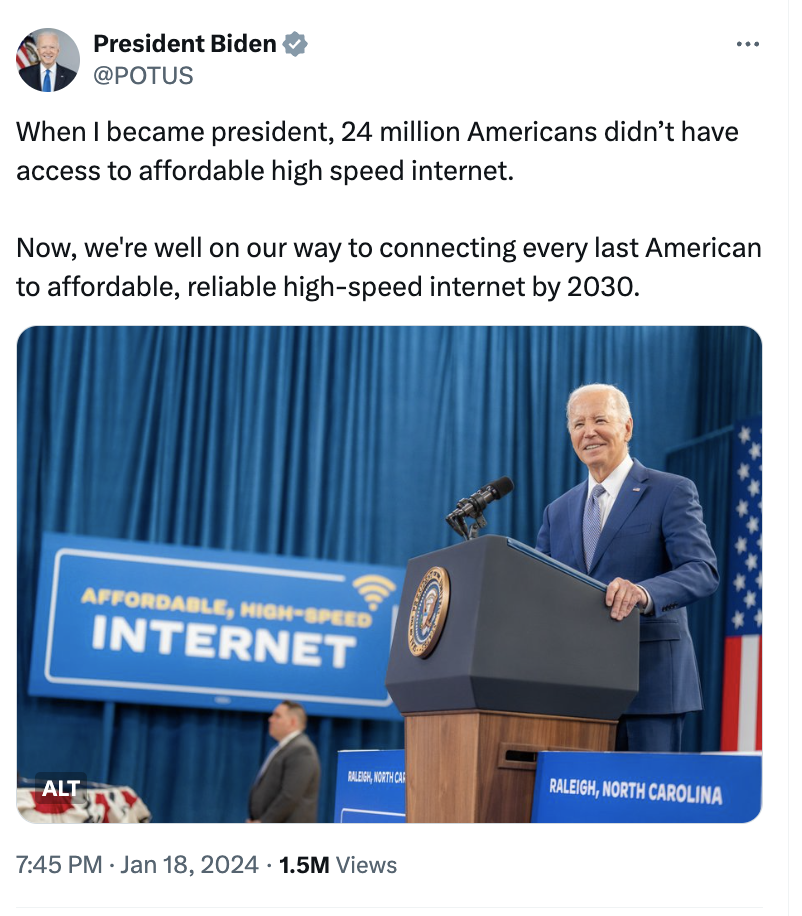
If you guessed zero, congratulations — treat yourself to a Starlink subscription

FCC Commissioner Brendan Carr has an update on what "well on our way" means at this point: 

Starlink satellites are already providing high-speed Internet service to millions of people around the globe, including Americans in rural, inaccessible areas, all without costing taxpayers a dime. But where’s the opportunity for graft in that?

Who do they think they are, global warmists?

buy lovely mansions

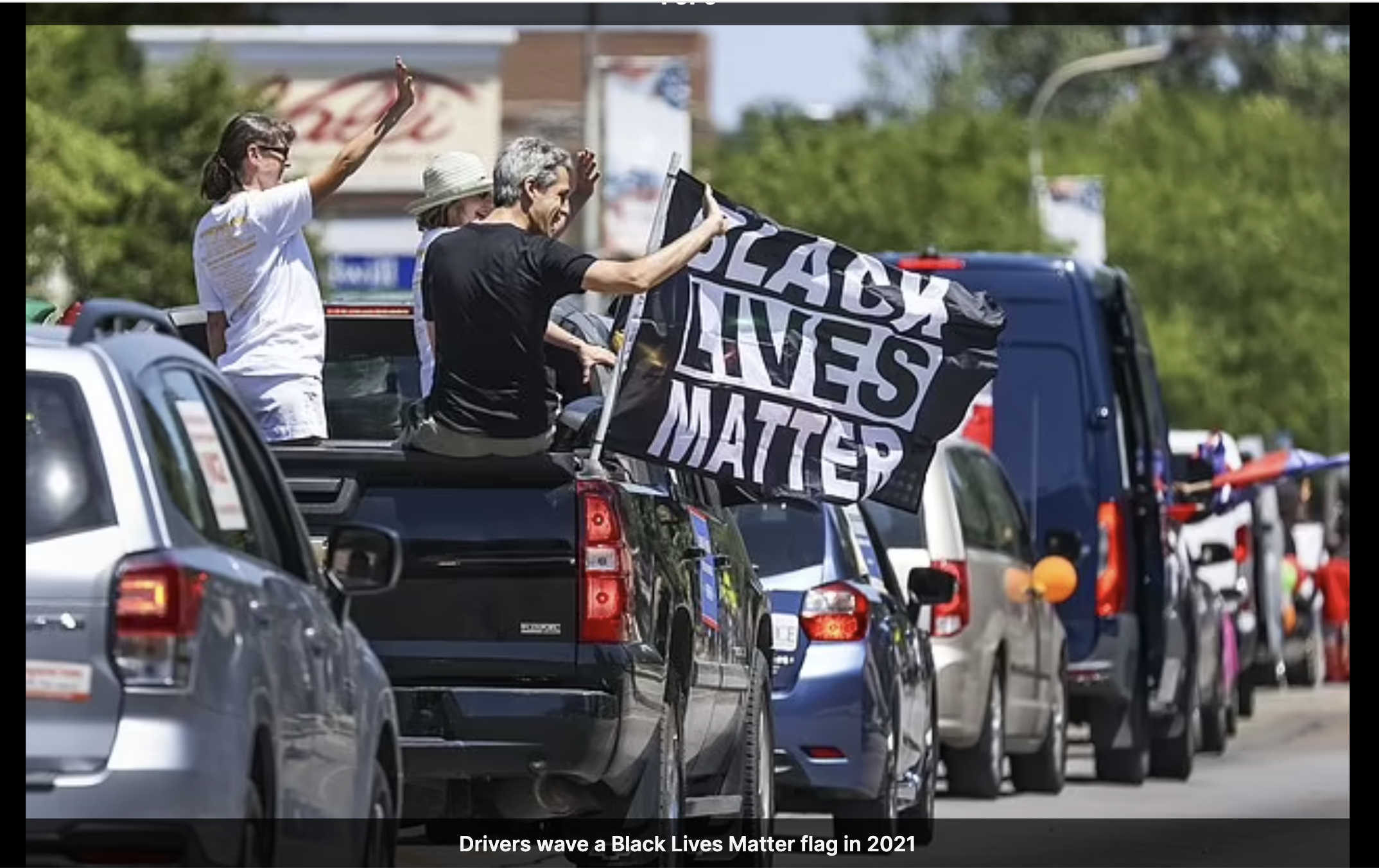
BLM’s Leaders Used Charitable Funds To Enrich Themselves And Their Families, New Documents Show

Nothing new here, but examination of the organization’s tax returns has shown that the rot extends thrpught the entire organization and is not limited to the founding trio of charlatans.

Black Lives Matter Global Network Foundation (BLMGNF) has paid out millions in contracts to insiders, newly released tax documents show.

The nation’s largest BLM organization approved lucrative contracts to firms owned by members of the organization’s leadership and their family members between July 2022 and June 2023, tax filings show. The shuffling of charitable funds to private companies owned by interested parties raises considerable ethical concerns given the lack of oversight and the possible conflicts of interest, experts told the Daily Caller News Foundation.