Public primary schools were created by states to reinforce obedience among the masses and maintain social order, rather than serve as a tool for upward social mobility, suggests a study from the University of California San Diego.
The study in the journal American Political Science Review finds historical patterns from 1828 to 2015, across many countries, of education reforms, including the rise of mandatory primary schooling itself, being implemented after instances of social unrest. The research also sheds light on the current controversy in the U.S. over teaching critical race theory.
“The key prediction of the research is that when there are periods of internal conflict, states will introduce education reform that is designed to indoctrinate people to accept the status quo,” said the study’s author Agustina S. Paglayan, a UC San Diego assistant professor with a joint appointment in the Department of Political Science/School of Social Sciences and the School of Global Policy and Strategy.
Paglayan added that while some could interpret this as evidence that states were trying to solve people’s economic woes by investing in education after violent rebellions, historical documents tell a different story.
“My research reveals violence can heighten national elites’ anxiety about the masses’ moral character and the state’s ability to maintain social order. In this context, public education systems were created and expanded to teach obedience,” Paglayan said.
A recent example in the U.S. of the government turning to education reform after encountering resistance is when former President Donald J. Trump created The 1776 Commission after the widespread Black Lives Matter protests in the summer of 2020. The commission was charged with promoting “patriotic education,” Paglayan said, to supposedly unite Americans.
While the commission was eliminated on the first day President Joseph R. Biden took office, its recommendations continue to shape education reform efforts in many states, Paglayan says, pointing to a wave of different state bills that ban public schools from teaching about systemic racism.
….
She cites a letter that Thomas Jefferson wrote to James Madison as evidence that the U.S. looked to primary schools after a period of insurrection that threatened established institutions.
“After several violent uprisings in the late 18th century, such as Shays’ Rebellion and the Whiskey Rebellion, politicians became increasingly interested in education.
Soon after Shays’ Rebellion, Thomas Jefferson wrote to James Madison relaying that it should be taught in schools that violence is an illegitimate way for citizens to express discontent and that it should be drilled into them to express it by voting,” Paglayan said.
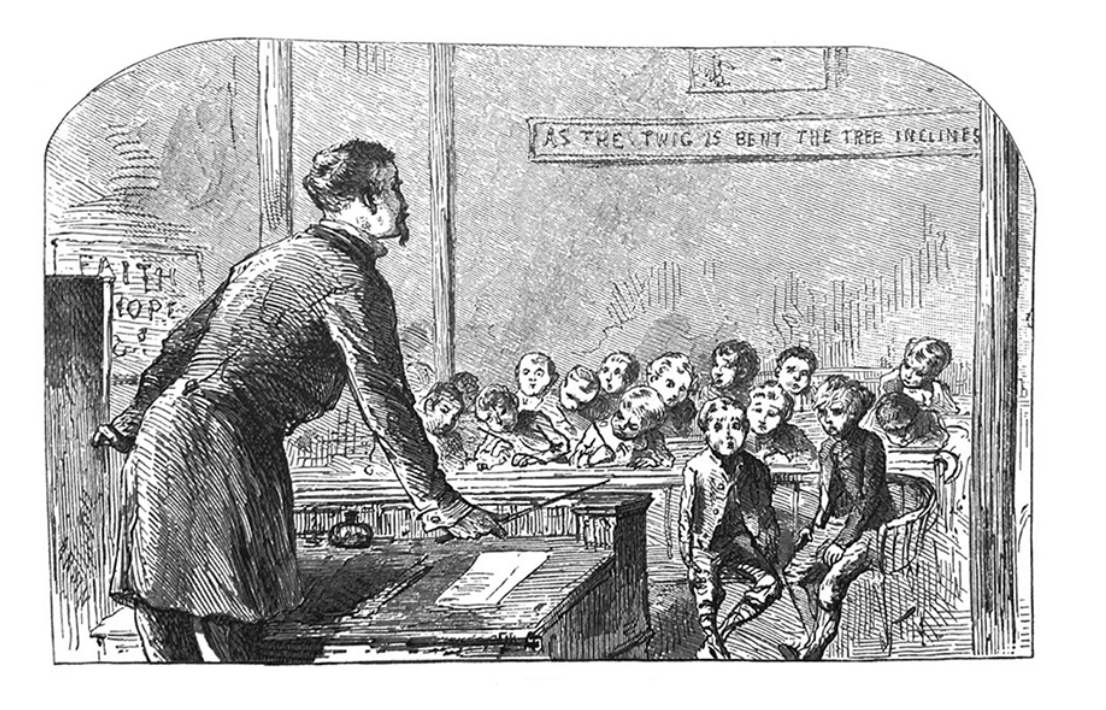
“Children are like sponges,” Paglayan said. “Politicians thought that primary schools could shape behavior by instilling fear of punishment for misbehavior, or conversely, by promoting rewards for proper behavior. The mere act of attending school every day, sitting still, not speaking out of turn and following schedules, routines and rituals, like marching in silence from classroom to breakroom, would make individuals internalize from a young age what constituted good manners and civil behavior.”