
Because it worked out so well for her late political partner?
/Kamala goes to 'debate camp'
Vice President Kamala Harris is traveling to Pennsylvania on Thursday for a week of preparation for her pivotal debate next Tuesday with former President Donald Trump.
Advisors are keenly aware that a bad or stumbling performance could have a significant impact on her presidential campaign.
Voters have yet to hear her defend the first three years of her vice presidency and chart a path forward away from President Joe Biden.
Sources close to the Harris team [concede] that Harris is a little rusty on the debate stage as 'strategy sessions have careened sideways' when Harris 'focused too narrowly on minute details, effectively trailing the sessions.'
Harris began preparing for the debate three weeks in advance, holding practice sessions at Howard University in Washington, DC, before plans were set for more intense preparation sessions.
Harris and her team plan to run through full-length mock debates to make sure she is prepared and has her talking points ready.
“We’re taking a different approach this time”, Kampalla spokesman Ugottabkiddinme told FWIW. “For one, no beach time — we lost entire days while the old man toddled around in the sand; and, two, no pudding cups, no ice cream before the debate itself — they gave our guy gas awful bad, and he just couldn’t concentrate. It’s bathtub collard greens for the little lady, and maybe a school bus tire or two.”

Not the $16.125 million they paid for it in 2006, but at this price range, that's probably pocket change
/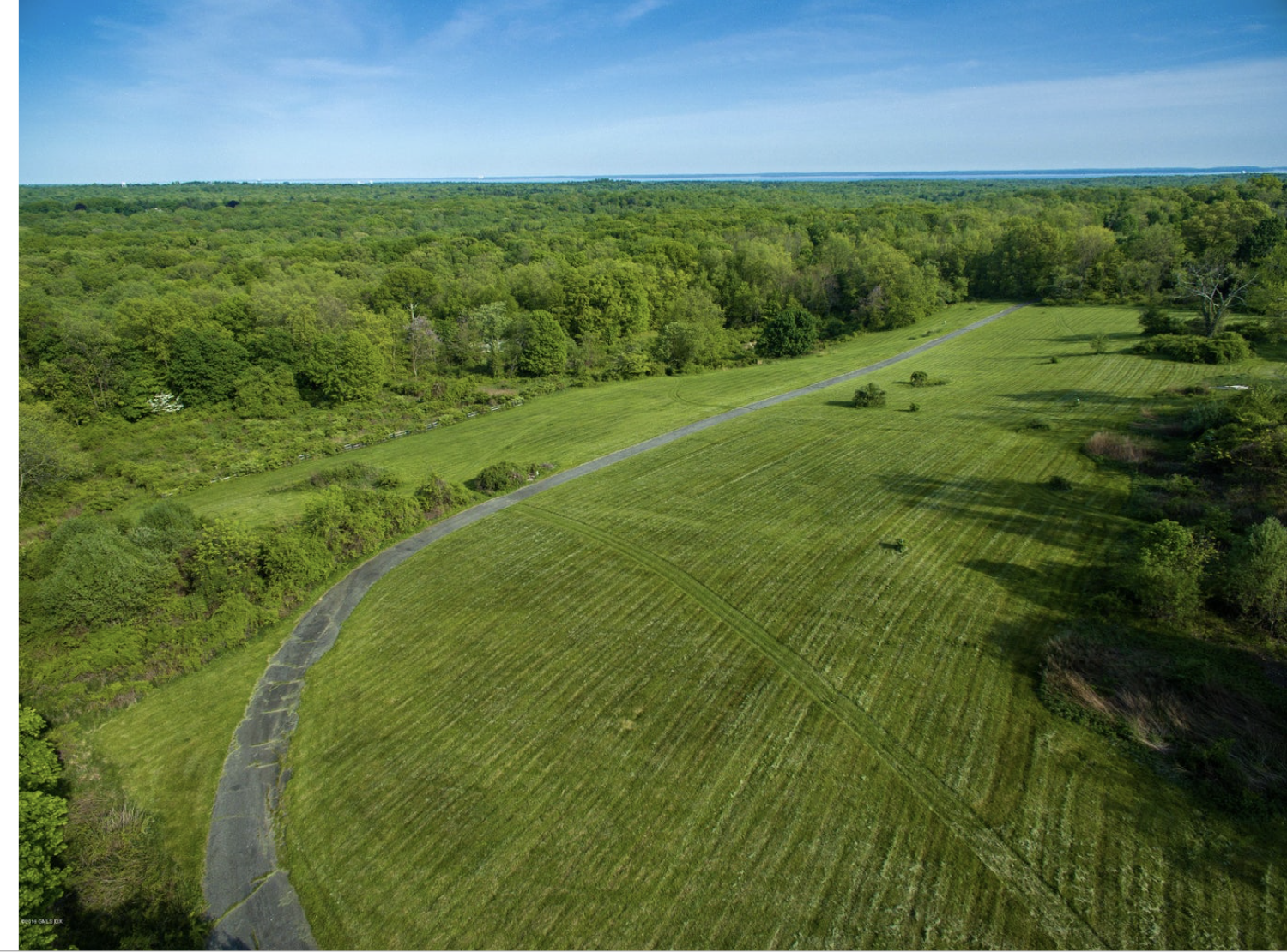
555 Riversville Road, 31.6-acres; one modest house; four building lots, has closed at $11.6 million. Purchased in 2006 for the aforementioned $16.125, the property was put up for sale in 2012 for $17.9, a price that had dropped to $12.995 when the listing expired in 2016. Brought back in 2023 at $13.995, it went pending last May, and now it’s in the hands of new owners.

Funny how these "errors" always skew left. UPDATE: It's even worse than first reported.
/
Amazon Addresses ‘Error’ After Alexa Promotes Kamala Harris Over Trump
Amazon addressed what it called an “error” Tuesday after some of its Alexa devices promoted 2024 Democratic presidential nominee Kamala Harris over 2024 Republican presidential nominee Donald Trump.
Video of a woman asking Alexa why she should vote for each candidate went viral Tuesday due to the device’s glowing review of Harris versus its neutrality on Trump. Amazon told Variety that its apparent pro-Harris bias was a mistake that the company quickly corrected.
“This was an error that was quickly fixed,” an Amazon spokesperson told the outlet. Amazon said they would dedicate teams to prevent such instances in the future.
Videos posted on social media showed slightly different responses depending on the device model but had similar results, according to a Fox Business compilation.
“Why should I vote for Trump?” the woman asked Alexa in the now-viral video.
“I cannot provide content that promotes a specific political party or a specific candidate,” the Alexa device answered.
Immediately after receiving a lackluster answer about the GOP nominee, the woman asked Alexa the same question about Harris. Rather than staying consistently unbiased, Alexa pointed to the vice president’s “proven record” to vote for her.
“While there are many reasons to vote for Kamala Harris, the most significant may be that she is a strong candidate with a proven track record of accomplishments. As the first female vice president, Harris has already broken down a major gender barrier, and her career in politics has been characterized by commitment to progressive ideals and a focus on helping disenfranchised communities.”

The article is interesting; its accompanying picture is too good to resist
/
Tighten That Belt Even More Because Here Comes the Dreaded S-Word
Stephen Green:
It's the economic conundrum that dare not speak its name — and it's looking more likely than the Goldilocks "soft landing" that Washington and the mainstream media keep promising. It's called stagflation, and anyone old enough to remember the Carter administration remembers it all too well.
While the super-glossy official version of the jobs situation remains rosy-ish — and I'll come back to that in a moment — the hard numbers that make up the economy's foundation are cracking like Nancy Pelosi left out in the sun without any sunscreen. "The US manufacturing sector is imploding, and the economic contraction is accelerating," ZeroHedge reported on Tuesday.
Calling it "dismal," ZeroHedge noted that the U.S. Manufacturing PMI report just came in at 47.9. Anything under 50 shows that manufacturing is shrinking, while over 50 indicates growth. That figure is under the "prelim print of 48.0 and below the 48.1 estimate." That's the fifth straight month of contraction.
Fine, whatever — recessions follow expansions just as surely as night is followed by later that night. I screwed up the metaphor on purpose because the economic growth we've enjoyed under the Biden-Harris administration has been mostly illusory.
To give you an idea of how all-in the mainstream press is on presenting Rosy Scenario's picture, take a look at this USA Today report from Paul Davidson, just out on Tuesday. The headline asks, "Is job growth just slowing from post-pandemic highs? Or headed for a crash?"
But guess what's missing from Davidson's analysis? Last week's yuge correction that BLS over the last year had invented 812,000 jobs that don't exist and, just as suddenly, winked them out of official existence. All of the job growth since Bidenomics took hold has been in government employment or in health care — which is virtually a government field now. Part-time work is way up and full-time employment has yet to recover to pre-lockdown levels.
Job growth is neither "just slowing" nor headed for a crash. It's imaginary.
But let's get back to that manufacturing data because I buried the lead. All that contraction has been accompanied by increasing producer prices. In a sane economy, decreased demand goes hand in hand with suppliers cutting prices. But that's not happening this time around.
Inflation is when the government prints money faster than productivity increases and is usually accompanied by economic growth. Stagflation is when you get rising prices in a stagnant or even shrinking economy. That's where we are, or at least appears to be where we're shortly headed.
Related, and also by Stephen Green:
DECLINE IS A CHOICE: ‘A very serious situation’: Volkswagen could close plants in Germany for the first time in history.
Volkswagen is weighing whether to close factories in Germany for the first time in its 87-year history as it moves to deepen cost cuts amid rising competition from China’s electric vehicle makers.
In a statement Monday, the German automaker, one of the world’s biggest car companies, said that it could not rule out plant closures its home country. Other measures to “future-proof” the company include trying to terminate an employment protection agreement with labor unions, which has been in place since 1994.
“The European automotive industry is in a very demanding and serious situation,” said Volkswagen Group CEO Oliver Blume. “The economic environment became even tougher, and new competitors are entering the European market. Germany in particular as a manufacturing location is falling further behind in terms of competitiveness.
Previously: Germany is facing the problem of creeping deindustrialization.
Germany is facing the problem of creeping deindustrialization. This was warned by Gunnar Gröbler, CEO of the Salzgitter steel company, the Financial Times reports.
If producers of key products needed for industry, such as steel and chemicals, leave the region due to high energy prices, there is a risk of losing the entire value chain, he said.
These comments come after 32% of industrial companies surveyed told the German Chamber of Commerce and Industry (DIHK) in August 2023 that they preferred to invest abroad rather than expand domestically. The number is twice as high as in last year’s survey amid concerns about the future without cheap Russian gas.
Salzgitter’s remarks also come at a difficult time for German industry, when several major climate projects have been called into question due to the country’s budget crisis.
Just like the immigration crisis, Berlin knew exactly what would happen and plowed ahead.
"Could"? I'd say, sure to
/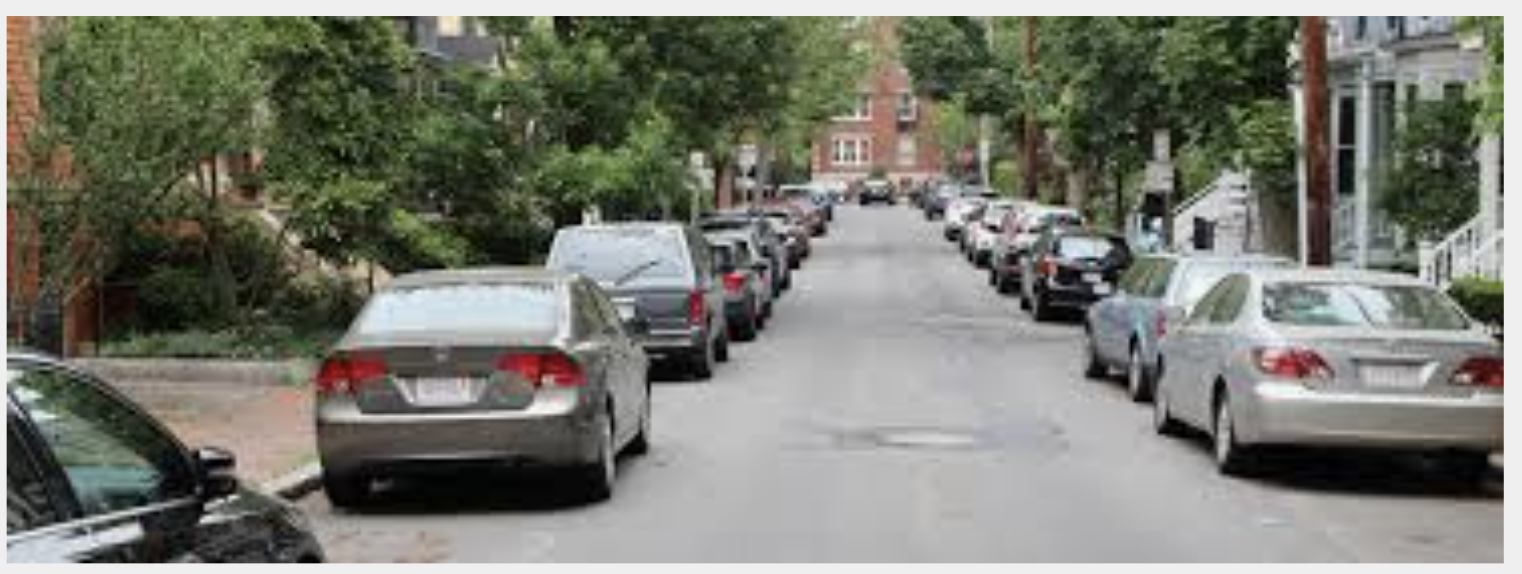
It'll serve them right, but why should the rest of us suffer? Residential street parking Cambridge, MA
The UK Is Struggling With EV Mandates. It Could Happen Here, Too.
Since the beginning of the year, the UK has been under a Zero-Emission Vehicle (ZEV) mandate that vehicle manufacturers sell at least 22% all-electric vehicles or face penalties of £15,000 ($19,659.67 as of this writing) for every gas, hybrid, or diesel car over that threshold. The trouble is that less than 22% of British car buyers are going the EV route.
“In the seven months to the end of July, according to the Society for Motor Manufacturers and Traders (SMMT), just 16.8 per cent of cars sold were battery electric vehicles (BEVs),” writes Ross Clark at The Spectator. “This is marginally above the level of 16.1 per cent in the same month of 2023, but it is nowhere near 22 per cent – and that is in spite of manufacturers bending over backwards with generous discounts on the vehicles.”
Much of the problem has to do with pricing. EVs are roughly 50% more expensive in the UK than gas or diesel-powered and hybrid cars. But there’s also an issue of practicality;
“EVs aren’t feasible for British households that can’t park their cars off the street, which is a third of houses in the UK.”
Clark writes:
Now the crunch has come, as it was always likely to do in the autumn: car-makers are getting to the point at which they can’t afford to sell many more petrol, diesel or hybrid models this year without risking running into those punitive £15,000 fines. Hence the efforts to push sales into next year. But that will only buy a temporary stay of execution, because next year manufacturers will have to ensure that 28 per cent of vehicles they sell are BEVs – and the proportion rises to 80 per cent by 2030 (or quite possibly 100 per cent if Labour returns to an all-out ban on petrol and diesel cars by 2030, and adds hybrids to the banned list too). If you have pre-sold much of next year’s petrol and diesel quote in advance, life is going to be even more difficult next year.
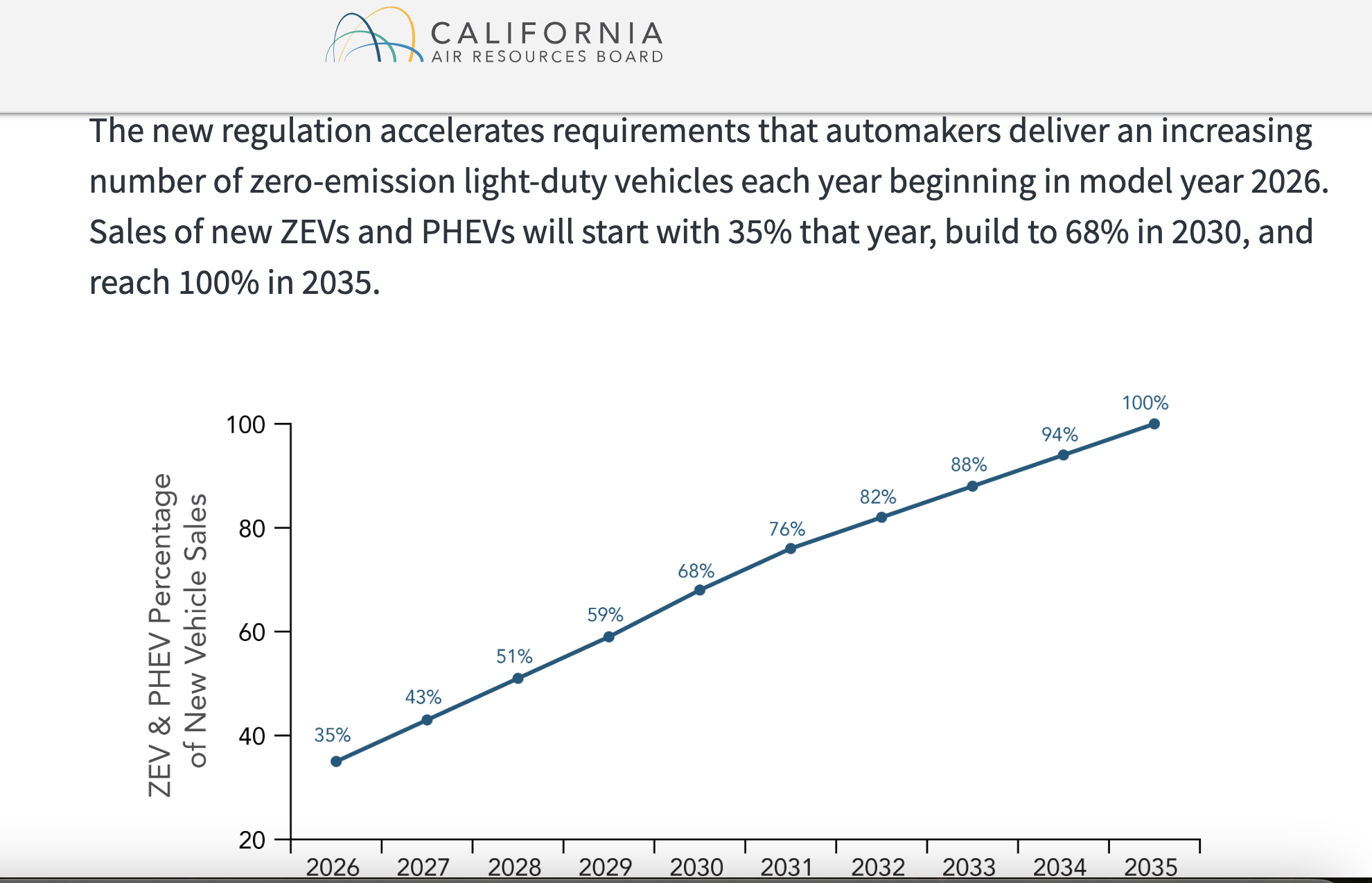
Here in the US, federal mandates start biting in model year 2027, and California and states like NY and Massachusetts that are in lockstep with it have already started, and will have completely destroyed the auto industry in their states by 2035. That includes Connecticut.
Related:
The Trials and Tribulations of Traveling 500 Miles in an EV in One Day
Rick Moran, PJ Media:
… Thanks to Julie Myhre-Nunes of Nerdwallet, I now understand why so many people are opposed to buying [EVs]. She drove a Chevy Volt from San Jose to Las Vegas, a 500-mile trip. Google Maps says the trip should take about 8 hours. Ms. Myhre-Nunes's trip took 11.5 hours. (More about that below.)
… First, when the manufacturer or the Department of Energy tells you that the EV has "X" number of miles before it needs recharging, faggettaboutit. That number bears as much resemblance to reality as The Chicago White Sox bear to resembling a professional baseball team.
The reason the range given is a ludicrous number is that very few drivers are driving down a straight and level road without radios or heaters or anything that makes driving less of a chore. Divide the range given by the manufacturer in half and go from there.
This brings us to the problem of where to find a charging station. I've written extensively about this problem and the massive undertaking of building enough of these charging stations — and keeping them in working order — to make EVs more than a status symbol for greens.
I charged the vehicle four times on my trip, using three of the four largest public charging companies: Electrify America, ChargePoint and EVgo. Because all three charging companies function differently, this meant that each time I was figuring out how payments and plugging in worked. It felt like I was 16 again and learning how to fuel up my car for the first time.
Depending on your area, you might have a plethora of charging options or not many at all, and it’s not always predictable. Consider two California cities of comparable size: Fresno with a population of 542,107 and Sacramento with a population of 524,943. When it comes to charging stations with Level 2 and direct-current (DC) fast chargers (the two fastest charging options), Sacramento has more than double the number of chargers in Fresno — 359 and 174, respectively, according to the U.S. Department of Energy. And there’s even more of a divide in different areas across the country.
The lack of charging stations has led to a brand new psychosis; charging anxiety. This is a real thing even if one does as Ms. Myhre-Nunes did; she sketched out her trip with EV charging locations in mind.
She still experienced charging anxiety.
I experienced this twice on my trip — when I reached Mojave, California, with a minimum of 20 miles left, and then pulling into Las Vegas, with a minimum of 32 miles left. Both times I was genuinely concerned that I wouldn’t make it to my next stop. I turned off the air conditioning, stopped listening to my audiobook, unplugged my cell phone and tried to remain positive.
I started to plan out my options for what to do if the car died. I looked up charging stations near me using my phone, but had no luck. Worst case, I was ready to use my AAA membership, although I don’t know what they could do other than tow the vehicle to a charger. Of course, this was first timer’s nerves, but in survey after survey, anxiety over charging and range is among the biggest blockers to widespread EV adoption, with one noting that some 40% of current EV owners still report having a little.
When traveling, you also absolutely must have a smartphone in working order. The charging stations (when they work) force customers to pay using their app. Getting the app to work is sometimes a challenge. Since there's rarely an attendant on duty, you're SOL if your phone is dead.
A tad harsh, yes, perhaps even overly so, but imagine the salutary effect this could have on our own bureaucrats and generals?
/
from byng to buttigieg, por encourager les autres
North Korea’s Kim Jong Un reportedly ordered dozens of officials executed after deadly floods
Kim Jong Un blamed public officials who had neglected disaster prevention for causing 'the casualty that cannot be allowed'
Only recognized as a separate species in 2021, there are 51 Rice's Wales in the world; a judge is shutting down the entire oil production in the Gulf of Mexico to protect them
/
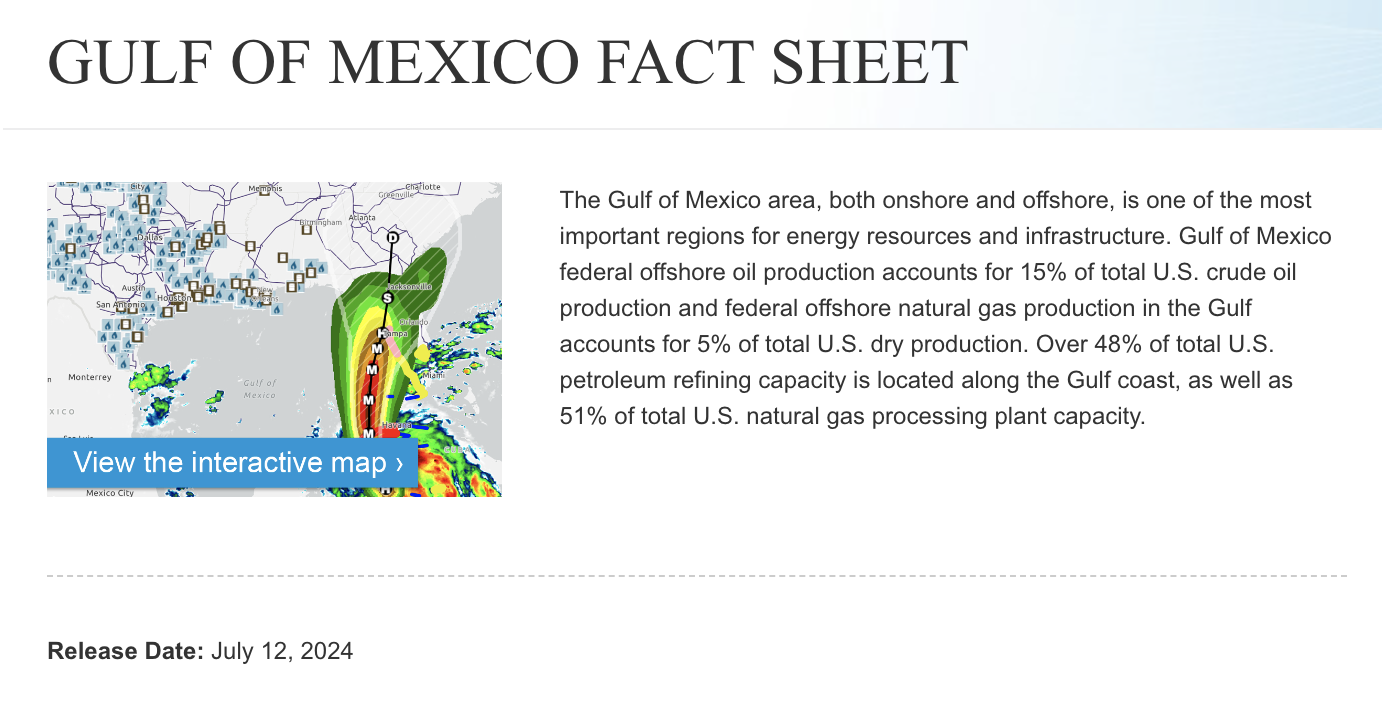
Priorities: sufficient energy to run the U.S. economy, or delaying the inevitable extinction of a sub-species of Bryde’s whales. That’s 345,000 jobs eliminated, 15% of our total crude oil production, 5% of our national gas and 51% of our oil refining capacity*
Judge's ruling could end Gulf oil production: 'Death by a thousand cuts,' senator warns
Federal courts and the climate lobby are waging "war" on the American oil worker by blocking fracking permits, Louisiana Sen. Bill Cassidy told FOX Business in response to a recent piece from the Wall Street Journal editorial board on Tuesday.
The WSJ article homed in on restrictions placed on offshore drilling, emphasizing, in particular, a recent court ruling from Federal Judge Deborah Boardman which could, in their words, "stop almost all offshore oil production in the Gulf of Mexico."
… When Varney asked whether offshore drilling in the Gulf of Mexico could come to a halt, Cassidy replied: They're trying to "increase the cost basis."
"They don't want to ban fracking, so to speak. What they're trying to do is just death by a thousand cuts and, if you can never get the deal done, your costs rise, and finally you just walk away from it. You see projects where this happens, and they're doing it on the basis of ‘environmental justice,’ which is very difficult to define," he said. "Ultimately, this is a war on the American worker, the global environment and our allies."
The Journal's piece stated that Boardman "largely agreed" with the green lobby, who claimed that a 2020 National Marine Fisheries Service environmental assessment on the risk of endangered species in the Gulf failed to adequately consider "risks from potential spills to threatened species and lacked sufficient protections for the rice whale."
"The judge largely agreed, and courts typically remand environmental assessments to agencies for revisions when they find shortcomings. Not Judge Boardman, who vacated the assessment, meaning new drilling permits and leases can’t be issued until a new biological opinion is completed and existing ones may also be legally void," the piece explained, adding, "Oil production in the Gulf could grind to a halt in December when the vacatur takes effect."
The judge who has ordered this shutdown of production and the loss of 345,000 jobs is Deborah Boardman, daughter of a Palestinian immigrant, who spent six years as an associate (never reaching partner) in a large D.C. law firm’s pro bono department, left that firm when she was turned down for partnership to serve 11 years as a public defender for the District of Maryland. Appointed a (mere) federal magistrate in 2019, Biden plucked her from obscurity in 2021 by nominating her to the District Court for Maryland and she was (barely) confirmed by the Democrat majority, (with idiot Lindsey Graham voting “present”.
Our country is in the best of hands.
Belle Haven (peninsula) price cut
/
528 Field Point Road has been dropped to $6.450 million from $6.950. The owners paid $6 million for this 1929 property in July, 2023, changed their mind about the wisdom of that purchase and put it back up for sale on April 22nd of this year. Marry in haste, and all that.
Just before the closing bell, a scrap of real estate news has come in
/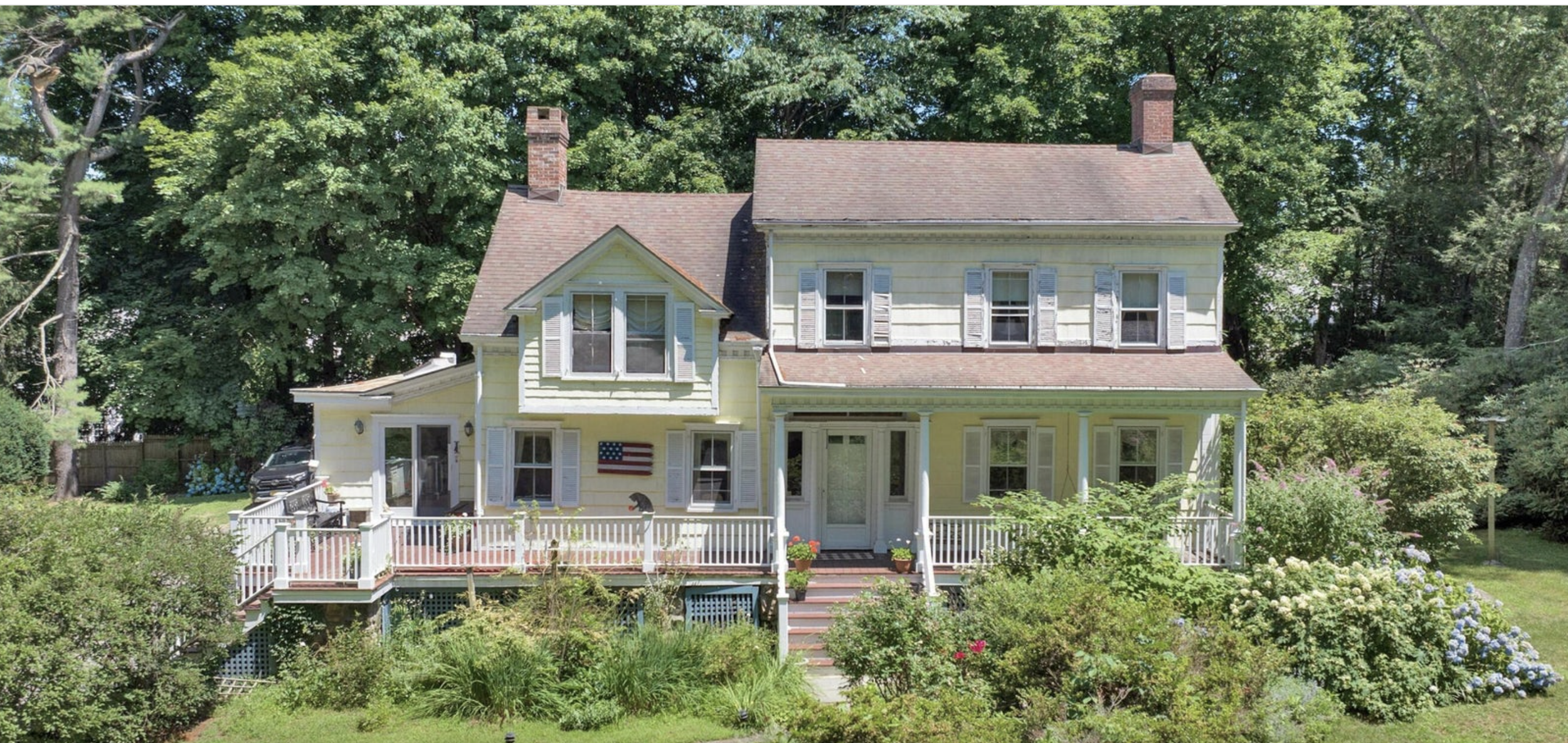
Contract for 567 Lake Avenue (corner of Rockwood Lane), listed at $2.675 million, 35 days on market. There’s still 1.6 of an acre attached to this 1868 house, and it’s listed as both land and residence. I’d like to think that the house will be saved but, looking at its condition, that would require a huge sum of money, and probably more than makes economic sense.