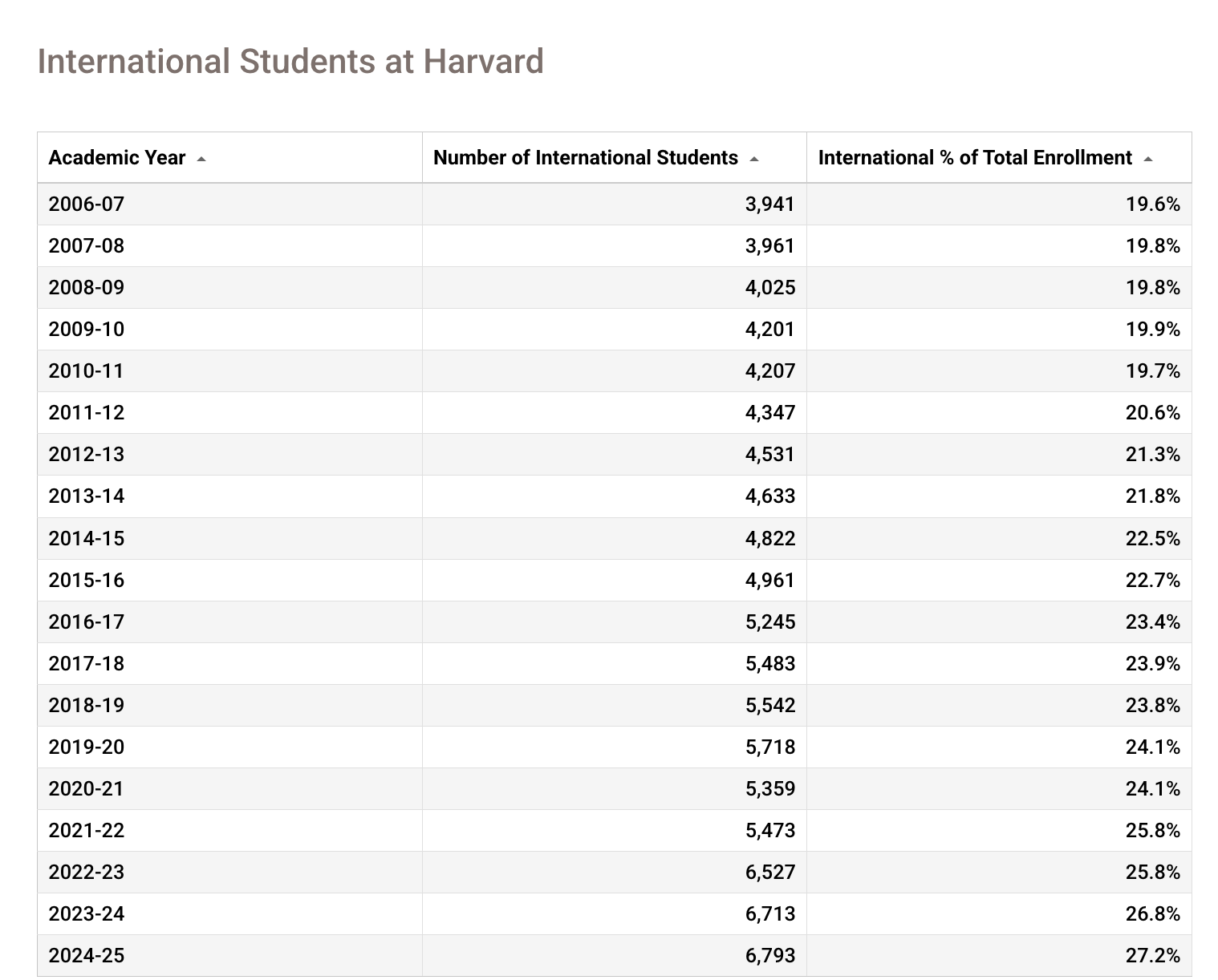
There are currently 1.1 million foreign students at U.S. colleges and universities, and because the majority of those students come from wealthy families that can pay full-freight+ tuition, they are beloved and cherished cash cows for those institutions.
Here’s how Google’s AI answered the prompt, “do colleges charge foreign students full tuition?” . I trust this particular response because (a) it provides links to the supporting facts, and (b) it’s exactly what I’ve read for years.
Yes, in most cases, colleges in the US charge international students the full cost of tuition and fees, often including extra fees for support services and government-required tracking. Public universities typically charge international students out-of-state tuition, which is usually higher than in-state tuition. Private universities generally have the same tuition for all students, but international students may not qualify for the same need-based financial aid as domestic students.
Here's a more detailed breakdown:
Public Universities:
International students at public universities are usually charged out-of-state tuition rates, which can be significantly higher than in-state tuition.
Private Universities:
While private universities often have a flat tuition rate for all students, international students may not be eligible for the same need-based financial aid as domestic students.
Additional Fees:
Some colleges charge additional fees to international students to cover expenses like student programming, support services, and government-required tracking.
Financial Aid:
While international students may be able to qualify for scholarships or grants, they generally do not qualify for the same need-based financial aid as domestic students, which is often tied to federal and state funding.
Exceptions:
Some public universities and private colleges offer full-ride scholarships or other forms of financial assistance to international students, but these are not the norm.