Che GueMurphy speaks


He said the ideas that folks like he and Bernie are suggesting aren't "that fundamentally radical" but they are trying to "return us to a world in which we had a little bit higher level of commitment to each other."

"Don't be afraid of it because the world we are looking to build is one that is not going to be super unfamiliar to you" (Not if you’ve studied the history of communist regimes, no)

Murphy Claims Socialism Isn't Radical, Trump's Movement Rooted In "False, Perverse, Misogynist, Racist Nostalgia"...

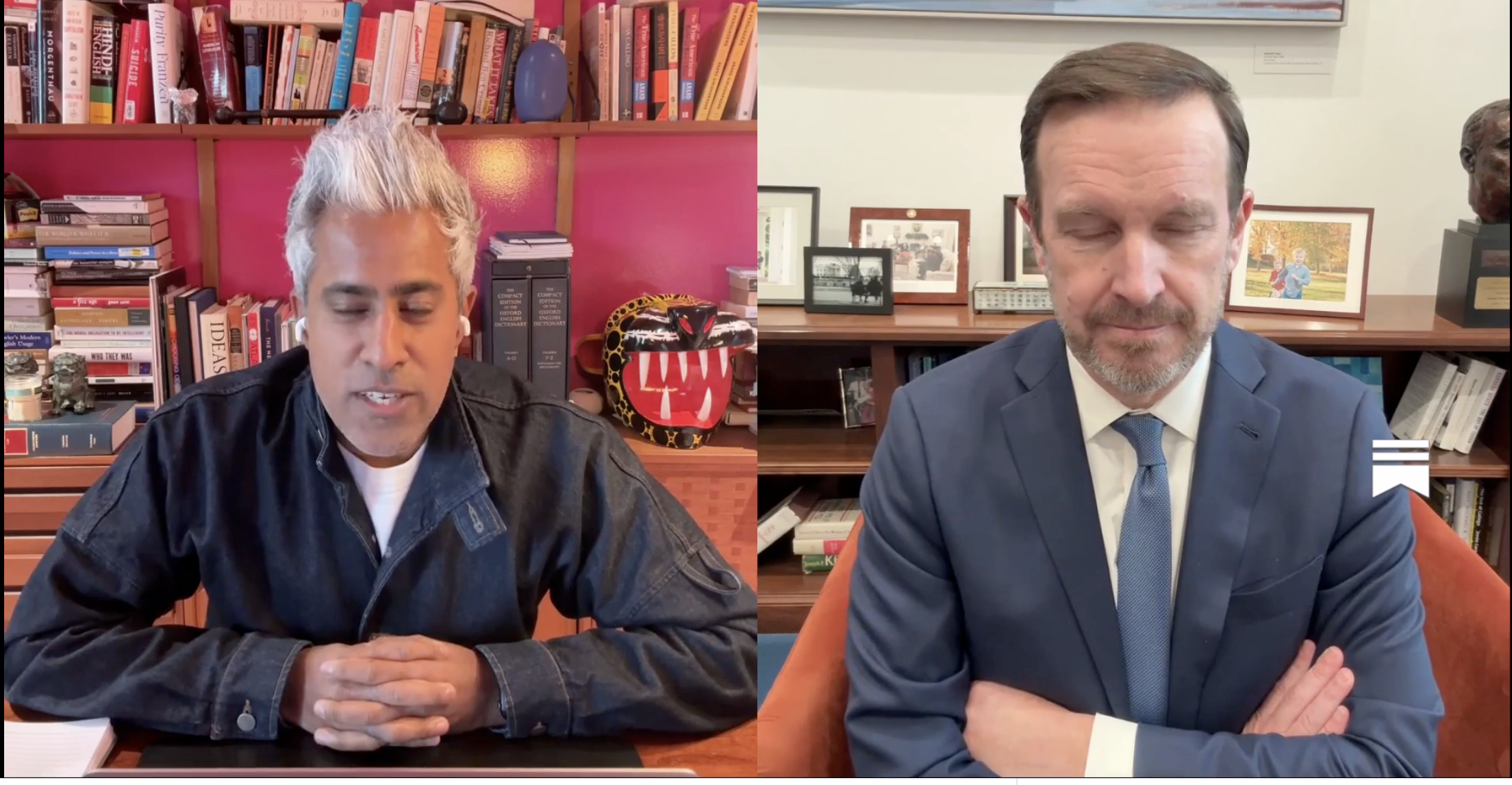
Sen. Chris Murphy joined Anand Giridharadas on his October 29 podcast to talk about "fighting the authoritarian takeover, remaking the Democratic Party, and how you, today, can cure the disease that led to Trumpism."

According to Giridharadas, Murphy is one of the clearest, loudest and most unafraid voices against Trump.

Giridharadas wanted to get some insight from Murphy on what reflecting has been done by Democrats in the nearly one year since Trump won. 

"I think many people were not ready for how dizzying the campaign of destruction was going to be," said Murphy. "Trump and his crowd, they were ready this time, and from day one they began to unwind our democracy."

Murphy couldn't explain why no one on the democrat side has otherwise taken stock of what went wrong for them. He complained that corporate America just joined Trump, and blamed the media for not doing any "stock-taking."

"But inside the democratic party... there are some interesting sort of strains of thought, but I would say that almost all of the energy has been spent on trying to figure out how to engage in conventional resistance and we are still stuck as a party that is probably still unelectable in broad swaths of the country, as you know," said Murphy who has his own take on how to address the Democrat Party's "electability problem."

"My view, which is I think kind of the view of people like Bernie and Elizabeth and Mamdani, has not taken root as the conventional mainstream view," said Murphy. "I think most people just want to run back the same version of the democratic party that has gotten our clock cleaned in election after election."

Giridharadas pointed out that Bernie Sanders, Elizabeth Warren and Zohran Mamdani scare certain kinds of people -- like those who fear socialism -- and asked Murphy to explain why they shouldn't be afraid of those "ideas". 

…. He said the ideas that folks like he and Bernie are suggesting aren't "that fundamentally radical" but they are trying to "return us to a world in which we had a little bit higher level of commitment to each other."

"Don't be afraid of it because the world we are looking to build is one that is not going to be super unfamiliar to you," Murphy promised.

…. Murphy said Trump is just a symptom of an underlying disease -- "a country that is having trouble finding connection to purpose and to meaning" -- and just beating Trump won't be enough to fix that. 

Murphy doesn't want his party to put its "thumbs on the scales against candidates who have really big ideas for how you deconstruct concentrated power in this country"... a comment he made in reference to Graham Platner, the democrat candidate in Maine who identifies as a communist and has a Nazi tattoo.

Giridharadas asked if it was possible to have more candidates like that -- in a scaled and systematic way -- without having to first change leadership in the Democrat party.

Murphy assumed the question was about Chuck Schumer whom Murphy says has "got a fucking hard job because this caucus is pretty diverse." Plus, Murphy said there aren't enough Democrats willing to take risks and "live outside the sort of conventional boundaries of politics at a moment of real peril like this."

Then Murphy said he wants to make sure that Democrats "do not sign onto a budget that funds a corrupt Department of Justice, a corrupt Department of Homeland Security, a corrupt FCC."

He further suggested we are in the "middle of the authoritarian takeover" and anyone not willing to stand up to the authoritarians should just step aside right now.
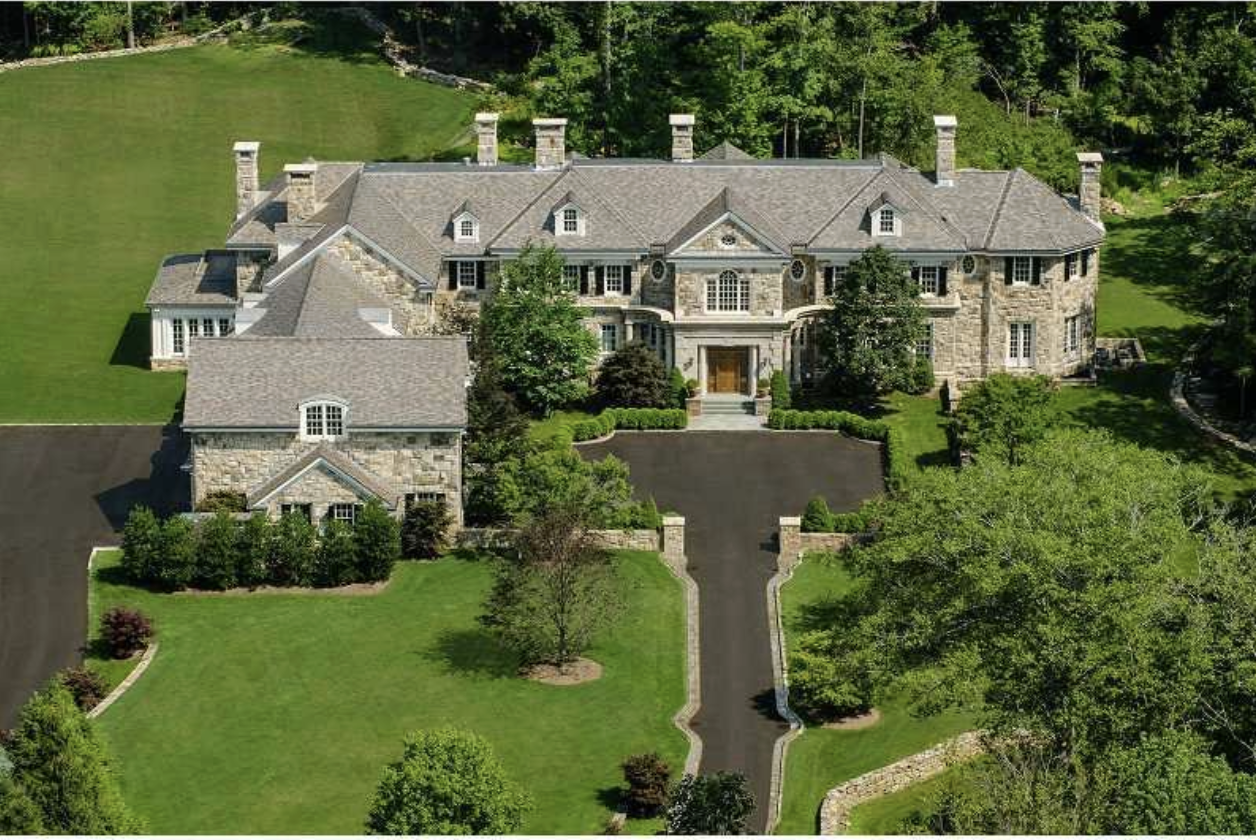

Probably not as much as they'd hoped but hey; they're rid of this troublesome house

11 Langhorne Lane, a hangover from the collapsed Antares real estate (cardboard) empire, has sold for $17,370,000, on an asking price of $19.950 million. 26,500 sq. ft., 8.9-acres. The buyer’s from West Palm Beach and no doubt intends to use it as summer weekend getaway cottage.

Antares built this monstrosity of a spec house during the last real estate bubble and tried selling it in 2007 for $25 million, then $28 million, then went bust and unloaded it, unfinished and “as is”, for $13.750 in 2008. That buyer initially tried to resell it a year later for $14.5 but gave up the effort in 2010 and fixed it up, sort of, and attempted to get $27.5 million in 2011 on a promise to finish the construction. He didn’t, so far as I know, but he accomplished enough that these sellers were willing to pay $17 for it in 2014.

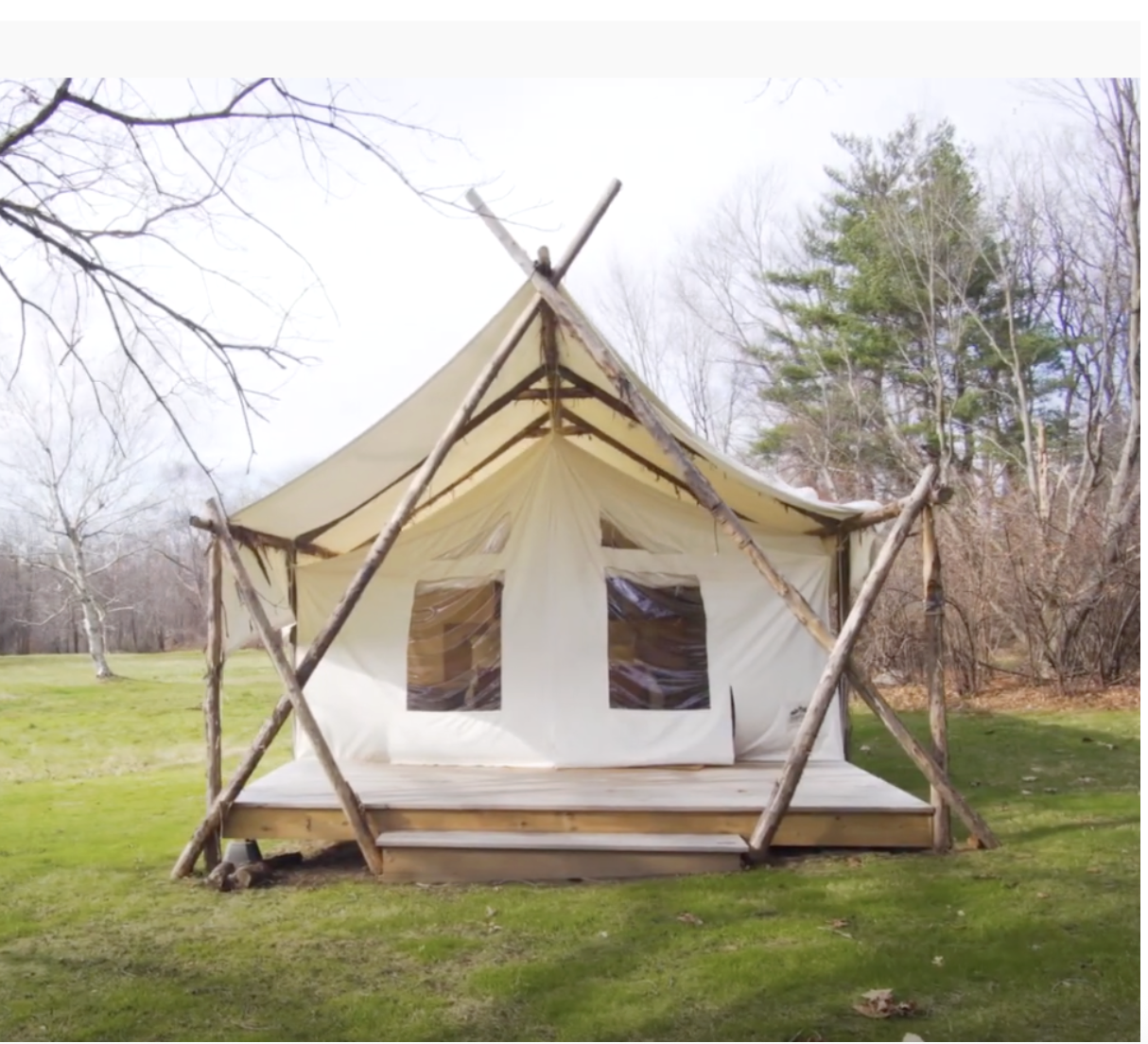
Why can't we erect this kind of camp on the grounds of John Cooper's Rock Ridge estate?

Rock Ridge putting green

Not to single out John, of course; there are many other suitable sites for hobo camps, including David Rafferty’s Riverside manse, and Christ Church’s front lawn. Where there’s a liberal, there ought to be a way(farer)

Advocates call for heat at tiny home encampment in New Haven

City officials cut off electricity and heat to Rosette Village, citing zoning and building code violations

Advocates at a New Haven homeless encampment of tents and tiny houses, known as Rosette Village, are asking elected officials to do more to help them work through government regulations to get their heat turned on before the weather gets colder this winter.

Local officials had cut off electricity, which powers heating in the encampment, citing zoning and building code violations. 

The encampment is situated in the backyard of a house on Rosette Street in New Haven’s Hill neighborhood. The village’s organizers, Mark Colville and his wife Luz Catarineau, live in the house. It’s similar in concept to other communities that have been created around the country, including one called Dignity Village in Portland.

Cheer up, John — that’s not a jukked-up junkie wino pissing on your kitchen floor, it’s just a new neighbor you hadn’t met yet, until just now.

“The idea is to shift the culture around homelessness and think of unhoused people as neighbors rather than problems to be dealt with”, Colville said.

But the program has come into conflict with the city. 

When Rosette Village installed the tiny homes in October 2023, they did so without building permits. City officials said they were violating regulations and cut off electricity to the development in 2023.

The village has since gotten easements from the city Board of Zoning and Appeals, but it then ran into conflict with the state building code. That code requires that dwellings have kitchens and bathrooms. The tiny homes have neither. Residents use the kitchen and bathroom inside Colville and Catarineau’s house, said Colleen Shaddox, a volunteer with the organization.

Advocates pointed out that many college students live in dorms, which also require residents to walk a few yards to use a bathroom or the kitchen. 

…. Lenny Speiller, a spokesperson for the city, said the state Department of Administrative Services and Building Inspector have said the structures don’t meet minimum safety requirements including structural strength for wind and slow loads, fire resistance rated walls and sanitary provisions. The homes were issued permits in summer 2024 as temporary structures, which are only supposed to be up for 180 days, Speiller added.

On Monday, progressive members of the state legislature spoke at a press conference with the Rosette Village Neighborhood Collective. State Reps. Josh Elliott and Laurie Sweet, both Democrats from Hamden, said they want to pass legislation that makes it easier to replicate the model of addressing homelessness used at the encampment and introduce other protections for the unhoused population.

Rev. Gini King of the First Congregational Church of Guilford said her church wants to see the power turned back on. The congregation has helped support the village for years.” [the huts went up in October ‘23, so … 2 years?]

“Our faith calls us to justice, and having electricity turned off was not justice. It was a betrayal of justice,” King said.

During this year’s legislative session, state lawmakers proposed bills that would have allowed temporary tiny homes on property owned by places of worship and keep police from arresting people for sleeping outside. Both passed committee but weren’t called for votes on the House or Senate floors.

“I worry that we missed the opportunity to change laws for Rosette Village,” Sweet said. She is vice-chair of the newly formed Homelessness Caucus.

She said when the legislature reconvenes next year, she wants to address arrests for people sleeping outside, which has become a nationwide issue following a U.S. Supreme Court decision last summer. She also wants to look into ways state building code can be adjusted to allow housing like Rosette Village.

“We need to create and pass bills to change state statues so that neighborhoods like Rosette Village can have heat in the winter and continue to provide dignified housing year round,” Sweet said. 

Anyone checked out Greenwich Country Club’s 165 acres? There’s bound to be room for, what, 70 shacks? 100? Look for a strong letter to Greenwich Free Press’s editor from Cooper or Rafferty or both in support of just such a project, “but not in my backyard, please.”

I missed this sale last month

188 Rogues Hill sold on October 11 for $ 11.250 million, a slight premium over its last asking price of $10.995, and not so awfully far from its 2006 purchase price of $14.650 million. That buyer almost immediately regretted his purchase and has been trying to undo it since 2008. Now he has.

I wrote about this property back in January of this year when, after a contract had fallen through the previous April, it was brought back on at $12 million:

After 14 years on the market, 6 brokers, and 4,312 (aprox) price changes, it's back, seemingly stronger than ever

188 Round Hill Road, 11 acres on the corner of Rogues Hill and Walter Noel Memorial Highway, is back after a brief hiatus and is now asking $12 million. Purchased for $14.650 on 2006, it’s been on the market since 2008, beginning at $18 million, dropping as low as $8.750 in October 2019 and now, as noted, it’s back up to $12.

It’s nice land, and even has a residence on it, so it must be worth something; maybe we’ll find out what that something is this year.

"No, no no; not weakened, our appeal has just become 'more selective'"

Maine’s totenknopf senatorial candidate Graham Platner says controversies have ‘strengthened’ his campaign

The self-avowed communist, man of the people, who has previously described rural Mainers — his future constituents, he hopes — as dumb white racists, and wears (or wore, until two weeks ago) an SS death head tattoo on his chest, says he’s not worried about today’s primary contest.

Maine Senate candidate Graham Platner said a string of controversies have only “strengthened” his campaign.

Platner’s comments to NBC News come on the heels of the resignations of his national finance director Ronald Holmes III and his campaign manager and longtime friend Kevin Brown last week [and on October 17th, that of the campaign’s political director Genevieve McDonald]. Holmes said he resigned Friday because he feels his “professional standards” are “no longer fully aligned with those” of Platner’s campaign. Brown resigned days into his role after learning he has a baby on the way.

“It is amusing for me to watch the campaign described in the media as collapsing or falling apart — when internally, we frankly have not felt this strong since the beginning,” Platner told NBC News. “It hasn’t sunk my campaign. In fact it seems, in many ways, it’s strengthened us.”

The insurgent Democrat’s bid to take on Republican U.S. Sen. Susan Collins in 2026 has been beset with controversy over the past three weeks.

Last month, a video of Platner surfaced showing him with a tattoo depicting a skull superimposed over crossbones, similar to the Totenkopf symbol adopted by the Nazi SS during World War II. 

Platner, a 41-year-old oyster farmer from Sullivan, denies knowing that his tattoo was a Nazi symbol. He has said he got the tattoo in 2007 while deployed abroad with the U.S. Marines. While on leave, Platner and other Marines went to Croatia, where they got “very inebriated” and decided to get tattoos. He said that they all picked “terrifying” designs off the wall.

Platner has further denied allegations from Genevieve McDonald, a former state representative who resigned as his campaign’s political director, that he knew the tattoo was problematic weeks ago. He told The Associated Press that he has covered the tattoo.

Before that, his campaign was contending with the fallout from numerous deleted Reddit posts in which Platner asked why Black people “don’t tip” and suggesting that women concerned about rape not drink around certain people, among others.

Then, on Oct. 22, Platner confirmed to The Advocate that he was the author of a number of Reddit posts featuring homophobic slurs, anti-LGBTQ+ jokes and sexually explicit stories denigrating gay men.

He called the posts “indefensible,” according to The Advocate.

And then proceeded to try to defend them.

If Graham is sent packing after April’s primary, he can always go home, grab a handle of vodka and watch “This is Spinal Tap”

Fortunately, Graham will always have his inclusion in New York Magazine’s (they’re still around?) cover story on “25 Young(ish) Democrats to Watch” to console him, and remind him of better days.


Ha.

It's a shame NY doesn't have ranked-choice voting

NYC election eve poll predicts Zohran Mamdani, Andrew Cuomo mayoral race will come down to wire

43.9% - 39.4%, Commie v Cuomo.

If the voters who really, really hate to see a slimy bastard like Andrew Cuomo return to power, but know that it’d be insane to hand the city over to Mamdani could cast a protest vote for Sliwa and “second choice” Cuomo, it’d be back to his mommy'‘s house for our Ugandan from Hell.

They have your kids, their minds, and your money

Public school districts coast to coast adopting radical curriculum from org named for 60s radical

Zinn Education Project boasts 176,000 teachers have downloaded more than 765,000 lessons for students from pre-K to grade 12

Public schools across the country are directing teachers to use curriculum resources from a nonprofit that teaches American history through the lens of racial and sexual oppression.

The Zinn Education Project (ZEP), named for the late radical 1960s professor Howard Zinn, pushes controversial resources and lesson plans to teachers for students as young as pre-K, all the way up to grade 12.

ZEP boasts that its curriculum has been adopted by more than 176,000 teachers, who have downloaded more than 765,000 lessons for their students, according to its website. The organization hosts a Teach Truth Day of Action annually, which is co-sponsored by the NEA, America's largest teachers union, and other organizations.

Zinn, who died in 2010, taught at Boston University from the early 1960s until his retirement in 1988. He was the author of "A People’s History of the United States," a book that teaches American history, beginning with Christopher Columbus' discovery of North America and into the 21st century, through a lens of racial and sexual oppression. The principles in his book serve as the benchmark for ZEP's lessons.

[FWIW: [From A People’s History of America introduction:

"The pretense is that there really is such a thing as ‘the United States, subject to conflicts and quarrels, but fundamentally a community of people with common interests. It is as if there really is a ‘national interest’ represented in the Constitution, in territorial expansion, in the laws passed by Congress, the decisions of the courts, the development of capitalism, the culture of education and the mass media.”

…. My viewpoint, in telling the history of the United States, is different: that we must not accept the memory of the states as our own. Nations are not communities and never have been. The history of any country, presented as the history of a family, conceals fierce conflicts of interest … between conquerors and conquered, masters and slaves, capitalists and workers, dominators and dominated in race and sex. And in such a world of conflict, a world of victims and executioners, it is the job of thinking people, as Albert Camus suggested, not to be on the side of the executioners.”

[Now back to your regularly scheduled programming — Ed]

In 2003, Zinn described himself as, "Something of an anarchist, something of a socialist. Maybe a democratic socialist."

New York City Public Schools, the largest school district in the country, encourages teachers to use ZEP resources to teach during Black History Month, Women’s History Month, Disability Pride Month and Pride Month.

"The Zinn Education Project also has compiled lesson ideas and relevant primary sources into a resource called 'Teaching with Seizing Freedom' that educators can use in their classrooms alongside the podcast," a Black History resources page on the school system's website says.

The "Teaching with Seizing Freedom" podcast is described by ZEP as "an ideal resource to introduce students to the imaginative, defiant ways that Black people sought and enacted freedom throughout U.S. history — and brings to life voices that are often muted in textbooks."

For Disability Pride Month, the school system directs teachers to ZEP resources that include an article titled, "10 Quick Ways to Analyze Children’s Books for Ableism."

In the Chicago Public Schools system, a page called "Equity Tools," alongside other social justice resources from other organizations, like "Implicit Bias and Structural Racialization" from the National Equity Project, ZEP is mentioned as a resource. The public school system links to the ZEP homepage.

Similarly, Portland Public Schools in Oregon directs teachers and students to ZEP for resources on Black History Month. The ZEP site has 328 webpages of resources for teaching Black History Month.

A summary on the ZEP page on Black History Month recommends a book called "The Real Ebonics Debate: Power, Language, and the Education of African-American Children." That book summary describes ebonics as "the distinctive language of many African-American children," and emphasizes urgency for teachers to learn to engage with discussions about ebonics.

…. ZEP's website is full of colorful testimonials from teachers around the country, including Sarah Giddings, identified as a middle school social studies teacher from Mesa, Arizona. Giddings used ZEP resources to teach her students about climate change.

"The culminating activity involved having my students participate in a mock trial based on Bill Bigelow’s role play activity ‘Who’s to Blame for the Climate Crisis?'" Giddings' testimonial says. "By this point of our study, my students were emotionally and intellectually ‘invested’ and were genuinely curious as to what or who is responsible for the environmental crisis."

"I’ve used the Zinn Education Project’s materials since my first year teaching," says a testimonial from Corey Wincester, described as a high school history teacher from Evanston, Ill.

"Nine years later, my students can speak to the power of deconstructing the narratives of Christopher Columbus and Abraham Lincoln’s efforts that have replicated white supremacy and marginalization of people of color in historical discourse.

None of the school districts mentioned returned a request for comment.

Here’s the Zinn homepage. And lest you think this deconstruction of America is restricted to public schools, I offer this: Many years ago, I used to stop at the Putnam Avenue Starbucks for a 7:00 AM coffee to go. There was always a line at that time and, because of similar schedules, often the same people. Over months, I came to converse with many of the same people and struck up a casual aquaintance with several of them. One was a very nice younger man who, he told me, taught history at Rye Country Day, “and my favorite resource, the one I primarily teach from, is Howard Zinn’s ‘A People’s History f the United States” — these kids minds are just blown away.” I don’t think he meant that literally, but it was a powerful, and apt, metaphor.

Further reading, if curious, on the scope of the penetration of Zinn and a critique of the work itself can be found in, of all places, an article published by the AFT in 2013: “Undue Certainty” I’m morally certain that, as much as the author softpedals his (scathing) analysis, the vast majority of Randi Weingarteners would like to see him hanged.

Pending up on Rogues Hill

331 Round Hill Road, priced at $4.350 million last June, is now reported pending. The previous owners of this 1758 home tried for $4.1 million between 2010 and 2013 before selling it to these sellers for $1.9 in February of that year. It’s been renovated since, and although a first attempt to resell in 2023 for $3.995 failed, it was brought back, as noted, this past June with better luck.