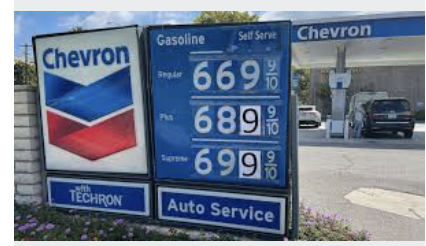
Here’s a truncated synopses of why gas prices are so high in California, taken from Valero Oil’s vice president for state government affairs, Scott Folwarkow, in his response to an inquiry from the California Energy Commission two years ago.
As to separation between California prices and the prices in the rest of the United States, we can offer the following information. For Valero, California is the most expensive operating environment in the country and a very hostile regulatory environment for refining. California policy makers have knowingly adopted policies with the expressed intent of eliminating the refinery sector. California requires refiners to pay very high carbon cap and trade fees and burdened gasoline with cost of the low carbon fuel standards.With the backdrop of these policies, not surprisingly, California has seen refineries completely close or shut down major units. When you shut down refinery operations, you limit the resilience of the supply chain.
Valero, by the way, is closing its last refinery in the state on December 31st. There were 40 california refineries in 1985, 23 in 2000, and there will be under 6 left by the end of 2026.
And wait until we witness the results of the accelerating Jet Fuel crisis
Key Takeaways
1 California’s declining oil production and refinery closures, caused by the state’s energy policies, could create an “aviation fuel crisis” by increasing dependence on imported aviation fuel, thereby threatening national security.
2 Several U.S. military installations, including Travis Air Force Base and Naval Air Weapons Station China Lake, rely almost entirely on California refineries for their jet fuel.
3 According to the Energy Information Administration, California ranks first in jet fuel demand among the states.
4 In 1991, California had more than 40 refineries, but only eight remain as of October 2025.
5 Refiners find that they cannot survive in California with Governor Newsom’s policies against oil companies and their oil and gasoline production.
6 California’s gas taxes, boutique fuel blends, and other requirements add about $1.60 per gallon to the national average price of gasoline.
California’s declining oil production and refinery closures, caused by the state’s energy policies, could create an “aviation fuel crisis.” An increasing dependence on imported aviation fuel could threaten national security. Several U.S. military installations, including Travis Air Force Base and Naval Air Weapons Station China Lake, rely almost entirely on California refineries for their jet fuel.
According to the Energy Information Administration, California ranks first in jet fuel demand among the states. Via AVWeb, California imports approximately one million barrels of oil per day, with about 20% of its jet fuel, gasoline, and diesel coming from India. India has been obtaining about 40% of its oil from Russia, though it is winding down those imports due to additional sanctions on Russia for its invasion of Ukraine and Trump’s 50% tariffs on its goods.
California had more than 40 refineries in 1991, but only eight remain as of October 2025. The lack of refineries and the unique nature of California’s gasoline blend are causes for California’s gasoline prices to be over $1.60 higher than the nation’s average price. According to PennyGem, with the closure of Valero’s refinery in Benicia in the spring of 2026, California will lose 145,000 barrels of gasoline and diesel daily — about 8% of the state’s refining capacity. California’s gasoline prices are expected to increase by 15 cents per gallon, with possible spikes above $7 or $8 per gallon. The loss of 2.2 billion gallons annually affects not only personal vehicles, but also shipping routes, aviation, and emergency services. California Governor Gavin Newsom and the state’s lawmakers are reviewing emergency measures, including infrastructure upgrades and strategic fuel reserves, but admit that such efforts may not avert near-term consequences of the closure stemming from the state’s regulations.
Via PennyGem, California’s unique fuel standards and pipeline limitations mean replacement barrels must come from overseas — primarily Asia and the Middle East — at higher costs and longer transit times. Other U.S. refineries do not make the fuels required by the state, resulting in imports of the refined products in tankers crossing the Pacific. California believes that its onerous regulations and higher resulting petroleum prices would make consumers move more quickly to electric vehicles and solar and wind power. The state’s 27 million licensed drivers, however, still rely heavily on gasoline. While some consumers are switching to electric vehicles, that transition is slower than the closure of the state’s refineries and the availability of domestically produced petroleum products.