What are odds that the missing books were claimed to have been written in Somali?

Top California librarian questioned about missing $650K tied to Dolly Parton child literacy program

State Sen Shannon Grove says situation 'reeks of horrific no transparency and potential fraud' during California budget hearing

California state librarian Greg Lucas is facing scrutiny from lawmakers after roughly $650,000 tied to a statewide literacy program connected to Dolly Parton’s Imagination Library could not be accounted for.

The issue surfaced during a Thursday Senate Budget and Fiscal Review Subcommittee No. 1 on Education hearing, which examined how funds were distributed for California’s participation in the book-gifting program.

Documents shared by the subcommittee as part of its hearing agenda claim that a nonprofit created to help administer the program reported spending roughly $1.2 million, while bank statements provided to Senate budget staff showed $555,000 in expenditures, leaving about $649,000 without supporting documentation.

"I find this to be incredibly concerning," said state Sen. Sasha Renée Pérez, D-Pasadena, chair of the subcommittee. "There’s $650,000 that’s been unaccounted for in a program, a bipartisan effort that was intended to increase literacy among children. This is incredibly serious."

State Sen. Shannon Grove, R-Bakersfield, also criticized the lack of documentation, saying the situation raised serious concerns about transparency and oversight.

"That makes no sense," Grove said during the hearing. "And that reeks of horrific no transparency and potential fraud."

Lawmakers said Senate budget staff had requested financial records from the Strong Reader Partnership, the nonprofit created to help administer the program, multiple times, including receipts, invoices and bank statements to corroborate expenses.

According to the subcommittee, those requests were made on several occasions between November 2025 and February 2026, but the documentation had not been provided.

During the hearing, Lucas acknowledged that lawmakers had received bank statements accounting for roughly $555,000 in spending but disputed the claim that the funds were unaccounted for.

"I don't believe that's correct," he said. "I mean, we received a final report on the disposition of the money by the Strong Reader Partnership, which has expressed, and we've passed this on to you as well,

[Nothing suspicious here]:

the difficulty in obtaining some of this information because they no longer have any money or members of the partnership since the money was transferred to the Imagination Library."

He added that his agency has repeatedly asked the nonprofit for additional records and pledged to continue requesting the information.

Pérez gave Lucas seven days to produce the financial records, saying the subcommittee expected invoices and receipts detailing how the money was spent.

Not that there’s anything unique about this scam:

EX-NONPROFIT BOSS ALLEGEDLY SWIPED $1.2M MEANT FOR HOMELESS PROGRAMS TO FUND LAVISH LIFESTYLE, DA SAYS

The San Francisco Chronicle reported that the case follows years of scrutiny involving Westbrook and the nonprofit. According to the outlet, she was accused in 1997 of taking thousands of dollars from a cash box at a San Francisco Port parking lot where she worked. In 2015, regulators discovered unsanctioned blackjack tables operating inside a charity bingo hall run by the nonprofit, the Chronicle reported.

The charges come as homelessness spending in California faces heightened scrutiny. In Los Angeles, the head of another homeless services nonprofit was recently charged at both the federal and state level with allegedly misusing $23 million in taxpayer funds to finance luxury properties and vehicles.

TRUMP ADMIN UNCOVERS 'STAGGERING' $8.6 BILLION IN SUSPECTED CALIFORNIA SMALL BUSINESS FRAUD

Not that this East German ever hid her goals, but still ….

Merkel Blasted for Calling on Migrants to Vote Against Populist AfD Party

Former German Chancellor Angela Merkel has drawn criticism for calling on migrants in Germany to vote against the populist Alternative for Germany (AfD) party.

Merkel, who served as the architect of the European Migrant Crisis in 2015, when she unilaterally decided to open the EU’s borders to unprecedented waves of foreigners from the Middle East and Africa, resulting in dramatic demographic transformations in her country and across the continent, appears to have let the cat out of the bag as to her motivation for doing so.

In an interview with establishment journalist Jagoda Marinić for Hesse Broadcasting earlier this month, Merkel openly called on the migrant population of Germany — many of whom she personally allowed into the country — to vote against the political right and vote against the AfD.

“I would like people with a migration background… or with a migration history… we join forces with those who do not make common cause with the AfD.”

“I wish everyone would stand together against this party. And we do not split ourselves as a political center, I say, onto those who have a migration history and those who have none. Because then our country would become weaker against the AfD,” she continued.

“Whether a German citizen has been a German citizen for two years or for four days or the entire family for three generations, it doesn’t matter. We are the German people… We must also stick together when we have to take action against people who have completely different ideas about our future.”

>>>>

Responding to the former chancellor, [AfD leader Alice Weidel] said on Saturday: “Merkel has inflicted severe damage on Germany. In addition to the ruin of our energy infrastructure and the open borders for everyone from all over the world, she is now calling on naturalized ‘people with a migration background’ not to vote for the AfD.”

>>>>

Despite her myriad failures in office, including sparking the migrant crisis, depleting Germany’s military, eroding its industrial base with trade deals with Communist China, and rashly deciding to scrap the nation’s nuclear fleet — a move that even her former acolyte EU cheif Ursula von der Leyen admits was a mistake — Merkel was recently awarded with an “order of merit” from the European Union.

She received the award on Tuesday for her “significant contributions to European integration and European values.”

That would be the new European values.

And from January …

She said this eleven years ago in her infamous 2015 “We can do this” speech, and repeated it in 2018.

2015: Angela Merkel says “Wir schaffen das” on accepting refugees

Igniting a heated debate within her nation and across the globe, German Chancellor Angela Merkel declares “Wir schaffen das” (“We can do this”) on August 31, 2015, as she commits to accepting a mass influx of refugees amid Europe’s biggest refugee crisis since World War II.

Merkel’s controversial stance involved providing humanitarian support to approximately 1 million refugees—primarily from Syria, Afghanistan and Iraq—who sought refuge in the continent.

Supporters of the open-door policy saw it as a commitment to upholding human rights, while critics argued it would cause economic strain, cultural clashes, security issues and other long-term implications. The Alternative für Deutschland, an anti-immigration party, experienced a temporary surge in the polls.

“I put it simply, Germany is a strong country … we have managed so many things—we can do this,” she said during a press conference following her visit to a refugee center outside Dresden.

The statement received widespread media attention and became a recurring theme in her speeches. “If we start having to apologize for showing a friendly face in an emergency situation, then this is not my country,” Merkel, who served as Germany’s first woman chancellor for 18 years before stepping down in 2018, said in September.

2018:

In the first major speech of her new term, German Chancellor Angela Merkel struck a conciliatory tone on immigration while offering an inclusive message on Islam. "Germany can do it," she said, and "we are all Germany."

Wednesday was the first time Angela Merkel addressed the Bundestag after the unprecedentedly long and difficult process of forming a new government. It was thus a chance for the conservative Christian Democratic (CDU) chancellor to sell her plans for her fourth term in office and third as the leader of a grand coalition with the center-left Social Democrats (SPD).

So it was significant that Merkel began her address with a discussion of her own political Achilles' heel: her welcoming stance toward the numerous migrants and refugees who arrived in Germany in 2015 and 2016. She called her famous "We can do this" statement from 2015 a "point of crystallization" in a process that "has divided and polarized our country."

The chancellor noted that Germany had mastered this "unprecedented challenge" but added that they country's acceptance of more than 1 million migrants was a "humanitarian exception" that would not be repeated.

Merkel said that Germany would do more to strengthen United Nations aid programs while at the same time pushing for beefed-up security on the European Union's external borders. [Never done — Ed]. She added that Germany would continue to take in political refugees, but that the government would also focus on deportations.

'Islam is part of Germany'

Nutmeg Embarrassment

And Tokyo Rose is still at it:

Yes, I know that sounds like a grossly simplified explanation. But it's not. It's the actual truth. Military planners have understood the challenge of the Strait of Hormuz since Portugal seized the strait in 1507.

Protecting the vulnerable — in Virginia, those are their illegal aliens, not the state's children

‘Schoolboy’ charged with groping nine 11th grade classmates is exposed as adult illegal migrant released under Biden

FWIW Summary:

Sexual pervert sneaks into the U.S., is caught at the border and released to wander about the country as he pleases

Attends public school at taxpayers’ expense

Initiates a campaign of sexual groping of girls, behavior that continues and is tolerated by the school administration for months

Finally arrested, only the intervention of a judge prevents him from being granted bail: the prosecution filed no objection to the defendant’s bail request

An 18-year-old illegal immigrant from El Salvador allegedly groped 12 female classmates at a Virginia high school — and was allowed into the US under the Biden administration.

Israel Flores Ortiz, who is almost 19 but a junior at Fairfax High School, has been charged with nine counts of assault and battery after he was accused of repeatedly creeping up behind the students in crowded hallways and grabbing them between the legs.

Ortiz, who entered the country illegally in 2024, was released under a federal government policy during the Biden administration, according to local outlet 7News.

….

Parents claim that Ortiz’s disturbing behavior had been going on for months.

“There’s a group of about 12 individuals that have reported this assault,” the mother of one alleged victim said. “He just sneakily walked up behind them and put his hand in between their legs.”

The parent stressed the encounters went far beyond horseplay.

“It was not just a butt smack or a butt grab,” she said. “It was a groping of a private area. It had been occurring for several months.”

Families also blasted school officials, accusing Fairfax County Public Schools of downplaying the situation.

Principal Georgina Aye sent a letter to parents on March 12 informing them of a student’s arrest for “inappropriately touching other students” and described the incidents as the suspect “touching students’ buttocks while they were transitioning in the hallways.”

Parents said the wording minimized the allegations and only came after families demanded an explanation.

“[The county] attempted to diminish what happened to these girls,” one parent said, calling the district’s response “abysmal.”

Meanwhile, a Fairfax County judge denied Ortiz bail this week — even though prosecutors did not oppose his release — after reviewing surveillance video and determining the proposed conditions did not adequately protect the public.

And of course …

ICE lodged a detainer seeking custody of Ortiz for deportation, but the agency said the Fairfax County Sheriff’s Office failed to honor it.


Oh

U.S. Bombing Devastates Iran's ‘Crown Jewel’ Island, Trump Issues Ultimatum

https://www.pbs.org/newshour/world/after-the-u-s-strike-on-kharg-island-heres-what-to-know-about-irans-islands

Petras Katinas, an energy researcher at the Royal United Services Institute, said Kharg Island was critical to funding Iran's government and military.

If Iran were to lose control of Kharg, it would be difficult for the country to function, even though the island isn't a military or nuclear target, he said.

"It doesn't matter which regime is in power — new or old," Katinas said. A takeover would give the U.S. leverage over negotiations with Iran because the island is "the main node" of its economy.

Iran opens Strait of Hormuz to all traffic from countries other than US or Israel, which is basically all traffic. 

David Strom:

We are bombarded by criticism and negative takes. Now obviously the media should report bad news, but it should also report good news, and its analyses should not be solely focused on proving that Donald Trump is a madman, Hegseth is an idiot, and Dan Caine is a moron who can't read a map, or, for that matter, review 50 years of war plans for the Gulf. 

None of those things is true. And, more importantly, the coverage leaves most Americans anti-informed about the war. 

Hezbollah's rocket war: it’s barely been mentioned by the MSM so far, and it certainly won't be when the Israelis invade Lebanon to stamp it out

Michael Oren Exposes What CNN’s Coverage Left Out

As Newsbusters reported, former Israeli Ambassador to the United States Michael Oren confronted CNN's biased reporting head-on during a live broadcast. CNN Chief Global Affairs Correspondent Matthew Chance reported from Beirut on Israeli actions in Lebanon, detailing civilian effects and damage without mentioning Hezbollah's rocket attacks on Israel.

Oren called out the oversight, noting Hezbollah fired over 220 rockets at northern Israel in the previous five days, forcing thousands from their homes and killing or wounding many Israelis. Oren insisted that reporters had failed in their duty by ignoring these facts, catching CNN anchor Jessica Dean off guard and forcing her to pivot, defending Chance's focus on Lebanon, though she conceded Oren's point on Israel's attacks.

Western media outlets screw Israel by downplaying threats for decades while slamming its responses. Hezbollah holds 150,000 rockets and missiles, many precision-guided to hit Israeli cities. Militants have launched tens of thousands of rockets at Israel since the early 2000s

According to the latest public estimates, Hezbollah has around 150,000 rockets and missiles, most with a range of a few dozen kilometers. Various reports, however, say a substantial number can reach targets located hundreds of kilometers from Lebanon.

Hezbollah is the most heavily armed non-state actor in the world, concluded researchers from the Center for Strategic and International Studies in Washington in an extensive 2018 report on the lethal arsenal stationed just north of Israel. The group holds a large and diverse reserve of "dumb" rocket artillery alongside ballistic, anti-air, anti-tank, and anti-ship missiles, the report found.

In a conversation with Haaretz this week, Shaan Shaikh, one of the study’s authors, warned that Hezbollah's intervention in Syria “raises concerns about its acquisition of more sophisticated standoff and precision-guided missiles, whether from Syria, Iran, or Russia.” Standoff missiles are long-range systems that can be fired from far enough away that the launchers remain protected.

In 2021, over 4,300 rockets targeted Israel in 11 days, killing 13 people, wounding hundreds, and displacing hundreds of thousands. These barrages force Israelis into shelters and disrupt lives, yet stories have always fixated on the other side's hardships. 

When the pattern repeats over decades, any belief in balanced coverage becomes nothing more than a whisper in the wind.

An absolutely perfect juxtaposition

UPDATE: Too funny; I went to the Nuestra America Convoy’s web site with an idea of grabbing a screenshot, and then using AI to insert a picture of Greta, but of course, she’s already there! Should have known.

Code Pink will be aboard; can the Invisible Ladies of Belle Haven be far behind?

UPDATE II — Exciting news!

Inspired by Nuestra Cuba’s encouragement for sympathizers to set up their own local collection spots, FWIW is proud to announce the opening of a special one for Greenwich residents. Located at 4 Holly Hill Lane, Greenwich, CT 06830, it will be open Monday through Friday, 7:00 am to 2:30 am, and Saturdays 7:00 am to noon Town employees will be on hand to direct donors to the proper collection zones and award a pink “I Participated” helium baloon to each benefactor — save ‘em, swap ‘em, give ‘em to your friends.

Muslims on X

This first one’s too much fun to check; besides, he’s right.

Telling the Truth Is Not "Phobic"

David Strom has a nice collection of clips posted today; here are three:

Homeless in Manhattan — and elsewhere

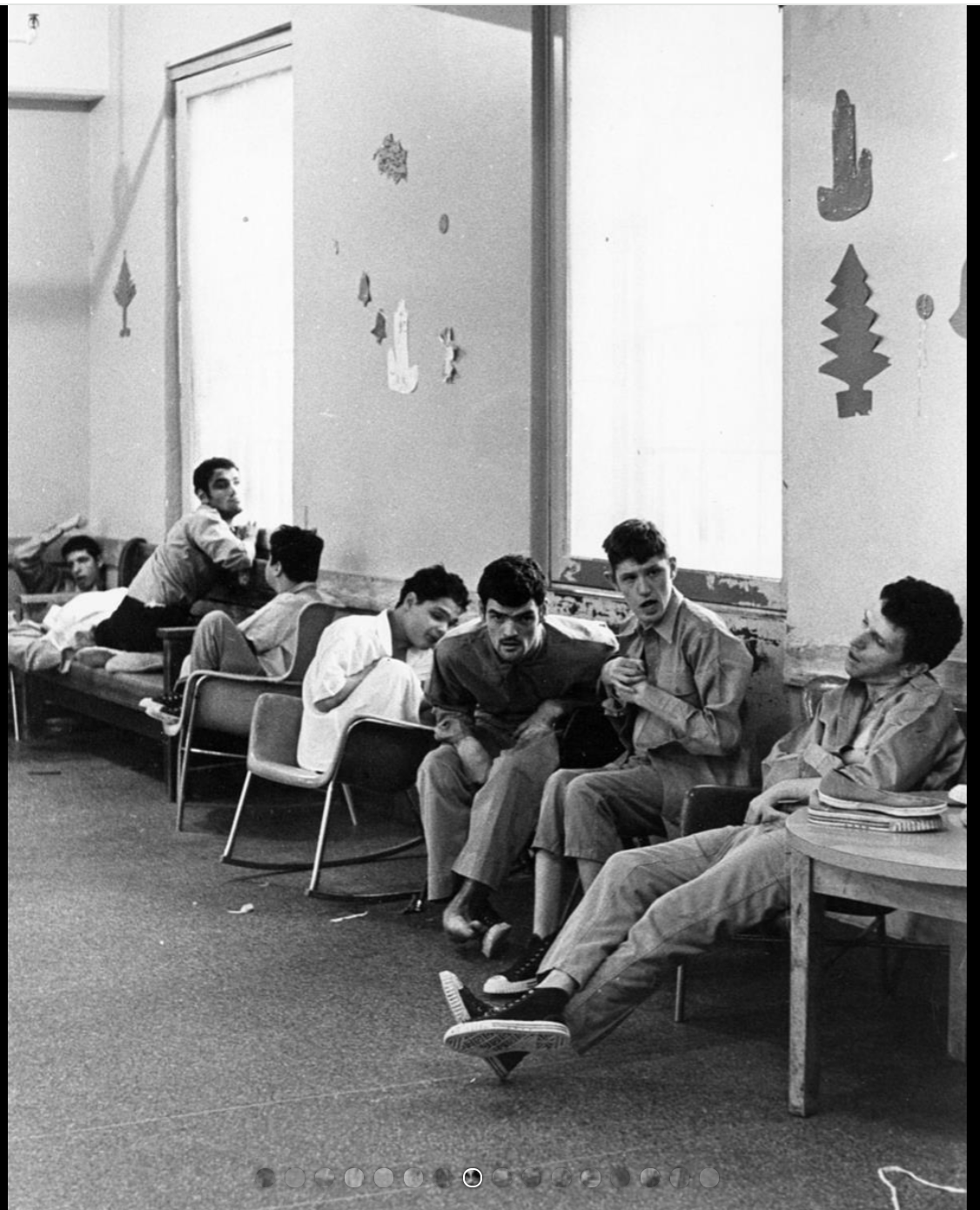
willowbrook state hospital for the feeble minded, staten island, 1970

At the dinner with friends I mentioned three posts ago, I gave them a 2-minute recital of the history of the deinstitutionalization of the mentally ill and why those poor souls ended up on the streets. Of the two friends, the most liberal one, who suffers from a severe case of TDA, insisted that it was all Trump’s fault, and demanded that I not try to confuse him with facts “that just aren’t true”. Sigh.

In any event, because it’s Saturday morning and I have nothing better to do, I asked Grok to give me the history of the problem, and it came back with an answer that tracks my own summary almost word-for-word. And just to be annoying, I sent it along to my friend, who will not read it, and won’t believe it if he does. Oh, well.

Deinstitutionalization refers to the policy and social movement in the United States that shifted the care of individuals with serious mental illnesses (SMI) from large state-run psychiatric hospitals to community-based settings, beginning in the mid-20th century. This process aimed to address the often abysmal conditions in institutions—overcrowding, abuse, neglect, and lack of effective treatment—while promoting more humane, integrated care through outpatient services, group homes, and community mental health centers (CMHCs).

Your recollection aligns closely with the historical record: the movement promised a transition to supportive community living, but inadequate funding, local resistance (often called "NIMBY" or "not in my backyard" opposition), and shifting priorities left many without proper support, contributing to increased homelessness and involvement with the criminal justice system.

Historical BackgroundThe roots of deinstitutionalization trace back to the post-World War II era, when exposés like Albert Deutsch's 1948 book The Shame of the States and films such as The Snake Pit highlighted the horrific conditions in mental asylums.

At its peak in 1955, the U.S. had about 559,000 patients in state mental hospitals, representing a rate of roughly 337 per 100,000 population.

Several factors converged to drive change:

  • Medical advancements: The introduction of antipsychotic medications like chlorpromazine (Thorazine) in 1954 made it possible to manage symptoms outside institutions, reducing the need for long-term hospitalization.

  • Social and civil rights movements: The broader civil rights era, including advocacy for disability rights, emphasized individual liberties and opposed involuntary confinement. Groups like the American Civil Liberties Union (ACLU) and patient advocacy organizations pushed for reforms.

  • Economic incentives: States sought to reduce costs by closing expensive hospitals and shifting burdens to federal programs.

By the 1960s, the momentum built toward community care as a more ethical and cost-effective alternative.Key Federal Policies and LawsDeinstitutionalization was heavily influenced by federal initiatives, though it wasn't a single overarching "federal policy" but a series of laws and funding shifts. The process accelerated under President John F. Kennedy, who had a personal stake due to his sister Rosemary's intellectual disabilities and institutionalization.

Year

Key Event/Law

Description

1946

National Mental Health Act

Established the National Institute of Mental Health (NIMH) to fund research and training, laying groundwork for alternatives to institutional care.

1963

Community Mental Health Act (CMHA)

Signed by Kennedy as his last major legislation; provided federal grants to build CMHCs for outpatient treatment, group homes, and preventive services. The goal was to create 1,500-2,000 centers nationwide, but only about 750 were ever fully funded due to the Vietnam War diverting resources after Kennedy's assassination.

1965

Medicaid and Medicare

These programs excluded federal funding for care in "institutions for mental diseases" (IMDs) for adults aged 21-64, incentivizing states to discharge patients to community settings where costs could be federally reimbursed. This "IMD exclusion" became a major driver of deinstitutionalization, as states closed hospitals to save money.

1981

Omnibus Budget Reconciliation Act (Reagan administration)

Consolidated federal mental health funding into block grants to states, cutting overall support by about 30% and eliminating many direct federal mandates for community services. This exacerbated underfunding of CMHCs and group homes.

These policies aimed to replace institutions with community supports, but implementation faltered. Federal funding for CMHCs never met projections, and states often prioritized closing hospitals over building alternatives, citing budget constraints.

Local opposition to group homes—fueled by stigma and fears of property value declines—further blocked development in many areas.

Role of Court Decisions

Court rulings played a pivotal role in limiting authorities' ability to involuntarily commit or retain individuals in institutions, emphasizing civil liberties and the "least restrictive environment." These decisions stemmed from lawsuits challenging unconstitutional confinements and were influenced by the civil rights era.

They effectively accelerated deinstitutionalization by making it harder to "lock up" people without clear justification.

Year

Case

Key Ruling and Impact

1966

Lake v. Cameron

Introduced the "least restrictive setting" principle: Patients must be discharged to less confining environments if possible. This set a precedent for community placement over hospitalization.

1973

Souder v. Brennan

Ruled that patients performing labor in institutions must be paid minimum wage, increasing costs for states and encouraging discharges.

1975

O'Connor v. Donaldson

Supreme Court held that non-dangerous individuals who can survive safely in the community (with or without help) cannot be confined against their will. This limited indefinite institutionalization and shifted criteria to "danger to self or others."

1979

Addington v. Texas

Raised the burden of proof for civil commitments from "preponderance of evidence" to "clear and convincing evidence," making involuntary hospitalization more difficult.

1999

Olmstead v. L.C.

Supreme Court ruled that unjustified institutionalization of people with disabilities (including mental illness) violates the Americans with Disabilities Act (ADA). States must provide community-based services when appropriate and feasible.

These rulings, combined with state laws like California's Lanterman-Petris-Short Act (1967, signed by then-Gov. Ronald Reagan), which required evidence of imminent danger or grave disability for commitment, drastically reduced institutional populations.

Between 1955 and 1994, the number of state hospital beds dropped from over 558,000 to about 72,000.

Outcomes and Challenges

While deinstitutionalization succeeded in closing many "horror show" institutions, the promised community infrastructure—group homes, halfway houses, and supported living—largely failed to materialize at scale.

Reasons included:

  • Budgetary shortfalls: Federal cuts in the 1980s under Reagan shifted responsibility to states, which often underfunded services amid economic pressures.

  • Local opposition: Communities resisted siting group homes, leading to zoning battles and delays.

  • Unintended consequences: Many discharged patients ended up homeless, in nursing homes, or cycling through emergency rooms and jails—a phenomenon called "transinstitutionalization."

    By the 1980s, homelessness among the mentally ill surged, and today, an estimated 20-25% of the homeless population has SMI.

One point I raised that they did agree with was the effect of closing the Bowery’s SROs; not sure why they could accept that, and not the rest of my little speech.

AI Overview

Closing the Bowery’s

Single-Room Occupancy (SRO) hotels in New York City significantly fueled the rise of modern homelessness by eliminating thousands of low-cost housing units for poor, single adults. As these buildings were converted into upscale housing or demolished, residents were displaced, directly contributing to the growth of the homeless population and increasing the burden on emergency shelters.

  • Displacement and Homelessness: The sharp decline in SRO units, particularly from the 1970s onwards, removed the last resort for low-income tenants, pushing many onto the streets or into unstable, temporary, or inadequate housing.

  • Neighborhood Transformation: As the Bowery shifted from "skid row" to a high-end, renovated district, the loss of affordable housing forced former occupants into public spaces such as parks, libraries, and subway stations, say reports National Affairs.

  • Loss of Safety Net: These SROs served as vital, private housing for vulnerable individuals who often cannot manage, afford, or qualify for other housing types, acting as a direct alternative to the public shelter system.

  • Last Remaining SROs: Long-standing, small SROs like the Sunshine Hotel on the Bowery saw drastic decreases in occupancy, shifting from over 200 residents to just a few dozen, as owners phased them out for development, say researchers at City Limits.

    Coalition For The Homeless +4

The decline of these units is generally considered a primary, structural cause of the surge in NYC homelessness.


I'll be curious to see how many hoops our P&Z requires this developer to jump through, and how long it takes before shovel finally meets dirt

One way to approach the affordable housing problem is to increase the supply of all housing. From what I’ve observed, however, our P&Z doesn’t agree with that strategy and instead prefers to dither and preen and make lofty, self-congratulatory pronouncements that will demonstrate, they think, their concern for “the underprivileged”. Delays cost money, prices increase, and so it goes. We’ll see

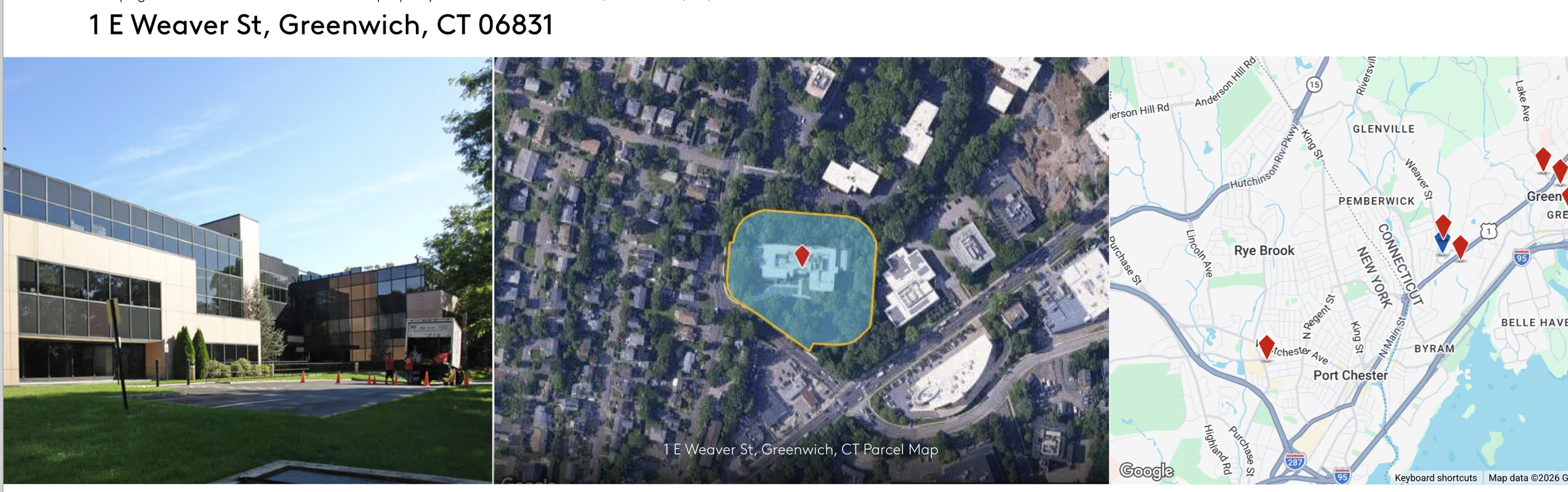
Forty-four new apartment units proposed at an office building in the west end of Greenwich

GREENWICH — The trend of converting underutilized office buildings into housing in Greenwich and around the region is continuing, with the latest proposed conversion slated for an office site at 1 East Weaver Street.

Fareri Associates and developer John Fareri are looking to upgrade the exterior of the three-story office building and turn the office areas into 44 residential units.

According to the attorney representing the project, John Tesei, the 41-year-old building would undergo a makeover to make it more attractive to residents. "There are no site changes proposed," Tesei said, "Minor architectural changes will be made, such as adding small balconies within the building frame itself and rooftop terrace amenities for the residents.... A small portion of the upper level garage area will be converted to resident amenities."

Besides the new balconies, the new facade would be composed of granite, metal, glass and wood-like paneling, according to the architetectural renderings submitted to the town planning department. The new residences would be called the J Lofts on East Weaver.

>>>>

The building is described as "mostly vacant" by the development team. 

The units would be a mix of 22 one-bedroom units, 20 two-bedroom units and two three-bedroom units. 

The site has ample parking, with 224 spaces, more than the necessary requirement of 90 spaces for the proposed residential units. No new landscaping is planned, according to Tesei, and the traffic impact will be minimal. The site is just off West Putnam Avenue.

The planned conversion is part of a larger a real estate trend across the region, as numerous office buildings are being converted into residential buildings after a major shift in the commercial real estate sector. 

The plan for the office conversion is due for review by the Planning & Zoning Commission in coming weeks.