Homeless in Manhattan — and elsewhere
/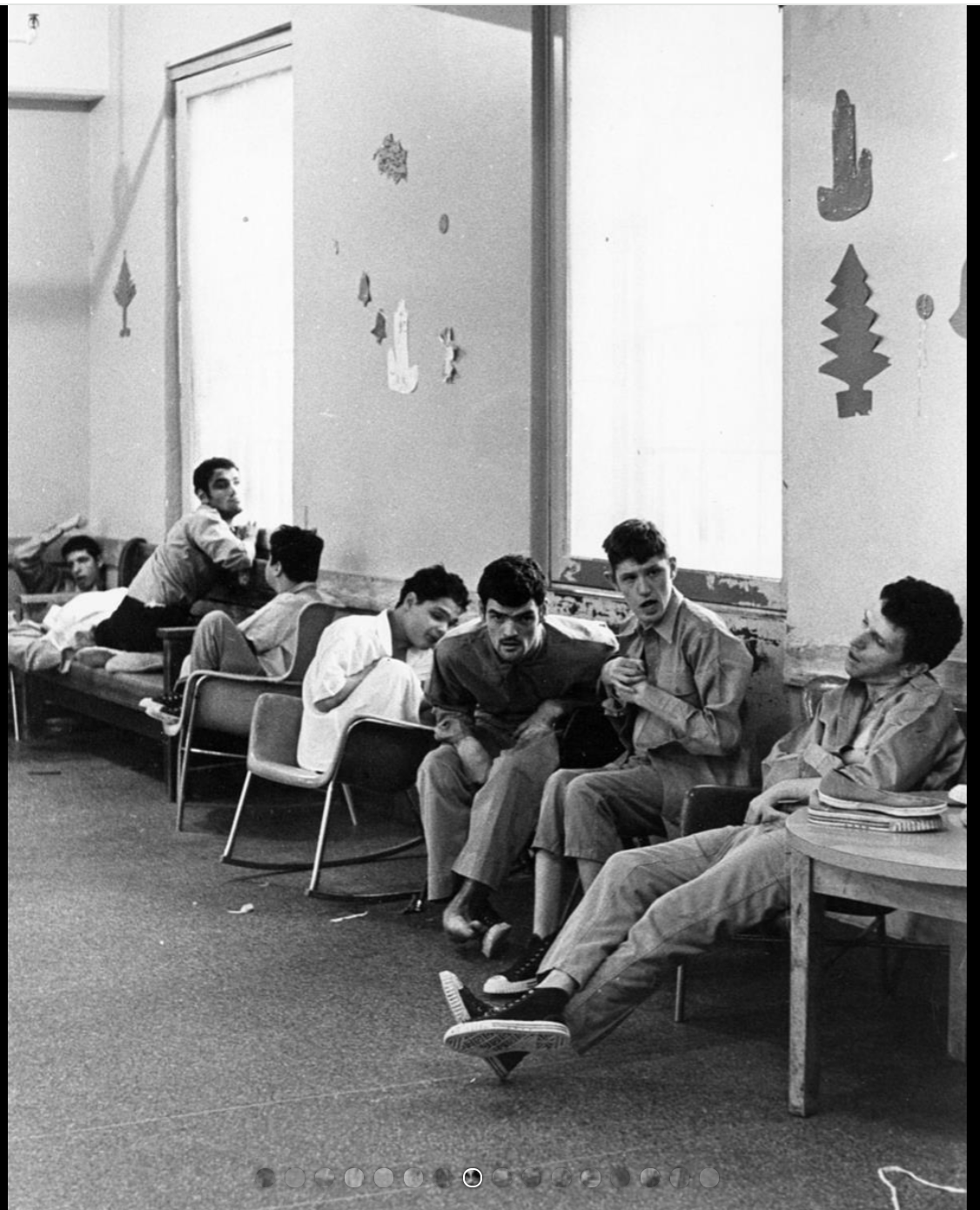
willowbrook state hospital for the feeble minded, staten island, 1970
At the dinner with friends I mentioned three posts ago, I gave them a 2-minute recital of the history of the deinstitutionalization of the mentally ill and why those poor souls ended up on the streets. Of the two friends, the most liberal one, who suffers from a severe case of TDA, insisted that it was all Trump’s fault, and demanded that I not try to confuse him with facts “that just aren’t true”. Sigh.
In any event, because it’s Saturday morning and I have nothing better to do, I asked Grok to give me the history of the problem, and it came back with an answer that tracks my own summary almost word-for-word. And just to be annoying, I sent it along to my friend, who will not read it, and won’t believe it if he does. Oh, well.
Deinstitutionalization refers to the policy and social movement in the United States that shifted the care of individuals with serious mental illnesses (SMI) from large state-run psychiatric hospitals to community-based settings, beginning in the mid-20th century. This process aimed to address the often abysmal conditions in institutions—overcrowding, abuse, neglect, and lack of effective treatment—while promoting more humane, integrated care through outpatient services, group homes, and community mental health centers (CMHCs).
Your recollection aligns closely with the historical record: the movement promised a transition to supportive community living, but inadequate funding, local resistance (often called "NIMBY" or "not in my backyard" opposition), and shifting priorities left many without proper support, contributing to increased homelessness and involvement with the criminal justice system.
Historical BackgroundThe roots of deinstitutionalization trace back to the post-World War II era, when exposés like Albert Deutsch's 1948 book The Shame of the States and films such as The Snake Pit highlighted the horrific conditions in mental asylums.
At its peak in 1955, the U.S. had about 559,000 patients in state mental hospitals, representing a rate of roughly 337 per 100,000 population.
Several factors converged to drive change:
Medical advancements: The introduction of antipsychotic medications like chlorpromazine (Thorazine) in 1954 made it possible to manage symptoms outside institutions, reducing the need for long-term hospitalization.
Social and civil rights movements: The broader civil rights era, including advocacy for disability rights, emphasized individual liberties and opposed involuntary confinement. Groups like the American Civil Liberties Union (ACLU) and patient advocacy organizations pushed for reforms.
Economic incentives: States sought to reduce costs by closing expensive hospitals and shifting burdens to federal programs.
By the 1960s, the momentum built toward community care as a more ethical and cost-effective alternative.Key Federal Policies and LawsDeinstitutionalization was heavily influenced by federal initiatives, though it wasn't a single overarching "federal policy" but a series of laws and funding shifts. The process accelerated under President John F. Kennedy, who had a personal stake due to his sister Rosemary's intellectual disabilities and institutionalization.
Year
Key Event/Law
Description
1946
National Mental Health Act
Established the National Institute of Mental Health (NIMH) to fund research and training, laying groundwork for alternatives to institutional care.
1963
Community Mental Health Act (CMHA)
Signed by Kennedy as his last major legislation; provided federal grants to build CMHCs for outpatient treatment, group homes, and preventive services. The goal was to create 1,500-2,000 centers nationwide, but only about 750 were ever fully funded due to the Vietnam War diverting resources after Kennedy's assassination.
1965
Medicaid and Medicare
These programs excluded federal funding for care in "institutions for mental diseases" (IMDs) for adults aged 21-64, incentivizing states to discharge patients to community settings where costs could be federally reimbursed. This "IMD exclusion" became a major driver of deinstitutionalization, as states closed hospitals to save money.
1981
Omnibus Budget Reconciliation Act (Reagan administration)
Consolidated federal mental health funding into block grants to states, cutting overall support by about 30% and eliminating many direct federal mandates for community services. This exacerbated underfunding of CMHCs and group homes.
These policies aimed to replace institutions with community supports, but implementation faltered. Federal funding for CMHCs never met projections, and states often prioritized closing hospitals over building alternatives, citing budget constraints.
Local opposition to group homes—fueled by stigma and fears of property value declines—further blocked development in many areas.
Role of Court Decisions
Court rulings played a pivotal role in limiting authorities' ability to involuntarily commit or retain individuals in institutions, emphasizing civil liberties and the "least restrictive environment." These decisions stemmed from lawsuits challenging unconstitutional confinements and were influenced by the civil rights era.
They effectively accelerated deinstitutionalization by making it harder to "lock up" people without clear justification.
Year
Case
Key Ruling and Impact
1966
Lake v. Cameron
Introduced the "least restrictive setting" principle: Patients must be discharged to less confining environments if possible. This set a precedent for community placement over hospitalization.
1973
Souder v. Brennan
Ruled that patients performing labor in institutions must be paid minimum wage, increasing costs for states and encouraging discharges.
1975
O'Connor v. Donaldson
Supreme Court held that non-dangerous individuals who can survive safely in the community (with or without help) cannot be confined against their will. This limited indefinite institutionalization and shifted criteria to "danger to self or others."
1979
Addington v. Texas
Raised the burden of proof for civil commitments from "preponderance of evidence" to "clear and convincing evidence," making involuntary hospitalization more difficult.
1999
Olmstead v. L.C.
Supreme Court ruled that unjustified institutionalization of people with disabilities (including mental illness) violates the Americans with Disabilities Act (ADA). States must provide community-based services when appropriate and feasible.
These rulings, combined with state laws like California's Lanterman-Petris-Short Act (1967, signed by then-Gov. Ronald Reagan), which required evidence of imminent danger or grave disability for commitment, drastically reduced institutional populations.
Between 1955 and 1994, the number of state hospital beds dropped from over 558,000 to about 72,000.
Outcomes and Challenges
While deinstitutionalization succeeded in closing many "horror show" institutions, the promised community infrastructure—group homes, halfway houses, and supported living—largely failed to materialize at scale.
Reasons included:
Budgetary shortfalls: Federal cuts in the 1980s under Reagan shifted responsibility to states, which often underfunded services amid economic pressures.
Local opposition: Communities resisted siting group homes, leading to zoning battles and delays.
Unintended consequences: Many discharged patients ended up homeless, in nursing homes, or cycling through emergency rooms and jails—a phenomenon called "transinstitutionalization."
By the 1980s, homelessness among the mentally ill surged, and today, an estimated 20-25% of the homeless population has SMI.
One point I raised that they did agree with was the effect of closing the Bowery’s SROs; not sure why they could accept that, and not the rest of my little speech.
AI Overview
Closing the Bowery’s
Single-Room Occupancy (SRO) hotels in New York City significantly fueled the rise of modern homelessness by eliminating thousands of low-cost housing units for poor, single adults. As these buildings were converted into upscale housing or demolished, residents were displaced, directly contributing to the growth of the homeless population and increasing the burden on emergency shelters.
Displacement and Homelessness: The sharp decline in SRO units, particularly from the 1970s onwards, removed the last resort for low-income tenants, pushing many onto the streets or into unstable, temporary, or inadequate housing.
Neighborhood Transformation: As the Bowery shifted from "skid row" to a high-end, renovated district, the loss of affordable housing forced former occupants into public spaces such as parks, libraries, and subway stations, say reports National Affairs.
Loss of Safety Net: These SROs served as vital, private housing for vulnerable individuals who often cannot manage, afford, or qualify for other housing types, acting as a direct alternative to the public shelter system.
Last Remaining SROs: Long-standing, small SROs like the Sunshine Hotel on the Bowery saw drastic decreases in occupancy, shifting from over 200 residents to just a few dozen, as owners phased them out for development, say researchers at City Limits.
Coalition For The Homeless +4
The decline of these units is generally considered a primary, structural cause of the surge in NYC homelessness.