Well, they can still buy a house in non-waterfront Byram
/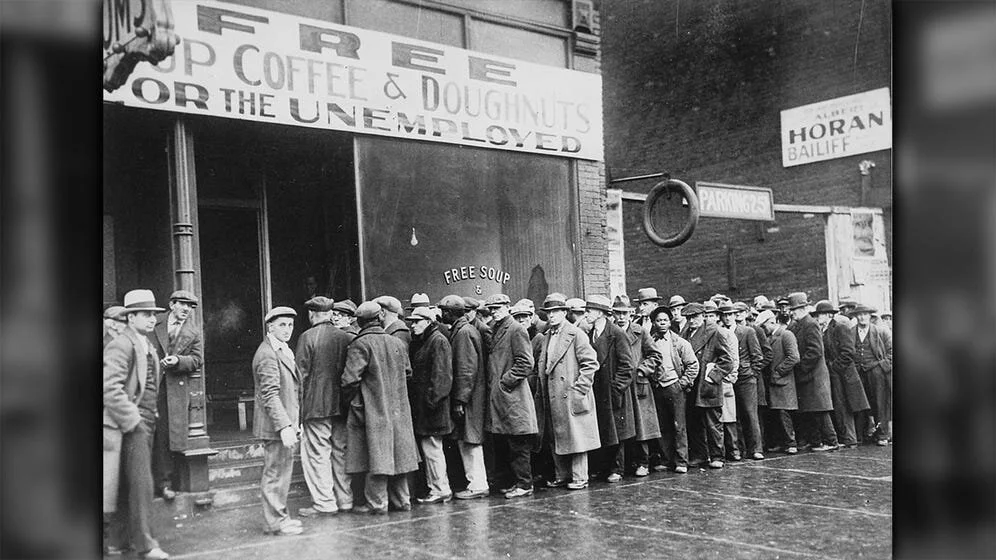
Morgan Stanley ex-employee cafeteria
Axios: Wall Street bonuses going down
Brace yourself: New York city officials estimate the pool of money allocated to bonus payouts by Wall Street firms will shrink by at least 9% this year — to about $25 billion from the $27.5 billion doled out in 2018.
Why it matters: A surging stock market and low unemployment rate don’t mean that bonuses in the securities industry will keep growing and growing.
Then there's the trickle-down effect: If you work at, say, Smith & Wollensky or a Connecticut Ferrari dealership, you could be in the same boat as the bankers.
Driving the news: Bonuses are typically handed out — or at least announced — this month through the beginning of next year.
The sums can be staggering: Some run to six or even seven figures, making up a third or more of an executive's annual compensation.
The big picture: The smaller payouts reflect harder times for the banking industry — which is being hit by low interest rates, trade wars, political incertitude, and volatile markets.
Wall Street executives have been mum about what's going on with bonuses — relative to years past — "because there is so much uncertainty about what might happen in overnight lending [markets] in late December, and the ripple effects it could have on other markets,” Reuters reported this week.
Meanwhile, Morgan Stanley is reportedly firing more than 1,000 people — 2% of its workforce — an announcement that comes before year's end to "avoid paying out bonuses," CNBC reported.
The bank cited "an uncertain global economic outlook" as its reason, CNBC said.
It's the first of the big Wall Street firms to make such cuts, but more could follow.
Flashback: The current situation is a direct contrast to 10 years ago, when Wall Street bonuses were grandiose — despite an economy mired in recession (largely of the banks' making) and massive government bailouts of the financial services industry.
Since the financial crisis, people who traditionally made tons of money from the Wall Streeters spending their sky-high bonuses — like real estate agents, who reliably sold pricey Hamptons homes to the newly flush —have had to adjust to changing times.
One factor: More banks are opting for deferred forms of compensation — i.e. stock instead of cash.
And banks have taken steps to curb excessive pay, industry experts say — despite the fact that regulations proposed after the financial crisis that aimed to curb big bonuses (which were seen as tempting workers to take risks) never crossed the finish line.
What they're saying:
"The Wall Street bonus meant a lot to us before the financial crisis in 2008 — it was a barometer of how the market would would fare,” Scott Durkin, COO of the real estate agency Douglas Elliman, tells Axios.
Of the first sign of declining bonuses, “we [real estate agents] all thought it was the end of the world."
The average bonus paid to Wall Street employees in New York City was $153,700 in 2018 — a decline of 17% from the prior year, despite an upturn in the broader industry's profits. All in all, fewer dollars were spread among a larger number of people.
Johnson Associates, a compensation consultancy whose estimates are closely watched, says Wall Street could see bonuses fall as much as 4% this year.
But hedge funds payouts will remain the same, or could even increase as much as 5%.
Of course, the BSDs of Wall Street are still making lots, and lots of money, and presumably have stashed away even more, but a significant drop one’s yearly bonus might cause a hesitancy to commit to buying, say, an $8 million home; perhaps a $4 million might be safer. If so, then owners of $8 million homes are going to have to slash their prices if they hope to sell them and, so far, that’s what seems to be happening.
And for the little swinging dicks, there’s always Cos Cob and Byram.