You won't find this article on Facebook
/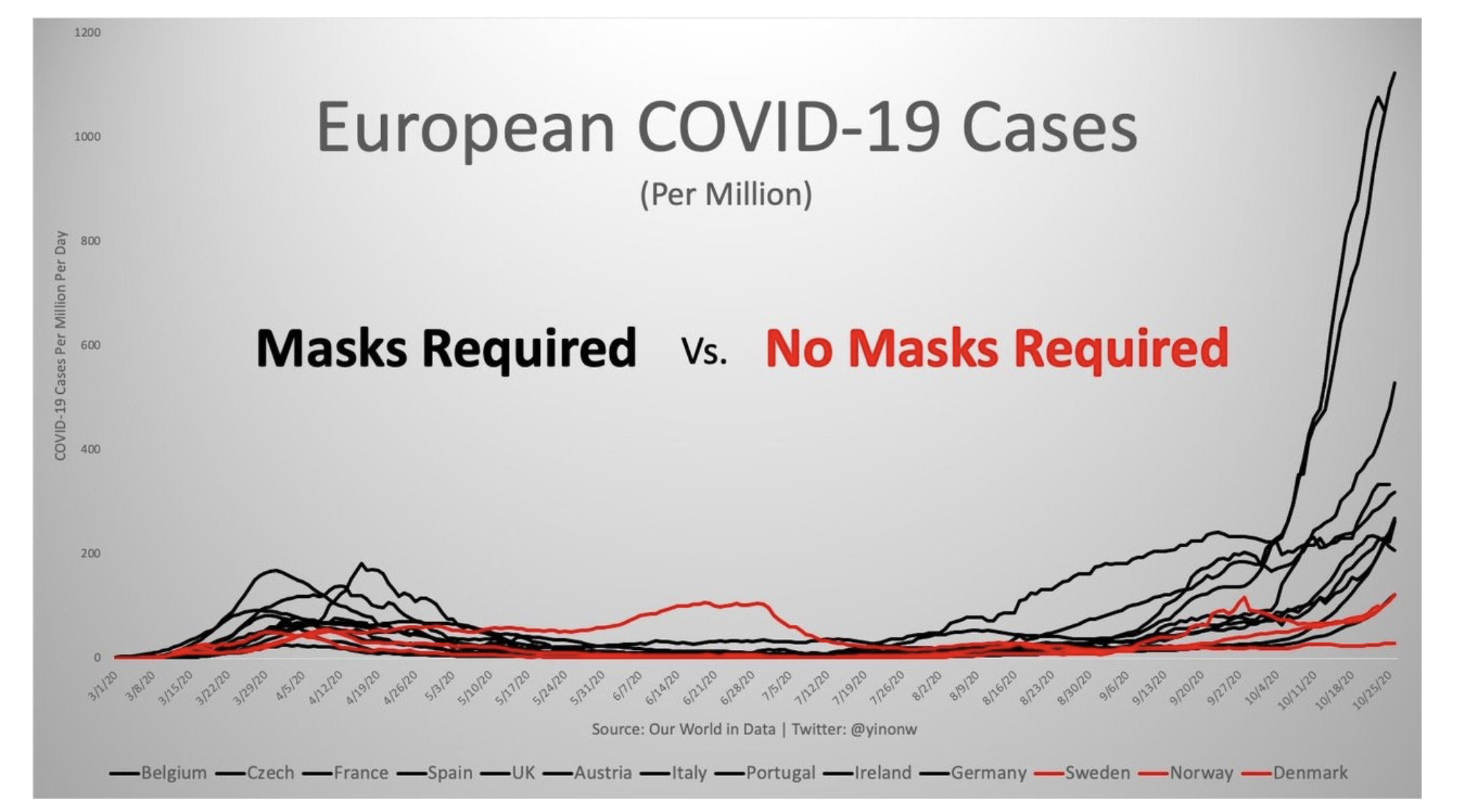
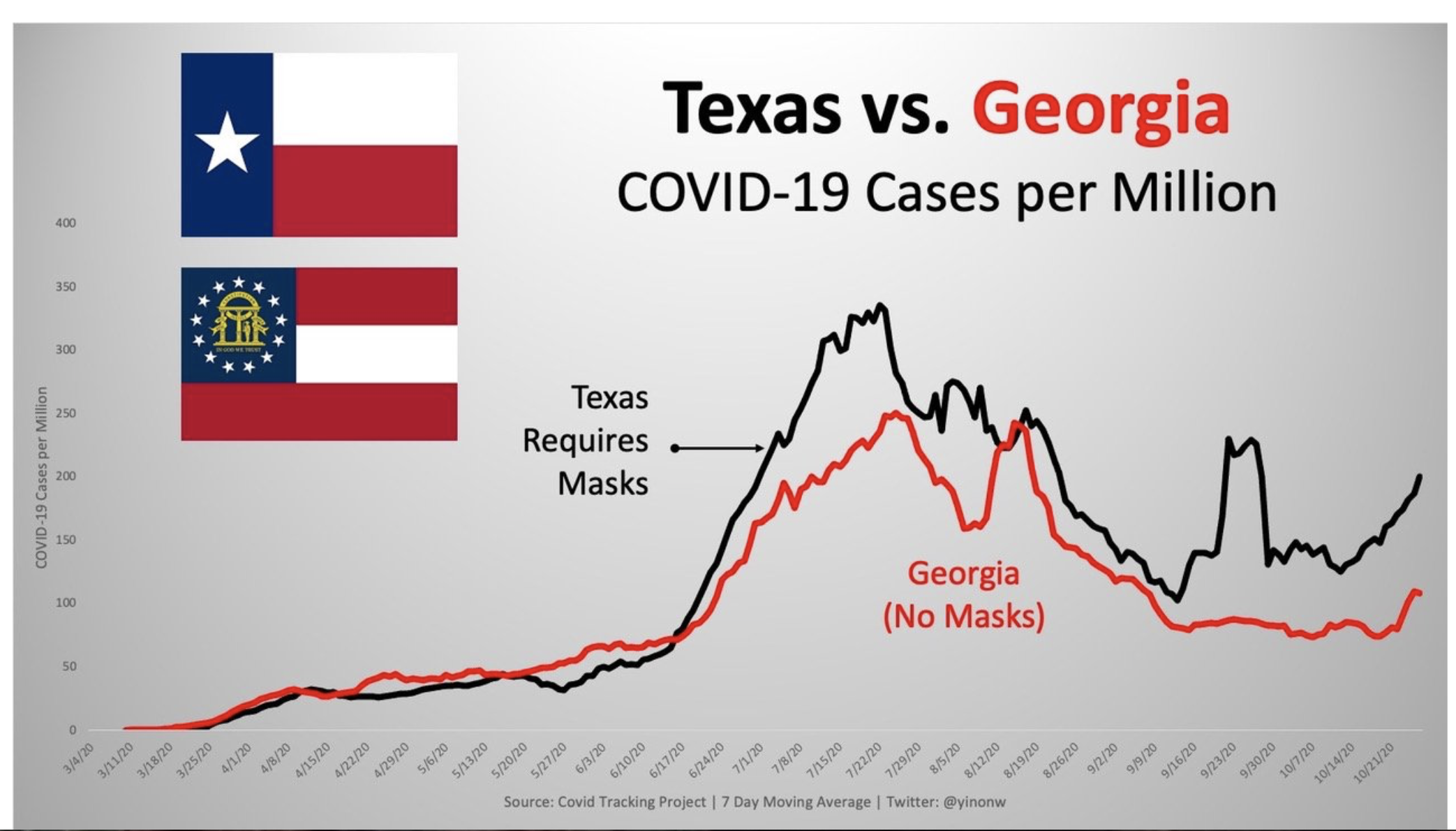
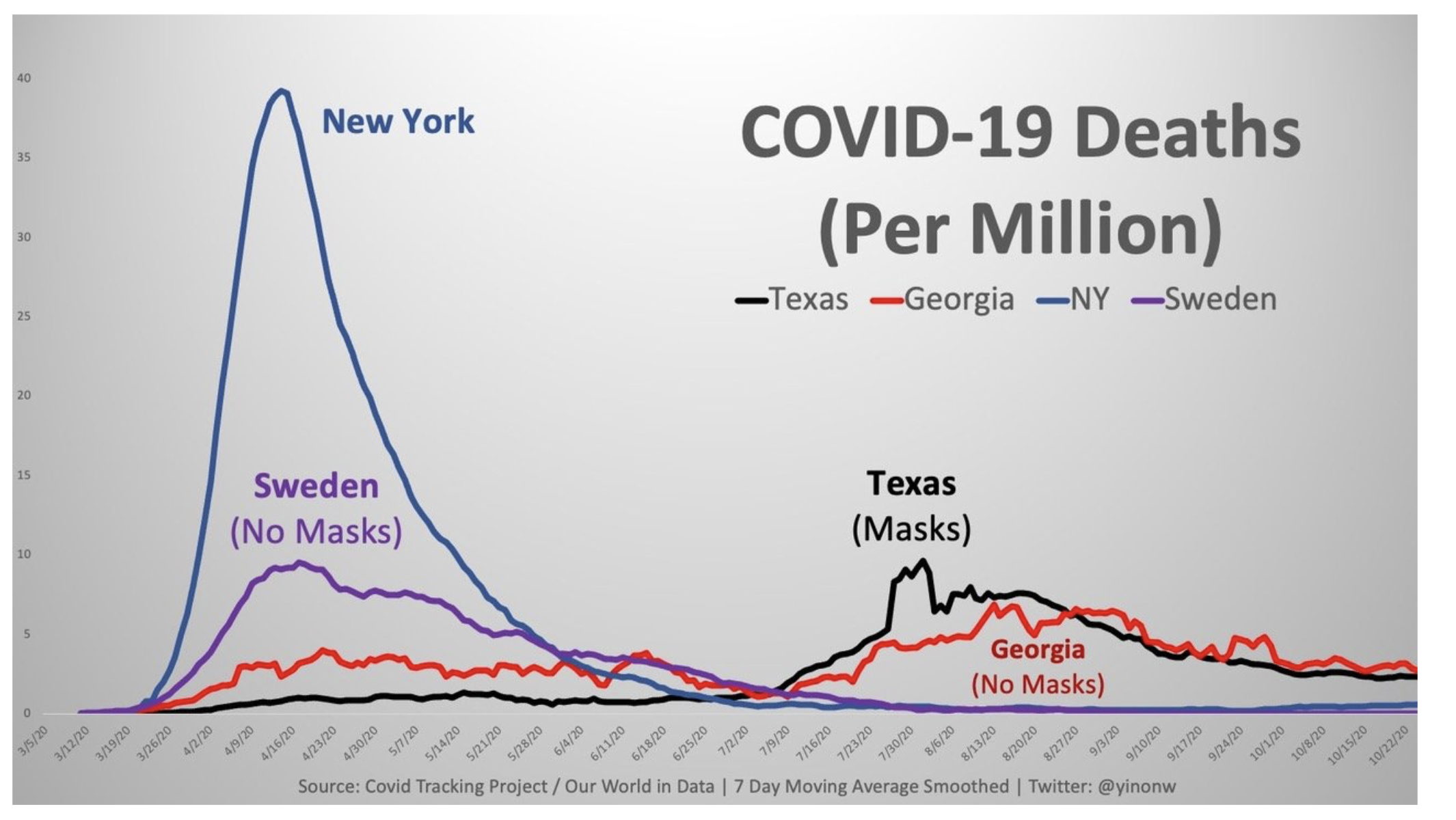
These 12 charts show that mask mandates do nothing to stop the spread of COVID
The Centre for Evidence-Based Medicine at Oxford University summarized six international studies which “showed that masks alone have no significant effect in interrupting the spread of ILI or influenza in the general population, nor in healthcare workers.” Oxford went on to say that “that despite two decades of pandemic preparedness, there is considerable uncertainty as to the value of wearing masks.” They prophetically warned that this has “left the field wide open for the play of opinions, radical views and political influence.”
A study of health-care workers in more than 1,600 hospitals showed that cloth masks only filtered out 3 percent of particles. An article in the New England Journal of Medicine stated, “[W]earing a mask outside health care facilities offers little, if any, protection from infection” and that “[T]he desire for widespread masking is a reflexive reaction to anxiety over the pandemic.”
There are many other credible studies showing lack of mask efficacy, such as studies published in the National Center for Biotechnology Information, Cambridge University Press, Oxford Clinical Infectious Diseases, and Influenza Journal, just to name a few.
Studies do show masks can help in the case of direct respiratory droplets, which would matter if somebody is coughing, breathing, or sneezing directly on your face. That happens normally in a tight and highly confined space.
But the plentiful evidence we have indicates masks would not meaningfully help with aerosol transmission, where two people are just in the same area, or even the same room. This is because the two people end up breathing the same air, with or without a mask, as visually demonstrated in this video.
Why Don’t Masks Work?
Why don’t masks work on the general public? For one, if you read the fine print on most consumer masks you will see something along the line of “not intended for medical purposes and has not been tested to reduce the transmission of disease.” Masks can work well when they’re fully sealed, properly fitted, changed often, and have a filter designed for virus-sized particles. This represents none of the common masks available on the consumer market, making universal masking much more of a confidence trick than a medical solution.
If we actually wanted effective masks, then manufacturers should be conducting scientific tests evaluating masks specifically for their ability to reduce the spread of coronavirus. The Food and Drug Administration and CDC should be making recommendations on which masks to use and approving masks based on their scientific efficacy rather than promoting the wrapping of any piece of miscellaneous cloth around your face.
Many powerful institutions have too much political capital invested in the mask narrative at this point, so the dogma is perpetuated.
Effective masks, if they exist, should then be distributed to highly vulnerable groups for use only in rare and extenuating circumstances. There would be little point for the population at large to wear masks all the time because while focused protection may be possible, it is not possible to eradicate the virus at this point or stop its spread.
Our universal use of unscientific face coverings is therefore closer to medieval superstition than it is to science, but many powerful institutions have too much political capital invested in the mask narrative at this point, so the dogma is perpetuated. The narrative says that if cases go down it’s because masks succeeded. It says that if cases go up it’s because masks succeeded in preventing more cases. The narrative simply assumes rather than proves that masks work, despite overwhelming scientific evidence to the contrary. [emphasis added]
The narrative further ignores places like Sweden and Georgia, which never required masks in the first place, and it suppresses new scientific evidence if it doesn’t support desired political results, such as data from the world’s only randomized trialinvestigating if masks actually protect from COVID-19. Even a Nobel laureate has been canceled because his COVID charts and data were found to be undesirable.
History does not bode well for times that politics meddles with science. Martin Kulldorff, a professor at Harvard Medical School and a leader in disease surveillance methods and infectious disease outbreaks, describes the current COVID scientific environment this way: “After 300 years, the Age of Enlightenment has ended.”
In the end, it will be the loss of credibility in our scientific institutions, and the unnecessary division they have sowed among us, for which masks will be remembered.
All twelve of the author’s charts can be found at the link. Here are two: