Their mouths are at one end, their money's at the other
/
The rich are flooding in.
Rising Seas aren’t dampening the hot market for Maine’s beachfront homes.
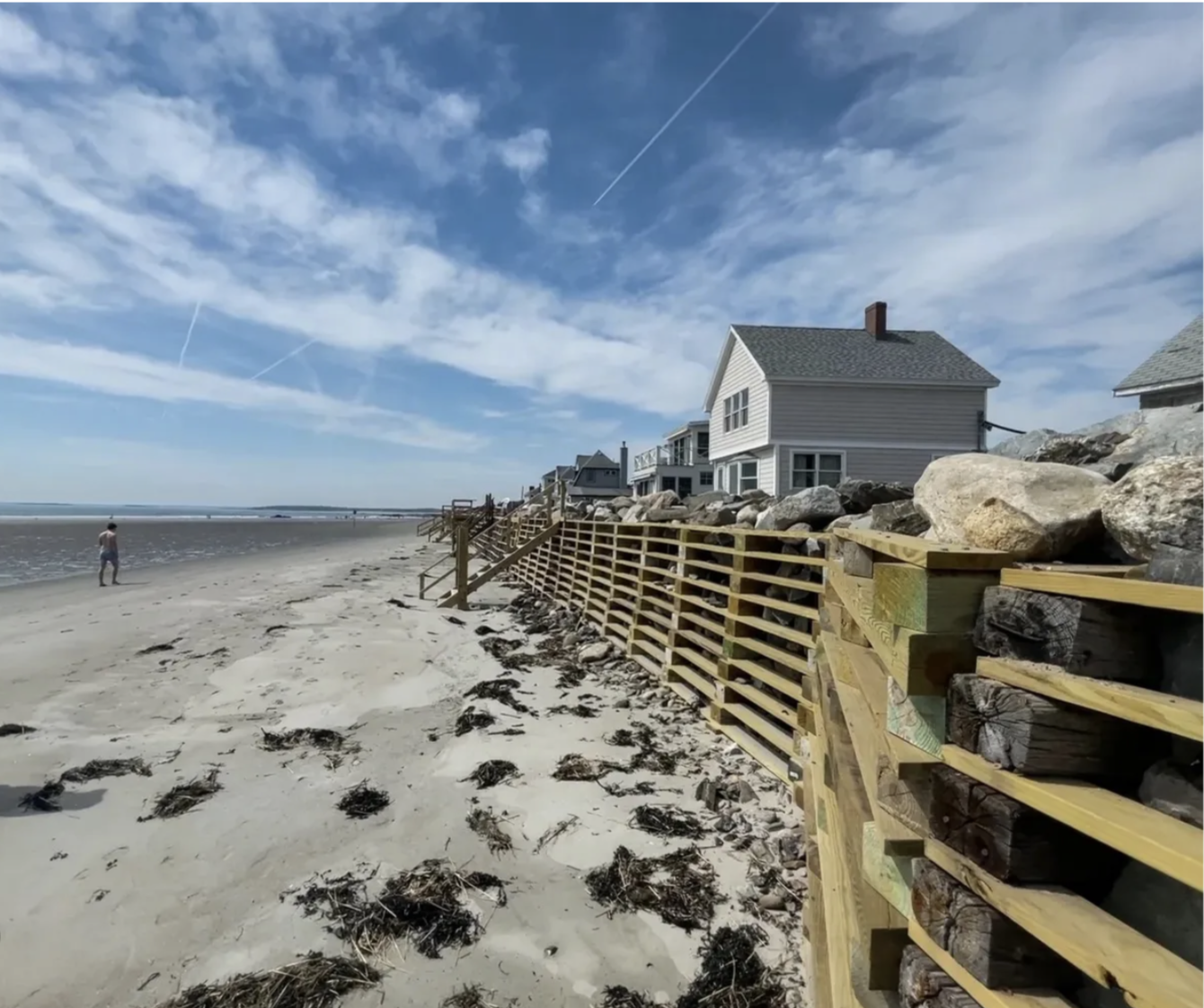
Higgins Beach in Scarborough is lined with private homes and cottages. But Peter Slovinsky of the Maine Geological Survey says 100 years ago, there was a lot more beach to enjoy.
“If we were looking at historical pictures of this area, back in the teens, twenties and thirties, we’d be looking at some cottages behind a pretty expansive dune system, and then a pretty wide sandy beach, and the shoreline would have been a couple of hundred feet further seaward than it is right now," he says.
Now, at high tide, you can't walk much of the beach without getting your feet wet, as the ocean laps up against sea walls that homeowners have built to keep their houses from washing away. This phenomenon is known as coastal squeeze.
The acceleration of sea level rise due to climate change has prompted some analysts to predict a decline in the value of waterfront properties. But that hasn't happened in Maine. In fact, the value of beachfront houses has skyrocketed. Part of the reason may be that people simply love to live on the water, and can afford to. And for some, the risks of rising seas and more powerful storms just don't seem all that imminent.
Scientists predict Maine sea levels will rise by about a foot and a half in the next 25 years. And Slovinsky says on most beaches the waterline will move about 100 feet inland with each foot of sea level rise. But none of this appears to be having much of an effect on real estate values.
“Maine is becoming more and more desirable for people to live for a variety of reasons," says real estate agent Scott Townsend, "and if you can afford it, there is nothing better than being oceanfront.”
Townsend says he began visiting his grandmother here when he was a baby. He and his wife were married on the beach. Now they sell houses in the area, and manage more than 100 rentals. Townsend says he understands the challenges posed by the changing climate and rising sea levels.
"It’s a constant battle," he says. "And I think at the end of the day, if you were to fast-forward 200 years from now, when none of us will be around, the ocean is going to win, at the end of the day.”
But in the nearer term, Townsend says beachfront houses rarely hit the market, and when they do, they are snapped up in a heartbeat. In fact, Townsend says a tear-down several blocks inland from this beach would likely sell for more than a million dollars, and a beachfront house would be far more expensive. Even so, many buyers see waterfront property in Maine as a steal.
"Without a doubt, they think that's a bargain," says Cale Pickford, who specializes in oceanfront insurance policies for Allen Insurance and Financial in Camden. "They can't believe the quality and affordability of Maine real estate."
Pickford says the market is driven by out-of-state buyers, and coastal real estate in Maine is far cheaper than it is on Cape Cod, or Martha's Vineyard, or in California. Pickford says homeowner's insurance policies for his clients are more expensive than for a house that's high and dry, but aren't prohibitive for people who can afford the houses.
Global warming laws and regulations, like all social schemes that claim to be for the benefit of mankind: legalizing theft, defunding the police, and ending the gig economy, just to name a few, never affect the wealthy, and they’re designed not to. It’s good to be king, or related to him.