
I'd advise you to get that whole house generator installed now, before the rush, but then again, it probably won't matter in two weeks
/
Thank the green-energy cult for major blackouts this summer
Summer’s coming. That means sunshine, swimming, cookouts — and blackouts.
That’s the warning from the North American Electric Reliability Corporation.
According to NERC, at least two-thirds of the country is at risk for major power outages this summer.
This extends to most everyone west of the Mississippi except for Texas.
Texas and much of the Midwest will be fine, the report says, so long as we don’t experience hot, windless summer days.
Well, that’s a relief. When do we ever get hot, windless summer days in Texas and the Midwest?
Part of the problem is the steady removal of fossil-fuel plants from the grid.
These plants are supposed to be replaced by renewables — wind and solar — but wind doesn’t work on windless days, and solar doesn’t keep your air conditioning running on steamy nights.
The Wall Street Journal reports the Environmental Protection Agency has made things worse with new nitrogen-oxides rules from its recently finalized “Good Neighbor Plan, which requires fossil-fuel power plants in 22 states to reduce NOx emissions. NERC predicts power plants will comply by limiting hours of operation but warns they may need regulatory waivers in the event of a power crunch.”
The Journal notes, “The EPA claimed the rule wouldn’t jeopardize grid reliability, but then why would power plants need waivers to prevent blackouts?”
Why indeed?
There are other technical problems, too: Faulty solar inverters are in widespread use, and these can fail and make grid problems worse.
The Journal’s advice: Buy an emergency generator while stores still have them; don’t wait until later this summer when everyone will want one.
Scary stuff; or it would be, if we hadn’t been promised that we’re all gonna be dead by June 21st.


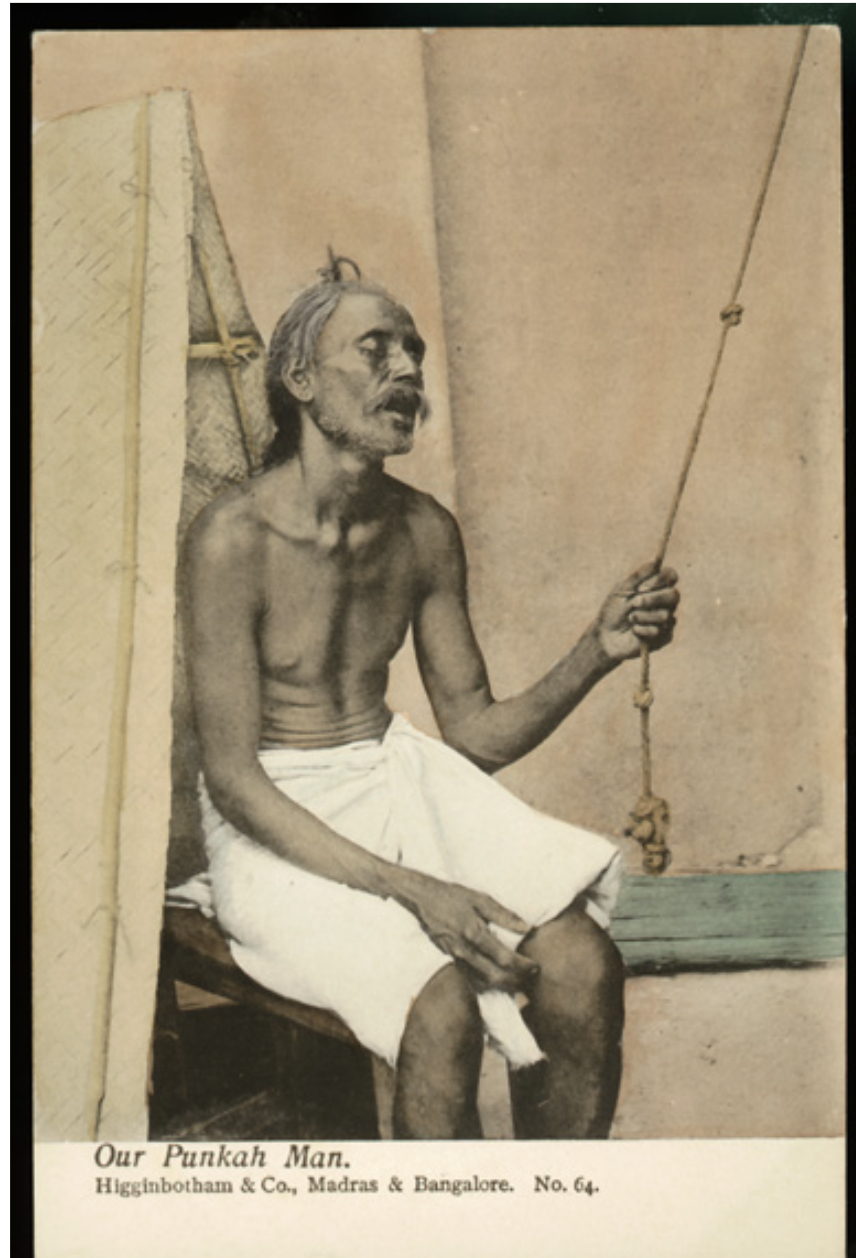
Of course, just in case, if by some miracle Greta and her fellow experts are wrong, you might want to give my pal Lou Van Leeuwen a call beforehand at Greenwich Power Systems, or emulate your soon-to-be-masters, and install an Indian punkah system in your mansion .
Before the arrival of electricity, it was not uncommon for people to sleep outside their homes under the shade of a tree, where it was cooler, or in the verandah with a handheld fan. Those who could afford had punkahs, or ceiling fans, that were swung with the help of a long string to produce a cooling draft.
A punkah was usually rectangular in shape and was made from cane, or a flat wooden frame covered with cloth. It was suspended from the ceiling of a room and pulled by the means of a rope and pulley by servants or slaves called punkah-wallah. The rhythmic to and fro movement of the punkah generated a gentle breeze that allowed the British expats and wealthy Indians to work and sleep in comfort.
Punkahs were a luxury found only in palatial homes and government bungalows and offices. As one British resident described, “you have a punkah over your bed, another over your bath-tub, another at your dressing-bureau, another over your dining-table, and another above your desk. Your body servant calls out to your punkah-wallah and has him shift from one cord to another as you move about your room, or go from one room to another. You have the punkah in motion all day and all night somewhere, and for this purpose you must have two men to relieve each other. When you go to bed … you are fanned to sleep.”