You can't say they're hiding their intentions
/
Mamdani’s Rent Czar Wants to Destroy the Private Housing Market
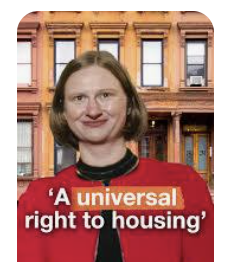
Mayor Zohran Mamdani's controversial pick for tenant advocate, Cea Weaver, once admitted that pushing for rent control was just the "first step" in her plan to destroy the free housing market and move toward "full social housing."
Videos of Weaver's past statements have gone viral on social media since Mamdani chose the 37-year-old to lead the city's Office to Protect Tenants.
"We decided that fighting for rent control was a strategic and critical first step in the fight for full social housing," she said in a newly surfaced clip. “So, a lot of times people ask, ‘Why are we fighting for rent control when we have NYCHA? We should be fighting to save public housing.’ We decided that through a program like rent control, we are able to directly challenge the logic of unfettered profit in the real estate market. Umm, and we are able to directly challenge housing as a wealth-building tool and, through regulation, strike a blow to the entire real estate industry at once.”
She continued, “And so, the beauty of rent stabilization and rent control is that it weakens the speculative value of the real estate asset. The value is no longer based on what the landlord is able to get, but rather it’s based on a state public board deciding how much rent is going up. And yes, that board is controlled by the real estate industry, and yes, there could be a better way to regulate it. But the idea is that we could weaken the entire industry at once through a strong rent control campaign, and that would strengthen our ability to do things, like fight for social housing.”
AI:
the overwhelming consensus among most economists is that rent control generally hurts the supply and quality of housing by discouraging new construction, reducing maintenance, and leading to less efficient market allocation, even though it benefits some current tenants with lower rents. Surveys show large majorities of economists agree rent control reduces housing quantity and quality, though some newer studies suggest less stringent or well-designed policies might have different outcomes.
Why Economists Agree It Hurts Supply:
Reduced Profitability: Price ceilings (rent controls) lower potential profits for landlords, making it less attractive to build new rental units or invest in existing ones.
Deterioration: Landlords have less incentive to maintain or upgrade properties, leading to lower quality housing stock.
Conversion: Owners may convert rental units to condos or other uses, further shrinking the rental supply.
Misallocation: The best housing goes to the lucky few who get a rent-controlled unit, while others face higher rents in the unregulated market, reducing mobility and creating inefficiencies.
In essence, while rent control helps some renters now, the broader economic consensus, supported by many studies, points to negative impacts on the overall housing market's quantity and quality.