The future awaits
/
“Throughout history, poverty is the normal condition of man. Advances which permit this norm to be exceeded — here and there, now and then — are the work of an extremely small minority, frequently despised, often condemned, and almost always opposed by all right-thinking people. Whenever this tiny minority is kept from creating, or (as sometimes happens) is driven out of a society, the people then slip back into abject poverty.
This is known as "bad luck.”
―Robert Heinlein
Democrats want billionaires to foot the bill for $3,000 payouts to American households
(And that’s just the beginning)
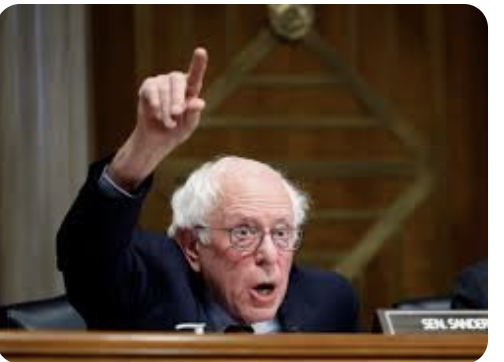
Progressive lawmakers Sen. Bernie Sanders, I-Vt., and Rep. Ro Khanna, D-Calif., are targeting the billionaire class with massive new tax proposal that seeks to seize trillions from the nation's wealthiest individuals to fund a sweeping government spending spree.
Announced Monday, the "Make Billionaires Pay Their Fair Share Act" targets 938 individuals, including titans like Elon Musk and Jeff Bezos, for an estimated $4.4 trillion over the next decade — a move Sanders claims is necessary to fix a "corrupt tax code" that has seen wealth redistributed from the bottom 90% to the top 1%.
"At a time of unprecedented income and wealth inequality, this legislation demands that the billionaire class in America finally pay their fair share of taxes so that we can create an economy that works for all of us, not just the 1%," Sanders said in a press release. "We can no longer tolerate a corrupt tax code that enables billionaires to pay a lower tax rate than the average worker."
"We have a deep economic divide in this country. On one side, places like Silicon Valley are generating extreme wealth. On the other side, families are struggling to cover the cost of health care, housing, and basic needs. We can tax billionaires a modest amount to make sure everyone has a fair chance while keeping our innovative engine," Khanna said in the same press release.
The core of the proposal is a direct 5% annual wealth tax on assets, not just income, exceeding $1 billion. Sanders and Khanna project the bill to raise $4.4 trillion in revenue over 10 years.
The measure would direct new tax revenue toward one-time $3,000 payments for individuals in households earning $150,000 or less, meaning a family of four could receive up to $12,000.
The legislation cites several high-profile figures to illustrate its reach: Elon Musk would owe $42 billion, Mark Zuckerberg could pay $11 billion and Jeff Bezos would owe an approximate $11 billion.
That’s a one-time payout of confiscated money; after that, the assets will continue to be seized and sucked into Washington to be distributed by the politicians to their friends to spend wisely and well. (Like, for example, NYC’s new “free” child care program @ $36,500 per head)
The $4.4 trillion in estimated revenue is earmarked for a massive expansion of the federal safety net and public infrastructure, including a more than $1 trillion Medicare and Medicaid expansion, building affordable homes, capping childcare costs and establishing a minimum $60,000 salary for public school teachers.
"To accept this revenue estimate as credible, you must believe that a 5% annual wealth tax on billionaires—on their investments and their closely-held businesses—will have no economic ramifications worth mentioning," Tax Foundation senior fellow Jared Walczak wrote in a post on X.
The bill won’t pass this year, but when the Democrats regain control of the country? Count on it; they are the now the party of the radical far-left, and this idea will be popular not only with their base, but chumps everywhere: the same plan in California is expected to pass easily this fall, and that will embolden the new socialist party to bring it national.
The media has already begun the campaign, and Ira Stroll at Free Beacon offers a taste of how it’s starting:
Almost as if coordinated, the New York Times unleashed a four-byline project about what it called “America’s New Gilded Age.” The Times story, which was published as a news article, hit nearly the same theme as the Sanders and Khanna press release. “One of the central quandaries the country now faces is how to govern in an era when such vast wealth both controls a large part of the economy and is increasingly used to access political power,” said—OK, you guess, was that from the Times article or the Sanders and Khanna press release?